What Documents Prove Eligibility for the Law of Return?
The journey of making Aliyah to Israel is often a profound and deeply personal one, fueled by a dream of connection and belonging. Yet, before you can even begin to imagine life in the Holy Land, many hopeful olim (new immigrants) find themselves facing a formidable administrative hurdle: proving their eligibility under the Law of Return. It can feel like an overwhelming quest to unearth generations of family history, navigating dusty archives and official paperwork, and the emotional toll of this process can be surprisingly heavy. This guide aims to demystify the specific documents you'll need to gather to substantiate your claim under the Law of Return, offering a clear roadmap through the bureaucratic maze.
The Law of Return: Understanding the Foundations of Your Claim
The Law of Return (Chok HaShvut), enacted in 1950, is one of Israel’s foundational laws, granting every Jew the right to immigrate to Israel and gain citizenship. However, defining "Who Qualifies Under the Law of Return" isn't always as straightforward as it sounds, and it's certainly not identical to the strictures of Halakha (Jewish religious law) for conversion or personal status. This distinction is crucial and often a source of significant confusion and frustration for applicants.
Who Qualifies Under the Law of Return?
At its core, the Law of Return extends the right to:
- A Jewish Person: Anyone born to a Jewish mother or who has converted to Judaism (Orthodox, Conservative, or Reform) and is not a member of another religion. This is the most direct path, though proving Jewishness can still require substantial documentation.
- A Child of a Jewish Person: This covers individuals who have at least one parent who is Jewish, regardless of their own religious practice, provided they have not voluntarily practiced another religion. So, if your father was Jewish but your mother wasn't, you're included.
- A Grandchild of a Jewish Person: Similarly, if you have at least one Jewish grandparent, you are eligible, again, provided you have not voluntarily practiced another religion. This means your connection can be three generations back, making the genealogical detective work even more challenging.
- A Spouse of a Jewish Person, Child of a Jewish Person, or Grandchild of a Jewish Person: This provision is vital for family unity. If you are married to someone who qualifies for Aliyah, you, as their spouse, are generally also eligible to make Aliyah with them, even if you are not Jewish yourself. The same applies to spouses of children or grandchildren of Jews. This ensures that families aren't split by the Aliyah process.
It’s important to remember that the Law of Return focuses on a lineage claim, not necessarily religious observance. The main caveat is that one cannot have voluntarily practiced another religion. For example, if you have a Jewish grandmother but you yourself actively converted to Christianity, you would likely not be eligible. This is often where the application process gets intensely personal and sometimes fraught with difficult questions.
The Nuances and Common Misunderstandings
One of the biggest misunderstandings surrounds the difference between civil and religious law. While the Chief Rabbinate in Israel handles matters of personal status for Jews (like marriage and divorce), the Law of Return is a civil law. This means that while some documents, like a ketubah (Jewish marriage contract), are helpful, the focus is on civil proof of lineage, not always halakhic (religious law) standing.
Another common point of confusion arises with conversion. If you converted to Judaism, whether Orthodox, Conservative, or Reform, your conversion must be recognized by the State of Israel for Aliyah purposes. While Orthodox conversions are generally accepted worldwide, recognition of Conservative and Reform conversions usually requires that the conversion took place in a recognized community outside of Israel. If you converted in Israel, the path can be more complex. This distinction can lead to immense frustration for those who have embraced Judaism but find their path to Aliyah is still complicated by bureaucratic definitions. Similarly, for adopted children, if they were adopted by at least one Jewish parent, their eligibility often follows the same principles as biological children, though the adoption papers become critical.
This complex interplay between lineage, conversion, and adherence to other religions means that simply feeling Jewish, or having one family member who was Jewish, isn't always enough. The state requires tangible, verifiable proof.
Gathering Your Genealogical Treasure Trove: Essential Documentation
Now, let's get down to the nitty-gritty: the paperwork. This is where the detective work really begins. The goal is to build an undeniable paper trail that connects you to your Jewish lineage, or to the qualifying family member. Remember, everything needs to be original, or a certified copy from the issuing authority, and often translated into English or Hebrew by a certified translator. This isn't a place for shortcuts.
Personal and Identity Documents
Before you even delve into the specifics of Jewish lineage, you'll need to have your own basic identity documents in impeccable order. These are standard for any immigration process, but their accuracy and validity are paramount.
- Valid Passport: This is your primary identification. Ensure it has at least six months' validity beyond your planned arrival date in Israel. If you have passports from other countries, bring those too.
- Original Birth Certificate: This proves your own existence and parentage. Make sure all names are spelled correctly and dates are accurate. Any discrepancies can flag your application for further scrutiny.
- Marriage Certificate (if applicable): If you are married, especially if your eligibility is through your spouse or you are bringing a non-Jewish spouse, this document is critical.
- Divorce Certificates (if applicable): If you or your Jewish parent/grandparent were divorced, these are needed to establish continuous lineage or marital status.
- Death Certificates (if applicable): If a qualifying family member has passed away, their death certificate can sometimes contain information about their religion or parentage, which can be useful.
- Proof of Name Changes (if applicable): Any official document showing a legal name change (e.g., deed poll, court order) is essential to link your current identity to historical family records.
Proving Jewish Lineage: The Core Challenge
This is often the most demanding part. You need to establish a clear, unbroken line of Jewish descent from a Jewish mother, father, or grandparent. The more documents you have, the stronger your case. It’s like building a legal argument, and each document is a piece of evidence.
- Birth Certificates of Parents and Grandparents: These are foundational. Look for any indication of Jewish identity or simply to establish the family tree. Sometimes, older birth certificates might include a "religion" field.
- Marriage Certificates, especially Ketubot: While ketubot are religious documents, they can be powerful evidence of Jewish marriage and identity, especially for your grandparents or great-grandparents. A civil marriage certificate, if it clearly states the religion of the individuals, can also be helpful.
- Death Certificates: As mentioned, these can sometimes indicate Jewish identity. They also help complete the family tree if an ancestor has passed away.
- Synagogue Membership Records: Letters from synagogues confirming active membership of your Jewish ancestors can be incredibly persuasive. These might include membership rolls, records of donations, or participation in community events.
- Bar/Bat Mitzvah Certificates: These are direct proof of a coming-of-age ceremony within the Jewish tradition, clearly indicating Jewish identity and involvement.
- Holocaust-Era Documents: For families impacted by the Holocaust, documents from concentration camps, ghettos, displaced persons camps, or even resistance movement records often unequivocally state Jewish identity. Organizations like Yad Vashem or local Holocaust memorials might be able to help retrieve these if you have proof of lineage.
- Old Passports and ID Cards: Older government-issued documents, particularly from pre-WWII Europe, sometimes included religious affiliation. An ancestor's passport stating "Jewish" is a goldmine.
- Military Records: In some countries, military service records might have indicated religious affiliation.
- School Records: For ancestors who attended Jewish schools or received religious education, old school records can provide a link.
- Tombstone Inscriptions and Cemetery Records: While not standalone proof, photographic evidence of a tombstone with Hebrew inscriptions or Magen David (Star of David) symbols, combined with cemetery records indicating a Jewish burial ground, can support other documents.
- Letters from Recognized Rabbis or Jewish Community Leaders: These can be crucial, particularly if the rabbi or leader knew your family personally and can attest to their Jewish identity or involvement in Jewish life. However, these are typically supplemental and rarely sufficient on their own; they need to be backed by official records. For instance, if you are struggling to find a ketubah but have a letter from a rabbi who officiated the wedding, that can significantly bolster your case.
- Family Tree/Genealogical Research: While not direct proof, a well-documented family tree can help organize your evidence and guide The Jewish Agency in understanding your claim. Sometimes, having your family story laid out systematically can help caseworkers connect the dots.
Remember, the key here is to have as many official, verifiable documents as possible. The more angles you can approach it from, the stronger your application will be. This is why thorough research and potentially hiring a genealogist, or working closely with organizations like The Jewish Agency, can be incredibly beneficial.
Documentation for Spouses and Children
If your eligibility for Aliyah is based on your relationship to a Jewish person (e.g., you are the non-Jewish spouse of a Jewish person, or the child of a Jewish father and non-Jewish mother), you will need to provide specific documents to prove this relationship:
- Marriage Certificate (original): This is paramount for spouses. It must be a civil marriage certificate recognized in your home country.
- Birth Certificates (originals): For children making Aliyah with their qualifying parent(s), their birth certificates are needed to prove parentage.
- Adoption Papers (originals): If a child was adopted, the official adoption decree is necessary.
The process of "How to Register Family Members with Your Health Fund in Israel" or even securing their residency often hinges on the initial Aliyah approval, making this initial documentation phase critical for the entire family. If you're planning a move for the whole family, consider reaching out to moving specialists through platforms like Sirelo, who can help coordinate the logistical nightmare that often follows the paperwork.
Navigating the Application Process with The Jewish Agency and Misrad HaPnim
Once you've meticulously gathered your documents, the next step is to formally apply. For most olim, this means working closely with The Jewish Agency for Israel, or if you're coming from North America, Nefesh B'Nefesh, which partners with The Jewish Agency. These organizations are your primary point of contact and guide you through the process, leading up to the final approval from the Ministry of Interior (Misrad HaPnim).
The Role of The Jewish Agency and Nefesh B'Nefesh
Organizations like The Jewish Agency and Nefesh B'Nefesh are absolutely indispensable. They are not just information hubs; they are caseworkers, advocates, and navigators who understand the intricate requirements and pitfalls of the Aliyah process. Their role is to:
- Initial Eligibility Assessment: They review your documents and provide initial guidance on whether your claim under the Law of Return is strong.
- Document Collection Assistance: They often have local representatives who can help you understand exactly which documents are needed and how to get them certified or translated. This can be a godsend when you're dealing with foreign bureaucracy.
- Application Submission: They submit your application and supporting documents to the Israeli authorities on your behalf.
- Interview Preparation: They prepare you for the interview with an Israeli emissary (shaliach) and, later, with the Ministry of Interior.
- Logistical Support: Beyond the visa itself, they help with everything from flights to initial housing and "How to Register with a Kupat Holim as a New Immigrant in Israel".
Their expertise in "How to Apply for Aliyah Through the Jewish Agency and Nefesh B'Nefesh" is invaluable. They've seen countless cases, from the straightforward to the incredibly complex, and can often anticipate issues before they arise.
The Application Submission and Interview
After collecting your documents and submitting them through The Jewish Agency, you will typically undergo an interview process.
- The Shaliach Interview: This is often your first formal interaction. An Israeli emissary, usually from The Jewish Agency, will review your documents, ask questions about your Jewish background, your connection to Israel, and your motivations for Aliyah. This is where your paper trail truly comes to life. They want to ensure your claim is genuine and that you understand what Aliyah entails. Be prepared for probing questions about your family history and any gaps in documentation. This interview isn't designed to trip you up, but to verify your story.
- The Misrad HaPnim (Ministry of Interior) Review: Once The Jewish Agency greenlights your application, it goes to the Misrad HaPnim for final approval. This is the ultimate authority. In some cases, especially if your documentation is complex or there are perceived discrepancies, you might be required to have an additional interview with a Misrad HaPnim official, either in your home country or upon arrival in Israel. This interview is often more focused on legal technicalities and verifying civil status.
Patience is not just a virtue; it's a necessity during this stage. The wheels of bureaucracy, even for something as important as Aliyah, can turn slowly.
The Pitfalls and How to Overcome Them
The Aliyah process, especially proving eligibility, is rarely without its challenges. There are common pitfalls that many applicants encounter:
- Missing or Incomplete Documents: This is the most frequent issue. Old family records might be lost, destroyed, or never existed in the first place. You might hit a dead end trying to find your great-grandmother's birth certificate from a long-gone European village.
- Solution: Persistence and Creativity. Don't give up immediately. Explore alternative sources: town archives, census records, land registries, historical societies, old family letters, or even reaching out to distant relatives. Sometimes, multiple secondary documents can collectively build a strong enough case where one primary document is missing. A letter from an elderly family member, for example, might not be official proof, but it can lead you to an archive that does hold official records.
- Discrepancies in Documents: A different spelling of a name, a slight variation in a birth date across different documents, or an inconsistent indication of religious affiliation can cause significant headaches.
- Solution: Affidavits and Explanations. Be prepared to explain any discrepancies. You might need to provide notarized affidavits from family members explaining errors or inconsistencies. Sometimes, official letters from the issuing authorities correcting the error can be obtained, though this can be time-consuming.
- Proof of Non-Practice of Another Religion: For those eligible through lineage (child or grandchild of a Jew), the requirement not to have voluntarily practiced another religion can be difficult to prove or disprove.
- Solution: Personal Testimony and Context. This often comes down to your interview and personal testimony. Be honest and clear about your religious background. If you attended a non-Jewish school, explain why (e.g., no Jewish school nearby). If you have a cross given by a grandparent, explain its sentimental value without religious adherence.
- Language Barriers: If your documents are in a language you don't understand, or need certified translation, it adds a layer of complexity.
- Solution: Certified Translators. Only use certified, recognized translators. The Jewish Agency or Nefesh B'Nefesh can often recommend reputable services.
The key to overcoming these challenges is to be proactive, meticulously organized, and to use the resources available to you. Don't be afraid to ask for help from The Jewish Agency or legal professionals specializing in Aliyah if you hit a wall.
Beyond the Paperwork: Practical Considerations and Support
While the focus of this guide is squarely on the documents proving your eligibility for the Law of Return, the reality of making Aliyah extends far beyond the paper chase. Once that coveted approval comes through, a whole new set of tasks and considerations opens up.
The Importance of Organisation and Persistence
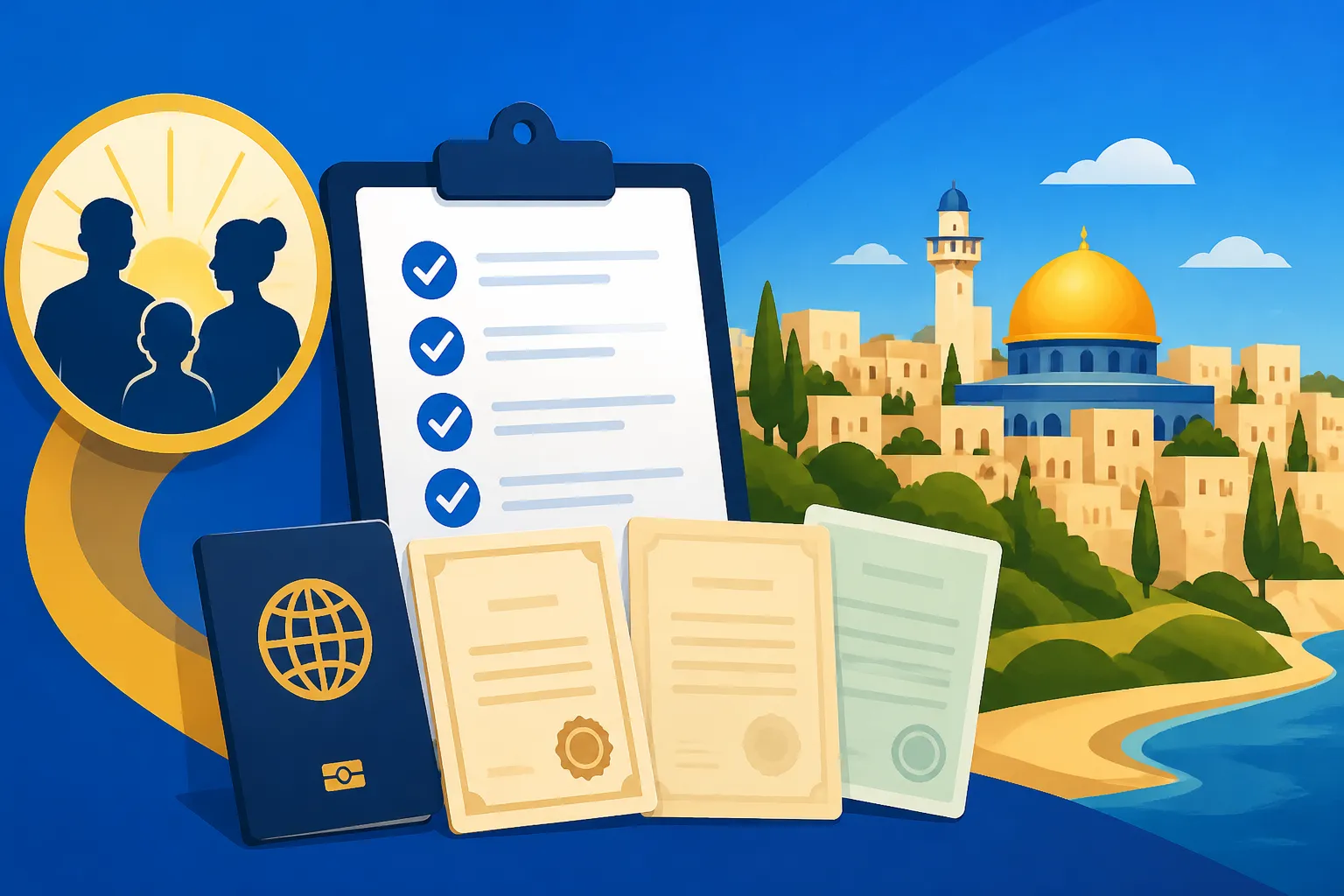
The entire Aliyah process is a testament to the power of organisation and persistence. From the very beginning, when you're digging through family albums and forgotten boxes in the attic, to the final interview with an official, every step demands a methodical approach. Create a master checklist of all required documents and tick them off as you gather them. Make multiple copies – both physical and digital – of everything. Keep a detailed log of all communication, dates, and names of officials you speak with. This diligent record-keeping will not only keep you sane but will also be invaluable if you need to refer back to something or if a document goes missing in transit.
Remember, the officials reviewing your application are dealing with thousands of cases. Presenting your information clearly, concisely, and with all supporting evidence readily available will make their job easier and, by extension, expedite your process. This isn't just bureaucracy; it's a careful verification of your connection to a nation.
Seeking Professional Assistance
For some, especially those with complex family histories, missing documents, or unique circumstances (like certain conversions or adoptions), seeking professional assistance can be a worthwhile investment.
- Aliyah Attorneys: Lawyers specializing in immigration to Israel can provide expert legal guidance, help you navigate complex cases, and represent you if there are significant challenges with your application. They can also help with appeals if an initial application is denied.
- Genealogists: Professional genealogists can be invaluable in tracing difficult-to-find family records, especially from countries where archives might be less accessible or records are in archaic languages. They know where to look and how to access documents that might seem impossible to find.
- The Jewish Agency/Nefesh B'Nefesh Staff: While not legal professionals, their experience and understanding of the system make them the first and most critical resource. Use their knowledge to your full advantage. They can also often point you towards reputable legal or genealogical services if needed.
While these services come at a cost, they can often save you immense time, stress, and potentially prevent costly errors that could delay or jeopardize your Aliyah. Understanding "The Complete Guide to Making Aliyah and Israeli Citizenship (2026)" often highlights the benefit of expert guidance.
Moving Your Life: Logistics Beyond Visas
Once you've successfully navigated the document labyrinth and secured your Aliyah approval, a new, exciting, and equally daunting phase begins: actually moving your life to Israel. This involves a whole host of logistical considerations that have nothing to do with ancestry but everything to do with setting up a new home.
- Shipping Your Belongings: Deciding what to bring and how to ship it is a major undertaking. Companies like Sirelo specialize in international moves and can help you get quotes, understand customs regulations, and manage the transport of your household goods, ensuring everything arrives safely in your new Israeli home. Planning this in advance can save you a lot of last-minute stress.
- Temporary Accommodation: You'll need a place to stay when you first arrive. Whether it's a short-term rental in Tel Aviv or an absorption center, planning this in advance is crucial.
- Healthcare Bridge: Even with Aliyah status, there can be a waiting period before your full "National Health Insurance (Bituach Briut Mamlachti) in Israel" coverage kicks in. During this transitional period, having a comprehensive international health insurance plan, such as those offered by Cigna Global, can provide peace of mind. This ensures you're covered for any unexpected medical needs before you're fully integrated into the Israeli healthcare system. You definitely don't want to get sick before your "Kupat Holim registration is complete".
- Financial Planning: Beyond the immediate costs of moving, you'll need to understand the "Cost of Healthcare in Israel: A Complete Breakdown for Foreigners (2026)" and other living expenses. "Understanding Aliyah Benefits and the Sal Klita Absorption Basket" will be critical to help you financially during your first few months.
- Integrating into Israeli Society: This includes "Learning Hebrew: A Complete Guide to Ulpan and Language Levels", finding a job, understanding the local culture, and building a new community.
The journey to Aliyah is multifaceted, starting with deep historical roots and culminating in the creation of a new future. While the documents proving your eligibility for the Law of Return are the gatekeepers to this journey, remember that each piece of paper represents a chapter in your family’s story, a story that is now joining the vibrant tapestry of Israel.
Disclaimer
The information provided in this article is for general informational purposes only and does not constitute legal, financial, or medical advice. While every effort has been made to provide accurate and up-to-date information, laws and procedures in Israel are subject to change. It is strongly recommended to consult with The Jewish Agency, Nefesh B'Nefesh, or an Israeli immigration attorney for personalized advice regarding your specific circumstances.