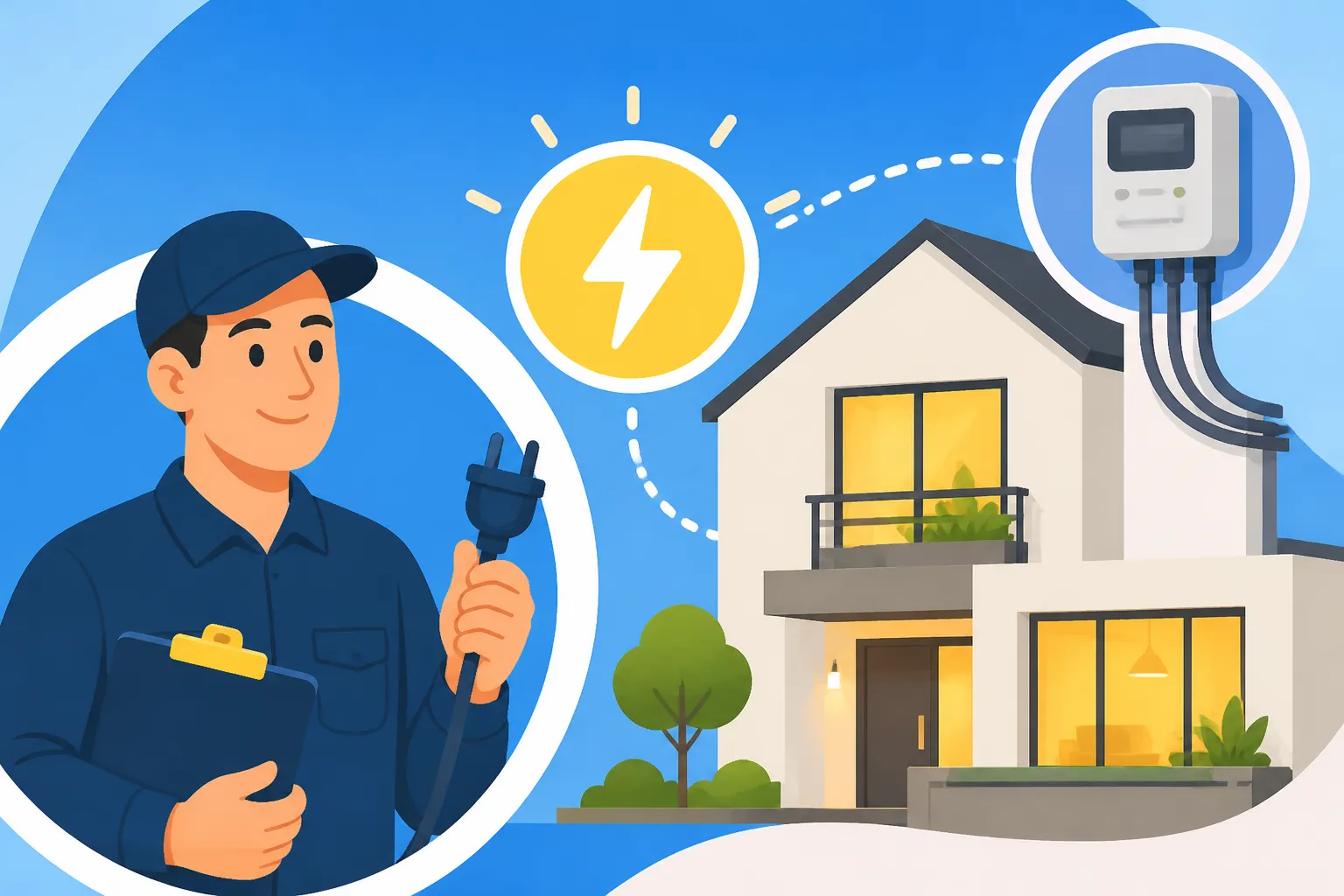
How to Set Up Electricity (Chevrat HaChashmal) in Your Israeli Home
Moving to Israel is an incredible adventure, full of vibrant culture, amazing food, and often, a hefty dose of bureaucratic hurdles that can leave even the most seasoned expat scratching their head. One of the first and most critical tasks when you finally get the keys to your new place – be it a cozy apartment in Tel Aviv or a family home in Jerusalem – is getting the lights on. This comprehensive guide will walk you through the often-confusing process of setting up electricity with Chevrat HaChashmal, Israel's national electric company, ensuring you don't get left in the dark.
Understanding Israel’s Electricity Infrastructure
Before diving into the nitty-gritty of signing up, it’s really helpful to understand the lay of the land when it comes to electricity in Israel. Unlike some countries where you might have a choice of providers, here, it’s pretty straightforward. There's essentially one name you need to know: the Israel Electric Corporation, or IEC (Chevrat HaChashmal – חברת החשמל).
The Sole Provider: Israel Electric Corporation (IEC)
Yes, you heard that right. When it comes to your power supply, the IEC is the one and only game in town. This means you don’t get to shop around for the best rates or different service packages. It’s a national monopoly, so every home, every business, and every street light in Israel gets its juice from the same source. While this might feel a bit limiting if you're used to a competitive energy market, it also simplifies things in a way: you only ever have one customer service department to deal with, one website to navigate, and one bill format to learn. However, it also means that if you have an issue, you're at the mercy of their system, which, like any large bureaucracy, can sometimes be a test of patience. The IEC is responsible for everything from power generation to transmission and distribution right to your meter.
Local vs. National Grids: What You Need to Know
While the IEC is the national provider, the actual infrastructure that delivers electricity to your home is part of a larger national grid. There isn't a "local grid" that operates independently in cities like Haifa or Be'er Sheva in the way some federal systems might work. Instead, it's all interconnected under the IEC's umbrella. This means that power outages, while hopefully rare, can sometimes affect wider areas. On the flip side, it also means a consistent standard of service and supply across the country. You won't find different connection types or voltage levels depending on whether you live in the North or the South; it's all unified. This also means that issues like major storm damage or a technical fault in a power plant will have ripple effects across the country. Rest assured, however, Israel's grid is modern and generally reliable, designed to handle the growing demands of its population.
Understanding Electricity Meters
Ah, the humble electricity meter. This little box on the side of your building (or inside your apartment, depending on the age and type of the building) is your direct link to the IEC and dictates how much you’ll be paying.
For years, most Israeli homes had the traditional electromechanical meters – those fascinating devices with a spinning disk and a row of numbers you'd read from left to right. If you move into an older apartment, you might still encounter one of these. Reading them involves noting down the numbers, usually once every two months when an IEC representative comes by, or if you call in your reading yourself.
However, Israel is increasingly rolling out "smart meters" (monim chamim or "smart meters" in Hebrew). These digital marvels are designed to transmit readings automatically to the IEC, eliminating the need for manual readings and making billing more accurate and frequent. They can also provide real-time consumption data, potentially allowing you to monitor your usage and adjust habits to save money. If your new home has a smart meter, you're in luck – one less administrative task to worry about! For a deeper dive into all the essential home utilities, make sure to check out our guide on The Expat Guide to Setting Up Utilities in Israel.
The Step-by-Step Process for New Residents
Getting your electricity connected might seem daunting, especially with a language barrier, but it’s a standard process once you know the steps. Whether you’re renting or buying, the core procedure is similar, but the paperwork might vary slightly.
Connecting Electricity When Renting
If you're renting an apartment in Israel, typically the electricity connection is already active. What you'll be doing is transferring the account into your name. This is crucial because you don't want to be paying for the previous tenant's consumption (or leave them on the hook for yours!).
- Check Previous Bills: Ask your landlord for a copy of the previous tenant's electricity bill. This isn’t just for checking the meter reading; it also provides the customer number (mispar mishtamesh) and meter number (mispar monah) which are vital for the transfer. It's a good idea to take a photo of the meter reading yourself on the day you move in.
- Contact IEC: You can contact the IEC customer service. They have an English-speaking line, but sometimes there's a wait. The number is 103 (from any Israeli phone). Be prepared with your Teudat Zehut (Israeli ID card, if you have one), passport details, and your rental contract. You’ll also need the meter reading from your move-in date and the previous tenant's details (if possible, but usually just the customer/meter number for the address is enough). If you're fresh off the plane and haven't secured your official ID yet, don't fret; they can often set up an account using your passport and visa details, especially if you've recently arrived as an Oleh. For more on getting settled, consider reading The Complete Guide to Making Aliyah: Your First 90 Days in Israel (2027).
- Complete the Transfer: They will walk you through the process over the phone. You'll formally request the transfer of the account to your name. They might ask for your Israeli bank account details for direct debit (Horaat Keva), which is generally the easiest way to pay. More on that in a bit!
- Confirmation: You should receive a confirmation message or email. Keep this for your records. The first bill in your name usually arrives within two months.
Remember, landlords are generally well-versed in this process and can often assist or provide the necessary details. Don't be afraid to ask for help!
Connecting Electricity When Buying Property
When you're buying a home, the process is slightly different in that you're establishing yourself as the long-term owner and payer. The electricity will still be active, but you’ll be taking full ownership of the account.
- During Property Transfer: This is usually handled as part of the legal process of buying property in Israel. Your lawyer, who is managing the Understanding the Israeli Land Registry Tabu and Property System, will typically coordinate with the seller’s lawyer to ensure that all utilities, including electricity, are transferred to your name as part of the closing. This makes your life significantly easier, as the legal teams handle the bureaucratic back-and-forth.
- Provide Documentation: You'll need to provide your Teudat Zehut or passport, the property's address, the meter number, and the official transfer date.
- Direct Contact with IEC (If necessary): While your lawyer will do the heavy lifting, it's still a good idea to confirm with the IEC directly, perhaps a week after you move in, that the transfer is complete and the account is officially in your name. This proactive step can prevent any nasty surprises down the line. You can confirm the details by calling 103.
- Setting up Payment: As with renting, you'll need to set up a payment method. Direct debit is highly recommended. Understanding all the costs involved when buying can be complex; our article on How Much Does It Cost to Buy an Apartment in Tel Aviv? might shed more light on related expenses.
Essential Documents for Connection or Transfer
No matter if you're renting or buying, having these documents handy will make the process smoother:
- Your Teudat Zehut (Israeli ID card) or passport. If you’re a new Oleh, your Teudat Oleh can also be helpful.
- Your Rental Agreement or Property Purchase Deed: This confirms your residency at the address.
- Bank Account Details: For setting up direct debit. An Israeli bank account is usually required for this. You might find our guide on The Expat Guide to Opening a Bank Account in Israel useful here.
- The Meter Reading: Take a photo of the meter reading on your move-in day.
- Previous Tenant/Owner Information: If available, their IEC customer number for the address can speed things up, but isn't always strictly necessary if you have the meter number and address.
It’s often a good idea to have a Hebrew speaker with you or to use Google Translate if you're not confident in your Hebrew, even when using the English-speaking customer service, as sometimes details can get lost in translation.
Navigating Electricity Bills and Payments
Once you're connected, the next step is understanding your electricity bills and knowing how to pay them. The Israeli bill might look different from what you're used to, but it's quite manageable once you get the hang of it.
Reading Your IEC Bill
The IEC bill (heshbon chashmal) arrives typically every two months. It can be quite detailed, but here are the key components you'll want to look for:
- Customer Details: Your name, address, and customer number (mispar mishtamesh).
- Billing Period: The dates for which the electricity consumption is being charged.
- Previous and Current Meter Readings: This shows the readings at the start and end of the billing cycle, allowing you to calculate your consumption.
- Consumption (kWh): This is the total number of kilowatt-hours (kWh) you've used during the billing period. This is the core number that determines your cost.
- Unit Price (Tariff): The cost per kWh. This is set nationally and can vary slightly based on government regulations.
- Fixed Charge: A basic monthly fee that covers administrative costs, regardless of your consumption.
- VAT (Ma'am): Value Added Tax, which is currently 17% in Israel, is added to your total. For more on this, check out The Complete Guide to VAT Ma'am in Israel for Businesses.
- Total Amount Due: The final amount you need to pay, usually highlighted prominently.
- Due Date: The last day to pay without incurring late fees.
- Payment Options: A list of ways you can pay, usually including direct debit, bank transfer, and sometimes payment at the post office.
Don't be surprised if the first bill after moving in is a bit higher or lower than expected. It sometimes takes a cycle or two for the system to adjust, especially if you moved in mid-billing cycle. If you ever find yourself struggling to decipher the bill, you can always call IEC customer service or ask a Hebrew-speaking friend for help.
Payment Methods
Israel offers several convenient ways to pay your electricity bill:
- Direct Debit (Horaat Keva): This is by far the most popular and easiest method for most residents. You authorize the IEC to automatically withdraw the bill amount directly from your Israeli bank account on the due date. This saves you from forgetting payments and incurring late fees. You can set this up when you initially connect or transfer your service, or later through your bank or the IEC's website.
- Online Payment: The IEC website (www.iec.co.il) has an online payment portal where you can pay with an Israeli credit card. You'll need your customer number and bill details.
- Bank Transfer: You can pay through your Israeli bank's online platform, typically by selecting "Israel Electric Corporation" from a list of payees and entering your customer number and the amount.
- Credit Card by Phone: You can call the IEC's automated payment line to pay using an Israeli credit card.
- Post Office (Doar Israel): If you prefer paying in person with cash or cheque, you can take your bill to any Israel Post office. Just be prepared for potential queues!
We highly recommend setting up a direct debit. It's hassle-free and ensures you never miss a payment, which is a common stress point when you're busy navigating life in a new country.
Special Tariffs and Discounts
While there's no "shopping around" for providers, the IEC does offer some special tariffs and discounts for certain populations:
- Low-Income Households: Eligible low-income families might qualify for a reduced tariff on a portion of their consumption.
- Seniors/Pensioners: There can be specific benefits for senior citizens.
- Medical Needs: Households with individuals dependent on life-sustaining medical equipment that requires continuous electricity might be eligible for special rates or assistance.
These discounts are usually tied to eligibility criteria set by the Ministry of Welfare or Bituach Leumi (National Insurance Institute). If you believe you might qualify, it's best to inquire directly with the IEC and possibly Bituach Leumi, as you'll likely need to provide documentation. Always inquire about these possibilities, as every shekel saved contributes to managing the overall The Cost of Healthcare in Israel: A Complete Breakdown for Foreigners (2026) and general living expenses.
Common Challenges and Troubleshooting
Even with the best intentions, things can go wrong. Being prepared for common challenges can save you a lot of headache and frustration.
Power Outages and Reporting Issues
Power outages (hafakot chashmal) do happen. They can be due to scheduled maintenance, weather events, or unexpected technical failures.
- Checking for Outages: Before calling, check the IEC website or their dedicated outage map. They often post information about planned outages (e.g., for maintenance in your area) and report on unplanned ones. You can also follow their social media channels, as they often post updates there.
- Reporting an Outage: If your entire building or street is out, and it's not listed online, you can call the IEC's emergency line (103). Be ready to provide your address.
- Your Own Breaker Box: If only your apartment has lost power, first check your building's main circuit breaker and your apartment's breaker box (luach chashmal). Sometimes a tripped breaker is the culprit, especially if you've plugged in too many high-power appliances at once. Locate the main switch (usually larger than the others) and flip it back on. If it trips again immediately, you might have an electrical fault and should call an electrician.
Dealing with Language Barriers
The language barrier is a real hurdle for many expats in Israel. While the IEC does have an English-speaking customer service option on their phone line (usually by pressing a specific number after the initial greeting), getting through to someone and explaining complex issues can still be tough.
- Use Translation Apps: Google Translate or similar apps can be invaluable when preparing to call or when trying to understand written communications.
- Seek Help from Friends/Colleagues: Don't be shy about asking a Hebrew-speaking friend, neighbor, or colleague to help you make a call or translate an email. Most Israelis are very understanding and happy to assist.
- Online Resources: The IEC website has some sections in English, and you can often find expat forums where people share experiences and tips for dealing with specific issues.
- Relocation Services: If you’re using a relocation service (perhaps through a company like Sirelo which assists with international moves), they might offer assistance with utility setup as part of their package. It's always worth checking if you have that option.
What to Do If Your Bill is Unusually High
A suddenly skyrocketing electricity bill can be alarming. Don't panic, but do investigate.
- Check for Errors: First, carefully review the bill. Compare the meter readings with your own photos (if you took them). Are the dates correct? Was the reading estimated or actual? Estimated readings can sometimes be off.
- Inspect for Leaks: No, not water leaks, but "electricity leaks." This can happen if an appliance is faulty or there's an issue with your home's wiring. To test this, turn off all your appliances and lights, then check if your meter is still running (or if the numbers are increasing on a digital meter). If it is, call a certified electrician immediately.
- Appliance Usage: Have you recently started using a new, high-power appliance (like an air conditioner during summer, or an electric heater in winter) more frequently? Air conditioners, especially older ones, are notorious electricity guzzlers. Israel's summers are brutally hot, and winter heating can also significantly increase your consumption.
- Contact IEC Customer Service: If you've ruled out personal usage changes and potential electrical faults, call the IEC. Explain your concern, provide your meter readings, and ask for clarification. They can sometimes send a technician to check your meter for accuracy.
This is where having a reliable mobile connection comes in handy. Making calls, looking up information, and potentially dealing with long wait times requires a good signal and data plan. Consider a global eSIM from a provider like Airalo to ensure you're always connected, even when you're first arriving and before you've sorted out a local SIM card.
Energy Efficiency and Cost-Saving Tips
Living in Israel can be expensive, and electricity costs are a significant part of that. Being mindful of your consumption can help keep your bills in check. Our guide to The Complete Guide to Cost of Living in Israel for Expats (2026) will show you just how much every saving counts!
Understanding Peak and Off-Peak Hours (Generally Not Applicable for Residential)
It's important to clarify that for residential customers in Israel, there typically isn't a complex tiered system of peak and off-peak hours with different electricity rates. Most household consumers pay a flat rate per kilowatt-hour, regardless of the time of day they use electricity. This simplifies things but also means you can't strategically shift your laundry to midnight to save a few shekels like in some other countries.
However, for industrial and large commercial customers, the IEC does implement time-of-use tariffs, which differentiate rates based on demand during peak, shoulder, and off-peak periods. But for your average apartment or family home, this won't apply to your bill. So, while you might hear people discuss peak hours, know that for most homes, the flat rate is standard.
Smart Appliance Usage
Even without variable tariffs, smart usage of appliances makes a huge difference:
- Air Conditioners: These are probably your biggest energy hogs. Use them efficiently! Set the temperature to a comfortable but not frigid level (around 24-25°C is often recommended), use the timer function, and ensure doors and windows are closed. Clean filters regularly to maintain efficiency.
- Boiler (Dud Shemesh or Dud Chashmal): Many Israeli apartments use electric boilers for hot water. If you have a solar water heater (dud shemesh), fantastic – let the sun do the work! If not, only turn your electric boiler on when you need hot water, and turn it off afterward. Don't leave it running all day. Ten to twenty minutes is usually enough for a shower, and it heats up quickly.
- Washing Machine & Dishwasher: Run these only when full. Use eco-friendly or lower temperature settings whenever possible.
- Refrigerators: Ensure your fridge and freezer doors seal properly. Don't leave them open unnecessarily.
- Unplug Electronics: Even when turned off, many electronics in "standby" mode still draw a small amount of power (phantom load). Unplug chargers, TVs, computers, and other devices when not in use.
Upgrading to Energy-Efficient Appliances
If you're buying new appliances, look for energy-efficient models. These might have a higher upfront cost, but they can save you significant money on your electricity bills over their lifetime. In Israel, appliances often come with an energy rating label (similar to the EU system), indicating their efficiency. A higher rating (e.g., A+++) means lower consumption.
Simple Habits for Reduced Consumption
Little things add up:
- Lighting: Switch to LED bulbs, which consume significantly less electricity and last much longer than traditional incandescent or even CFL bulbs. Turn off lights when you leave a room.
- Natural Light: Maximize the use of natural light during the day.
- Ventilation: Use fans instead of air conditioning when the weather permits, or in conjunction with AC to circulate cool air more efficiently.
- Insulation: Good insulation in your home, including double-glazed windows, can help keep heat out in summer and in during winter, reducing the need for extensive heating or cooling. If you're considering buying, inquire about the property's insulation and window quality, especially in older buildings.
By adopting these habits and making smart choices, you can effectively manage your electricity consumption and contribute to a more sustainable lifestyle in your Israeli home.
Summary of the Connection Process
Navigating the bureaucracy for utility setup in a new country is rarely a walk in the park, and Israel is no exception. However, with the right information and a bit of patience, setting up your electricity with Chevrat HaChashmal can be a straightforward process.
Remember these key takeaways:
- One Provider: The Israel Electric Corporation (IEC) is your only contact for electricity.
- Be Prepared: Have your Teudat Zehut or passport, rental/purchase contract, and initial meter reading ready.
- Automate Payments: Direct debit (Horaat Keva) is the simplest way to pay your bills and avoid late fees.
- Monitor Usage: Keep an eye on your consumption, especially for high-energy appliances like air conditioners and electric boilers.
- Don't Be Afraid to Ask: Reach out for help from locals or English-speaking customer service if you encounter language barriers or complex issues.
By following these steps, you’ll ensure your Israeli home is well-lit and comfortable, allowing you to focus on truly settling into your new life in the Holy Land.
| Step | Action | Key Documents Needed | Helpful Tip |
|---|---|---|---|
| 1. Identify Meter & Previous Info | Locate your electricity meter and get the previous tenant's customer/meter number (if possible). | N/A | Take a photo of the meter reading on move-in day. |
| 2. Contact IEC (103) | Call the IEC customer service line (103) to initiate transfer/connection. Choose English option. | Teudat Zehut/Passport, Rental Contract/Deed | Have a Hebrew speaker assist if you're not confident. |
| 3. Provide Details | Give your personal details, address, move-in meter reading, and previous account info. | Teudat Zehut/Passport, Current Meter Reading | Be clear and patient, clarify any terms you don't understand. |
| 4. Set Up Payment | Authorize direct debit (Horaat Keva) from your Israeli bank account for automatic payments. | Israeli Bank Account Details | This is the most reliable and convenient method. |
| 5. Confirmation | Receive confirmation of account transfer or new connection. | N/A | Keep the confirmation email/SMS for your records. |
| 6. Receive First Bill | Your first bill typically arrives within two months. Review it carefully for accuracy. | N/A | Compare the readings with your records to ensure correctness. |
Disclaimer
The information provided in this guide is intended for general informational purposes only and does not constitute professional advice. While we strive to ensure accuracy and up-to-date information, regulations and procedures in Israel can change. It is always recommended to verify specific details with the relevant authorities, such as the Israel Electric Corporation (IEC), legal professionals, or other official bodies, for your particular situation. We do not assume any liability for actions taken based on the information contained herein.