The Expat Guide to Setting Up Utilities in Israel
Arriving in Israel, you’re likely brimming with excitement, but soon enough, the practicalities hit you. One of the biggest, often most frustrating, hurdles for any newcomer is getting your home connected – figuring out electricity, water, gas, and internet can feel like navigating a bureaucratic maze where everyone speaks a different language. This guide is here to cut through the confusion, offering a step-by-step roadmap to setting up utilities in Israel, based on years of expat experience, so you can transform your new house into a comfortable, connected home.
Understanding the Israeli Utilities Landscape
When you first land in Israel and start thinking about settling into a new apartment, the sheer volume of new information can be overwhelming. Utilities are often at the top of that list, and for good reason. It’s not just about flipping a switch; it’s about understanding a system that can be quite different from what you’re used to, often layered with unique Israeli administrative quirks and, yes, a fair bit of Hebrew.
Public vs. Private Providers
Unlike some countries where a single company might handle all your utilities, Israel operates with a mix of public and private entities, each managing its own slice of your home's infrastructure. The main players are often public or quasi-public corporations for essential services, but for others, you'll have a choice of private companies.
For instance, the Israel Electric Corporation (IEC), or Chevrat HaChashmal, is the sole provider of electricity. There’s no shopping around for a better deal on your power supply – it's one national grid. Water is a bit more nuanced. While the national water company, Mekorot, manages the country's water resources, your actual water bill will typically come from your local municipality or a regional water corporation (e.g., Mey Zahav, Mei Rishon). This means that depending on where you live – whether it’s Tel Aviv, Jerusalem, or a small yishuv in the Galilee – the name on your water bill and the specific contact details might differ. Gas for cooking and heating, on the other hand, is firmly in the private sector. You’ll choose from companies like Amisragas, Pazgas, or Supergas, each vying for your business with different plans and service options. Similarly, when it comes to internet and mobile phones, it’s a fully competitive market with numerous providers. Understanding this distinction early on will save you a lot of headache, as it dictates who you call for a problem and who you negotiate with for a better rate.
Dealing with Hebrew Bureaucracy
Ah, the joys of Israeli bureaucracy! As a veteran expat, I can tell you that setting up utilities often feels like a rite of passage. It’s not always straightforward, and the language barrier can make it even more daunting. Most official forms, online portals, and even customer service agents will primarily operate in Hebrew. While many larger utility companies do offer some English-speaking support, especially during peak Aliyah seasons, don't rely on it being universally available or consistently high quality.
You’ll encounter terms like teudat zehut (identity card), hok zikui (ownership document), sha'on chashmal (electricity meter), and horaat keva (standing order or direct debit). Trying to decipher these on a bill or a website can be exhausting. My best advice here is to prepare. Have a Hebrew-speaking friend, neighbour, or even a professional assistant ready to help you with calls or visits to offices, especially for the initial setup. Don't be afraid to ask for help; Israelis are generally very willing to lend a hand, especially when they see you genuinely trying. It’s also wise to keep all correspondence – account numbers, reference codes, names of agents you spoke with – meticulously organized. You might find yourself needing to refer back to these details more often than you’d like. Even if you're feeling overwhelmed, remember that countless expats have gone through this before you, and you will too. Patience, persistence, and a good translation app will be your best friends.
Essential Documents You'll Need
Before you even pick up the phone to connect your services, make sure you have your paperwork in order. Israeli bureaucracy loves its documents, and having them ready will significantly smooth out the process. The exact requirements might vary slightly between providers, but generally, you'll need the following:
First and foremost, your identity document. For new immigrants, this will likely be your Teudat Oleh and Teudat Zehut (Israeli ID card). If you're here on a work visa or another residency permit, your passport along with your valid visa will be crucial. Remember, many services need to be registered under a valid Israeli ID number. You'll also need proof of your new address, usually a copy of your signed rental contract ( Chozeh Schirut) or property purchase agreement. This proves you are the legitimate occupant responsible for the utilities at that specific address. It’s a good idea to have several copies of these documents on hand.
Furthermore, bank account details will be essential for setting up direct debits for recurring bills, which is the most common and convenient payment method. Make sure you've already established your Israeli bank account. If you're linking utilities to an existing account, have your bank account number and branch code ready. Sometimes, especially if you're renting, the utility company might ask for details of the previous tenant to ensure a smooth transfer of services, though this is less common for initial connections to a new property. Having all these documents physically and digitally accessible will streamline your calls and appointments.
Getting Your Electricity Connected (Chevrat HaChashmal)
Electricity is arguably the most fundamental utility. Without it, life pretty much grinds to a halt! In Israel, the Israel Electric Corporation (IEC), or Chevrat HaChashmal, is the sole provider. While they’ve made strides in digitizing their services, connecting for the first time still requires a bit of focused effort.
The Initial Setup Process
Getting your electricity connected involves transferring the existing account at your new address into your name. You can't start a new connection unless it's a brand new building that has never been occupied. Typically, you'll want to contact the IEC as soon as you have your rental agreement or property deed in hand. You can reach them by phone at their customer service number (103 from any Israeli phone), or increasingly, through their website or dedicated app. I've found that calling can sometimes be more effective for complex first-time setups, especially if you have a Hebrew speaker with you.
When you call, you'll need to provide your Teudat Zehut or passport number, the address of the property, and crucially, the meter number (mispar sha'on). This meter number is usually a six to seven-digit number found on the physical electricity meter itself, often located outside your apartment door, in a communal hallway, or sometimes in a basement or utility cupboard. Take a clear photo of the meter and its number, along with the current reading (kri'at sha'on), before you even call. This is incredibly important as the IEC will use this reading to finalize the previous tenant's bill and start yours accurately. They will also ask for your bank details if you wish to set up a horaat keva for automatic payments, which I highly recommend. It simplifies life immensely. For a deeper dive into the process, you might find this guide on How to Set Up Electricity (Chevrat HaChashmal) in Your Israeli Home particularly helpful.
Understanding Your Electricity Bill
Once you’re connected, your first electricity bill might look like a cryptic message from outer space. Don't worry, we've all been there! Israeli electricity bills come out every two months (du-chodeshi), and they can be a bit hefty, especially in the summer with air conditioning or in winter with heating. The bill details your consumption in kilowatt-hours (kWh) and breaks down the charges. You’ll see a fixed monthly charge, a per-kWh rate, and sometimes additional charges like VAT (Ma'am).
One peculiar aspect for new residents is the "estimated" bill. Sometimes, if the meter reader hasn't visited recently, or if you haven't submitted a reading, the IEC will send an estimated bill based on previous consumption at that address. It’s vital to submit your own meter readings periodically (you can do this via their website or app) to ensure you're only paying for what you actually use. When a physical meter reading is taken, or you submit one, any discrepancy from previous estimated bills will be adjusted. You'll see terms like kri'at sha'on mechudeket (updated meter reading) and hefreshei cheshbon (billing differences) to reconcile previous estimates. Remember, electricity prices are regulated by the government, so they are uniform across the country. Understanding these bills is key to managing your finances, and you can usually find an explanation on the IEC website, sometimes in English.
Troubleshooting and Outages
Experiencing a power outage is never fun, but knowing who to call can ease the stress. If your power goes out, first check if it's just your apartment or the entire building/street. If it’s just your place, check your circuit breaker (the luach chashmal). Sometimes a tripped breaker for an overloaded circuit is the culprit. If the problem persists or it's a wider outage, your first point of contact is the IEC. Their emergency hotline is 103, available 24/7. You can also report outages or check for known issues in your area via their website or app. They have a map that sometimes shows active power cuts and estimated repair times.
When calling, be ready to provide your address and Teudat Zehut number. Even if you don't speak fluent Hebrew, try to clearly state "En chashmal" (No electricity) and your address. The IEC is generally quite responsive to emergencies, understanding the critical nature of electricity supply. For non-urgent issues, like a flickering light or a faulty meter, you can use their regular customer service channels, but be prepared for potentially longer wait times. If you have any ongoing issues with your wiring within your apartment, however, that's usually a job for a private, certified electrician, not the IEC. The IEC is responsible up to your meter, not for your internal wiring.
Setting Up Your Water and Gas (Mekorot & Gas Companies)
Beyond electricity, water and gas are the other two critical utilities that make a house a home. While electricity is a single, national entity, water and gas have their own unique structures and providers.
Water Connection and Billing
Water in Israel is a precious resource, managed nationally by Mekorot, but your local supply and billing are handled by either your municipality or a regional water corporation. This means that if you're in Tel Aviv, you might deal with "Mei Aviv," while in Jerusalem, it could be "Hagihon." For a new apartment, the process is similar to electricity: you need to transfer the existing water account into your name. Contact your local water corporation (a quick online search for "water corporation [your city name]" should yield results, or ask your landlord/realtor). You'll need your Teudat Zehut, the property address, and the water meter reading. Take a photo of the meter for proof, just like with electricity.
Water bills are typically sent every two months, and they'll detail your consumption in cubic meters (m³). The pricing is tiered: a lower rate for a certain amount of consumption per person (which needs to be registered with the water company, based on how many people live in your household – often linked to your Misrad HaPnim registration), and a higher rate for consumption above that threshold. This encourages conservation. Additionally, your water bill might include a sewage charge and sometimes even be combined with your Arnona (municipal property tax) bill, depending on your local authority. This guide on How to Set Up Water and Gas Connections in Israel can offer more detailed, location-specific advice. It’s crucial to ensure the number of residents in your household is correctly registered with the water company, as this impacts your discounted water allowance.
Gas Connection for Cooking and Heating
Unlike electricity or water, gas for cooking and sometimes water heating is supplied by private companies. The three main national players are Amisragas, Pazgas, and Supergas. If your building has a central gas system (a common setup in apartment blocks), you’ll simply need to contact the company already servicing your building. Your landlord or Vaad Bayit (building committee) will know which company this is. If your apartment uses individual gas cylinders, you’ll need to choose one of the companies, arrange for cylinder delivery and installation, and set up an account.
When you contact a gas company for the first time, you’ll need your Teudat Zehut, address, and bank details. They’ll send a technician to inspect your gas lines, ensure everything is safe, and connect your meter or cylinders. This initial visit might incur a setup fee. Gas bills are usually sent monthly or bimonthly, detailing your consumption in cubic meters or a per-unit charge. It's often linked to a small meter within your apartment or near your front door. Unlike electricity, you might have some room to negotiate rates with gas companies, especially for new connections or if you threaten to switch providers (though switching central gas can be complicated).
Water and Gas Meter Readings
Accurate meter readings are essential for fair billing for both water and gas. Just like electricity, if actual readings aren't taken regularly, you might receive estimated bills. For water, the local water corporation usually has meter readers who visit periodically, but you can often submit your own readings online or via their app. For gas, especially with central systems, readings are typically done by the gas company or sometimes by the building superintendent if they're responsible for communal areas.
It's a good practice to take a photo of your water and gas meters and their readings when you move in, and then again every couple of months, just so you have your own records. This can be invaluable if there’s a dispute about your bill. Many water and gas companies also provide online portals where you can view your consumption history, submit readings, and manage your account. Being proactive with your meter readings helps avoid the shock of a larger-than-expected "catch-up" bill down the line. It's a small habit that can save you a lot of grief.
Connecting to the Internet and Choosing a Mobile Provider
In today's connected world, reliable internet and mobile phone service are no longer luxuries; they're absolute necessities. Navigating Israel's telecom market can be a bit tricky, but with a bit of insight, you can get connected quickly.
Home Internet: Infrastructure and ISPs
Israel has a somewhat unique two-tier system for home internet. You generally need two contracts: one for the infrastructure and one for the Internet Service Provider (ISP). The main infrastructure providers are Bezeq (the historical landline provider) and HOT (a cable company). Both offer internet infrastructure over their respective networks, often bundled with phone lines or TV. More recently, fibre optic infrastructure has been rolled out by companies like Partner, Cellcom, and IBC (also known as Unlimited), offering significantly faster speeds in many urban areas.
Once you have your infrastructure set up, you need an ISP. These are the companies that actually provide you with internet access. Popular ISPs include Bezeq International, HOTnet, Partner, Cellcom, and 012 Smile. You’ll choose a package based on speed (e.g., 100 Mbps, 500 Mbps, 1 Gbps) and often get a router from them. The trick is that you must have an infrastructure contract with Bezeq, HOT, Partner, Cellcom, or IBC before you can activate an ISP account. Some companies, like Partner and Cellcom, offer "all-in-one" bundles where they provide both the infrastructure (if available in your building) and the ISP service, simplifying the billing. For initial setup, it's often easiest to call the companies directly or visit their service centers. For more specific guidance on this, consider reading How to Choose a Mobile and Internet Provider in Israel.
Mobile Phone Services: Plans and Carriers
Getting a local Israeli SIM card or eSIM is usually one of the first things expats do. It's essential for everything from making local calls to confirming your identity for online services. The Israeli mobile market is highly competitive, meaning good deals are often available. The main carriers are Cellcom, Partner, and Pelephone. Additionally, there are several virtual network operators (MVNOs) like Golan Telecom, Hot Mobile, 012 Mobile, and Rami Levy Communications, which often offer cheaper plans by using the infrastructure of the larger carriers.
For newcomers, an eSIM is a fantastic option for immediate connectivity without needing a physical SIM card. Brands like Airalo offer international eSIMs that can provide data as soon as you land, allowing you to use navigation, communicate with friends, and search for information while you sort out a long-term local plan. Once you're ready for a local plan, you can choose between prepaid (pre-paid) SIMs, which are great for short stays or controlled spending, or monthly contract plans. Contract plans usually offer better value for data and calls. You'll need your Teudat Zehut (or passport and visa) and an Israeli bank account or credit card to sign up for a monthly plan. These plans often include unlimited calls and texts within Israel and generous data allowances. Be aware of contract lengths and cancellation policies, as some plans might tie you in for a year or two.
Managing Your Communication Bills
Keeping track of your internet and mobile bills is relatively straightforward once they're set up. Most providers offer online portals or dedicated apps where you can view your usage, check your bill, and manage your plan. This is a huge improvement from years past when everything was paper-based! Many also allow you to set up direct debits (again, horaat keva) from your Israeli bank account, which is the most convenient way to pay.
Be mindful of special promotions. The Israeli market is famous for its "deal hopping," where customers frequently switch providers every year or two to take advantage of new customer discounts. While this can save you money, it also means regularly cancelling and re-signing up for services, which can be a hassle. Always read the fine print of any contract, especially regarding data limits, international calls, and cancellation fees. If you foresee needing to make frequent international calls, look for plans that include international minutes or consider using VoIP services. For managing all your finances and bills in Israel, including communications, The Expat Guide to Opening a Bank Account in Israel will be an invaluable resource.
Waste Management and Municipal Services (Arnona & Sanitation)
Living in a new city isn't just about what comes into your home, but also how things get out and what communal services support your neighbourhood. This is where municipal services, particularly Arnona and waste management, come into play.
Understanding Arnona and Municipal Taxes
Arnona is your municipal property tax in Israel, a mandatory payment for all residents, whether you own or rent. It’s a key part of Understanding Arnona (Municipal Property Tax) in Israel. The amount you pay depends on the size of your property (in square meters) and its location, as rates vary significantly between cities and even between neighbourhoods within the same city. For example, a property in central Tel Aviv will likely have a much higher Arnona bill than a similar-sized property in Be'er Sheva. These funds contribute to local services like waste collection, street cleaning, maintenance of parks, and local education.
Bills are typically sent quarterly (every three months), though some municipalities offer a discount for paying the entire year upfront. New immigrants (Olim Chadashim) are often eligible for a significant Arnona discount for their first few years in the country. To claim this, you'll need to visit your local municipality's Arnona department with your Teudat Oleh and Teudat Zehut. It's important to apply for this discount promptly, as it's not automatically applied. If you're renting, your lease agreement will specify whether you or your landlord are responsible for paying Arnona. Often, the tenant pays it directly. Make sure to transfer the Arnona account into your name, similar to other utilities, by contacting your municipality with your ID and rental contract.
Waste and Recycling Collection
Waste management in Israel has improved significantly over the years, with most municipalities offering regular collection and increasing recycling options. General waste is collected frequently, typically 2-3 times a week, from large green or brown bins (pachim) located on sidewalks or in communal areas of apartment buildings.
Recycling has become more prevalent. You'll find orange bins (pach katom) for packaging waste (plastics, metals, cartons), blue bins (pach kachol) for paper and cardboard, and purple or clear bins (pach sagol or pach shafaf) for glass bottles. There are also designated collection points for old electronics, textiles, and batteries, often located at municipal recycling centres or larger supermarkets. Familiarize yourself with the collection schedule and the types of bins available in your specific neighbourhood. Information is usually available on your local municipality’s website. Proper waste separation is encouraged, and some municipalities might issue fines for improper disposal, so it's worth taking the time to learn the local rules. It's an important part of integrating into community life, and it keeps your area clean!
Neighbourhood Services and Vaad Bayit
Beyond the municipality, if you live in an apartment building, you'll almost certainly encounter the Vaad Bayit, or building committee. This is the residents' committee responsible for the common areas of your building, and they collect a monthly fee from each apartment. This fee covers expenses like cleaning the stairwells, maintaining the elevator, gardening, communal electricity, and sometimes even small repairs to the building's infrastructure.
The Vaad Bayit fee is separate from Arnona and is usually paid directly to the committee, often to a specific resident who manages the building's finances. The amount varies greatly depending on the size and amenities of your building (e.g., if it has an elevator, a garden, or a central water heater). As a renter, you are typically responsible for this fee. Make sure to get the contact details of your Vaad Bayit representative from your landlord or a neighbour as soon as you move in. This fee, though sometimes overlooked by newcomers, is crucial for the smooth functioning and maintenance of your shared living space. More information on this can be found in Understanding Building Committee (Vaad Bayit) Fees in Israel.
Dealing with Utility Bills and Payments
Once your utilities are up and running, the next step is managing the recurring bills. Navigating the payment system in a new country can sometimes feel like a puzzle, but Israel offers several convenient options.
Payment Methods and Online Portals
The most common and hassle-free way to pay utility bills in Israel is by setting up a horaat keva, which is a direct debit authorization from your Israeli bank account. This ensures that your bills are paid automatically on time, every time, saving you from late fees or service interruptions. Most major utility providers (electricity, water, internet, and often gas) will offer this option during the setup process or through their online portals. To set this up, you'll need your bank account details, including your branch number and account number, and your ID number.
Many utility companies now boast excellent online portals and dedicated apps. These platforms allow you to view your current and past bills, submit meter readings, track your consumption, and make one-time payments using an Israeli credit card. The Israel Electric Corporation, for example, has a comprehensive website and app where you can manage almost every aspect of your account. Similarly, internet and mobile providers offer robust digital platforms. If online payments aren't your preference, or you need to pay a one-off bill, you can often pay at Israeli post offices (Doar Yisrael), banks, or even at some supermarket customer service desks, usually by scanning a barcode on the physical bill. For a comprehensive overview of financial management, How to Set Up Direct Debit for Bills in Israel can provide further insights.
Understanding Arrears and Penalties
Missing a utility payment can happen, especially when you're still getting used to the billing cycles and different companies. However, it's important to address arrears promptly to avoid penalties or, in severe cases, service disconnection. Utility companies in Israel will typically send reminders for overdue payments, often by SMS or email, before taking more drastic action. These reminders will usually include information on how to pay the outstanding balance.
Penalties for late payments usually involve a late fee and accrued interest on the overdue amount. If payments remain outstanding for an extended period, the utility company might send a warning notice threatening service disconnection. For electricity, this means your power could be cut; for water, supply might be reduced or cut off. Reconnecting services often involves paying the full outstanding balance, reconnection fees, and sometimes a deposit, which can be a significant hassle and expense. If you find yourself struggling to pay a bill, it's always best to contact the utility company immediately. Sometimes they can offer payment plans or extensions, especially if you communicate proactively. Don't let unpaid bills pile up; it's a headache you definitely want to avoid as an expat.
Seeking Assistance and Explanations
The language barrier is a common source of frustration when dealing with utility bills in Israel. If you receive a bill you don't understand, or you believe there's an error, don't hesitate to seek assistance. Most major utility companies (IEC, major water corporations, internet/mobile providers) have customer service hotlines. While Hebrew is primary, many now offer English-speaking representatives, particularly if you press the right number in the automated menu (listen for "for English, press X").
If direct communication proves difficult, enlist the help of a Hebrew-speaking friend, neighbour, or colleague. Many olim (new immigrants) also rely on Aliyah organizations or private assistance services that specialize in navigating Israeli bureaucracy. Remember, it's your right to understand your bill and question any charges you don't recognize. Keep detailed records of your calls, including dates, times, and the names of the representatives you spoke with. This documentation can be invaluable if you need to escalate an issue. It can be a slow and sometimes exasperating process, but standing your ground and seeking clarification is key to ensuring you're only paying what you owe.
Troubleshooting Common Utility Issues
Even with everything properly set up, issues can arise. Knowing how to troubleshoot common utility problems and who to contact will save you a lot of stress. As an expat, you often feel a bit more vulnerable when things go wrong, so being prepared is half the battle.
Power Outages and Reporting
A sudden power outage can be unsettling. If your lights flicker and die, first, take a breath. Check your circuit breaker (the luach chashmal) inside your apartment. It's often in the entrance, hallway, or kitchen. A tripped breaker is very common and can usually be reset by simply flipping the switch back on. If it immediately trips again, you might have an overloaded circuit or a faulty appliance. Unplug some devices and try again.
If your circuit breaker is fine, but you still have no power, check with neighbours or look outside to see if the streetlights are off. If it's a neighbourhood-wide outage, contact the Israel Electric Corporation (IEC) emergency line: 103. They have a 24/7 service. You can also check their website or app, which sometimes shows known outages on a map. When you call, be ready to provide your exact address. If the problem is unique to your apartment and not a tripped breaker or neighbourhood outage, you might need a private electrician. The IEC is responsible for the supply up to your meter, but internal wiring is your responsibility (or your landlord's).
Water Leaks and Emergency Contacts
Water leaks are another nuisance, ranging from a dripping tap to a burst pipe. For minor issues within your apartment, such as a leaky faucet or a running toilet, you’ll need to call a private plumber (instalator). Your landlord should have a list of trusted professionals, or you can find local services online.
If you suspect a major leak within your building's common areas or if you see water gushing from a street pipe, that's a job for your local water corporation. Each city or region has its own water authority (e.g., Hagihon in Jerusalem, Mei Aviv in Tel Aviv). They typically have a 24/7 emergency hotline. Find their number by searching "water emergency [your city name]" or check their website. For example, if you're in Tel Aviv and spot a major leak, you'd call Mei Aviv's emergency line. If the leak is affecting your apartment but originates from above (e.g., a neighbour's apartment), you'll need to contact your Vaad Bayit or the upstairs neighbour directly. Knowing who to call can make a huge difference in mitigating damage.
Internet and Mobile Connectivity Problems
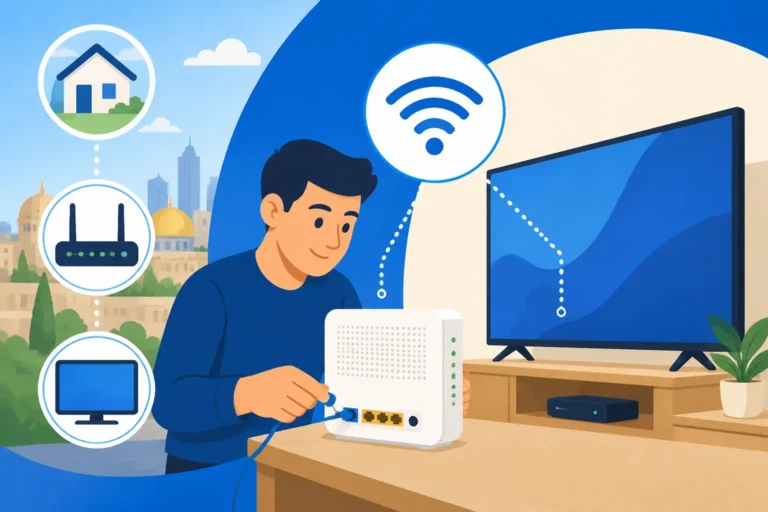
In our digital age, internet or mobile phone issues can feel like a crisis! For home internet, first, try the classic reboot: unplug your router and modem for 30 seconds, then plug them back in. This simple step resolves many issues. If that doesn't work, check if the problem is with your infrastructure provider (Bezeq, HOT, Partner, Cellcom) or your ISP. You can sometimes tell by the lights on your modem/router – if the internet light is off, it might be an infrastructure issue.
Contact your ISP first. They will usually be able to tell you if there’s a known outage in your area or guide you through further troubleshooting. If the problem is confirmed to be with the infrastructure, they'll direct you to call that company. For mobile phone problems, first, try restarting your phone. If you have no signal, check if others around you are experiencing the same issue. If not, contact your mobile provider’s customer service. They can help with network issues, SIM card problems, or account-related glitches. Remember, for immediate, short-term data solutions if your main connection is down, an eSIM from providers like Airalo can be a lifesaver, allowing you to stay connected while troubleshooting your primary service.
Key Considerations for New Arrivals and Renters
Moving to a new country and setting up a home from scratch is a huge undertaking. For new arrivals and renters in Israel, there are a few specific nuances regarding utilities that are worth keeping in mind.
Utilities for Short-Term Rentals
If you're starting in Israel with a short-term rental – perhaps an Airbnb, a sublet, or temporary housing while you find your permanent home – you're generally not responsible for setting up utilities. Most short-term rentals operate on an "all-inclusive" basis, meaning electricity, water, gas, and internet are already connected and their costs are factored into your rent. This is a huge relief for newcomers, as it allows you to get settled without the immediate headache of bureaucracy.
However, it's always wise to confirm this explicitly with your landlord or host before signing any short-term agreement. Ask specifically if "all utilities are included" and if there are any caps on usage (e.g., "electricity up to X shekels per month"). While rare, some short-term rentals might have conditions, especially for electricity in the summer with heavy air conditioning use. For internet, verify that Wi-Fi is available and get the network name and password upon arrival. Mobile connectivity is separate; for this, you'll still want to purchase a local SIM or eSIM like those from Airalo to ensure you have personal mobile service from day one.
Transferring Utilities with a New Lease
Once you sign a long-term lease for an apartment, the responsibility for transferring utilities into your name falls squarely on you. This is a critical step, and it should be done as soon as possible after you take possession of the property. The exact process involves contacting each utility provider (electricity, water, gas, internet) and initiating the transfer. You will need your Teudat Zehut, the new address, your rental contract, and critically, the current meter readings for electricity, water, and gas. Take photos of these meters with time and date stamps as irrefutable proof.
Your landlord should provide you with the account numbers or the names of the previous tenants, which can sometimes help expedite the transfer process by making it easier for the utility companies to locate the correct account. Some landlords are very hands-on and will assist you, while others will expect you to handle it entirely. Be proactive! It's better to initiate the transfer and potentially pay a small prorated amount for a few days than to suddenly find yourself without power or water because the previous tenant disconnected their services and you hadn't transferred them yet. This process is covered in depth in How to Transfer Utility Bills to My Name When Renting in Israel.
Dealing with Previous Tenant's Debts
This is a tricky one and a common point of anxiety for new renters. In some unfortunate scenarios, a previous tenant might have left behind unpaid utility bills. While, legally, you are not responsible for their debts, utility companies might sometimes create difficulties when trying to transfer the service into your name if there are outstanding balances at that address. This is less common for electricity (as the IEC is usually good at isolating accounts), but can sometimes arise with water or gas, especially if the account is tied to the physical address rather than strictly to an individual.
To protect yourself, always ensure your rental contract explicitly states that the landlord guarantees the property is free of all utility debts from previous tenants. When you transfer utilities, confirm with each provider that there are no outstanding balances from previous occupants before you put the account in your name. If a utility company tries to make you pay a previous tenant's debt, politely but firmly refuse, explain that you are the new tenant with a new contract, and offer to provide your rental agreement as proof. If they persist, escalate the issue or seek legal advice from a tenants' rights organization. While rare, it's a frustration you might encounter, and being prepared for it is crucial. Ultimately, your new adventure in Israel should be about exciting discoveries, not old debts!
| Utility Service | Main Provider(s) | Typical Billing Cycle | Essential Info for Setup | Emergency/Support No. |
|---|---|---|---|---|
| Electricity | Israel Electric Corporation (IEC) | Bimonthly | Teudat Zehut, Address, Meter Reading | 103 |
| Water | Local Water Corporations (e.g., Hagihon, Mei Aviv) | Bimonthly/Quarterly | Teudat Zehut, Address, Meter Reading, # Residents | Varies by municipality (check local website) |
| Gas (Cooking/Heating) | Amisragas, Pazgas, Supergas | Monthly/Bimonthly | Teudat Zehut, Address, Bank Details | Varies by company (check bill/website) |
| Home Internet (Infrastructure) | Bezeq, HOT, Partner, Cellcom, IBC | Monthly | Teudat Zehut, Address, Bank Details | Varies by company (check website) |
| Home Internet (ISP) | Bezeq Int'l, HOTnet, Partner, Cellcom, 012 Smile | Monthly | Teudat Zehut, Address, Bank Details (after Infra setup) | Varies by company (check website) |
| Mobile Phone | Cellcom, Partner, Pelephone, Golan Telecom, etc. | Monthly/Prepaid | Teudat Zehut, Bank/Credit Card Details | Varies by company (check website) |
| Municipal Tax (Arnona) | Local Municipality | Quarterly/Annually | Teudat Zehut, Address, Rental Contract (for discount) | Varies by municipality (check local website) |
| Building Committee (Vaad Bayit) | Building Residents' Committee | Monthly | Contact person in building | N/A (local contact) |
Disclaimer
The information provided in this guide is for general informational purposes only and does not constitute legal or financial advice. While we strive to keep the information up-to-date and accurate, utility policies, regulations, and prices in Israel can change. Always consult with the relevant utility providers, legal professionals, or financial advisors for specific advice tailored to your situation.