How Do I Set Up Recycling and Waste Collection in Israel?
Oh, the joy of setting up a new home in Israel! It’s an adventure, isn't it? But amidst the excitement of finding your perfect dirah and navigating Hebrew contracts, you're suddenly faced with a rainbow of bins and a system that seems to change street by street. Forget the simple "trash goes here" you might be used to; Israel's waste and recycling system can feel like a labyrinth, especially when you're grappling with a new language and different municipal rules. This guide is here to untangle the confusion, helping you understand how to properly dispose of your waste and embrace recycling like a true local.
Navigating the Israeli Waste Landscape: More Than Just a Bin
When you first arrive, it might seem like chaos, with black bins overflowing and then, magically, disappearing. But there’s a method to the madness, evolving rapidly as Israel pushes towards a greener future. It's a journey from simply burying everything to a more sustainable, if sometimes complex, approach.
From Landfills to Green Initiatives: A National Evolution
For a long time, Israel, like many places, relied heavily on landfills. We just chucked everything in, and out of sight, out of mind. However, with increasing population density, limited land, and a growing global awareness of environmental issues, the country has made significant strides in recent years. The Ministry of Environmental Protection, along with various local authorities, has been leading the charge to reduce waste sent to landfills and boost recycling rates. This means that what might have been a straightforward black bin a decade ago is now complemented by a spectrum of colored containers, each with its own purpose. It’s a work in progress, and you'll see different levels of implementation depending on where you live – from the bustling streets of Tel Aviv to the quiet kibbutzim in the North.
Who's in Charge Here? Municipalities and Their Mandates
Here’s where it can get a little tricky: while there’s a national push for recycling, the actual implementation and day-to-day management of waste collection largely fall on your local municipality (iriya or moatza mekomit). This is why you might hear your friend in Jerusalem talking about different bin colors or collection schedules than your neighbor in Ra'anana. Each city or town has its own bylaws, collection routes, and specific instructions for residents. They’re responsible for everything from the frequency of general waste pickup to the types of recycling bins available and where they're located. You'll also encounter the Arnona (municipal property tax), which often covers the cost of these essential services. Knowing that your municipality is the primary point of contact is key to figuring out your local waste practices.
The Core of Household Waste: Your "Ashpa" and Beyond
Let's start with the most basic: your everyday trash. This is often the least complicated, but even here, there are nuances to understand.
The Ubiquitous Black/Green Bin: Everyday Trash
This is your go-to for general household waste, what we call ashpa. Think food scraps (that aren't going into a compost bin, if you have one!), non-recyclable plastics, dirty packaging, and anything else that doesn't fit into the specialized recycling categories.
You'll typically find large black or dark green bins, often on wheels, at the entrance to apartment buildings or along the street in residential areas. Collection frequency varies widely: in some dense urban centers like Tel Aviv, they might be emptied daily, or even twice a day, especially in commercial areas. In smaller towns or less populated neighborhoods, it could be a few times a week.
Pro Tip from an Expat: Don’t be surprised if your bin is overflowing on certain days. People often wait until the last minute, or there's simply more waste generated than the bins can handle. Try to time your disposal with the collection schedule if possible to avoid contributing to the overflow, especially in summer when smells can be… potent. Make sure your trash is securely bagged to prevent attracting pests.
Tackling Bulky Items: "Gabash" Collection
So, you've just moved into your apartment, perhaps after using a service like Sirelo to help with your move, and now you have all these cardboard boxes, old furniture, broken appliances, and other large items that just won't fit in your regular ashpa bin. This is where gabash (גב"ש – G’fafot, Botz, Ve’Shever – basically, "bulky waste") comes in. You absolutely cannot just dump these items next to the regular bins. Doing so can lead to fines and, frankly, makes life difficult for your neighbors and the sanitation workers.
Most municipalities have a designated gabash collection day or a special arrangement for these items. You usually need to contact your municipality in advance to schedule a pickup. Some larger cities have specific locations where you can drop off bulky waste yourself. Check your municipality's website (often under "Environment" or "Sanitation") or call their customer service line for details. They'll tell you when and where to place your items for collection. Patience is key here; it might not be instantaneous.
Dealing with the Tricky Bits: Hazardous and Electronic Waste
Batteries, old cell phones, light bulbs, paint cans, and expired medications – these are the items that can't go into regular trash or even most recycling bins due to their hazardous nature or specific material composition.
- Batteries: You'll often find collection points for used batteries at supermarkets, electronics stores, and sometimes even your local Kupat Holim clinic. Look for small, dedicated collection boxes.
- Electronics (e-waste): Old computers, phones, TVs, and other gadgets contain valuable materials that can be recycled, but also harmful substances. Many large electronics stores (like Best Mobile or Bug) have collection points. Some municipalities also run special collection drives or have designated drop-off sites for e-waste. When you're setting up your new home, perhaps relying on a reliable mobile network with your Airalo eSIM, remember to properly dispose of your old devices.
- Medications: Never flush old medications down the toilet or throw them in the trash. Pharmacies are usually the best place to return expired or unused prescription and over-the-counter drugs. They have specific protocols for safe disposal.
- Other Hazardous Materials: For things like paints, solvents, or chemicals, you'll need to check with your specific municipality. They often have designated hazardous waste collection events a few times a year, or a central collection point.
Embracing the Colors of Recycling: A Bin for Every Type
Now for the rainbow! Israel has made a concerted effort to separate different types of recyclables, which is fantastic for the environment but can be a bit of a learning curve for newcomers.
Blue for Paper: Your Contribution to Tree-Saving
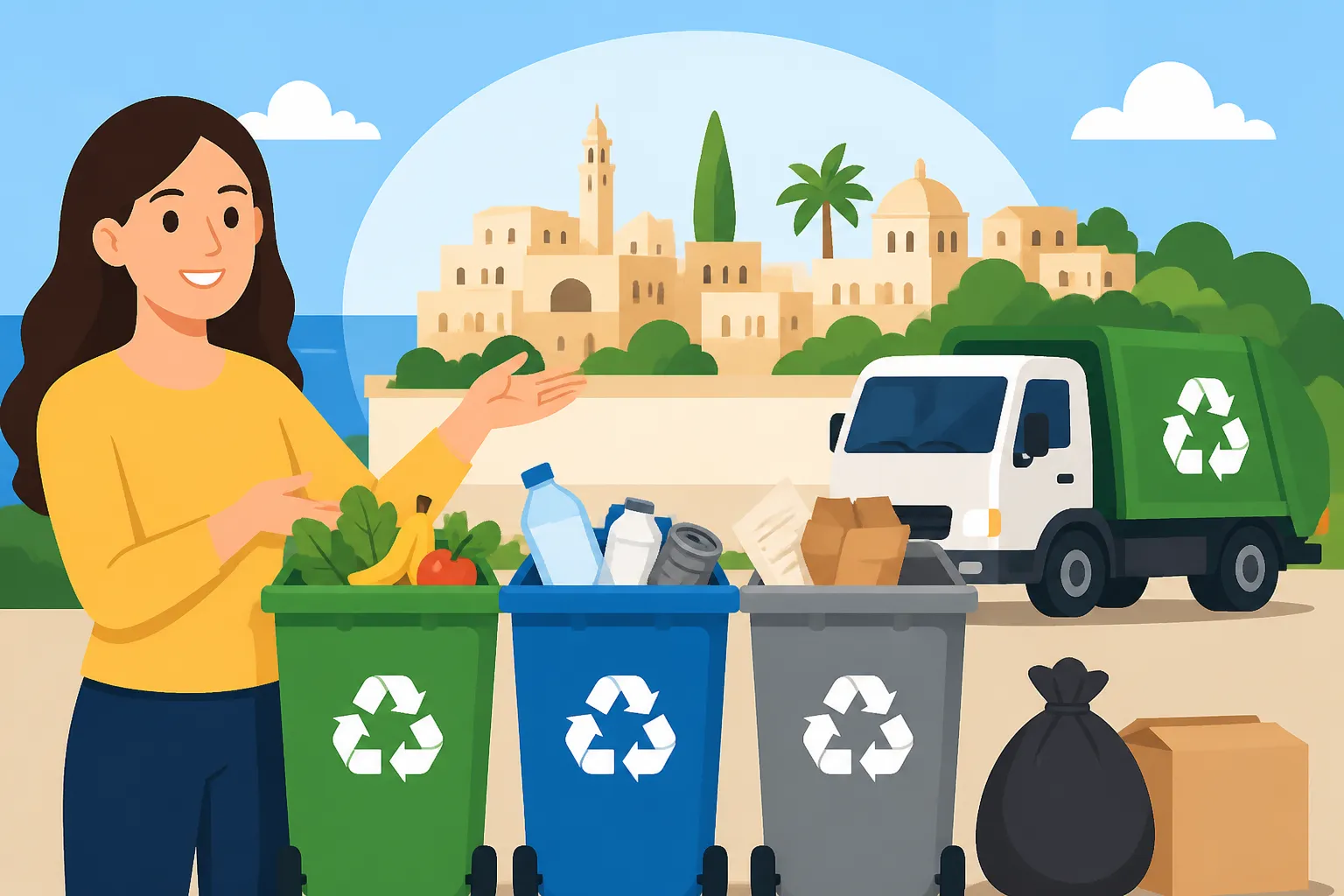
The blue bin, or pach kachol (פח כחול), is for all your paper and cardboard waste. This includes newspapers, magazines, junk mail, office paper, cardboard boxes (flattened, please!), cereal boxes, and even egg cartons.
What goes in: Clean paper, cardboard.
What doesn't go in: Wet or dirty paper (e.g., pizza boxes with grease stains), tissues, paper towels, laminated paper, or wax-coated paper. These should go into the black bin.
Collection: Blue bins are usually found publicly on streets or in designated recycling areas for apartment buildings. Collection is generally weekly or bi-weekly. It’s a straightforward one, and probably the easiest to get used to.
Orange for Packaging: The Plastic Revolution
The orange bin, or pach katom (פח כתום), is a relatively newer addition to the Israeli landscape but a significant one. It's designed for plastic packaging, metal packaging, and beverage cartons, which is often the bulk of household waste. The introduction of this bin has been a game-changer for reducing landfill waste.
What goes in:
- Plastic: Yogurt cups, cottage cheese containers, plastic bottles (shampoo, cleaning products), plastic bags (empty and clean), plastic trays from cookies or meat.
- Metal: Cans (soda, tuna, corn), aluminum trays.
- Beverage cartons: Milk cartons, juice boxes (rinsed).
What doesn't go in: Hard plastics like toys, garden furniture, or electronics. These are not packaging. Also, no glass, ceramics, or hazardous materials.
Collection: Orange bins are becoming increasingly common throughout the country. If your building doesn't have one, check if there's a communal one nearby. Recyclers like Tamir Corporation are behind this initiative, aiming to provide these bins to all municipalities. Remember to rinse containers lightly before tossing them in!
Purple for Glass: Recycling Those Wine Bottles
The purple bin, or pach sagol (פח סגול), is specifically for glass bottles and jars. It’s an easy one to spot and use.
What goes in: Glass bottles (wine, olive oil), glass jars (jams, sauces), perfume bottles.
What doesn't go in: Broken drinking glasses, ceramic plates, Pyrex dishes, mirrors, light bulbs, or windows. These items have different melting points or compositions and contaminate the glass recycling stream. They belong in the black bin.
Collection: Purple bins are usually communal, located on streets or in central recycling points. Collection frequency varies, but usually, it's less frequent than plastic or paper. Just like with the orange bin, a quick rinse is appreciated.
Yellow for Beverages: The Deposit Bottle System
Ah, the mashkin (משקה) system, also known as pikadon (פיקדון) or the deposit law. This is for small beverage bottles (plastic and glass, 100ml to 1.5 liters) and cans that have a 30 agorot deposit on them. You'll see these at the entrance of supermarkets or convenience stores.
How it works: When you buy a drink with the deposit symbol, you pay an extra 30 agorot. When you return the empty bottle or can to a designated collection machine or counter at a supermarket, you get your 30 agorot back.
What goes in: Plastic water bottles, soda bottles, beer bottles, and cans that clearly state "פקדון" (Pikadon) on the label.
What doesn't go in: Large 1.5-liter plastic bottles of soda water (like SodaStream bottles), wine bottles, or other glass jars. These go into the purple bin.
Collection: Look for bottle return machines at large supermarkets (Shufersal, Rami Levy, etc.). They scan the barcode, verify the bottle, and print a receipt for your refund, which you can redeem at the cashier. It's a great way to recoup some small change and ensure these items are recycled properly.
Brown for Organic Waste: Composting in the Community
The brown bin, or pach chum (פח חום), is slowly making its way into more municipalities. This is for organic waste – food scraps, garden waste, and other compostable materials. The goal is to turn this waste into compost for agriculture, rather than letting it decompose in landfills and produce methane.
What goes in: Food scraps (vegetables, fruit, bread, cooked food), coffee grounds, tea bags, garden waste (leaves, small branches).
What doesn't go in: Meat bones (sometimes allowed, check local rules), dairy products (sometimes allowed), plastic bags, diapers, or anything non-organic.
Collection: This is still less widespread than the other bins. If your municipality offers it, they usually provide residents with small, sealed kitchen bins and special compostable bags to collect organic waste before transferring it to the larger brown communal bins. Check your local iriya website for details on if and how this system operates in your area.
Here's a quick overview of the main recycling bins:
| Bin Color | Material Type | Common Examples | Exclusions |
|---|---|---|---|
| Black/Green | General Household Waste (Ashpa) | Food scraps, non-recyclable plastics, dirty packaging | Recyclables, bulky waste, hazardous items |
| Blue | Paper and Cardboard | Newspapers, magazines, cardboard boxes, office paper | Wet/dirty paper, tissues, laminated paper |
| Orange | Plastic, Metal, and Beverage Cartons (Packaging) | Yogurt cups, plastic bottles, soda cans, milk cartons | Hard plastics (toys), electronics, glass, ceramics |
| Purple | Glass Bottles and Jars | Wine bottles, olive oil bottles, jam jars, perfume bottles | Drinking glasses, ceramics, Pyrex, mirrors, light bulbs |
| Yellow (Cages) | Deposit Beverage Containers (Pikadon) | Small plastic water bottles, soda bottles, beer cans | Non-deposit items, large plastic bottles (>1.5L) |
| Brown | Organic Waste/Compost | Food scraps, fruit/veg peels, coffee grounds, garden waste | Plastic, diapers, (sometimes) meat/dairy – check local |
Practical Strategies for the Expat Recycler
Making sense of this system, especially as an expat, can be a hurdle. But with a few tricks, you’ll be a pro in no time.
Unlocking Your Municipality's Secrets: Local Rules and Resources
As mentioned, your local municipality is the key. Their website (אתר העירייה – atar ha'iriya) will be your best friend. Look for sections on "Environment" (איכות הסביבה – eichut hasviva), "Sanitation" (תברואה – tavrua), or "Waste Management" (פינוי אשפה – pinui ashpa). Many larger cities have English sections, but you might need Google Translate for smaller towns.
They usually publish:
- Collection schedules: When the black bins are emptied, when gabash is collected.
- Recycling points: Maps or lists of where the different colored bins are located if they aren't directly outside your building.
- Special events: Dates for hazardous waste collection or other initiatives.
Don’t hesitate to call their customer service number (מוקד עירוני – mokad ironi, often 106 or 107) if you can’t find the information online. They might have English-speaking staff, or a friendly neighbor could help you make the call. This is part of the general process of setting up utilities in Israel, where each local authority has its own rules.
Bridging the Language Gap: Apps and Community Support
The language barrier is a real thing, and it can make simple tasks feel monumental. But there are ways to navigate it:
- Google Translate: Seriously, keep it handy for municipal websites and street signs on bins.
- Local WhatsApp Groups/Facebook Groups: Join expat groups or community groups for your neighborhood. People are usually very helpful with practical questions like "When is gabash day?" or "Where's the nearest orange bin?"
- Apps: Some larger municipalities have their own apps for reporting issues, checking schedules, or finding recycling points. Ask around in your local community if such an app exists. While you're at it, ensuring you have a reliable data plan, perhaps with an Airalo eSIM, can be incredibly helpful for using these apps on the go.
- Your Building's Vaad Bayit: The building committee, or vaad bayit, often knows the specifics of your building's waste management. They can tell you where the bins are, if there are specific rules, and who to contact for issues.
Setting Up Your Home Recycling Hub
Once you understand the system, it's about making it practical in your home.
- Small Bins for Each Category: Dedicate a small bin or bag in your kitchen for each recycling category (paper, plastic, glass, and deposit bottles). This makes it easy to separate as you go.
- Designated "Outbound" Spot: Have a larger, easily accessible spot (e.g., utility closet, balcony corner) where you consolidate your separated recyclables before taking them to the communal bins.
- Flatten Cardboard: This saves a tremendous amount of space in your home and in the blue bin!
- Rinse, Rinse, Rinse: A quick rinse of plastic and glass containers prevents smells and pests, making the recycling process much more pleasant for everyone.
It might seem like a lot of bins and a lot of effort at first, but once you get into the rhythm, it becomes second nature. And you'll feel good knowing you're contributing to Israel's environmental efforts. If you're looking for broader guidance on settling in, guides like The Complete Guide to Making Aliyah: Your First 90 Days in Israel often cover these initial logistical challenges.
Moving In and Moving On: Waste Considerations for Expats
The beginning and end of your stay in Israel, or even just moving between apartments, can generate a significant amount of waste. Being prepared makes a huge difference.
Dealing with Moving Day Clutter
Moving is inherently messy. Whether you’ve brought your life savings in boxes or just a few suitcases, there’s always an abundance of packaging, protective materials, and often, items you decide to discard. If you've used a relocation service like Sirelo, you'll likely have a mountain of cardboard.
- Cardboard Boxes: Flatten all your cardboard boxes and take them to the blue paper recycling bins. If you have an exceptionally large quantity, especially after a big move, contact your municipality. They might be able to arrange a special gabash collection or direct you to a larger recycling center. Don't just leave them by the regular bins; they take up too much space.
- Packing Peanuts/Bubble Wrap: Unfortunately, these usually go into the general waste (black bin) unless they are clearly marked as biodegradable or recyclable by a specific plastic code accepted in the orange bin (which is rare for these materials).
- Old Furniture/Appliances: If you're discarding old items when moving out, remember to schedule a gabash pickup with your municipality well in advance of your move date. Don't leave it until the last minute, or you might incur fines or a disgruntled landlord.
Special Waste During Home Renovations
If you decide to do a bit of renovation or redecoration, you'll inevitably generate construction waste: broken tiles, plaster, wood scraps, old fixtures, etc. This cannot go into any of the regular bins.
- Dedicated Skips/Containers: For significant renovations, you'll need to rent a dedicated skip or large waste container (migdal, kontainer) from a private company. Your contractor will usually arrange this, but if you're doing it yourself, search for "פינוי פסולת בניין" (pinui psolet binyan) or "השכרת מכולה" (haskarat mikola) online.
- Small Amounts: For very small amounts of construction debris (e.g., a single broken tile), check with your municipality. Some have specific guidelines or small drop-off points, but it's rare. When in doubt, it's always safer to assume it requires special disposal. This also applies to things like old paint cans or chemicals from renovation projects; these are hazardous and require proper handling.
The Israeli waste and recycling system can feel overwhelming at first, but it’s a system built on good intentions and a growing commitment to sustainability. By understanding the different bins, your municipality's role, and a few practical tips, you’ll not only keep your home tidy but also contribute positively to your new environment. It’s all part of the expat journey, learning the ropes and becoming a part of the local fabric.
Disclaimer
The information provided in this guide is for general informational purposes only and does not constitute professional advice. Waste management and recycling regulations in Israel can vary significantly by municipality and may change over time. It is highly recommended to consult your specific local municipal authority (Iriya) or relevant government websites for the most accurate and up-to-date information pertaining to your area. We do not assume any responsibility for actions taken based on the information contained herein.