How to Prepare Documents for an Aliyah Application
The Aliyah journey, while incredibly rewarding, often feels like a bureaucratic maze designed to test your patience and organizational skills. It’s a process fraught with paperwork, unexpected requirements, and the nagging feeling that you’ve forgotten something crucial. This guide is here to cut through that noise, walking you through every document you’ll need to prepare for your Aliyah application, ensuring you're as ready as humanly possible for this life-changing move to Israel.
Understanding the Aliyah Application Journey: More Than Just Paperwork
Before we dive into the specific documents, let's talk about the bigger picture. Making Aliyah isn't just a relocation; it's a profound step that involves proving your connection to the Jewish people and the State of Israel. For many of us, this means digging deep into family history and grappling with administrative hurdles that can feel utterly overwhelming. The Israeli government and its facilitating organizations are meticulous for a reason: they need to verify your eligibility under the Law of Return and ensure a smooth transition into society.
The Emotional Rollercoaster of Preparing for Aliyah
Honestly, preparing for Aliyah is a journey in itself, often filled with anticipation, excitement, and then, invariably, a healthy dose of frustration. You'll likely find yourself unearthing old family records, contacting relatives you haven't spoken to in years, and navigating government offices in your home country that might not be used to such specific requests. It's easy to feel disheartened when a simple birth certificate takes weeks to arrive or when an obscure document is deemed insufficient. Believe me, I've been there, staring at a stack of papers wondering if I'd ever get to the finish line. Every expat who has gone through this will tell you the same: it's normal to feel stressed, but it’s manageable with the right approach and preparation.
Why Every Document Matters in the Eyes of the State of Israel
Every single piece of paper you submit tells a part of your story and validates your eligibility under the Law of Return. The Israeli authorities aren't trying to make your life difficult; they're safeguarding a fundamental principle of the state. These documents serve as tangible proof of your Jewish lineage, your personal identity, your legal status, and your intent to integrate into Israeli society. Missing a document, or submitting one that isn't properly authenticated, can cause significant delays, sending you back to square one. Think of it as building a case for your new life; each document is a vital piece of evidence. This meticulousness extends to every detail, from the date on your passport to the stamp on your divorce certificate.
The Role of The Jewish Agency and Nefesh B'Nefesh
For most prospective Olim, the application process is facilitated by either The Jewish Agency for Israel or Nefesh B'Nefesh (primarily for North American and UK Olim). These organizations are your primary point of contact and invaluable resources. They guide you through the initial stages, collect your documents, interview you, and ultimately recommend you to the Israeli Ministry of Interior (Misrad HaPnim) for final approval.
They'll provide you with detailed checklists and instruct you on what is required, but remember, their lists are general. Your personal circumstances might necessitate additional documents. It’s crucial to communicate openly with your Aliyah representative about any complexities in your family history or legal status. They’ve seen it all and can often provide tailored advice. For more details on this partnership, you can explore the guide on How to Apply for Aliyah Through the Jewish Agency and Nefesh B'Nefesh.
Essential Documents for Proving Jewish Eligibility
This is often the most critical and sometimes the most challenging part of the Aliyah application. The Law of Return (Chok HaShvut) specifies who is eligible to make Aliyah. Generally, this includes anyone born Jewish (with a Jewish mother or converted by an Orthodox rabbinate), the child of a Jewish person, the grandchild of a Jewish person, or the spouse of any of the above. The key is proving that connection through official, verifiable documents.
Birth Certificates and the Chain of Jewish Descent
Your own birth certificate is just the beginning. To prove your Jewish lineage, you’ll typically need birth certificates (and often marriage certificates) for your parents, grandparents, and sometimes even great-grandparents, tracing a clear line back to a Jewish ancestor. This can be tricky if records are old, lost, or from countries with less stringent record-keeping.
- Your Birth Certificate: This is foundational. It needs to show your parents' names, which connects you to the next generation up.
- Parents' Birth and Marriage Certificates: If your mother is Jewish, her birth certificate is key. If your father is Jewish, his birth certificate and his parents' documents will be needed. Their marriage certificate proves their legal union.
- Grandparents' Birth and Marriage Certificates: This is where many Olim hit a wall. If your Jewish lineage comes through a grandparent, you'll need their birth certificate, proving their Jewish parentage (or their own Jewish birth), and their marriage certificate to your non-Jewish grandparent, if applicable.
- Proof of Name Changes: If anyone in your lineage changed their name due to marriage or legal process, you'll need the official documents (marriage certificates, court orders) showing these changes to maintain the clear chain of identity.
Hypothetical Scenario: Imagine your saba (grandfather) was Jewish, but you only have a faded photo and some anecdotes. You need his birth certificate showing his Jewish mother, or his parents' marriage certificate showing her Jewish status. This can take serious detective work. Websites like Ancestry.com or local archives can sometimes help, but be prepared for a long process. Remember to consult the guide on Understanding the Law of Return (Chok HaShvut) and Who Qualifies for specific eligibility criteria.
Marriage, Divorce, and Death Certificates: Proving Family Status
These documents are crucial for understanding your current family status and how it impacts your Aliyah.
- Marriage Certificate: If you are married, your original marriage certificate is essential. If your spouse is also making Aliyah with you, they will need to prove their status through your shared marriage certificate. This is especially vital for non-Jewish spouses applying under the Law of Return, as their eligibility derives from yours.
- Divorce Certificate (Get): If you are divorced, you will need your official divorce decree. If you had a Jewish divorce (a get), proof of that will also be required. The Israeli rabbinate is very particular about the validity of Jewish divorces, even if performed abroad.
- Death Certificate: If a spouse or parent has passed away, their death certificate is necessary to explain changes in family status. This is particularly relevant when proving a single parent's lineage or a surviving spouse's status.
These documents must be official, often sealed, and sometimes require an apostille or notarization, which we'll get into later. They tell the story of your relationships and legal standing, which are vital for your application.
Official Proof of Jewish Status: Rabbinical Letters and Synagogue Affiliation
Beyond civil documents, the Israeli government (specifically the rabbinical authorities that advise the Ministry of Interior) often requires additional proof of Jewish identity.
- Letter from a Recognized Rabbi: This is a letter from an Orthodox rabbi in your community, affirming your Jewish identity, your active participation in Jewish life, and, if applicable, your mother's Jewish status. This isn't just a casual note; it's a formal declaration and often needs to be on synagogue letterhead, stamped, and signed.
- Synagogue Membership Records: While not always mandatory, proof of long-term synagogue membership can support your claim of active Jewish life. This could include letters from synagogue boards or historical membership records.
- Conversion Certificates: If you converted to Judaism, your original Orthodox conversion certificate, usually including the beit din (rabbinical court) ruling, is absolutely paramount. Conversions performed by Reform or Conservative movements are generally not recognized by the Chief Rabbinate of Israel for the purpose of Aliyah. This is a point of significant friction for many, and it's where seeking guidance from organizations like Nefesh B'Nefesh becomes critical.
This category of documents often feels the most personal and intrusive, but it’s a standard part of the process for those seeking Aliyah. Ensure your rabbi understands the specific requirements for Aliyah applications to avoid delays.
Personal and Legal Identification Documents You Can't Forget
These are the fundamental documents that identify you as an individual and verify your legal standing in your country of origin. They are usually more straightforward to obtain but no less critical.
Passports and Visa Histories: Your Travel Credentials
Your passport isn't just for travel; it's your primary form of international identification.
- Valid Passport: You'll need a passport that is valid for at least six months beyond your anticipated Aliyah date, and ideally, for a year or more. Many countries require a minimum validity for entry, and Israel is no exception. Make sure you have plenty of blank pages for the Aliyah visa stamp.
- Copies of All Previous Passports (if applicable): This is a detail many overlook. If you've had previous passports, especially if they contain visas for certain countries (or lack thereof for others), you might be asked to provide copies. This helps establish a complete travel history.
- Visa History: Be prepared to discuss your travel history, particularly any previous visits to Israel or other countries in the Middle East. If you've ever overstayed a visa anywhere, or had any immigration issues, be upfront about it. Transparency is key.
Practical Tip: Photocopy every single page of your current passport, even blank ones. Keep these copies separate from the original. This is a good habit for any major international move, and helpful when dealing with companies like Sirelo for your shipping, who might also need copies of identification.
Police Clearances: A Global Background Check
Israel, like any country, wants to ensure that those who become citizens are law-abiding individuals.
- Police Certificate from Your Country of Citizenship: This document, often called a "Good Conduct Certificate" or "Criminal Record Check," states that you have no criminal record in your home country. You'll usually need to apply for this through your national police force or relevant government agency.
- Police Certificates from Any Country Where You've Lived for an Extended Period: If you've lived in other countries for more than 6-12 months (the exact period can vary by Aliyah office), you may be required to obtain police clearances from those countries as well. This can be one of the most time-consuming parts of the application, as obtaining these from abroad can involve local embassies or specialized services.
Frustration Point: Obtaining police clearances from multiple countries can be a huge headache, especially if you've lived in places with complex bureaucratic systems. Start this process early. Some countries take months to issue these certificates, and they often have an expiration date, adding another layer of stress.
Detailed CVs and Educational Transcripts: Your Professional Story
While not strictly for eligibility under the Law of Return, these documents are vital for integration and future prospects in Israel.
- Comprehensive CV/Resume: This isn't just for job hunting; it's for The Jewish Agency and Nefesh B'Nefesh to understand your professional background and help with your absorption into the Israeli workforce. Include all your education, work experience, volunteer work, and skills, particularly language proficiencies.
- Educational Transcripts and Diplomas: Copies of your university diplomas and academic transcripts are important, especially if you plan to continue your education or seek professional recognition in Israel. If you’re considering continuing your profession in Israel, understanding How to Get Your Foreign Degree Recognised in Israel: The Full Guide will be crucial. Even if you don't think you'll need them immediately, it's far easier to get them before you leave your home country.
- Professional Licenses/Certifications: If you hold professional licenses (e.g., doctor, lawyer, engineer, nurse), bring copies of these. You'll likely need to go through a process to validate them in Israel, but having the original documents is the first step.
These documents help the Aliyah organizations understand where you might fit into Israeli society and what kind of support you might need for employment or further studies.
Health, Financial, and Other Crucial Supporting Documents
Beyond identity and lineage, the Aliyah process requires an understanding of your health status and financial situation to ensure you can adequately support yourself, at least initially.
Medical Records and Health Declarations: A Necessary Step
Your health is a significant consideration, both for your well-being and for the state.
- General Medical History: While a full medical dossier isn't usually required upfront, The Jewish Agency will ask for a basic health declaration. If you have significant medical conditions, chronic illnesses, or disabilities, they will likely ask for supporting medical records. This isn't to deny Aliyah, but to understand your needs and help connect you with appropriate services in Israel.
- Psychiatric Evaluations/Records: If you have a history of serious mental health conditions, particularly those that required hospitalization, you might be asked for a letter from your psychiatrist or therapist detailing your condition, treatment, and current stability.
- Vaccination Records (especially for children): While not always a primary Aliyah document, having your (and your children's) complete vaccination records is incredibly useful for registering with a Kupat Holim (health fund) and for school enrollment. It’s far easier to get these translated and organized before you arrive.
It's important to be truthful about your health. Israel has an excellent healthcare system, but understanding your needs in advance allows for better preparation. To understand more about the Israeli healthcare system, refer to The Complete Guide to Healthcare in Israel for Olim and Expats (2026). It is also important to consider your health insurance coverage during any waiting periods. Companies like Cigna Global offer international health insurance that can bridge the gap before your full national health insurance kicks in. Understanding Health Insurance Waiting Periods for New Olim in Israel is key here.
Financial Statements: Proving Your Stability (or Lack Thereof)
While Israel doesn't require Olim to be independently wealthy, they do want to ensure you have a plan for financial stability, especially during the initial absorption phase.
- Bank Statements: Provide recent bank statements (checking, savings, investment accounts) to show your financial resources. This isn't about hitting a specific number, but demonstrating you have some funds to support yourself during your first months.
- Proof of Income (if applicable): If you have a steady income stream (e.g., pension, remote work contract, rental income), provide documentation. This could include recent pay stubs, employment letters, or rental agreements.
- Letter from a Financial Institution: Sometimes a letter from your bank confirming your accounts and good standing is requested.
- Proof of Assets: If you own property or other significant assets, documents proving ownership can also be useful, especially if you plan to sell them to fund your move.
Realistic Expectation: Don't panic if your bank account isn't overflowing. Many Olim arrive with modest savings. The Sal Klita (Absorption Basket) is designed to provide financial aid for your first six months. However, showing you've thought about your finances and have some resources is important. You can learn more about this through What Is the Sal Klita (Absorption Basket) and Who Gets It?
Photographs and Application Forms: The Finishing Touches
These seem simple, but precision is key.
- Passport-Sized Photographs: You'll need several up-to-date, passport-sized photos meeting specific requirements (often white background, no glasses/hats, neutral expression). Get more than you think you need, as various steps will require them.
- Completed Aliyah Application Forms: These forms, provided by The Jewish Agency or Nefesh B'Nefesh, must be filled out completely and accurately. Any discrepancies or missing information will cause delays. Read every question carefully.
- Letters of Recommendation (optional but helpful): While not universally required, personal letters of recommendation from community leaders, employers, or even friends who know your strong connection to Judaism and Israel can sometimes add weight to your application.
The Nitty-Gritty of Document Preparation: Translations, Apostilles, and Notarizations
This is where the process gets really specific and often frustrating. It's not enough to have the documents; they need to be presented in a way that Israeli authorities will accept. This often means official translations, special seals, and legal certifications.
Navigating Official Translations: When and Why They're Crucial
Most of your documents will likely be in your native language, not Hebrew. For them to be understood and accepted by the Israeli government, they need official translations.
- When are translations needed? Generally, any document not in Hebrew or English will require a certified translation. Even some documents in English might require a Hebrew translation if the content is complex or legal in nature. Always clarify with your Aliyah representative.
- Who can translate? This isn't a job for Google Translate or a friend who speaks Hebrew. Translations must be done by a certified, professional translator. Ideally, find a translator who is recognized by an Israeli embassy or consulate, or one with extensive experience in Aliyah documents. The translation must be an exact rendition of the original and often needs to be attached to the original document, along with an affidavit from the translator attesting to its accuracy.
- What documents definitely need translation? Birth certificates, marriage certificates, divorce decrees, police clearances, rabbinical letters, and any legal documents (wills, guardianship papers, etc.).
Common Pitfall: Using a non-certified translator or a translation that isn't perfectly accurate. This will almost certainly lead to rejection and further delays. It's worth investing in professional services here.
The Power of Apostilles: International Document Verification
An apostille is a special certificate issued by an authority in your country that verifies the authenticity of the signature and seal on a public document (like a birth certificate or police clearance) so it can be recognized in other countries that are part of the Hague Apostille Convention. Israel is a signatory to this convention.
- What documents need an apostille? Most public documents issued in a foreign country that you submit for Aliyah will need an apostille. This includes birth certificates, marriage certificates, police clearances, court orders, and often academic transcripts if they are being submitted for official recognition.
- Where do I get an apostille? This depends on your country. In the US, it's typically issued by the Secretary of State's office in the state where the document was issued. In the UK, it's done by the Foreign, Commonwealth & Development Office (FCDO). For Canada, which is not part of the Hague Convention, documents usually require 'legalization' or 'authentication' by Global Affairs Canada, followed by 'consularization' at the Israeli embassy.
- Timing: Get apostilles after you have the original documents, but before you submit them for Aliyah. The apostille itself usually needs to be attached to the original document.
An apostille is essentially the international stamp of approval that makes your document legitimate in Israel’s eyes, saving you from having to get it verified by the Israeli embassy in your home country.
Notarization: Local Certification for Global Use
Notarization is another form of authentication, typically done by a local notary public in your home country. While an apostille verifies the source of a public document, a notarization often certifies the authenticity of a signature or a copy of a document.
- When is notarization needed? Sometimes, a copy of a document needs to be certified as a true copy of the original by a notary public. This is often the case for passports, academic degrees, or letters that weren't originally issued by a government body but need formal verification. Letters from a rabbi, for example, might need to be notarized to confirm the rabbi's signature.
- Who performs notarization? A licensed notary public in your home country. They will witness your signature (if you’re signing an affidavit) or certify that they have seen the original document and that the copy is a true reproduction.
- Combining with apostilles: In some cases, a document will first need to be notarized (e.g., a certified copy or an affidavit), and then that notarized document will need an apostille. It's a chain of authentication!
Understanding the difference between these processes is crucial. When in doubt, always ask your Aliyah representative for precise instructions. Getting these details wrong can lead to documents being rejected and significant delays.
| Document Category | Examples | Original Required | Certified Copy Required | Translation Needed (if not ENG/HEB) | Apostille/Legalization Needed |
|---|---|---|---|---|---|
| Jewish Eligibility | Birth Certificates (self, parents, grandparents), Marriage Certificates, Divorce Decrees, Death Certificates, Rabbi's Letter, Conversion Certificate | Yes | Often (for records) | Yes | Yes |
| Personal ID | Valid Passport, Previous Passports, Police Clearances | Yes | Yes (for records) | No | Yes (for Police Clearances) |
| Professional/Edu | CV, Educational Transcripts, Diplomas, Professional Licenses | No | Yes | Yes | Often (for Transcripts/Licenses) |
| Health & Financial | Medical Records (specific), Financial Statements, Proof of Income | No | Yes | Yes (for specific medical records) | No (typically) |
| Application Specific | Aliyah Application Forms, Passport Photos | Yes | N/A | N/A | N/A |
Maintaining Sanity and Organization Throughout the Process
Okay, so you’ve got a mountain of documents, many of which need multiple layers of authentication. It’s enough to make anyone want to pull their hair out. But trust me, with a systematic approach, you can keep your head above water.
Creating a Master Checklist and Digital Backup
Organization is your best friend during Aliyah prep.
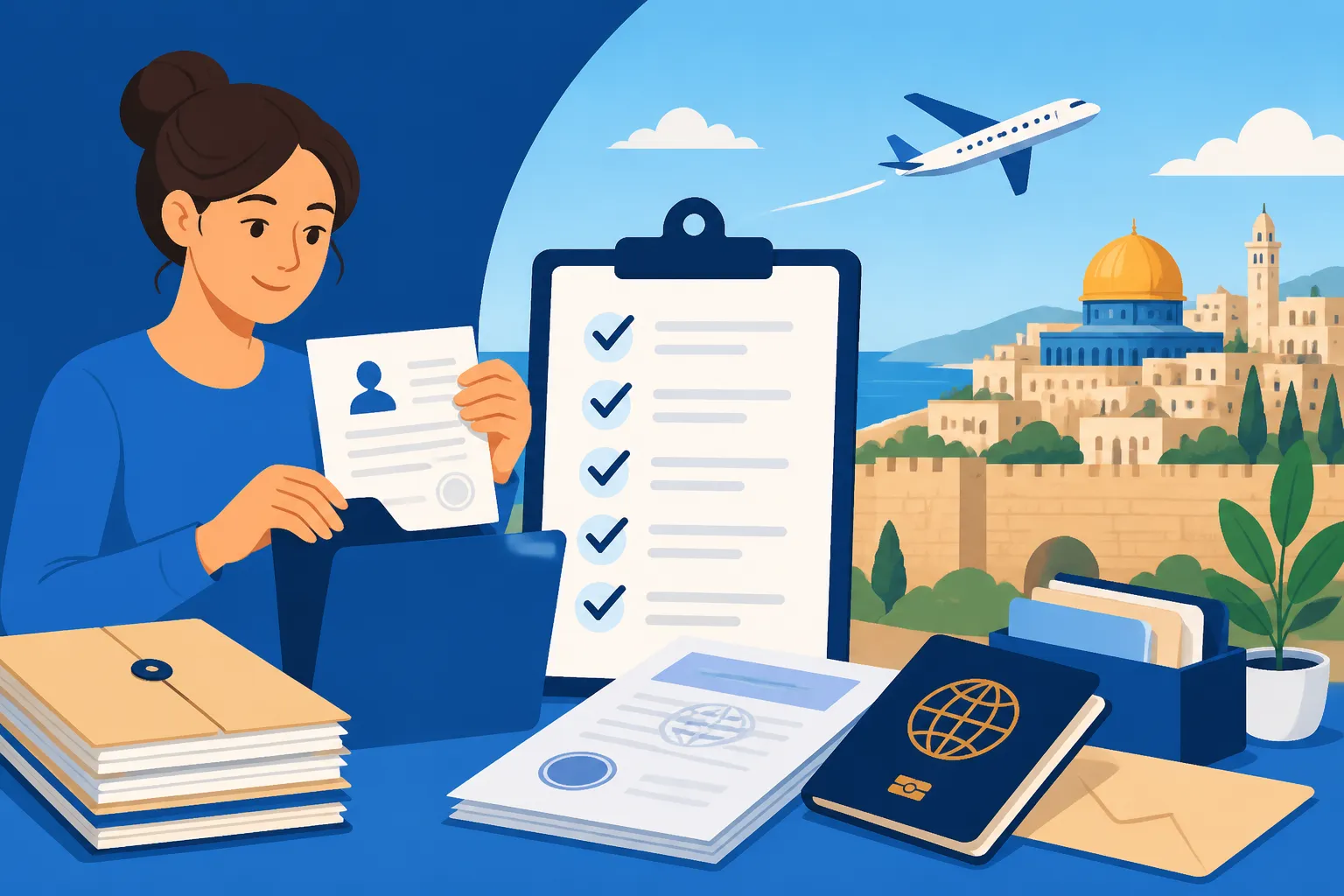
- Develop a Master Checklist: Don’t rely solely on the list provided by The Jewish Agency or Nefesh B'Nefesh. Create your own, more detailed version. For each document, note:
- What it is (e.g., Your Mother’s Birth Certificate)
- Where to get it (e.g., State Records Office, home country)
- Status (e.g., Requested, Received, Translated, Apostilled, Submitted)
- Date requested/received/submitted
- Any specific notes (e.g., "Aunt Sarah has original, need to borrow")
- Digital Backup: Scan everything! Every original, every certified copy, every translation, every apostille. Save them to a cloud service (like Google Drive or Dropbox) and also to an external hard drive. Label folders clearly (e.g., "Aliyah Docs – John Smith," then subfolders like "Birth Certificates," "Police Clearances"). This saves you countless headaches if a physical document gets lost or if you need to resubmit something.
- Physical Organization: Invest in a good binder with dividers or an accordion file. Keep originals separate from copies, and keep everything in chronological order or by document type.
My Personal Experience: I once misplaced a critical police clearance. The sheer panic was enough to teach me a lesson. From then on, I had three copies of everything: original, scanned digital, and a physical duplicate copy. It felt excessive, but it saved me when I needed it most.
Seeking Professional Help: When a Lawyer or Aliyah Advisor is Worth It
While The Jewish Agency and Nefesh B'Nefesh are excellent resources, there are times when specialized help can be invaluable, especially if your case is complex.
- Aliyah Lawyers: If you have unusual circumstances (e.g., complex conversions, a criminal record, unique family situations, or highly sensitive documents), an Aliyah lawyer specializing in Israeli immigration law can navigate the nuances. They can advise on specific legal requirements and represent you in dealings with the Misrad HaPnim. This might be especially relevant if you are moving to Israel as a non-Jewish foreigner via a different route, or if you need to clarify your status after living there for a while, like understanding how to get a Teudat Zehut (Identity Card) in Israel.
- Document Retrieval Services: If you're struggling to obtain old records from foreign countries, there are services that specialize in international document retrieval. These can be costly but worth it if you're hitting brick walls.
- Financial Advisors: For managing the financial aspects of your move, including tax implications, a financial advisor knowledgeable in Israeli law (like understanding the Oleh Chadash 10-Year Tax Exemption in Israel) can be extremely helpful.
Remember, these are usually additional costs, so weigh the complexity of your situation against the financial investment. For many straightforward cases, the Aliyah organizations are sufficient. However, for those with complex questions, an expert can provide peace of mind and prevent costly errors.
The Waiting Game and Follow-Up: Patience is a Virtue (and a Necessity)
Once you've submitted your meticulously prepared documents, a new phase begins: waiting. This can be one of the most challenging parts of the entire Aliyah process.
- How Long Does It Take? The processing time for an Aliyah application can vary wildly, depending on your country of origin, the complexity of your case, and the current workload of The Jewish Agency and the Israeli Ministry of Interior. It can be a few weeks, or it can be many months. The guide on How Long Does the Aliyah Process Take? provides a detailed overview.
- Proactive Follow-Up: Don't just sit and wait. While constant badgering won't speed things up, polite and regular follow-ups with your Aliyah representative are crucial. Ask for status updates and if anything else is needed from your end. Be prepared for silence at times, which can be frustrating, but persist respectfully.
- Be Prepared for Additional Requests: Even after submitting everything, you might be asked for supplementary documents, clarification on existing documents, or an additional interview. This is normal. Just respond promptly and accurately.
The Aliyah journey is a marathon, not a sprint. Be patient with the process, be thorough with your preparation, and remember that every document you collect is a step closer to your new life in Israel.
Disclaimer
The information provided in this guide is for general informational purposes only and does not constitute legal, financial, or medical advice. While we strive to keep the information up-to-date and accurate, regulations and procedures can change rapidly. It is essential to consult directly with The Jewish Agency, Nefesh B'Nefesh, or an Israeli immigration lawyer for advice tailored to your specific situation before making any decisions related to your Aliyah application or relocation to Israel.