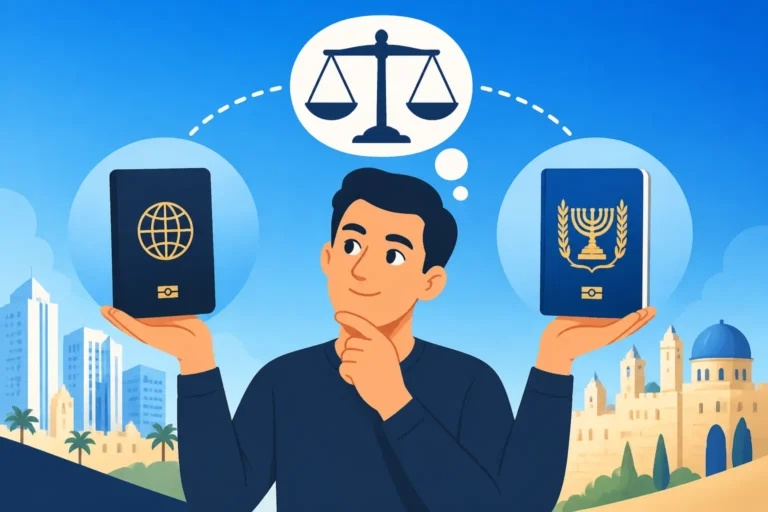
Understanding Long-Term Residence Status in Israel
The journey to making a life in Israel as a foreigner often feels like navigating a maze blindfolded. You arrive with hopes, dreams, and perhaps a temporary visa, but the question of genuine long-term stability—of truly belonging here—can weigh heavily. This guide is dedicated to pulling back the curtain on the various paths to long-term residence status in Israel, breaking down the complex processes, and validating the very real frustrations you might encounter along the way.
The Labyrinth of Israeli Residence: An Initial Overview
Let's be honest, the concept of "long-term residence" in Israel can feel like a moving target, constantly shifting depending on your circumstances, your family ties, and sometimes, it feels like the whim of the official behind the counter at the Ministry of Interior (Misrad HaPnim). But for any expat, this isn't just bureaucratic jargon; it's about the very foundation of your life here, determining your rights, your access to services, and your peace of mind.
Why Long-Term Status is So Crucial (and Complex)
Without a secure long-term status, everything feels temporary. You might be able to work, but accessing things like a reasonable mortgage or even some higher-tier banking services can be a struggle. Planning for your children's future, knowing they can stay in the same school system, or simply feeling settled in your community, all hinge on having that crucial stamp of approval from the state. It's not just about a piece of paper; it's about stability, about truly putting down roots. I remember countless conversations with fellow expats, anxiously checking visa expiry dates, wondering if another renewal would be granted, and feeling that constant low hum of uncertainty about their future. It's a draining way to live, and it’s a frustration many of us know all too well.
Differentiating Between Temporary and Permanent Residence
In Israel, the path to fully recognized long-term status often involves a series of temporary steps before reaching permanent residency or, ultimately, citizenship.
- Temporary Residence (A/5 Visa): This is typically the first significant step beyond a tourist or short-term work visa. An A/5 visa is usually granted for one year at a time and must be renewed annually. While it allows you to live and work in Israel, and often to join a health fund, it’s still temporary. Your rights and access to certain benefits, especially social security, can be limited or subject to specific conditions. Many people on the spousal track, for instance, spend several years on an A/5 visa, proving the legitimacy and continuity of their relationship before they can apply for anything more secure. You're living here, but the government still sees it as a provisional arrangement, one that requires regular re-evaluation.
- Permanent Residence (A/0 Status): This is a much more stable status. Once you obtain permanent residency, you have nearly all the rights of an Israeli citizen, with the notable exceptions of holding an Israeli passport (you keep your foreign one) and voting in national elections. You are fully integrated into the National Insurance (Bituach Leumi) system and have unrestricted access to healthcare and other social benefits. This is a significant milestone, granting a high level of security and peace of mind. For those not eligible for Aliyah, this is often the highest level of residency achievable without naturalizing as a citizen.
- Citizenship: The ultimate goal for many. Israeli citizenship grants you all rights, including a passport, voting rights, and the ability to live abroad without fear of losing your residency status in Israel (though there are rules about how long you can be away). The path to citizenship can be through Aliyah (the Law of Return), naturalization after a period of permanent residency, or through marriage to an Israeli citizen via the graduated process.
Common Pathways to Long-Term Residence in Israel
When it comes to putting down roots in Israel, there isn't a one-size-fits-all approach. Your path will largely depend on your background and your connection to the country. It’s important to understand these distinct routes, as each comes with its own set of requirements, timelines, and bureaucratic hurdles.
The Aliyah Route: Law of Return (A/5 followed by citizenship)
For those of Jewish heritage, or those who have converted to Judaism, the Law of Return (Chok HaShvut) offers the most direct and streamlined path to long-term residency and citizenship. This is known as making Aliyah, and it's fundamentally different from other immigration processes because it's based on a historical right rather than just an immigration application.
If you qualify under the Law of Return, the process usually begins with applying for Aliyah through organizations like the Jewish Agency or Nefesh B'Nefesh. Upon arrival in Israel, you're immediately granted an Oleh visa (A/1), followed swiftly by the A/5 temporary resident visa. Within a very short period, often just a few months, you're eligible to receive your Teudat Zehut (Israeli ID card) and officially become a citizen. This path comes with significant benefits, often referred to as the "Sal Klita" (absorption basket), which includes financial assistance, Hebrew Ulpan classes, and various tax benefits. It’s truly designed to help new immigrants integrate quickly. It’s worth noting that even those with a Jewish grandparent, or a spouse of a Jew, are generally eligible, making it a broader category than many assume. If this sounds like your path, you'll want to dive deep into The Complete Guide to Making Aliyah and Israeli Citizenship (2027) and understand Understanding Aliyah Eligibility Under the Law of Return (2027). The initial steps, including securing your How to Obtain a Teudat Oleh and Teudat Zehut After Aliyah, are usually handled with much more efficiency than other visa categories.
Family Reunification: The Spousal Visa Process
For those who don't qualify for Aliyah but are married to an Israeli citizen, the family reunification process is the primary pathway. This is famously known as the "graduated process" (or medureget in Hebrew), and it's notorious for being long, arduous, and, frankly, quite intrusive. The process is designed to prevent sham marriages and verify the authenticity of the relationship.
Initially, a foreign spouse will typically enter Israel on a B/2 tourist visa. To begin the process of obtaining a more stable status, the Israeli spouse must petition the Ministry of Interior for their partner. This usually starts with a B/1 work permit, often for a period of six months to a year, which allows the foreign spouse to work legally. After this, they move onto an A/5 temporary resident visa, which is granted for one year at a time. The key here is the annual renewal. Each year, for approximately 4 to 7 years (the timeline can vary), the couple must appear together at the Misrad HaPnim for an interview. During these interviews, officials scrutinize documents, ask deeply personal questions about your life together, and assess the genuineness of your relationship. It’s not uncommon to hear stories of couples being asked about the color of their spouse's toothbrush or specific details of their living arrangements. This constant state of proving your love and commitment to a government official can be incredibly stressful. For a deeper dive into this specific and often challenging path, you’ll find Family Reunification and Spousal Visas in Israel: A Complete Guide and Understanding the Graduated Process for Spousal Citizenship in Israel incredibly helpful. Understanding How to Apply for Residence Based on Marriage to an Israeli Citizen is your first big step.
This process also applies, with some variations, to common-law partners, though proving the relationship’s authenticity can be even more complex without a marriage certificate. The state wants to ensure that any long-term residency granted is based on a genuine commitment and integration into Israeli society.
Humanitarian and Special Circumstances
While less common for the average expat, Israel does have provisions for long-term residence under exceptional humanitarian circumstances. These cases are usually handled on an individual basis, often involving severe personal hardship, asylum seekers, or individuals whose lives would be in grave danger if returned to their home countries.
These applications are extremely complex, require extensive documentation, and are typically processed through specialized departments within the Ministry of Interior, often involving multiple levels of review and legal representation. This isn't a standard immigration route; it's a lifeline for those facing extraordinary predicaments. It’s not a path most expats would consider, but it's an important part of the overall residency landscape, reflecting Israel’s commitment to certain international humanitarian principles.
The Step-by-Step Journey to Permanent Residence
So, you’ve decided to make Israel your long-term home, and you don’t qualify for Aliyah. Chances are, you’re looking at what’s often called the “graduated process” (the medureget) or a similar multi-year pathway that slowly transitions you from a temporary visitor to a permanent resident. This journey isn't a sprint; it's a marathon, and it requires immense patience, meticulous organization, and a good dose of emotional resilience.
The Graduated Process (Medureget) in Detail for Spouses
If you're a foreign spouse of an Israeli citizen, the medureget is your reality. This process typically unfolds over several years, initially involving a B/1 work permit, which is usually granted for a period of 6 to 12 months. This permit allows you to legally work and live in Israel while your long-term status is being evaluated. It's a temporary reprieve, but a necessary one to begin building your life here.
Once that B/1 period is over, or sometimes even concurrently, you'll move to the A/5 temporary resident visa. This is where the real graduated process begins. The A/5 visa is almost always issued for a single year. Each year, usually around a month or two before its expiration, you and your Israeli spouse will need to return to the Misrad HaPnim. You’ll be required to present an updated array of documents: rental contracts, bank statements, utility bills in both your names, photos of your life together, and affidavits confirming the continuation of your relationship. Then comes the interview. These interviews can be nerve-wracking, ranging from friendly chats to intensive interrogations, designed to confirm the authenticity of your marriage. Officials might separate you and your spouse, asking identical questions to check for consistency. The entire process typically lasts between four to seven years, depending on the specific branch of Misrad HaPnim you deal with, the mood of the official, and the perceived complexity of your case. It can feel like a constant battle to prove your genuine love and commitment to a government institution. Throughout this entire journey, ensuring you have continuous health coverage is absolutely critical. While some form of healthcare might become available through a Kupat Holim once you have an A/5, comprehensive private plans from providers like Cigna Global can offer a safety net, especially during transitional phases or if your initial public coverage is limited.
For many, booking an appointment at the Misrad HaPnim is the first hurdle. Check out How to Book an Appointment at the Misrad HaPnim for Visa Matters for some pointers. It's a system designed for thoroughness, but often at the expense of simplicity and speed.
Renewing Your A/5 Temporary Residence Visa
The annual renewal of your A/5 visa becomes a ritual for many foreign residents. It's not just a formality; it's a full re-evaluation of your eligibility. Every year, you'll need to gather a fresh set of documents. This often includes:
- Updated forms: The Misrad HaPnim has specific forms for A/5 renewals.
- Recent proof of cohabitation: Rental agreements, utility bills (electricity, water, internet) in both names, bank statements showing joint accounts or shared expenses.
- Photographs: Recent photos of you and your spouse/family, demonstrating ongoing shared life. Don't underestimate this; they want to see current evidence of your life together.
- Police clearance certificates: Sometimes, they will ask for updated criminal record checks from your home country, especially in the later stages of the process. This can be a major headache to obtain from abroad annually.
- Affidavits: Both you and your Israeli partner may need to sign declarations stating the continued existence of your genuine relationship.
- Passport and visa copies: Ensure your foreign passport has at least six months validity.
My advice, and something I learned the hard way, is to start preparing these documents at least three months before your visa expires. Misrad HaPnim appointments are notoriously hard to get, especially in larger cities like Tel Aviv (the Rishon LeZion office is a popular, albeit often chaotic, spot), Jerusalem, and Haifa. If you’re in a smaller town, you might have an easier time, but don't count on it. Always bring originals and multiple copies of everything. And if your Hebrew isn’t perfect, try to bring a native speaker with you, even if the official speaks English. Having someone to navigate the nuances can save a lot of grief. For more on this, Understanding the A/5 Temporary Residence Visa in Israel offers crucial insights.
Transitioning from A/5 to Permanent Residency (A/0)
After successfully navigating several years of A/5 renewals (typically 4-7 years, as mentioned before), you finally reach the threshold for applying for permanent residency (A/0) or, in the case of spouses, citizenship. This is the light at the end of the bureaucratic tunnel!
The final step for permanent residency involves another application to the Misrad HaPnim. By this point, you've established a long track record of living in Israel, maintaining your relationship (if applicable), and demonstrating integration. The final interview will again verify all your details and ensure you meet the criteria. While the scrutiny might feel less intense than the early A/5 renewals, it’s still a formal process. Once approved, you will be granted A/0 status, which allows you to continue living in Israel indefinitely, with nearly all the rights of a citizen, save for voting in national elections and holding an Israeli passport. This is a huge relief for many, as it removes the annual anxiety of renewals. Some spouses might opt to apply for full Israeli citizenship at this stage, which involves a slightly different process (including potentially renouncing their previous citizenship, depending on their home country's laws and Israel's discretion), but permanent residency provides a solid and secure foundation regardless.
The Benefits and Responsibilities of Long-Term Status
Achieving long-term residence status in Israel, whether it's permanent residency (A/0) or citizenship, is more than just a piece of paper; it's a gateway to fully participating in Israeli society and enjoying the stability you've worked so hard for. It transforms your temporary existence into a permanent home, but it also comes with its own set of responsibilities.
Access to Services and Rights
Once you secure your long-term status, a world of stability and opportunity opens up:
- Healthcare: This is one of the most significant benefits. With an A/5 visa, you usually gain access to Israel's universal public health system through one of the four Kupot Holim (health funds). However, upon obtaining permanent residency or citizenship, you are fully and unequivocally integrated into the system, often with fewer waiting periods for certain services and broader access to benefits within the Health Basket (Sal Briut). This means comprehensive medical care, from doctor visits to hospital care, becomes readily accessible. You can explore The Complete Guide to Healthcare in Israel for Olim and Expats (2027) for all the details.
- Social Security (Bituach Leumi): Full integration into Bituach Leumi means you contribute to and are eligible for a wide range of social benefits. This includes maternity benefits, unemployment insurance (if you lose your job), old-age pensions, disability benefits, and child allowances. It's the social safety net that underpins Israeli society, and as a permanent resident, you become a full part of it. Understanding National Insurance (Bituach Leumi) Contributions in Israel is key to appreciating this benefit.
- Employment: With permanent residency, your right to work in Israel becomes unrestricted. You no longer need specific work permits tied to an employer or a specific visa category. This opens up more career opportunities and gives you greater flexibility in the job market.
- Banking and Finance: While opening a bank account is possible earlier, long-term status significantly eases access to credit, loans, and mortgages. Israeli banks, like Bank Leumi and Bank Hapoalim, are much more willing to extend financial services to individuals who have demonstrated a permanent commitment to living in the country. This can be crucial for major life purchases, like a home. Get the full picture from Banking in Israel: A Complete Guide for Foreigners (2027).
- Education: Your children gain full access to the public education system, from gan (preschool) to high school, without the complexities sometimes faced by those on temporary visas. This ensures continuity and full integration into the local school environment.
As you achieve this long-term stability, you might also find yourself planning a more permanent move, perhaps bringing more belongings from your home country. Companies like Sirelo specialize in international moving services and can be invaluable in handling the logistics of shipping your possessions to Israel, now that your future here is secure.
Maintaining Your Status: What to Avoid
While permanent residency offers immense security, it's not entirely without conditions. There are specific actions and situations that could potentially jeopardize your status:
- Extended Periods Outside Israel: The most common way to lose permanent residency is by residing outside Israel for an extended period. Generally, if you leave Israel for more than seven years, or if you acquire citizenship in another country without specific arrangements, your permanent residency could be revoked. The government expects permanent residents to genuinely live in Israel. If you plan to be away for a long time, it’s advisable to consult with the Misrad HaPnim or a legal expert beforehand.
- Criminal Activity: Engaging in serious criminal activities in Israel can lead to the revocation of your residency status.
- Misrepresentation: If it's discovered that your residency was obtained through fraudulent means or misrepresentation, it can be revoked. This is why the Misrad HaPnim is so thorough in its vetting process, especially for the graduated process.
- Failure to Notify Changes: While less severe, it’s always important to notify the Misrad HaPnim of significant changes, such as a change of address. Keeping your records updated helps maintain a smooth relationship with the authorities.
Considering Israeli Citizenship
For many, permanent residency is a comfortable and sufficient status, offering stability without necessarily requiring the renunciation of their original citizenship. However, some eventually choose to naturalize and become full Israeli citizens. This path is generally available after a period of permanent residency, usually at least three to five years, during which you have lived in Israel, demonstrated an intention to settle permanently, and have some basic knowledge of Hebrew.
The criteria for naturalization include:
- Being in Israel for at least three of the last five years.
- Having the right to reside in Israel permanently.
- Having settled in Israel or intending to settle there.
- Some knowledge of the Hebrew language (the level required can vary).
- Renouncing your previous citizenship, unless an exemption is granted (this is a complex point and depends heavily on your original country's laws and individual circumstances).
Becoming an Israeli citizen means full participation in the democratic process (voting), the right to an Israeli passport, and deeper integration into the national identity. It's a deeply personal decision with significant legal and emotional implications. For those considering this ultimate step, Israeli Citizenship: Routes Through Aliyah, Naturalisation and Marriage (2027) provides a thorough overview, and Understanding the Hebrew and Integration Requirements for Olim is crucial, as is how to actually How to Apply for Israeli Citizenship Through Naturalisation.
Challenges and Navigating the Bureaucracy
Let's not sugarcoat it: navigating the Israeli bureaucracy, particularly the Ministry of Interior (Misrad HaPnim), can test the patience of even the most zen individuals. It’s a common complaint among expats, and frankly, a shared trauma for many who have gone through the process. Expect delays, inconsistencies, and a system that sometimes feels like it was designed to confuse you.
The Frustrations of the Misrad HaPnim (Ministry of Interior)
Ah, the Misrad HaPnim. The very name can elicit groans from veterans of the Israeli immigration system. The challenges are numerous:
- Appointment Shortages: Getting an appointment can feel like winning the lottery. You often have to book weeks, sometimes months, in advance, particularly in high-demand branches in Tel Aviv or Jerusalem. The online booking system (through the Gov.il website or the dedicated app) is your primary tool, but slots disappear quickly.
- Long Waiting Times: Even with an appointment, be prepared to wait. I've heard stories, and experienced myself, waiting for hours past my scheduled time, watching the digital queue numbers crawl along. Bring a book, fully charged phone, snacks, and your saintly patience.
- Inconsistent Information: This is perhaps the most maddening aspect. You might call the national hotline and be told one thing, only for an official at the local branch to tell you something entirely different. The rules and interpretations can vary from branch to branch, or even from official to official within the same office. Always try to get information in writing if possible, and if denied, politely ask to speak to a supervisor if you feel the information is incorrect.
- Language Barriers: While many officials speak English, not all do. And even if they do, the complexity of legal and bureaucratic Hebrew can lead to misunderstandings. Bringing a native Hebrew speaker with you is always a good idea if you're not fully confident in your own language skills.
- "Missing" Documents: You've brought everything you were told to bring, plus copies. Yet, the official might suddenly require an additional document you've never heard of, or claim one of your documents isn't "correct" or "up to date," even if it was just issued. This is where deep breathing and a polite but firm attitude come in handy.
It's okay to feel frustrated, overwhelmed, or even humiliated by the process. Your feelings are valid. You are not alone in experiencing these difficulties.
Document Preparation and Legal Assistance
Given the bureaucratic gauntlet, meticulous document preparation is your best defense.
- Authentication is Key: For documents from your home country (birth certificates, marriage certificates, police clearances, divorce decrees), you almost certainly need them to be officially authenticated. This usually means an apostille stamp if your country is part of the Hague Apostille Convention, or a full legalization process through the Israeli embassy/consulate in your home country. Do this before you move to Israel. Trying to get documents apostilled from abroad can be a logistical nightmare.
- Originals and Copies: Always, always bring the original of every document, plus at least two clear photocopies. They often ask for the original to sight, but keep the copy.
- Translation: Any document not in Hebrew or English (and sometimes even English documents for certain purposes) will need to be translated by a certified translator in Israel, or at least a notary public.
For complex cases, especially within the graduated process or for humanitarian visas, hiring an experienced Israeli immigration lawyer can be invaluable. They understand the nuances of the law, the unspoken rules of the Misrad HaPnim, and can often expedite processes or provide crucial advocacy. While it's an added expense, the peace of mind and reduced stress can be well worth it, particularly if your case isn't straightforward. And remember, during these often lengthy and uncertain periods of visa processing, having robust private health insurance like Cigna Global can provide essential peace of mind, ensuring you're covered for any medical needs while your status is in flux.
Financial Planning for the Long Haul
The journey to long-term residence isn't just emotionally taxing; it can also be financially demanding.
- Application Fees: While not exorbitant, visa application and renewal fees add up over the years.
- Legal Fees: If you hire a lawyer, their fees will be a significant cost.
- Document Costs: Obtaining apostilles, translations, and new police checks from abroad can incur charges.
- Proof of Financial Stability: For many visa types, and especially for renewals, you'll need to demonstrate that you have sufficient funds to support yourself and your family in Israel. This means bank statements, pay stubs, or other proofs of income. The Misrad HaPnim wants to ensure you won't become a burden on the state. For some perspective on costs, The Cost of Healthcare in Israel: A Complete Breakdown for Foreigners (2026) might shed light on one aspect of living here. While perhaps not directly related to residence status costs, knowing How Much Does an Israeli Work Visa Cost? can give you an idea of the kind of fees involved in immigration generally.
Being financially prepared for these expenses, and maintaining clear records of your finances, will significantly reduce stress during the process.
| Feature | A/5 Temporary Resident Visa | A/0 Permanent Residency | Israeli Citizenship (Oleh/Naturalized) |
|---|---|---|---|
| Duration | Typically 1 year, renewable annually for several years | Indefinite, subject to conditions | Indefinite, permanent |
| Misrad HaPnim Checks | Annual interviews, document review, relationship verification | Final review for stability and integration | Initial Aliyah checks or naturalization process |
| Access to Healthcare | Yes, via Kupot Holim (after registration) | Full access to Kupot Holim (National Health Insurance) | Full access, same as native-born citizen |
| Social Security (Bituach Leumi) | Limited eligibility, often with waiting periods/conditions | Full eligibility for all benefits | Full eligibility, same as native-born citizen |
| Right to Work | Yes, usually with a B/1 permit, then A/5 | Unrestricted | Unrestricted |
| Travel Documents | Foreign passport, Israeli visa sticker | Foreign passport, Israeli travel document (Laissez-Passer) | Israeli passport (Darkon or Lesse-Passe) and foreign passport (if dual) |
| Voting Rights | No | No (except local elections, in some cases) | Yes (national, local, and municipal elections) |
| Renunciation of Foreign Citizenship | Not required | Not required | Often required for naturalization (with exceptions) |
| Path to Obtaining | Graduated process for spouses, work visas | After A/5 period for spouses, or other special cases | Aliyah (Law of Return), Naturalization, Marriage |
Disclaimer
The information provided in this guide is for general informational purposes only and does not constitute legal, financial, or medical advice. Immigration laws and regulations in Israel are complex and subject to change. It is essential to consult with a qualified Israeli immigration lawyer, financial advisor, or relevant government authorities (such as the Ministry of Interior or the National Insurance Institute) for advice tailored to your specific situation. Reliance on any information in this guide is solely at your own risk.