How Long Does the Aliyah Process Take?
Oh, the age-old question that keeps many aspiring Olim awake at night: "How long is this actually going to take?" If you're like most of us who've been through the Aliyah journey, you're probably picturing endless forms, phone calls, and the agonizing wait for that elusive approval. Trust me, I've been there, staring at my phone, willing it to ring. This guide isn't here to give you a definitive magic number, because honestly, there isn't one. Instead, we'll dive deep into what truly influences the Aliyah timeline and give you a realistic picture of the journey ahead, helping you manage expectations and perhaps even nudge things along.
Understanding the Aliyah Process: A Multi-Stage Journey
Making Aliyah isn't a single event; it's a meticulously planned, multi-stage process that involves several key players, primarily the Jewish Agency for Israel and, for many Westerners, Nefesh B'Nefesh. Each stage has its own potential for delays and demands a fair bit of patience. It’s like climbing a mountain; you don't just magically appear at the summit.
Initial Application and Eligibility Checks
This is where the rubber meets the road. Your first step is usually to contact the Jewish Agency for Israel, or if you're coming from North America, the UK, or Australia, you'll likely go through Nefesh B'Nefesh. You'll fill out an initial application, which collects basic information about you and your family. But this isn't just a simple questionnaire; it's the start of a deep dive into your background to determine your eligibility under the Law of Return.
The Law of Return, in its essence, grants every Jew the right to immigrate to Israel and obtain citizenship. However, proving your eligibility can sometimes be more complex than it sounds. This initial phase involves preliminary background checks and verifying your Jewish lineage, or if you're a non-Jewish spouse or child, your connection to an eligible Jew. This early stage often feels like a black hole, where you send off your details and then… wait. The Jewish Agency or Nefesh B'Nefesh caseworkers are working behind the scenes, sifting through initial documentation and assessing your case, but the wheels can turn slowly, especially during busy periods. Expect this stage to be a few weeks to a couple of months, depending heavily on how straightforward your case is. For a full understanding of the criteria, check out our guide on Understanding Aliyah Eligibility Under the Law of Return (2027).
Document Gathering and Verification
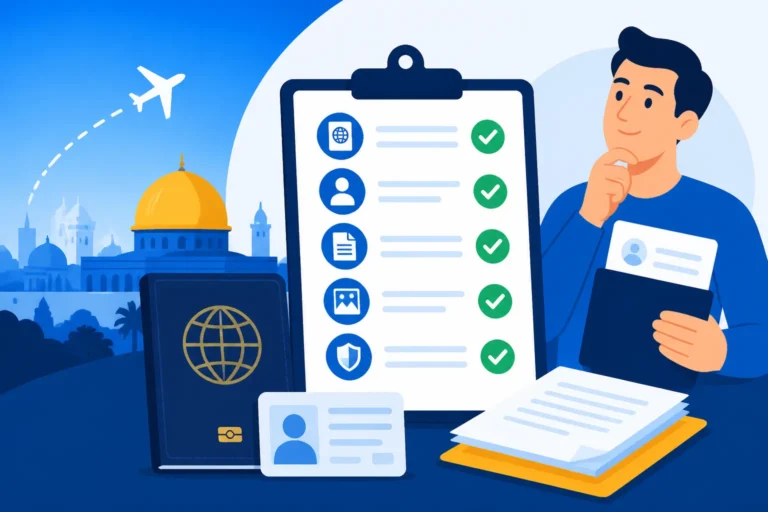
Once your initial eligibility seems promising, you'll be hit with the infamous "document request list." And let me tell you, it's usually extensive. We're talking birth certificates (yours, your parents', sometimes grandparents'), marriage certificates, divorce decrees, police clearance certificates from every country you've lived in, letters from rabbis, proof of Jewish community involvement, photos, passports, and so much more. Each document needs to be the original, often apostilled (a form of international notarization), and sometimes translated into Hebrew by a certified translator.
This stage is often the most time-consuming and frustrating for many Olim. Tracking down old records, especially if family members are no longer with us or if you've moved countries frequently, can be a monumental task. I remember spending weeks just getting an apostille for my birth certificate, navigating the bureaucracy in my home country. Any missing document, an incorrectly formatted stamp, or a less-than-clear photocopy can send you back to square one, adding weeks, if not months, to your timeline. It's a real test of patience and organizational skills. Our post on How to Prepare Documents for an Aliyah Application can give you a head start on what to expect here.
The Interview and Final Approval
After you've submitted what feels like your entire life story in paper form, the next crucial step is an interview with a Shaliach (emissary) from the Jewish Agency or Nefesh B'Nefesh. This interview, whether in person or via video call, is your opportunity to discuss your motivations for Aliyah, your understanding of life in Israel, and for them to clarify any remaining questions about your documentation or background. It's not meant to be an interrogation, but a chance for them to get to know you and ensure your move is well-considered.
Following a successful interview, your file is then formally presented to the Israeli Ministry of Interior (Misrad HaPnim) for final approval. This is the ultimate "yes" or "no" that grants you the coveted Aliyah visa. The wait after the interview can be incredibly nerve-wracking, as you're so close to the finish line. The processing time at the Ministry of Interior can vary, sometimes taking a few weeks, sometimes longer, depending on their workload and the complexity of your file. Once that final approval comes through, usually as a formal letter or email, you're officially cleared to book your flight to Israel.
Key Factors Influencing Your Aliyah Timeline
While the steps are generally the same for everyone, the speed at which you navigate them can differ wildly. There's no one-size-fits-all answer to "How long does Aliyah take?" because so many variables come into play.
Your Country of Origin and Local Jewish Agency Office
The efficiency and caseload of the Jewish Agency office or Aliyah organization in your home country can significantly impact your timeline. For instance, applicants from North America, the UK, and Australia often benefit from the streamlined processes offered by Nefesh B'Nefesh, which works in partnership with the Jewish Agency. Nefesh B'Nefesh is known for providing extensive support, dedicated caseworkers, and sometimes quicker processing times for eligible applicants due to their specialized focus. To learn more about this, check out How to Apply for Aliyah Through the Jewish Agency and Nefesh B'Nefesh.
In contrast, if you're applying from a country with a smaller Jewish community or where Aliyah is less common, the local Jewish Agency office might have fewer staff or different procedures, potentially leading to longer processing times. The sheer volume of applications from certain regions can also create backlogs. So, while your cousin from Toronto might have heard back quickly, your friend from Argentina might experience a much longer wait. It's truly a global operation with local variations.
The Complexity of Your Personal File
This is probably the biggest single factor in determining your Aliyah timeline. A straightforward case – a single individual with clear Jewish lineage, all original documents, and no prior criminal history – will almost always sail through faster than a complex one. However, most people's lives aren't that simple!
Factors that commonly cause delays include:
- Complex Jewish Lineage: If your Jewish status isn't immediately obvious, or if it involves conversions that need Rabbinate approval, it will add time.
- Non-Jewish Spouses or Children: While non-Jewish family members of an Oleh are also eligible to make Aliyah, their inclusion adds an extra layer of verification, particularly for marriage documents and backgrounds.
- Missing or Incomplete Documents: This is the most common culprit. If you can't produce an original birth certificate, or if a police clearance from a country you lived in five years ago is missing, you'll be sent on a scavenger hunt, often with significant delays.
- Past Criminal Records: Any criminal history, no matter how minor, will trigger additional reviews and may require special dispensations, greatly extending the process.
- Health Issues: While not usually a bar to Aliyah, certain health conditions might require additional checks or medical reports, especially if you have complex needs.
The more "red flags" or missing pieces in your application, the more time the various agencies will need to review, verify, and ultimately approve your Aliyah. You may even consider obtaining international health insurance from providers like Cigna Global to cover any unforeseen medical needs during this transition period, especially if you anticipate a longer wait for your Israeli health fund registration.
Personal Preparedness and Responsiveness
Believe it or not, you play a significant role in your own timeline. The Aliyah caseworkers are busy, and they rely on you to be prompt and organized. If you take weeks to respond to an email requesting additional documents, or if you don't have papers ready when asked, you're directly contributing to your own delay.
Being proactive means having as many documents as possible gathered, translated, and apostilled before you even submit your initial application. It means checking your email regularly and having a dedicated file for all Aliyah-related correspondence and documents. The more organized and responsive you are, the smoother and potentially quicker the process will be. Think of it as a collaboration: they process, you provide. Any slack on your end will create a bottleneck.
Peak Seasons and Global Events
Just like any bureaucratic system, the Aliyah process experiences peak seasons. Summer months, leading up to the High Holy Days, and certain times of the year when special Aliyah flights are scheduled, often see an increase in applications and processing. This can lead to longer wait times as staff are stretched thin.
Beyond predictable seasonal fluctuations, unforeseen global events can also disrupt timelines. Pandemics, political changes, or even significant events within Israel can impact staffing, international travel, and the overall processing flow. While these factors are entirely out of your control, being aware of them helps set realistic expectations.
After Approval: The Final Countdown and Initial Settling
Getting that official Aliyah approval is a momentous occasion, a huge weight off your shoulders. But the journey isn't quite over. There are still crucial steps that have their own "timelines" once you've landed in Israel.
Booking Your Flight and Final Pre-Aliyah Preparations
Once you receive your Aliyah visa approval, the excitement is palpable! For many, particularly those using Nefesh B'Nefesh, the Aliyah flight itself is often arranged as part of the package, or at least heavily subsidized. You'll work with the Aliyah organization to book your flight, confirm your arrival date, and receive any last-minute instructions. This final logistical phase can take a few weeks as you coordinate your departure, tie up loose ends in your home country (selling possessions, closing accounts, saying goodbye to friends and family), and pack your life into suitcases. This is also when you might start looking into international moving companies like Sirelo to help you ship your belongings if you're bringing more than just luggage.
This stage is less about official processing and more about personal preparation. Don't underestimate the time it takes to wind down your life abroad and prepare for a completely new chapter.
Arrival Day Formalities at Ben Gurion Airport
The day you land at Ben Gurion Airport as a new Oleh is usually one of the most memorable of your life. It's often highly organized, with representatives from the Ministry of Aliyah and Integration (formerly Misrad HaKlita) and, if applicable, Nefesh B'Nefesh, meeting you. You'll go through a simplified immigration process. This is where you'll officially receive your temporary Teudat Zehut (identity card) and your Teudat Oleh (Oleh certificate), which is crucial for accessing all your new immigrant benefits.
While this process itself is usually swift – a matter of hours at the airport – it marks the official start of your life in Israel. However, remember this is just a temporary ID. You'll need to follow up for your permanent Teudat Zehut. For more details on what happens upon arrival, read How to Obtain a Teudat Oleh and Teudat Zehut After Aliyah.
Post-Arrival Bureaucracy: Your First Weeks in Israel
Here's where the next wave of Israeli bureaucracy hits, but this time, you're on the ground. Within your first few days or weeks, you'll need to:
- Visit the Misrad HaPnim (Ministry of Interior): To apply for your permanent Teudat Zehut, register your address, and officially establish your residency. Booking an appointment can sometimes take a while, so be prepared for a wait. Our guide How Do I Book a Misrad HaPnim Appointment for My Visa? can help you navigate this.
- Open a Bank Account: Essential for receiving your Sal Klita (absorption basket funds) and managing daily finances. This typically takes a few days once you have your temporary Teudat Zehut. You can learn more in The Expat Guide to Opening a Bank Account in Israel.
- Register with a Kupat Holim (Health Fund): This is vital for accessing Israel's national health insurance system. You'll choose one of the four main health funds (Clalit, Maccabi, Meuhedet, or Leumit) and register. There might be a short waiting period for some services, especially for new Olim. Refer to How to Register with a Kupat Holim as a New Immigrant in Israel for a detailed walkthrough.
- Apply for Sal Klita and Other Benefits: This involves visits to the Ministry of Aliyah and Integration and Bituach Leumi (National Insurance Institute) to claim your absorption basket and other new Oleh benefits like the 10-year tax exemption.
Each of these steps has its own mini-timeline, often involving appointments, paperwork, and waiting periods. While you're "in Israel," these administrative tasks can feel like an extension of the Aliyah process itself, typically spanning your first month or two.
Strategies to Potentially Shorten Your Aliyah Journey
While you can't magically warp through the process, there are concrete steps you can take to make your Aliyah journey as smooth and efficient as possible, potentially shaving off some precious time.
Meticulous Pre-Application Preparation
This is, hands down, the single most impactful thing you can do to avoid delays. Do not wait for the Jewish Agency or Nefesh B'Nefesh to ask for documents. Assume they will need everything. This means:
- Gather all vital documents early: Birth certificates, marriage certificates, divorce decrees, police clearances from all countries you've lived in for the past X years (check current requirements), academic transcripts, professional licenses, and any proof of Jewish lineage (e.g., ketubot, synagogue membership letters, parent's birth certificates).
- Ensure documents are original or certified copies: Many require originals or officially certified copies.
- Get them apostilled/legalized: If your home country is part of the Hague Apostille Convention, get all necessary documents apostilled. If not, research the equivalent legalization process. This can take weeks, so start early.
- Obtain certified translations: If any of your documents are not in English or Hebrew, get them translated by a certified translator.
Having this "Aliyah binder" ready to go before you even submit your first application can save you months of back-and-forth. It shows you're serious, organized, and ready for the next step.
Maintaining Proactive Communication
While you don't want to be a nuisance, maintaining consistent and polite communication with your caseworker is crucial.
- Respond quickly: When they ask for something, provide it as fast as humanly possible.
- Keep organized records: Maintain a detailed log of all correspondence, including dates, names, and what was discussed or sent.
- Follow up regularly (but politely): If you haven't heard back in a reasonable amount of time (e.g., 2-3 weeks after submitting something), a polite email asking for an update is perfectly acceptable. They manage many cases, and a gentle reminder can sometimes help your file rise to the top of the pile.
- Utilize online portals: If your Aliyah organization provides an online portal for document submission and status updates, use it diligently.
Remember, they are there to help you, but you need to meet them halfway with responsiveness and organization.
Utilizing Available Resources and Support
Don't go it alone! There's a wealth of support available that can help you navigate the complexities and even expedite parts of the process.
- Aliyah Counselors: Both the Jewish Agency and Nefesh B'Nefesh offer counselors who can guide you through each step, clarify requirements, and provide invaluable advice. They are experts in the process and can often foresee potential issues before they become major roadblocks.
- Online Forums and Groups: Expat groups on social media platforms are a treasure trove of real-world experiences and advice. While not official sources, they can offer practical tips and emotional support. Just remember to verify official information from the sources themselves.
- Immigration Lawyers: For particularly complex cases (e.g., challenging lineage, specific legal issues, or prior refusals), hiring an Israeli immigration lawyer can sometimes significantly streamline the process. They know the legal ins and outs of the system and can intervene on your behalf. While there are costs involved, for some, the peace of mind and potential time savings are worth it. Our article How Much Does the Aliyah Process Cost? touches on these potential expenses.
By being organized, proactive, and leveraging the available resources, you can ensure your Aliyah journey is as efficient as possible, allowing you to settle into your new life in Israel sooner.
Estimated Aliyah Timeline Breakdown
To give you a clearer picture, here's a general breakdown of potential timelines for different stages, keeping in mind that these are estimates and highly variable:
| Stage of Aliyah Process | Estimated Duration (Simple Case) | Estimated Duration (Complex Case) | Key Factors for Variation |
|---|---|---|---|
| Initial Application & Eligibility | 2-4 weeks | 1-3 months+ | Local office caseload, initial background checks |
| Document Gathering & Submission | 1-2 months | 3-6 months+ | Ease of obtaining originals, apostilles, translations |
| Interview & Final Approval | 1-2 months | 2-4 months+ | Interview scheduling, Misrad HaPnim processing |
| Flight Booking & Pre-Aliyah Prep | 2-4 weeks | 1-2 months | Personal logistics, availability of flights |
| Arrival Day Formalities | 1 day | 1 day | Typically standardized and efficient |
| Post-Arrival Bureaucracy (1st Month) | 2-4 weeks (for key tasks) | 1-2 months+ | Misrad HaPnim appointments, bank openings, Kupat Holim registration |
Please note: These are general estimates and your personal experience may vary significantly.
Ultimately, while the Aliyah process can test your patience, remember the incredible reward at the end: building a life in Israel. Every form, every phone call, and every moment of waiting brings you one step closer to your new home. Focus on what you can control – your organization, responsiveness, and preparation – and embrace the journey, however long it may be.
Disclaimer
The information provided in this guide is for general informational purposes only and does not constitute legal or professional advice. While we strive to provide accurate and up-to-date information, the Aliyah process and Israeli regulations are subject to change. It is always recommended to consult with the official Jewish Agency for Israel, Nefesh B'Nefesh, or a qualified immigration professional for personalized advice regarding your specific situation.