How Much Does a Routine Blood Test Cost Privately in Israel?
Navigating the Israeli healthcare bureaucracy often feels like a full-time job. Whether you are waiting weeks for a family doctor to issue a referral or struggling to explain your symptoms in broken Hebrew, the public system can be exhausting for newcomers. This guide clarifies the costs and procedures for skipping the line and getting a routine blood test privately in Israel, ensuring you get answers without the wait.
Why You Might Choose Private Blood Tests in Israel
The Israeli public healthcare system, while world-class, relies heavily on a gatekeeper model. To get a simple blood panel, you usually need a referral (Hafnaya) from your primary care physician. This means booking an appointment, which can sometimes be days or weeks away, and then justifying why you need the test. For an expat who is used to more direct access or who is managing a chronic condition from back home, this administrative hurdle can be incredibly frustrating. Private testing allows you to bypass the gatekeeper entirely, giving you agency over your own health data without needing to wait for a doctor’s approval.
Avoiding the Red Tape and Referral System
In the public system, the "Health Basket" determines which tests are covered and under what circumstances. If you want to check your Vitamin D levels or your thyroid function just for peace of mind, a public doctor might refuse the request if you do not meet specific clinical criteria. This is one of the primary reasons expats look toward private options. By paying out of pocket, you remove the need for a medical justification. You simply select the markers you want to test, pay the fee, and show up at the lab. This is particularly helpful for those who have recently arrived and are still figuring out How to Register with a Kupat Holim as a New Immigrant in Israel and don't want to wait for their membership to become fully active.
Furthermore, the public labs (Kupot Holim) often have restricted hours, usually early in the morning, which can be a nightmare for professionals. Private labs tend to offer more flexible scheduling and shorter wait times once you arrive. Instead of standing in a crowded hallway at 7:30 AM with a paper ticket in your hand, private clinics often provide a more "concierge" experience. For those who are not yet covered by a local health fund, understanding How to Access Healthcare on a Work Visa in Israel is crucial, but private labs offer a reliable stop-gap for immediate needs.
Speed and Convenience for Busy Expats
Speed is often the deciding factor. While results in the public system are generally fast, the process of getting the test done is not. Imagine you are a freelancer working from a hub in Tel Aviv; taking a whole morning off to navigate a public clinic is a significant loss of productivity. Private labs often offer "express" results, sometimes within the same day for basic panels. This is invaluable if you are feeling unwell and need to know quickly if you have a deficiency or an underlying infection that requires immediate attention.
Convenience also extends to home visits. Several private services in Israel now offer blood collection at your home or office. A certified phlebotomist arrives at your door, takes the samples, and leaves within fifteen minutes. While this comes with a premium price tag, for a parent with small children or a busy executive, the time saved is worth the expense. This level of service is a far cry from the standard experience described in most guides on Navigating the Israeli Healthcare System: An Expat's Roadmap (2027), but it is increasingly common in the private sector.
Anonymity and Specialized Panels
Sometimes you might want to test for things that you’d rather not have on your permanent Israeli medical record, such as certain hormone levels or comprehensive STI panels. Private labs offer a degree of anonymity that the public system cannot, as the results are sent directly to you rather than being uploaded to your health fund’s central database. This privacy is a major draw for expats who are sensitive about their medical history or who are concerned about how certain data might affect future insurance premiums.
Additionally, private labs often offer specialized panels that aren't readily available through the public health basket. This includes advanced nutritional screenings, food sensitivity tests, or comprehensive hormonal maps. If you are following a specific wellness protocol from a doctor in your home country, a private lab in Israel is often the only way to get the exact data points you need. For those without a permanent residence yet, using a flexible plan like SafetyWing can provide the necessary buffer while you navigate these private medical expenses.
The Financial Breakdown: Private Blood Test Costs in 2026
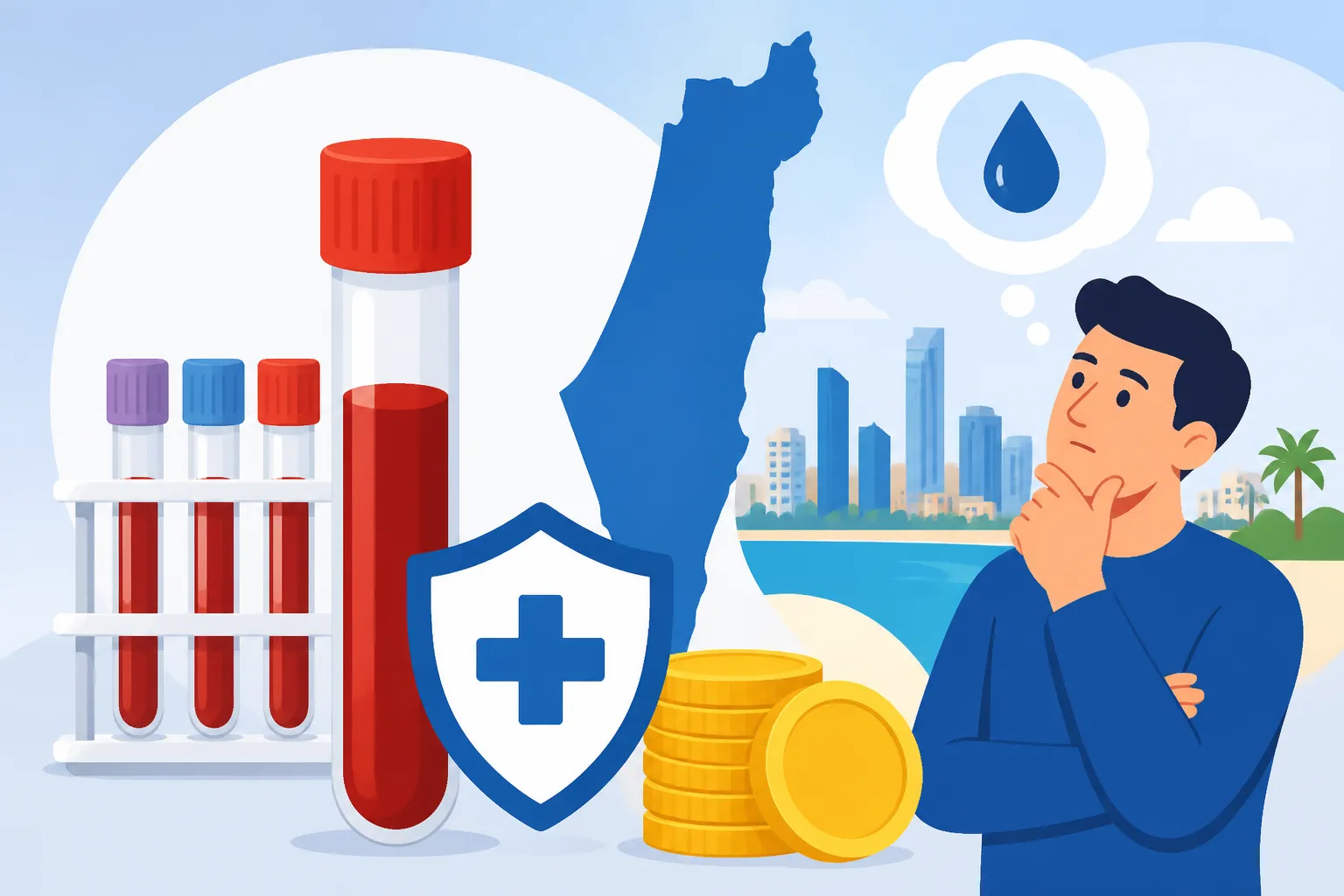
When we talk about "private" in Israel, it can mean two things: a private wing of a public hospital (Sharap) or a completely independent commercial laboratory. The costs vary significantly based on the complexity of the tests and the prestige of the facility. For a routine blood test—usually including a Complete Blood Count (CBC), glucose, cholesterol, and basic kidney/liver function—you should expect to pay between 250 NIS and 600 NIS. This is significantly higher than the small co-payment you would pay at a Kupah, but it covers the lab work, the phlebotomy fee, and the administrative processing.
Basic Routine Panels vs. Specialized Testing
A basic "wellness" panel is the most common request. In 2026, many independent labs in Tel Aviv and Herzliya charge a flat fee for a bundle of tests. If you start adding specific markers like Vitamin B12, Iron/Ferritin, or Vitamin D, the price climbs. Each additional specialized marker can add anywhere from 50 NIS to 150 NIS to your total. For expats who are still adjusting to the local economy, it is helpful to consult The Cost of Healthcare in Israel: A Complete Breakdown for Foreigners (2026) to see how these lab fees fit into a broader monthly budget.
If you require more complex testing, such as a full thyroid panel (including T3, T4, and antibodies) or a comprehensive testosterone/estrogen map, the costs can easily exceed 1,000 NIS. It is always wise to ask for a price list in advance. Most reputable private clinics will provide a transparent quote via email or WhatsApp. If you are traveling or recently arrived and don't have a local Kupat Holim yet, having a policy through SafetyWing can sometimes help with unforeseen medical costs, though routine elective blood tests are typically an out-of-pocket expense in any private system.
Understanding Lab Fees and Home Collection Surcharges
One thing that often catches foreigners off guard is the "sampling fee." Even if the individual blood markers seem affordable, many labs charge a base fee of 100 NIS to 200 NIS just for the act of drawing the blood and processing the paperwork. This is why it is often more cost-effective to group all your desired tests into a single visit rather than going back multiple times. If you are trying to find the most economical way to manage your health, you might want to read about How Much Private Health Insurance Cost in Israel in 2026? to see if a private policy might cover these diagnostic costs.
Home collection is the ultimate luxury in the Israeli private medical market. Services like "Check2Me" or private phlebotomists associated with Herzliya Medical Center offer home visits for a surcharge. In 2026, this surcharge typically ranges from 250 NIS to 450 NIS on top of the lab fees. For someone who is stuck at home with the flu or simply values their time at a high hourly rate, this is a common choice. However, if you are looking to save money, traveling to the lab yourself is the best way to keep costs down.
Comparing Costs Across Major Cities
Location matters. In Tel Aviv, the concentration of private clinics is higher, which sometimes leads to competitive pricing, but the overhead costs of the clinics also drive prices up. A routine panel in a boutique clinic on Rothschild Boulevard will likely cost more than a similar test in a private facility in Haifa or Be'er Sheva. In Jerusalem, many people opt for private services through the major hospitals like Hadassah, where pricing is standardized but can be slightly higher due to the institutional setting.
For those residing in the center of the country, it is easy to find an English-Speaking Doctor in Tel Aviv who can order these tests for you and help interpret the results. In smaller peripheral cities, private options are fewer, and you may find yourself forced to travel or pay higher rates for home collection. It's also worth noting that if you're a digital nomad or an expat on a short-term assignment, SafetyWing offers a practical solution for staying covered across different locations, even if you are just popping into a lab for a quick check-up.
| Test Type | Estimated Price Range (NIS) | Wait Time for Results |
|---|---|---|
| Basic Routine Panel (CBC, Glucose, Lipids) | 250 – 450 | 24 – 48 Hours |
| Comprehensive Wellness (Basic + Vitamins) | 500 – 850 | 2 – 3 Days |
| Full Hormonal Profile | 900 – 1,500 | 5 – 7 Days |
| Home Collection Surcharge | 250 – 450 | N/A |
| Express Results Fee | 100 – 200 | Same Day |
Where and How to Get a Private Blood Test in Israel
Knowing where to go is half the battle. Unlike some countries where you can walk into a pharmacy for basic blood work, in Israel, you generally need to visit a dedicated medical lab or a private hospital. The most famous private hospital is the Herzliya Medical Center (HMC), which is widely considered the gold standard for private care in Israel. They have an international department specifically designed to help expats and tourists who need medical services without the hassle of the public system.
Private Laboratories and Clinics
Beyond the big hospitals, there are several dedicated private laboratory chains. Companies like "Zemer" or "AMC" operate facilities where you can simply book an appointment online. These labs are often used by Private Health Insurance Plans in Israel to provide faster diagnostics for their members. When you visit these clinics, you will find that the staff almost always speaks English, which alleviates the stress of trying to understand medical terminology in Hebrew.
When choosing a lab, ask if they provide the results in English. While most modern labs in Israel provide digital results that are easy to translate, having a formal report in English is much easier if you need to share it with a doctor back in your home country. If you are in the capital, you can find many options by looking for an English-speaking doctor in Jerusalem who can point you to the nearest reliable private lab.
Using International Insurance or Self-Pay Options
If you are using international insurance, the process is slightly different. Most private labs in Israel will expect payment upfront (the "self-pay" model). You then take the detailed invoice (Oshir) and the medical report and submit it to your insurance provider for reimbursement. This is why it is vital to keep every piece of paper the clinic gives you. For those using SafetyWing, the process is usually straightforward: you pay the clinic, upload your receipts to the portal, and wait for your claim to be processed based on your policy terms.
It is worth noting that some private labs have direct billing agreements with major international insurers, but this is more common for expensive procedures like MRIs than for simple blood tests. Always call ahead and ask, "Do you work with international insurance?" Even if they don't, they are usually very accustomed to providing the specific documentation required for a successful claim. If you are still confused about your options, reading up on Public vs Private Healthcare in Israel: Which Should Expats Choose? can provide more context on how insurance affects your choices.
Navigating the Results and Medical Records
Once your blood is drawn, you will usually receive a link via SMS or email to a secure portal. In the private sector, these portals are almost always available in English. Your results will show your levels alongside the "normal" range. A significant advantage of private testing is that the results belong to you. In the public system, if you want to switch health funds, moving your records can be a bureaucratic headache. With private testing, you have the PDF, and you can take it to any doctor you choose.
If your results show something concerning, your next step should be to find a specialist. Because you already have the blood work in hand, you can book a private consultation immediately, skipping the weeks-long wait for a public specialist. This "fast-track" approach is a key part of how veterans manage their health in Israel. You might find it useful to learn How to Get a Referral (Hafnaya) to a Specialist in Israel if you eventually decide to take those private results back into the public system for long-term treatment.
Practical Tips for Navigating Healthcare as an Expat
Living in Israel requires a certain level of "hustle," and healthcare is no exception. You have to be your own advocate. If a lab says they don't have an appointment, ask for a manager or check a different branch. If you are a tourist or a temporary resident, don't assume you have no options; Can Tourists Get Emergency Care in Israel? is a common question, but for routine things like blood tests, the private market is your best friend.
Choosing the Right Insurance Coverage
Whether you are here for a month or a decade, your insurance strategy dictates your out-of-pocket costs. Many expats find that a combination of a basic Kupat Holim membership and a supplemental private policy is the most effective. The private policy often covers the "extra" costs that we've discussed, such as specialized labs or private specialist consultations. For those who move frequently or are in the middle of a visa transition, SafetyWing provides the flexibility that local Israeli insurers sometimes lack.
Before you commit to a private blood test, check your policy. You might find that your Supplementary and Private Health Insurance in Israel: Options Explained actually includes a certain number of private diagnostic tests per year. This can save you hundreds of shekels. If you are a digital nomad, having a global plan ensures that you aren't stuck paying full price for everything while you wait for your residency paperwork to clear.
Language Barriers and Booking Appointments
Don't let the Hebrew-only websites scare you. Most private clinics in Israel realize that a significant portion of their clientele is English-speaking. If you can't find an English booking page, try calling. In the private sector, you will almost always find someone who speaks excellent English. When booking, clarify exactly which tests you need. It's helpful to have the names of the tests written down in English and, if possible, their Hebrew equivalents (like "Bdiqat Dam" for blood test).
If you are living in a tech hub like Herzliya or Tel Aviv, the process is even smoother. You can often book via WhatsApp, which allows you to use translation tools if necessary. If you're wondering Which Kupat Holim Is Best for English Speakers in Israel? because you're tired of the private fees, keep in mind that even the best public fund will still have some level of bureaucracy compared to the "walk-in" nature of private labs.
What to Bring to Your Appointment
When you show up for your private blood test, you will need your passport or Teudat Zehut. Even though it's a private service, they are legally required to verify your identity. If you are being tested for something that requires fasting (like glucose or cholesterol), make sure you follow the instructions—usually no food or drink (except water) for 8–12 hours before the test. Private labs are often less forgiving than public ones; if you haven't fasted, they may refuse to do the test to ensure the data is accurate.
Finally, bring your credit card. Most private labs in Israel are cashless or prefer digital payment. If you're hoping to use your international insurance directly, bring your insurance card and a printed copy of your policy summary in case the administrative staff needs to verify coverage. Being prepared will make the experience as seamless as possible, allowing you to get back to your life in Israel with the answers you need about your health.
Disclaimer
The information provided in this guide is for informational purposes only and does not constitute medical or legal advice. Healthcare costs and regulations in Israel are subject to change. Always consult with a qualified medical professional or your insurance provider regarding your specific health needs and coverage options. The prices mentioned are estimates based on 2026 market trends and may vary by location and provider.