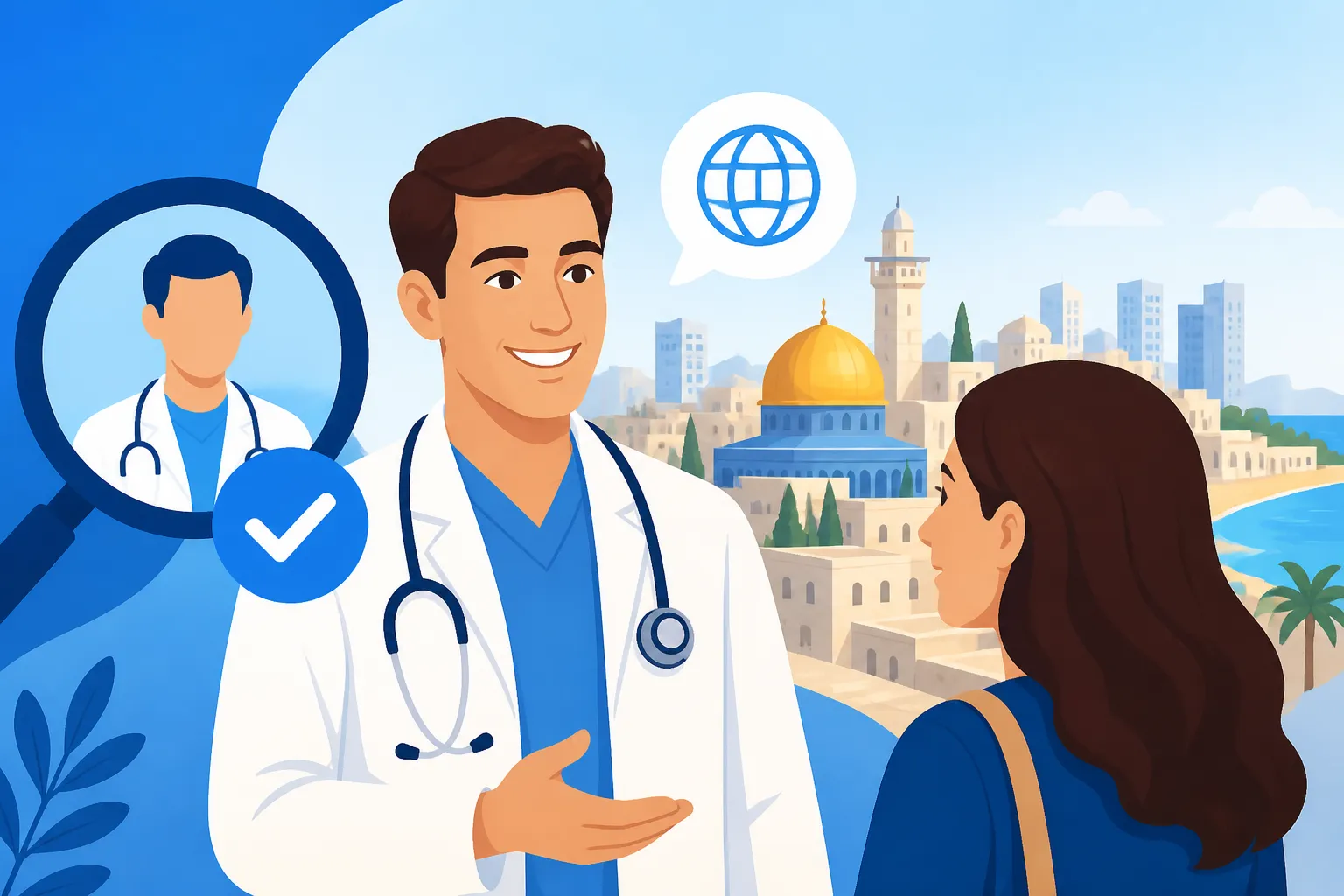
How to Find an English-Speaking Doctor in Israel
Moving to a new country like Israel is an adventure, but let's be honest, the healthcare system can feel like navigating a maze in the dark, especially when you're grappling with a language barrier. The last thing you want when you're feeling under the weather or dealing with a health concern is to struggle to explain your symptoms or understand a diagnosis. This guide is here to shine a light on exactly how to find compassionate, competent, English-speaking doctors across Israel, ensuring you can communicate effectively and receive the care you deserve.
The Initial Challenge: Language Barriers in Israeli Healthcare
One of the first hurdles many expats face in Israel is the language. While many Israelis speak excellent English, especially in the major cities, healthcare settings can be a different beast. It’s not always a given that your doctor, nurse, or even the administrative staff will be fluent, and that can lead to some real anxieties.
Why English is Not Always a Given
When you envision moving to Israel, you might expect a high level of English proficiency, and often you’ll find it in day-to-day life. However, the public healthcare system primarily operates in Hebrew. Doctors, especially those who have been practicing for a long time or in less cosmopolitan areas, might have varying levels of English. You might encounter situations where a doctor understands conversational English but struggles with complex medical terminology, or vice versa. Additionally, a significant portion of the Israeli population immigrated from countries like Russia or Ethiopia, and in some clinics, you might find staff more proficient in those languages than in English. This reality can be quite frustrating and even frightening when you're trying to describe a persistent cough or a sharp pain. The anxiety of being misunderstood, or worse, misunderstanding crucial medical advice, is a perfectly valid concern that many of us have experienced firsthand.
The Importance of Clear Communication in Medical Settings
Effective communication with your doctor isn't just a convenience; it's a critical component of receiving appropriate healthcare. When there’s a language barrier, the risk of misdiagnosis, incorrect treatment, or misunderstanding medication instructions increases significantly. Imagine trying to explain subtle symptoms like dizziness or tingling sensations through hand gestures or a translation app – it's far from ideal. Clear communication fosters trust, allows for a comprehensive understanding of your medical history, and ensures that you're an active participant in your own healthcare decisions. It's about feeling heard, understood, and confident that your well-being is in capable hands, without the added stress of trying to bridge a linguistic gap. Ultimately, peace of mind in a medical setting is priceless, and that starts with the ability to speak freely and be understood.
Leveraging Your Kupat Holim (Health Fund) for English-Speaking Doctors
Once you've officially registered with one of Israel's four health funds – Clalit, Maccabi, Meuhedet, or Leumit – you gain access to the public healthcare system. These Kupot Holim are your primary gateway to finding doctors, and surprisingly, they can be a great resource for English speakers, though it often requires a bit of strategic navigation.
Online Portals and Apps: Your First Stop
The digital age has made many aspects of Israeli bureaucracy a little less daunting, and healthcare is no exception. All the major Kupot Holim have robust online portals and dedicated smartphone apps. These platforms are often available in English, which is a massive relief. When you're searching for a doctor, whether it's a general practitioner (רופא משפחה – rofeh mishpacha) or a specialist, look for filters that allow you to specify language preferences. You can often tick a box for "English" or sometimes even specify other languages like Russian or Arabic.
Using these apps to find a doctor who explicitly lists English as a spoken language can save you a lot of guesswork and frustrating phone calls. Once you've found a potential doctor, you can often view their profile, which sometimes includes a short bio detailing their specialties and languages. Always cross-reference their clinic location and availability with your own needs. For detailed instructions on booking, check out our guide on How to Book Appointments Through Clalit and Maccabi Apps. This method is by far the most efficient way to start your search within the public system.
Direct Contact with Clinics and Administrative Staff
While the apps are fantastic, sometimes the listed information isn't completely up-to-date, or you might have specific questions that the app can't answer. This is where a bit of old-fashioned detective work comes in: calling the clinic directly. It can feel a bit intimidating, especially if you're not confident in your Hebrew, but it's often worth the effort. When you call, start by politely asking, "האם יש כאן מישהו שמדבר אנגלית?" (Ha'im yesh kan mishehu shemedaber Anglit? – Is there anyone here who speaks English?).
Even if the initial receptionist doesn't speak English, they might be able to find a colleague who does, or at least direct you to a clinic within the same Kupah that has English-speaking staff. Patience is key here. You might need to make a few calls, and sometimes explain your situation slowly and clearly. Don't be shy about stating that you need a doctor who can communicate fluently in English due to complex medical needs or simply for your peace of mind. Many administrative staff are used to assisting olim (new immigrants) and expats and will do their best to help.
Asking for Referrals from English-Speaking Professionals
Once you establish a relationship with a family doctor who speaks English, they can become an invaluable resource for finding other English-speaking specialists within your Kupat Holim. Let's say your English-speaking family doctor determines you need to see a dermatologist. You can simply ask them, "Do you know any dermatologists within our Kupah who speak English?" They often have internal networks or personal knowledge of colleagues' language capabilities that aren't always listed on the public portals.
This direct referral method can streamline your search significantly, as it comes with a personal recommendation. It also means your initial English-speaking doctor can write the referral (הפניה – hafnaya) in a way that includes notes about your language needs, potentially paving a smoother path with the specialist. Building this network, starting with a good English-speaking general practitioner, is a wise strategy. For tips on choosing your primary doctor, refer to our guide on How to Choose a Family Doctor (Rofeh Mishpacha) in Israel, and for navigating the referral process itself, see How to Get a Referral (Hafnaya) to a Specialist in Israel.
Beyond the Kupah: Private Options and Other Resources
While your Kupat Holim offers comprehensive coverage, sometimes the ideal English-speaking doctor isn't readily available within the public system, or you might be looking for more immediate access. This is where private options and the robust expat community become incredibly helpful.
Private Clinics and "Sharap" Services
If you find yourself struggling to locate an English-speaking doctor within your health fund, or if waiting lists are too long, exploring private healthcare options is a viable alternative. Israel has a thriving private medical sector. Many doctors, particularly specialists, also maintain private clinics (מרפאות פרטיות – mirpaot pratiyot) in addition to their work with the Kupot. In these private settings, you often find a higher concentration of English-speaking staff, as they frequently cater to an international clientele.
Another option is "Sharap" (שירות רפואי פרטי – sherut refui prati), which refers to private medical services offered within public hospitals, primarily in the larger medical centers like Ichilov (Sourasky Medical Center) in Tel Aviv or Hadassah in Jerusalem. Sharap allows you to choose your doctor and often get faster appointments for consultations, diagnostics, and even procedures, all within a reputable hospital environment. The trade-off, of course, is the cost, which is significantly higher than through your Kupah. However, for those urgent situations or when you simply prioritize clear English communication, these services can be a lifeline. Our guide on Public vs Private Healthcare in Israel: Which Should Expats Choose? delves deeper into this, as does Understanding Private Clinics and Sharap in Israeli Hospitals.
Expat Networks and Online Communities
Never underestimate the power of word-of-mouth recommendations, especially within the expat community. Israel has numerous active online forums and Facebook groups specifically for expats and new immigrants (olim) in cities like Tel Aviv, Jerusalem, and even for country-wide expat discussions. These groups are goldmines for practical advice, including recommendations for English-speaking doctors.
Simply posting a question like, "Can anyone recommend an English-speaking family doctor in Tel Aviv who is good with kids?" or "Looking for an English-speaking cardiologist in Herzliya, preferably within Maccabi," will often yield a wealth of suggestions and personal experiences. Fellow expats have walked in your shoes and are usually more than happy to share their positive (and sometimes negative) experiences. This also offers the benefit of hearing about doctors who are not only proficient in English but are also known for their empathetic approach to foreigners, understanding the unique challenges of healthcare in a new country.
International Health Insurance Providers and Their Networks
For many expats, especially those on work visas, student visas, or traveling extensively, relying solely on the Israeli public health system might not be sufficient, or they might not be eligible immediately. This is where international health insurance providers come into play. Companies like SafetyWing, which cater to digital nomads and global citizens, often have networks of English-speaking doctors and facilities worldwide, including in Israel.
These plans are designed with the expat lifestyle in mind, offering flexibility and access to a broader range of providers. If you have such a policy, check with your provider, like SafetyWing, to see if they have a list of recommended English-speaking doctors or clinics in Israel that are part of their network. They might even offer direct billing arrangements, simplifying the payment process. Furthermore, many international insurance plans now include telehealth services, allowing you to consult with an English-speaking doctor remotely, which can be incredibly convenient for non-emergencies and initial consultations, regardless of your physical location in Israel. For a deeper dive into these options, consider our article on Understanding Private Health Insurance Plans in Israel.
Practical Tips for Your Doctor's Visit
Finding an English-speaking doctor is a huge step, but the appointment itself still requires a bit of preparation and assertive communication to ensure you get the most out of it.
Preparing for Your Appointment
Even when you know your doctor speaks English, it's a good idea to arrive prepared. Medical terminology can be complex, and under stress, it's easy to forget key details.
- Write everything down: Before your visit, list all your symptoms, when they started, what makes them better or worse, and any over-the-counter medications you've tried.
- Medical history: Bring a concise summary of your relevant medical history, including any chronic conditions, allergies, and current medications (with dosages). If you have past medical records from your home country, try to get them translated into English (or ideally Hebrew) if they're in another language.
- Questions: Prepare a list of questions you want to ask the doctor. This ensures you cover all your concerns and don't leave feeling like something was missed.
- Translation apps for specifics: While your doctor speaks English, there might be a very specific medical term or anatomical part that is easier to clarify with a quick translation app on your phone. It's a handy backup for precision.
Being organized will not only help you articulate your concerns clearly but also demonstrate to your doctor that you're an engaged patient, leading to a more productive consultation.
During the Consultation
The consultation is your opportunity to communicate your needs and understand your treatment plan. Don't be afraid to take charge of the conversation, even if it feels a little awkward in a new cultural context.
- Ask for clarification: If the doctor uses a medical term you don't understand, politely ask them to explain it in simpler terms. Phrases like "Can you explain that in layman's terms?" or "What exactly does that mean?" are perfectly acceptable.
- Repeat information: Sometimes, repeating back what you've understood can help ensure accuracy. For example, "So, if I understand correctly, I should take this medication twice a day for five days with food?" This gives the doctor a chance to correct any misunderstandings.
- Don't rush: Doctors in Israel, especially in the public system, can sometimes seem rushed. However, your health is paramount. If you feel pressured, politely state that you have a few more questions.
- Consider bringing a friend: For particularly complex or sensitive appointments, if you're still feeling nervous about the language, consider bringing a Hebrew-speaking friend to act as an additional ear, not necessarily as a full-time translator, but for backup if any confusion arises. This can provide an extra layer of comfort and confidence.
Following Up and Prescriptions
Once your consultation is over, there are a few more steps to ensure your healthcare journey continues smoothly.
- Prescriptions: Your doctor will provide you with a digital prescription (מרשם – mirsham) which is linked to your Kupat Holim card. You can usually fill this at any pharmacy (בית מרקחת – beit mirkachat) affiliated with your health fund. Most pharmacies in larger cities will have at least one staff member who speaks English, but again, patience is a virtue. For a comprehensive guide on medications, see Prescription Medications and Pharmacies in Israel: The Complete Guide and How Do I Fill a Prescription at a Pharmacy in Israel?.
- Follow-up appointments: Make sure you understand if a follow-up is needed and how to book it. Often, this can be done through the Kupah app or by calling the clinic directly.
- Test results: Clarify how and when you will receive test results. Many Kupot Holim provide results directly through their online portals, sometimes with explanations in English.
Navigating Specialties and Emergency Situations
Finding a general practitioner who speaks English is a great start, but what happens when you need a specialist or, heaven forbid, face an emergency? The good news is that these situations are manageable with the right approach.
Finding English-Speaking Specialists
The process for finding English-speaking specialists largely mirrors that for general practitioners, but it can be a bit more challenging due to the specialized nature of their fields.
- Kupat Holim portals and apps: As mentioned, your Kupah's online platforms are still your best bet. Use the language filters and search specifically for the type of specialist you need (e.g., "gynaecologist," "cardiologist," "dermatologist").
- Referrals: Your English-speaking family doctor remains your strongest ally. They can often provide specific recommendations for specialists within your Kupah network who are known to speak English. This is particularly useful for obscure specialties where information might be harder to find. Learn more about getting referrals in How Do I Get a Specialist Referral Quickly in Israel?.
- Private clinics and Sharap: If the public options are limited or the wait times are excessive, private clinics and Sharap services will likely offer a wider selection of English-speaking specialists, especially in central areas like Tel Aviv, Jerusalem, and Haifa. Remember, these will come at a higher cost, and it's wise to check if your supplementary or private health insurance, like a plan from SafetyWing, offers any reimbursement for these services.
- Expat networks: These communities are invaluable for specialist recommendations, as someone else has likely needed the same type of doctor. They can often tell you about specific clinics or even individual doctors known for their excellent care and English proficiency.
Emergency Care and Language
Emergencies are inherently stressful, and a language barrier can amplify that stress tenfold. The good news is that major hospitals in Israel, particularly in larger cities, are well-equipped to handle international patients, and many staff members, especially doctors and nurses in emergency departments, will have at least a functional level of English.
- Dial 101: This is the emergency number for Magen David Adom (MDA), Israel's national emergency medical service. When you call, try to state "English speaker" immediately. They usually have operators who can assist in English. Clearly state your location and the nature of the emergency. For a detailed understanding of emergency services, see Emergency Medical Care in Israel: What Every Newcomer Needs to Know and Understanding Magen David Adom and Emergency Response in Israel.
- Major hospitals: If you go directly to a hospital emergency room (חדר מיון – cheder miyoon), especially in cities like Tel Aviv (e.g., Ichilov/Sourasky, Assuta), Jerusalem (e.g., Hadassah Ein Kerem, Shaare Zedek), or Haifa (e.g., Rambam), you will generally find staff who can communicate in English. While their priority will be your immediate medical needs, they are accustomed to treating diverse populations.
- Bring a companion: If possible, have a Hebrew or English-speaking friend accompany you to the emergency room. They can help advocate for you and ensure clear communication during a very high-stress situation.
Telehealth and Online Doctor Services
Telehealth has seen a significant boom globally, and Israel is no exception. Many Kupot Holim now offer video consultations with doctors, and several private platforms also provide online medical services. These services are often excellent for non-urgent issues, follow-ups, or obtaining prescriptions without a physical visit.
The great advantage here is that many of these telehealth platforms specifically market English-speaking doctors to cater to the international community. This is a convenient option if you're struggling to find an English speaker in your local clinic or simply prefer the ease of an online consultation. Some international health insurance plans, like those offered by SafetyWing, also include or provide reimbursement for telehealth services, further broadening your options for accessing an English-speaking medical professional from the comfort of your home.
| Kupat Holim | English Online Services (App/Website) | General English-Speaking Staff Availability | Notes for Expats |
|---|---|---|---|
| Clalit | Good, often has English interfaces. | Varies by clinic/location; better in major cities. | Largest Kupah, wide reach. Look for specific "English-speaking doctor" filters in their app. Call centers may have English speakers. |
| Maccabi | Excellent, comprehensive English app and website. | Generally good, especially in central areas. | Highly recommended for English speakers due to strong digital tools and expat-friendly services. Their "Maccabi English" line is very helpful. |
| Meuhedet | Moderate, some English options. | Varies, can be more challenging outside major cities. | Growing presence, but English support might require more direct inquiry. |
| Leumit | Limited English interface. | Can be less prevalent. | Smaller Kupah, may require more proactive searching and direct calls for English speakers. |
Remember, while this table offers a general overview, individual clinic and doctor availability will always vary. Persistence and direct communication remain your best tools.
Disclaimer
The information provided in this guide is for general informational purposes only and does not constitute medical, legal, or financial advice. While we strive to provide accurate and up-to-date content, healthcare policies, regulations, and availability of services in Israel can change. Always consult with a qualified professional or the relevant Israeli authorities for specific advice tailored to your situation.