How Bituach Leumi Health Contributions Work in Israel
Navigating the Israeli healthcare system can feel like trying to solve a Rubik's Cube blindfolded, and nothing adds to that confusion quite like understanding Bituach Leumi. For many expats, the National Insurance Institute is a mysterious entity that deducts money from their paychecks or demands quarterly payments, leaving them wondering what it all means for their health coverage. This comprehensive guide is here to unravel the complexities of Bituach Leumi health contributions, explaining exactly how they work and why they're so vital for securing your healthcare in Israel.
What Exactly is Bituach Leumi? More Than Just Health Insurance
When you first arrive in Israel, you’ll hear the term "Bituach Leumi" thrown around a lot. It sounds official, and it is, but its role extends far beyond just basic health insurance. Understanding this broader context is key to grasping why those deductions appear on your payslip.
The Grand Umbrella of Israeli Social Security
Think of Bituach Leumi, Israel's National Insurance Institute, as the backbone of the country's social safety net. It's designed to provide financial security and various benefits to residents across different life stages and circumstances. It’s not just about getting to see a doctor; it’s about a wide array of social security programs that protect you and your family. These include things like old-age pensions, disability benefits, unemployment compensation, maternity leave payments, child allowances, and even benefits for victims of hostile acts. It’s a mandatory system, meaning that nearly every resident in Israel is required to contribute, ensuring that these vital services are maintained for the entire population. This comprehensive approach means your contributions are pooling into a much larger fund that supports a vast range of social welfare initiatives.
Differentiating Health Contributions from General Bituach Leumi Dues
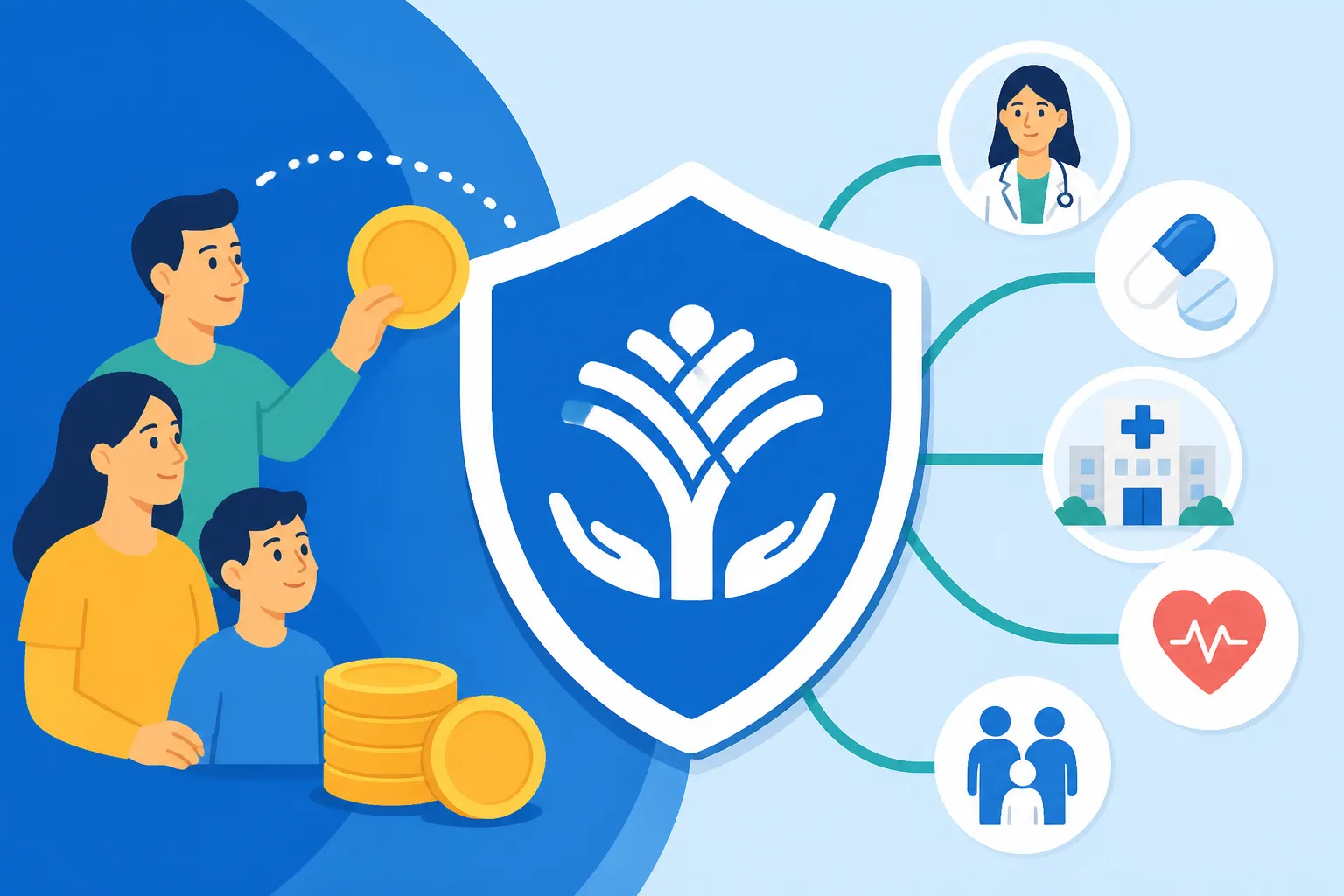
Here’s where it gets a little more specific for healthcare. While Bituach Leumi covers a broad spectrum of social benefits, a significant portion of your overall Bituach Leumi payment is specifically earmarked for health insurance. This is known as Mas Briut, or health tax. This health contribution is not a separate bill you pay; it's integrated directly into your general Bituach Leumi dues. It's the mechanism through which the Israeli government funds the public healthcare system, which is based on the National Health Insurance Law (Bituach Briut Mamlachti).
Essentially, your Mas Briut payments directly support the four public health funds, or Kupot Holim—Clalit, Maccabi, Meuhedet, and Leumit. These health funds are the providers of most public healthcare services in Israel. Without these regular contributions, you wouldn't be able to register with a Kupat Holim, and thus, wouldn't have access to the subsidized medical services that virtually all Israeli residents rely on. It’s a common misconception that paying into Bituach Leumi is just for the "health insurance" part, but it's really the gateway to accessing the entire public healthcare infrastructure.
Who Pays What? Understanding Contribution Tiers and Exemptions
The way you contribute to Bituach Leumi, and specifically its health component, largely depends on your employment status and income level. It's not a one-size-fits-all system, and knowing your category is crucial for understanding your financial obligations.
The Employed Employee: Your Payslip Breakdown
If you're working for an Israeli employer, you'll find that your Bituach Leumi contributions are automatically deducted from your salary each month. This is usually a relief for new expats, as it means one less administrative headache to manage. However, it's still important to understand what those deductions mean. Your employer handles the calculation and remittance to Bituach Leumi on your behalf, taking a portion from your gross salary and adding their own contribution.
The system for employees is typically tiered, meaning the percentage you contribute changes based on your income. There's a lower income bracket with a reduced percentage and a higher income bracket where a larger percentage is applied, up to a certain income ceiling. This progressive system is designed to ensure that those with higher incomes contribute more to the national safety net. For instance, a portion of your income up to a certain threshold might be taxed at a lower rate for health contributions, while any income above that threshold (up to the maximum insurable income) would be taxed at a higher rate. Your employer also contributes a percentage on your behalf, which is a significant benefit of being an employee in Israel. This joint contribution ensures a robust funding mechanism for the health system.
The Self-Employed (Atzmai): Taking Control of Your Contributions
For self-employed individuals, or atzmai in Hebrew, the responsibility shifts entirely to you. This is a crucial distinction and often a source of confusion and stress for expat freelancers or business owners. Unlike employees, there's no employer to handle the deductions; you are solely accountable for calculating and remitting your own Bituach Leumi contributions, including the health component. This means you need to be proactive and organized.
Your contributions as an atzmai are also based on your income, but the calculation method and rates can differ slightly from those for employees. Generally, you'll be required to pay a percentage of your taxable income, with specific rates applied to different income tiers. These payments are typically made on a monthly or quarterly basis, and it's essential to set them aside regularly to avoid falling behind. Many self-employed expats find it invaluable to work with a local ro'e cheshbon (accountant) who can help navigate these calculations, ensure timely payments, and file the necessary reports with both the Israel Tax Authority and Bituach Leumi. Understanding Health Coverage for the Self-Employed (Atzmai) in Israel is vital if you're going this route. Neglecting these payments can quickly lead to penalties and, more importantly, a lapse in your health coverage, which is a risk no one wants to take.
The Unemployed, Students, and Those with No or Low Income
It’s a common misconception that if you’re not working or have very low income, you don’t need to contribute to Bituach Leumi. This is generally not true. The system is designed to provide universal coverage, and as such, even those with no or minimal income are usually required to pay a minimum monthly contribution for health insurance. This minimum payment ensures that everyone, regardless of their current financial situation, maintains access to essential healthcare services through a Kupat Holim.
There are, however, specific situations where individuals might receive reduced rates or certain exemptions. For example, full-time students might qualify for lower rates, and new immigrants (Olim Chadashim) often have special arrangements during their initial period in the country. Homemakers who are not employed might also have specific rules. It's paramount to understand that even if your income is low or non-existent, you must actively register with Bituach Leumi and understand your obligations. Failing to do so can result in significant debt and, critically, prevent you from registering with a health fund and receiving medical care. This minimum contribution is a safeguard, ensuring that the health safety net remains accessible to all residents.
Calculating Your Bituach Leumi Health Contributions: A Step-by-Step Guide
Now for the nitty-gritty: how are these contributions actually calculated? This section will break down the percentages and income thresholds, giving you a clearer picture of what to expect. Keep in mind that these figures are subject to change, so always refer to the official Bituach Leumi website or consult with a professional for the most up-to-date information.
Income Thresholds and Percentage Rates
The amount you contribute to Bituach Leumi for health insurance is calculated as a percentage of your income, but it's not a flat rate across the board. The system uses income thresholds, with different percentages applied to different portions of your income. This progressive structure is a core feature of Israel's national insurance scheme.
For the latest figures, based on available information for 2024 (and likely to carry through to 2026 with minor adjustments, as these rates don't change drastically year-to-year unless significant policy shifts occur), the income levels and rates are as follows. It's important to note that Bituach Leumi defines a "minimum income" and a "maximum income" for contribution purposes, which influence these calculations. The "average wage" in Israel, as determined by Bituach Leumi, is often used as a benchmark for these thresholds.
For employees, health insurance contributions are typically around 3.10% for the portion of income up to 60% of the average wage, and then 5.00% for the portion of income exceeding 60% of the average wage, up to the maximum insurable income. Your employer also contributes to your Bituach Leumi, including the health portion, which is a distinct advantage of being employed.
Self-employed individuals face slightly different rates, generally paying a percentage on their assessable income. For example, for income up to 60% of the average wage, the health contribution might be around 3.10%. For income above 60% of the average wage, up to the maximum insurable income, it might be around 5.00%. These percentages are often part of a larger Bituach Leumi payment that includes other social security components.
Let's illustrate with a hypothetical (using 2024 approximate figures for average wage):
| Contribution Type | Income Up to ~NIS 6,731 (60% of Average Wage) | Income Above ~NIS 6,731 (Up to Max. Insurable Income ~NIS 47,465) |
|---|---|---|
| Employee Health Cont. | 3.10% | 5.00% |
| Self-Employed Health Cont. | 3.10% | 5.00% |
Note: These figures are approximate and based on 2024 Bituach Leumi guidelines. The average wage and maximum insurable income are updated periodically. Always check the official Bituach Leumi website or consult a professional for the most current rates applicable to your situation.
How to Register and Make Payments
For most employees, the process is largely hands-off after your initial registration in Israel. Your employer will take care of the Bituach Leumi deductions and remittances directly from your salary. You'll see these deductions itemized on your tlush sachar (pay slip). This streamlined process is one of the administrative perks of being formally employed in Israel.
However, if you are self-employed, an oleh chadash (new immigrant) during a waiting period, or in another category where automatic deductions aren't happening, you'll need to actively register and make payments. Registration typically occurs at a Bituach Leumi branch, or you might be automatically registered after receiving your Teudat Zehut. Once registered, self-employed individuals often set up recurring payments via bank transfer, direct debit (hora'at keva), or use the online portal on the Bituach Leumi website. Payment slips can also be generated and paid at the bank or post office. It is crucial to ensure these payments are made on time. Setting up an online account can simplify tracking your payment history and current obligations. For a deeper dive into registering, you might find our guide on How to Register with a Kupat Holim as a New Immigrant in Israel helpful, as Bituach Leumi registration is the prerequisite.
Penalties for Non-Payment and What to Do If You Fall Behind
This is where things can get seriously unpleasant, and it’s a situation you absolutely want to avoid. Failing to pay your Bituach Leumi health contributions can lead to a cascade of negative consequences. Firstly, Bituach Leumi can levy significant fines and interest charges on overdue amounts, which can accumulate quickly and turn a manageable sum into a substantial debt. The penalties are not just theoretical; Bituach Leumi is known for being diligent in collecting outstanding dues.
More critically, non-payment directly impacts your health coverage. Without continuous contributions, your eligibility for a Kupat Holim may be suspended or outright canceled. This means you would lose access to subsidized medical care, including doctor visits, prescription medications, hospital services, and specialist referrals. Imagine getting sick or needing urgent care only to discover you’re not covered—it's a terrifying prospect.
If you find yourself in arrears, don't bury your head in the sand. The first step is to contact Bituach Leumi immediately. They often have departments dedicated to helping individuals arrange payment plans. While they are strict, they can be pragmatic if you approach them proactively. Ignoring the problem will only make it worse. Seek advice from an accountant or a financial advisor familiar with Israeli law. It’s always better to address the issue head-on and work out a solution to get your payments back on track and ensure your health coverage is reinstated.
The Crucial Link to Your Health Fund (Kupat Holim) and Public Healthcare
Understanding the mandatory nature of Bituach Leumi health contributions isn't just about avoiding fines; it's about unlocking your access to the entire public healthcare system in Israel. Without it, you're essentially locked out.
No Bituach Leumi, No Kupat Holim
This is perhaps the most critical takeaway for any expat in Israel: your Bituach Leumi health contributions are the non-negotiable gateway to the public health funds. The moment you stop contributing, or if you never start, you cannot legally register with any of the four Kupot Holim (Clalit, Maccabi, Meuhedet, Leumit). This isn't just a bureaucratic hurdle; it means you lose access to the Sal Briut, the national health basket of services that covers a vast range of medical treatments, medications, and preventative care at highly subsidized rates.
Imagine you've settled into your new life in Tel Aviv or Jerusalem, and you need to see a doctor for a routine check-up or because you're feeling unwell. Without being registered with a Kupat Holim, you'd be forced to pay out-of-pocket for every single medical service, which can quickly become astronomically expensive in any country. This fundamental link underscores why understanding and complying with Bituach Leumi is not merely a financial obligation but a prerequisite for a healthy and secure life in Israel. It's the foundation upon which your entire healthcare experience here is built.
Health Coverage for New Olim: A Special Consideration
New immigrants (Olim Chadashim) often encounter a unique set of rules regarding their health coverage. While the ultimate goal is full integration into the Bituach Leumi system, there's usually a short waiting period before you are fully covered under the National Health Insurance Law. This period is designed to allow for administrative processing. During this initial phase, the Ministry of Aliyah and Integration often provides temporary health insurance to new olim, ensuring immediate access to necessary care upon arrival.
However, this temporary coverage has its limitations, and it's a window during which many new arrivals explore supplementary options. Some choose to extend their travel health insurance, like a plan from SafetyWing, if they had one prior to making Aliyah. This can provide peace of mind for those first few weeks or months, especially if the Ministry's coverage is still being processed or if you anticipate needing more extensive coverage than what is immediately provided. For a comprehensive overview of this topic, check out our guide on Understanding Health Insurance Waiting Periods for New Olim in Israel. It is imperative for new olim to follow the steps to register with Bituach Leumi promptly to ensure a smooth transition to permanent health fund membership once the waiting period is over.
Bridging Gaps with Private or Travel Health Insurance
While Bituach Leumi is mandatory for residents and provides comprehensive core coverage, there are situations where supplementary private insurance or travel insurance can be incredibly beneficial, acting as a crucial bridge or enhancing your overall medical safety net. For instance, during the waiting period for new olim, or for individuals on certain types of work visas who might not immediately qualify for full Bituach Leumi benefits, a temporary private plan is essential. Services like SafetyWing offer flexible travel medical insurance that can cover you for short-term stays, during transitions, or if you're frequently traveling in and out of Israel. This can be especially useful for digital nomads or those who need continuous coverage while their residency or employment status is being finalized.
Furthermore, even once fully covered by a Kupat Holim, many residents opt for supplementary health insurance (bituach mashlim) offered by their health funds or private companies. These plans often provide additional benefits beyond the Sal Briut, such as discounts on specialist consultations, broader choices of doctors, reduced co-payments for certain procedures, or even coverage for treatments not included in the basic basket. For tourists, a comprehensive travel insurance policy from a provider like SafetyWing is non-negotiable, as tourists are generally not eligible for Bituach Leumi and would otherwise face prohibitive costs for any medical emergency. It's about understanding what Bituach Leumi covers and where private options can offer added security or fill temporary gaps. If you're pondering whether Is Bituach Mashlim Worth It for Expats in Israel?, we have a full breakdown.
Common Expat Questions and Pitfalls Regarding Health Contributions
The world of Bituach Leumi can be particularly perplexing for expats, who often come from different social security systems. Here, we tackle some of the most frequently asked questions and highlight common pitfalls to help you avoid unnecessary stress.
"I Work Remotely for a Foreign Company – Do I Pay?"
This is arguably one of the most common and complex questions posed by the growing number of remote workers and digital nomads in Israel. You're living in Israel, but your salary comes from an employer based in, say, the US or Europe. Do you still owe Bituach Leumi health contributions? The short answer is: almost certainly, yes, if you are considered a resident of Israel.
Israeli law generally dictates that if you are a tax resident of Israel, you are also considered a resident for Bituach Leumi purposes. This means that regardless of where your employer is physically located or where your income originates, you are subject to Bituach Leumi contributions, including the health component. The challenge here is that your foreign employer won't be deducting these payments for you. This means you effectively become self-employed in the eyes of Bituach Leumi for the purpose of these contributions, even if you don't consider yourself a freelancer in the traditional sense. You'll be responsible for registering with Bituach Leumi and making regular payments based on your income, following the atzmai guidelines. This area is notoriously tricky, and navigating it incorrectly can lead to significant debt. We highly recommend consulting with an Israeli tax advisor or accountant who specializes in international taxation and Bituach Leumi for remote workers. This is exactly why we've put together a dedicated guide on How to Handle Tax as a Remote Worker for a Foreign Company in Israel.
"What if I Have Private Health Insurance from My Home Country?"
Another common misconception amongst new arrivals is that maintaining a private health insurance policy from their home country or purchasing an international private plan like those offered by SafetyWing exempts them from Bituach Leumi contributions. This is a critical point to clarify: your private health insurance, no matter how comprehensive or expensive, does not negate your obligation to pay Bituach Leumi contributions if you are an Israeli resident.
Bituach Leumi is a mandatory national insurance scheme. It's not an optional service you can decline because you have alternative coverage. Your contributions are what fund the public healthcare system for all residents, and having private insurance simply provides a supplementary layer of coverage, not a replacement. Think of it this way: your private insurance might offer faster access to specialists, cover treatments outside the Sal Briut, or give you more choice in private hospitals. These are fantastic benefits, and many expats choose to combine public and private coverage for enhanced care. However, the legal requirement to pay into Bituach Leumi for health insurance remains. If you are a resident, you must contribute, and only then can you register with a Kupat Holim. Private insurance from providers like SafetyWing is excellent for travel or as a temporary solution but should not be seen as an alternative to your Bituach Leumi obligations if you are an Israeli resident.
Navigating Language Barriers and Bureaucracy
Let's be honest, dealing with any country's bureaucracy can be frustrating, and Israel is no exception. Add a language barrier, and the process of understanding Bituach Leumi can feel like an insurmountable challenge. The forms are in Hebrew, the phone menus are in Hebrew, and while many staff members at Bituach Leumi branches speak English, it's not guaranteed, and they may not always be equipped to explain complex scenarios in a language you fully grasp.
This frustration is real and completely valid. Many expats find themselves feeling lost and unheard. However, there are strategies to help you navigate this. Firstly, always try to bring a Hebrew speaker with you to appointments—a friend, a colleague, or a professional translator. If that's not possible, utilize online translation tools to help you decipher documents or prepare specific questions in Hebrew before calling or visiting. Expat community groups online are also invaluable resources; often, someone has faced a similar situation and can offer advice or recommend an English-speaking professional. Ultimately, for complex financial or legal matters related to Bituach Leumi, particularly for the self-employed or those with unique income situations, investing in a reputable English-speaking Israeli accountant or lawyer can save you immense headaches and ensure compliance. Remember, seeking help is not a sign of weakness; it's a smart move to protect your health and financial well-being in your new home.
Current Bituach Leumi Health Contribution Rates (2024 – Estimated for 2026)
To give you a clearer picture, here's a summary of the health contribution rates based on the most recent publicly available information (2024), which generally remains stable for the near future unless there are major legislative changes. These are typically updated annually, so always double-check the official Bituach Leumi website for the exact figures applicable in 2026.
| Contribution Type | Income Portion | Current Rate (approx.) |
|---|---|---|
| Employee | Up to 60% of average wage (approx. NIS 6,731/month) | 3.10% |
| Above 60% of average wage up to maximum insurable income (approx. NIS 47,465/month) | 5.00% | |
| Self-Employed | Up to 60% of average wage (approx. NIS 6,731/month) | 3.10% |
| Above 60% of average wage up to maximum insurable income (approx. NIS 47,465/month) | 5.00% | |
| Minimum Payment | For non-working or low-income individuals | Approx. NIS 112/month (This covers health insurance only portion, total Bituach Leumi minimum is higher) |
Please note: The "average wage" and "maximum insurable income" are determined by Bituach Leumi and typically adjust each year. The percentages shown are for the health insurance component only; total Bituach Leumi contributions include other social security payments.
Understanding how Bituach Leumi health contributions work is absolutely foundational to living a secure and healthy life in Israel. It's not just a bureaucratic requirement; it's the gateway to one of the world's most accessible public healthcare systems. By understanding your obligations, making timely payments, and knowing when to seek professional advice or supplementary coverage from providers like SafetyWing, you can navigate this system with confidence and ensure you and your family are well cared for.
Disclaimer
The information provided in this guide is intended for general informational purposes only and does not constitute legal, financial, or medical advice. While we strive for accuracy, Bituach Leumi laws and regulations can be complex and are subject to change. Always consult with a qualified Israeli legal or financial professional for advice tailored to your specific situation.