How Do I Use the Rav-Kav Card on Buses and Trains in Israel?
Navigating public transportation in Israel can feel like trying to decipher an ancient scroll while riding a rollercoaster, especially when you’re new here. The Rav-Kav card, while a lifesaver once you get the hang of it, often adds another layer of "what in the world?" to the mix for expats and tourists alike. This guide is here to untangle the wires, explaining exactly how to get, load, and seamlessly use your Rav-Kav card on Israel's buses and trains, ensuring you can travel across the country with confidence and far less stress.
What Exactly is a Rav-Kav Card and Why Do You Need It?
Let's face it, public transport in a new country can be daunting. The schedules, the routes, the language barriers, and then, invariably, the payment system. In Israel, the Rav-Kav card is your golden ticket – or, more accurately, your indispensable chip card – for almost all forms of public transportation. Forget fumbling for cash on a crowded bus; since 2015, cash payments are largely a thing of the past for bus fares in most major cities. This means the Rav-Kav isn't just a convenience; it's practically a necessity.
This little card isn't just a glorified debit card for transport, though. It's a smart card that holds various travel "contracts" or stored value, allowing for flexible payment options, transfer benefits, and often significant discounts that you wouldn't get otherwise. Think of it as a universal key that unlocks the entire Israeli public transport network, from the bustling bus lines of Tel Aviv to the intercity trains connecting Haifa and Be'er Sheva. While the initial setup might feel like another administrative hurdle in a long list of them, mastering your Rav-Kav will vastly improve your daily commute and your ability to explore this incredible country.
Types of Rav-Kav Cards Available for Foreigners
When you first encounter the Rav-Kav, you'll quickly realize there isn't just one type. Understanding the differences is crucial to picking the right card for your specific needs, whether you're here for a short visit or planning to put down roots. Each type offers different levels of personalization and benefits, so choose wisely.
First up, we have the Anonymous Rav-Kav (Rav-Kav Anonimi). This is the simplest option and often the go-to for tourists or those on very short stays. You can purchase it easily at most central bus or train stations and designated loading points. No personal details, no photos, just a straightforward transaction. The anonymity is its biggest strength and weakness; while it's quick to acquire and use, if you lose it, your loaded funds are gone forever, and it doesn't qualify for any special discounts. It's a quick fix but lacks the security and benefits of its personalized counterpart.
Then there's the Personalized Rav-Kav (Rav-Kav Ishi). This is the one recommended for anyone planning to be in Israel for more than a few weeks, including students, temporary residents, and especially Olim (new immigrants). This card is linked directly to your identity, featuring your name and photo. The huge advantage here is that if you lose it, you can block the card and transfer any remaining balance or active passes to a new card, saving you from financial loss. More importantly, the Personalized Rav-Kav is your gateway to various discounts, such as those for Olim, seniors, students, and youth. These discounts can make a significant difference to your monthly travel budget.
While there was once a "Semi-anonymous" option, the focus now is primarily on the Anonymous and Personalized cards. For anyone settling in, or even just here for an extended period, investing the time to get a Personalized Rav-Kav is genuinely worth it. The peace of mind alone, knowing your funds are protected, is invaluable, not to mention the potential savings from discounted fares. It’s an essential part of becoming a local.
Getting Your First Rav-Kav Card: Initial Steps and Common Hurdles
Alright, so you've decided which Rav-Kav is for you. Now comes the exciting part: actually getting one. For the Anonymous card, it's usually as simple as walking up to a ticket counter at a central bus station (like the Tel Aviv Central Bus Station or Jerusalem's Central Bus Station), a major train station, or an "Al Hakav" service center, paying a small fee (around 5-10 NIS), and walking away with your new card. No forms, no fuss.
However, if you're aiming for the Personalized Rav-Kav, be prepared for a slightly more involved process. You'll need to visit a designated "Al Hakav" service center. These are usually located at major transportation hubs, like the aforementioned central bus and train stations, as well as Ben Gurion Airport upon arrival. For a Personalized Rav-Kav, you'll need to bring your passport, and if you have one, your Israeli ID (Teudat Zehut). You'll also need a recent passport-sized photo of yourself. The photo is crucial as it appears on the card itself, serving as proof that the card belongs to you, especially when conductors check for discounted fares. Remember, if you've recently made Aliyah, you'll also want to bring your Teudat Oleh, as this document is often required to prove your eligibility for new immigrant discounts. Having all your documents in order will save you a lot of time and frustration. If you need to know more about obtaining your official Israeli ID, check out our guide on how to get a Teudat Zehut and Tax File Number in Israel.
The process at the service center involves filling out a form with your personal details and indicating any discounts you might be eligible for. Don't be surprised if there's a bit of a wait, especially during peak hours, and while many staff members speak English, it's not guaranteed. Be patient, bring a book, and don't hesitate to use a translation app on your phone if you're struggling with the Hebrew. Once everything is submitted, they'll issue your Personalized Rav-Kav on the spot. While it might feel like another hoop to jump through, especially in those frantic first 90 days in Israel, it’s a necessary step towards smooth sailing on public transport.
Understanding Fare Structures and Loading Your Rav-Kav
This is where many newcomers hit a snag. It's not just about "loading money" onto your Rav-Kav; it's about understanding the different types of travel "contracts" and value options available. Israel's public transport system uses a zone-based fare structure, which can be initially confusing, but once you grasp the basics, you'll find it incredibly efficient and often quite economical.
Gone are the days of haggling with a bus driver over the correct fare to your destination. With Rav-Kav, everything is pre-loaded or pre-defined. The system offers flexibility, catering to occasional travelers, daily commuters, and everyone in between. Taking the time to understand these options will ensure you're always getting the best value for your journeys and avoiding unexpected charges.
The Concept of "Value Loaded" (Erech Tzavur)
Let’s demystify "Erech Tzavur" (ערך צבור), which literally translates to "stored value." This is probably the most flexible way to use your Rav-Kav, especially if your travel patterns are irregular. Essentially, you load a monetary amount onto your card, and the system often gives you a bonus. For example, if you load 50 NIS, you might get 62.50 NIS of travel credit; loading 100 NIS might give you 125 NIS. This isn't a special promotion; it's a standard benefit built into the Rav-Kav system, making public transport slightly more affordable for everyone.
This bonus value applies across all types of Rav-Kav cards, but personalized cards, particularly for eligible users, can unlock even higher bonus percentages. For instance, senior citizens often receive a substantial 50% discount on all fares loaded via Erech Tzavur, effectively doubling the value of their loaded money. New immigrants (Olim) also receive specific discounts for a period after their Aliyah, making a Personalized Rav-Kav essential for maximizing these benefits. The beauty of Erech Tzavur is its flexibility: you can use it on any bus, any train (within applicable zones), and for any length of journey, with the system automatically deducting the correct fare. To better understand how these costs factor into your daily life, you might want to read our guide on how much public transport costs in Tel Aviv.
When you tap your card on a bus or at a train station gate, the cost of your journey is deducted from your Erech Tzavur. It's a convenient, pay-as-you-go method that ensures you always have credit for unexpected trips. Just remember to keep an eye on your balance, which you can easily check through various apps or at loading stations, to avoid finding yourself stranded with insufficient funds.
Deciphering Daily, Weekly, and Monthly Passes (Hofshi Hodshi, Hofshi Shvui)
Beyond the flexible Erech Tzavur, Israel's public transport system also offers various periodic passes, often referred to as "contracts." These passes are fantastic for regular commuters or those planning intensive travel within a specific timeframe or region. The most common ones you'll hear about are Hofshi Hodshi (חופשי חודשי – monthly pass), Hofshi Shvui (חופשי שבועי – weekly pass), and Hofshi Yomit (חופשי יומי – daily pass). These passes provide unlimited travel within a pre-defined geographical area for their respective durations.
The key to these passes is understanding the geographical zones. Israel is divided into various transportation zones, and a pass bought for one zone (e.g., "Tel Aviv-Jaffa and surrounding areas") will only be valid within that specific zone. If you commute between cities, say from Rehovot to Tel Aviv, you'll need an intercity pass that covers both zones, or a broader national pass (though these are typically more expensive and might not be necessary for everyone). The apps and ticket machines will help you select the correct zone-based pass. For someone moving to Israel, especially if you're commuting to work or university every day, a Hofshi Hodshi can offer significant savings compared to paying per ride with Erech Tzavur. Once your belongings arrive via a company like Sirelo, and you're settled into a routine, these passes become indispensable for daily life and budget management.
These passes are loaded onto your Personalized Rav-Kav. When you tap your card on a bus or train, if you have an active pass that covers your journey, the system will use the pass first, saving your Erech Tzavur for journeys outside your pass's coverage. This layering of options allows for maximum efficiency and cost-effectiveness. It's truly worth calculating whether a daily, weekly, or monthly pass makes sense for your routine, especially if you find yourself using public transport frequently.
Convenient Ways to Load Your Rav-Kav: Apps and Stations
Keeping your Rav-Kav loaded and ready for action is essential. Thankfully, Israel offers a growing number of convenient options, moving well beyond just physical ticket counters. While physical loading stations are still widely available, the digital age has brought some fantastic app-based solutions that many expats find invaluable.
Physical Loading Stations: You can load your Rav-Kav at any major bus station or Israel Railways train station ticket counter. Look for the "Al Hakav" service centers, which handle everything from issuing Personalized cards to loading any type of contract or Erech Tzavur. Many supermarkets, kiosks, and even some pharmacies, particularly those within the Kupot Holim (health funds) network, also have Rav-Kav loading machines. These machines are usually user-friendly, with English language options, and accept cash or credit/debit cards. It’s always good to know where the nearest physical loading point is, especially when you’re out and about and suddenly realize your card is running low.
Online and App-Based Loading: This is where modern convenience truly shines. Several apps allow you to load your Rav-Kav from your smartphone, a feature that has become a game-changer for many. The most popular options include:
- Rav-Kav Online: This is the official app, developed by the Ministry of Transport. It allows you to check your card balance, view your travel history, and load various contracts or Erech Tzavur using a credit card. You’ll need a smartphone with NFC (Near Field Communication) capability to "read" and "write" to your physical Rav-Kav card by tapping it against your phone.
- Moovit: While primarily known as a journey planning app, Moovit also integrates Rav-Kav loading functionality. This means you can plan your route and top up your card all within the same app, streamlining your travel experience.
- CIMB (Cellopark) and Pango: These are widely used apps for parking payments in Israel, but they've expanded to include Rav-Kav loading as well. They operate similarly to Rav-Kav Online, using NFC to interact with your physical card.
Right after landing, getting an Israeli SIM card, or even an eSIM from providers like Airalo, is crucial. It lets you download essential apps like Rav-Kav Online or Moovit to load your card and navigate your new surroundings. You'll need a local phone number for most of these apps and services, so getting connected is a priority. For payment, while foreign credit cards sometimes work, having an Israeli bank account linked to a debit or credit card is generally smoother. Check out our guide on how to open an account at Bank Hapoalim as a foreigner for more details on setting up your finances. Utilizing these apps not only saves you time but also provides the flexibility to top up your card anytime, anywhere, as long as you have an internet connection and a charged phone. It's a prime example of how digital government services in Israel are making daily life easier for residents.
Navigating Israel's Public Transport with Your Rav-Kav
Once your Rav-Kav is loaded and ready, it’s time to hit the road – or rather, the bus and train tracks! Using the card itself is straightforward, but there are slightly different protocols for buses versus trains, as well as crucial information about transfers that can save you money and headaches. Understanding these nuances will make you a seasoned traveler in no time.
One of the biggest anxieties for newcomers is often the fear of doing something wrong or incurring extra charges. While the system is designed to be user-friendly, knowing the specifics for each mode of transport can alleviate that initial apprehension. Israeli public transport is generally reliable and efficient, and with your Rav-Kav in hand, you'll be zipping around like a local.
Using Rav-Kav on Buses: The Tap-On Protocol
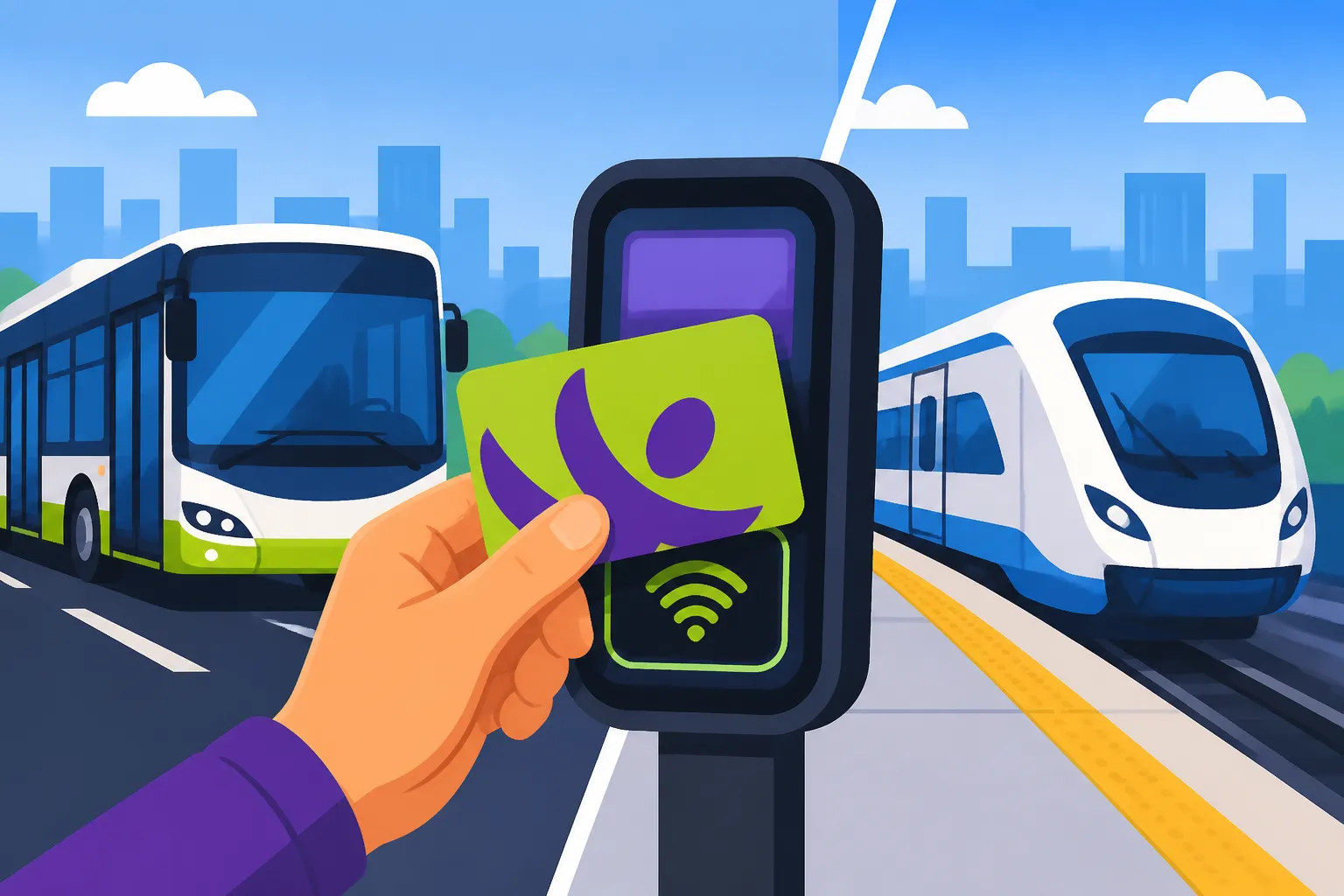
Riding the bus in Israel with your Rav-Kav is generally quite simple. As you board the bus, you’ll see a Rav-Kav reader near the driver. Simply tap your card on the designated pad. You should hear a beep or see a green light, indicating a successful tap. The fare for your journey will be automatically deducted from your card, whether from your Erech Tzavur or by activating a relevant pass.
Unlike some other public transport systems, for buses in most major cities, you typically only need to tap on when you board. There’s no need to tap off when you exit, as the system charges a flat fare (or activates your pass) upon entry within that specific zone. If you have a Personalized Rav-Kav with an active pass that covers the route, the system will automatically utilize that. If you're using Erech Tzavur, it will deduct the standard fare. What’s fantastic about this system is the 90-minute transfer window. Once you tap on a bus, you have 90 minutes to transfer to another bus (or the light rail in Jerusalem) within the same fare zone without being charged again. This makes multi-leg journeys incredibly economical. Always be sure to tap your card on the second (and third, etc.) bus, even if you're within the 90-minute window; the system will recognize your valid transfer and won't charge you extra. Don't be shy about confirming your tap with the driver, especially if you're unsure – a quick "Rav-Kav?" (pronounced Rahv-Kahv) and a nod will usually suffice.
A common frustration for expats is when the card reader isn't working, or you're unsure if your tap registered. Don't panic! Politely ask the driver if it worked or try tapping again. Sometimes the readers are a bit finicky. It's always a good idea to have a small amount of Erech Tzavur loaded on your card, even if you primarily use passes, just in case you accidentally travel outside your pass's zone or need a quick top-up. Remember, cash payments are almost universally not accepted on buses, so your Rav-Kav truly is essential.
Riding Israel Railways with Your Rav-Kav: Tap In and Tap Out
Using your Rav-Kav on Israel Railways trains operates on a slightly different principle than buses: here, it's a mandatory tap in, tap out system. This is crucial to remember, as failing to tap out can result in you being charged the maximum possible fare from your starting station, which can be a hefty sum.
When you arrive at a train station, you'll encounter automated gates. To enter the platform area, simply tap your Rav-Kav card on the reader at the gate. The gate will open, allowing you through. This "taps in" your journey. When you reach your destination, you'll again need to tap your card on the reader at the exit gates to leave the station. The system then calculates the fare based on your entry and exit points and deducts it from your Erech Tzavur or validates your relevant pass. If you have a Hofshi Hodshi or Hofshi Shvui that covers your train journey, the system will prioritize using that pass. Otherwise, it will deduct the fare from your Erech Tzavur. If you're using Erech Tzavur, you need to ensure you have enough balance to cover the fare before tapping in.
It's really important to get into the habit of tapping both in and out on trains. The system needs both points to accurately calculate your fare. If you forget to tap out, not only will you be overcharged, but you might also encounter issues using your card for subsequent train journeys until the discrepancy is resolved. Don't be like that exasperated expat (me!) who once walked out of a train station lost in thought, only to realize later that a small trip from Tel Aviv to Herzliya suddenly cost the equivalent of a ride to Nahariya. For a deeper dive into train travel, you can consult our dedicated guide on understanding train travel with Israel Railways (Rakevet Yisrael).
Planning Your Journey and Checking Balances
While the Rav-Kav makes payment easy, knowing where you're going and what your card status is, truly empowers your travel. Nobody wants to be stuck without funds or on the wrong bus. Luckily, several digital tools are available to help you plan your journey and manage your Rav-Kav effectively.
For journey planning, the undisputed champion in Israel is the Moovit app. It's incredibly accurate, providing real-time bus and train schedules, exact routes, estimated arrival times, and even alerts for delays or changes. Simply input your starting point and destination, and Moovit will give you the best public transport options, including walking directions to stops. Google Maps also offers reliable public transport directions, though often without the same level of real-time updates as Moovit. Both apps are available in English and are indispensable for navigating Israel's cities. For a comprehensive overview of how to get around, our guide on The Expat Guide to Public Transport in Israel provides even more insights.
Checking your Rav-Kav balance and remaining passes is just as important. The easiest way is through the Rav-Kav Online app (or other integrated apps like Moovit, CIMB, Pango) on your smartphone. By tapping your card to your phone's NFC reader, you can instantly see your current Erech Tzavur balance, active passes, and even recent travel history. Alternatively, you can check your balance at any Rav-Kav loading station or ticket counter. Some bus readers also display your remaining balance after a successful tap, though this is usually less detailed. Always make it a habit to check your balance before heading out, especially if you have an important appointment or a long journey planned.
Common Rav-Kav Headaches and How to Solve Them
Let's be real, life in Israel comes with its share of bureaucratic quirks and unexpected challenges, and the Rav-Kav system, while mostly efficient, isn't immune. From lost cards to technical glitches, encountering an issue with your Rav-Kav can be incredibly frustrating, especially when you're reliant on public transport. But don't fret! Many common problems have straightforward solutions, and knowing them beforehand can save you a lot of stress.
The key to resolving these issues often lies in patience, preparedness, and knowing where to go for help. While it might sometimes feel like you're speaking to a brick wall (or just a very busy service representative), the system is designed to help you, particularly if you have a Personalized Rav-Kav.
Lost, Stolen, or Damaged Rav-Kav Cards
Losing your Rav-Kav can feel like losing your wallet, especially if you have a significant balance loaded onto it. This is precisely why the choice between an Anonymous and a Personalized card is so crucial, as their recovery options differ vastly.
If you lose an Anonymous Rav-Kav, sadly, you're out of luck. Because it's not linked to any personal information, there's no way to prove it was yours, and therefore, no way to recover the funds or transfer any passes. It's a painful but valuable lesson for many tourists and new arrivals who opt for the quick and easy Anonymous card. Consider it a casualty of convenience. You'll simply need to purchase and load a new card, starting from scratch.
However, if you've wisely invested in a Personalized Rav-Kav, you're in a much better position. This is the ultimate peace of mind. If your Personalized card is lost, stolen, or even damaged beyond use, you can block it and transfer the remaining balance and any active contracts to a new card. To do this, you'll need to visit an "Al Hakav" service center. Bring your passport or Teudat Zehut (the ID you used to register the card), and they will assist you. They can verify your identity, block the old card, and issue a new one, onto which your remaining funds and passes will be transferred. There might be a small fee for the new physical card, but it's a negligible cost compared to losing all your accumulated travel credit. This feature alone makes the Personalized Rav-Kav the superior choice for anyone residing in Israel.
Card Not Reading, Insufficient Funds, or System Glitches
It happens to the best of us: you tap your card, and… nothing. Or worse, the dreaded "insufficient funds" message flashes. These minor glitches can throw a wrench into your carefully planned commute, but they're usually easy to navigate.
If your Rav-Kav card isn't reading on the bus, first try tapping it again, perhaps at a slightly different angle or on another reader if available (some buses have multiple). Sometimes the reader is just finicky, or you didn't hold it long enough. If it still doesn't work, politely inform the driver. They might suggest trying another card or, in rare cases, might let you ride if you genuinely seem to be trying to pay, especially if it’s a short trip. However, don't count on this; it's a kindness, not a right. For trains, if the gate isn't reading your card, try moving to another gate or asking a station attendant for help.
The "insufficient funds" message is usually quite literal. Your Erech Tzavur balance is too low, or you don't have an active pass covering your journey. This is where those smartphone apps come in handy for a quick top-up. If you find yourself completely out of funds with no way to load your card immediately, you might need to purchase a single-use paper ticket (if available for your route, usually only on trains and light rail) or, in a pinch, ask a fellow passenger if they can tap you on for cash, though this is not a common practice. Remember, prevention is key: always check your balance before heading out, especially for long journeys. If you ever find yourself in a genuine emergency, knowing the emergency phone number in Israel can be life-saving, but for transport issues, preparation is your best friend.
Sometimes, the apps or the overall system can experience minor glitches. If an app isn't loading your card, try restarting your phone, checking your internet connection, or trying a different Rav-Kav loading app. Technology isn't perfect, but having multiple options (physical stations and various apps) usually means you won't be stranded for long.
Maximizing Your Rav-Kav Experience and General Tips
Beyond the basics, there are several ways to really get the most out of your Rav-Kav and make your public transport experience in Israel as smooth and cost-effective as possible. As an expat, understanding these tips can not only save you money but also reduce daily stresses. It's all about navigating the system smart, not just hard.
From taking advantage of discounts to bridging language gaps and keeping an eye on future developments, a little extra knowledge goes a long way. After all, public transport is a cornerstone of daily life here, and mastering it means mastering a significant part of your new routine.
Exploiting Discounts and Special Passes
One of the biggest advantages of the Personalized Rav-Kav is access to a range of discounts that significantly cut down travel costs. If you are an Oleh (new immigrant), you are often eligible for special discounts for a certain period after your Aliyah. Make sure your Personalized Rav-Kav reflects this status by providing your Teudat Oleh when you apply for the card. This could mean a substantial percentage off on Erech Tzavur loadings or specific pass types. These benefits are part of the broader absorption basket designed to help new immigrants settle in.
Beyond Olim, other groups can also benefit:
- Students: University and college students can often get student-specific passes or discounts. You'll need valid student identification for this.
- Senior Citizens: Individuals over a certain age are entitled to significant discounts, often up to 50% off regular fares.
- Youth: Children and teenagers also have reduced fare options.
Always inquire about these discounts when you get or renew your Personalized Rav-Kav at an "Al Hakav" service center. Having a Personalized card and proving your eligibility with the relevant documents (like your Teudat Zehut, student ID, or Teudat Oleh) is the only way to unlock these savings. These benefits highlight why understanding national systems, like your National Health Insurance (Bituach Briut Mamlachti), can sometimes lead to other benefits too, as it's all part of your recognized status as a resident.
Overcoming the Language Barrier on Public Transport
Let's be honest, Hebrew can be a challenge, especially when you're new. While many Israelis speak English, particularly in major cities, you'll inevitably encounter situations on public transport where language can be a barrier. Bus drivers, while usually patient, often have tight schedules and might not have the time (or the English skills) for a lengthy conversation.
To mitigate this, always try to plan your journey in advance using apps like Moovit or Google Maps, which provide directions in English and often announce stops. This way, you won't need to rely solely on asking the driver for your stop. Learn a few key phrases in Hebrew: "Rav-Kav, bevakasha" (Rav-Kav, please) when you tap your card, "Toda" (Thank you), and "Slicha" (Excuse me). Don't be afraid to ask other passengers for help; Israelis are generally very warm and willing to assist, especially if you appear lost or confused. A simple "English?" or pointing at your map can often elicit a helpful response. Remember, learning Hebrew: a complete guide to Ulpan and language levels can significantly enhance your independence in all aspects of Israeli life, including public transport.
Future Developments and Contactless Payments
The world of public transport payment is constantly evolving, and Israel is no exception. While the Rav-Kav card remains the dominant and most cost-effective method for now, especially with its integrated discounts and passes, there's a growing push towards broader contactless payment options.
The Ministry of Transport has been introducing initiatives that allow passengers to pay directly with their credit cards or via payment apps (like Apple Pay or Google Pay) on buses and even some train lines. This new system offers similar features to Erech Tzavur, including the 90-minute transfer window. However, it's still in its earlier stages and doesn't yet fully replicate all the long-term passes and deep discounts available through the Personalized Rav-Kav. For visitors, this might offer a quick, convenient option, but for residents, the Rav-Kav will likely remain the smartest choice for comprehensive coverage and maximum savings for the foreseeable future. Keep an eye on announcements from the Ministry of Transport or the Rav-Kav Online app for the latest updates on these evolving payment methods.
Rav-Kav Card Types and Features Overview
To help summarize the main differences and benefits, here’s a quick overview of the two primary Rav-Kav card types you'll encounter in Israel:
| Rav-Kav Card Type | Best For | Registration Required | Recoverable if Lost | Discounts/Oleh Benefits | Rechargeable Online/App |
|---|---|---|---|---|---|
| Anonymous | Tourists, Short-term visitors, Infrequent travel | No | No | No | Yes |
| Personalized | Residents, Olim, Students, Seniors, Regular commuters | Yes (Passport/ID, Photo) | Yes | Yes (Oleh, student, senior, youth, etc.) | Yes |
This table should help you quickly decide which card best suits your needs and reminds you of the critical advantage of getting a Personalized Rav-Kav for long-term living in Israel.
Disclaimer
The information provided in this guide is intended for general informational purposes only and is based on current regulations and practices in Israel as of the publication date. Public transportation rules, fare structures, and digital services are subject to change by the Ministry of Transport and relevant operators. While every effort has been made to ensure accuracy and provide helpful, realistic advice, it is always recommended to consult official Israeli government websites (such as Rav-Kav Online, Ministry of Transport, and Israel Railways) or "Al Hakav" service centers for the most up-to-date and specific information regarding your personal situation.