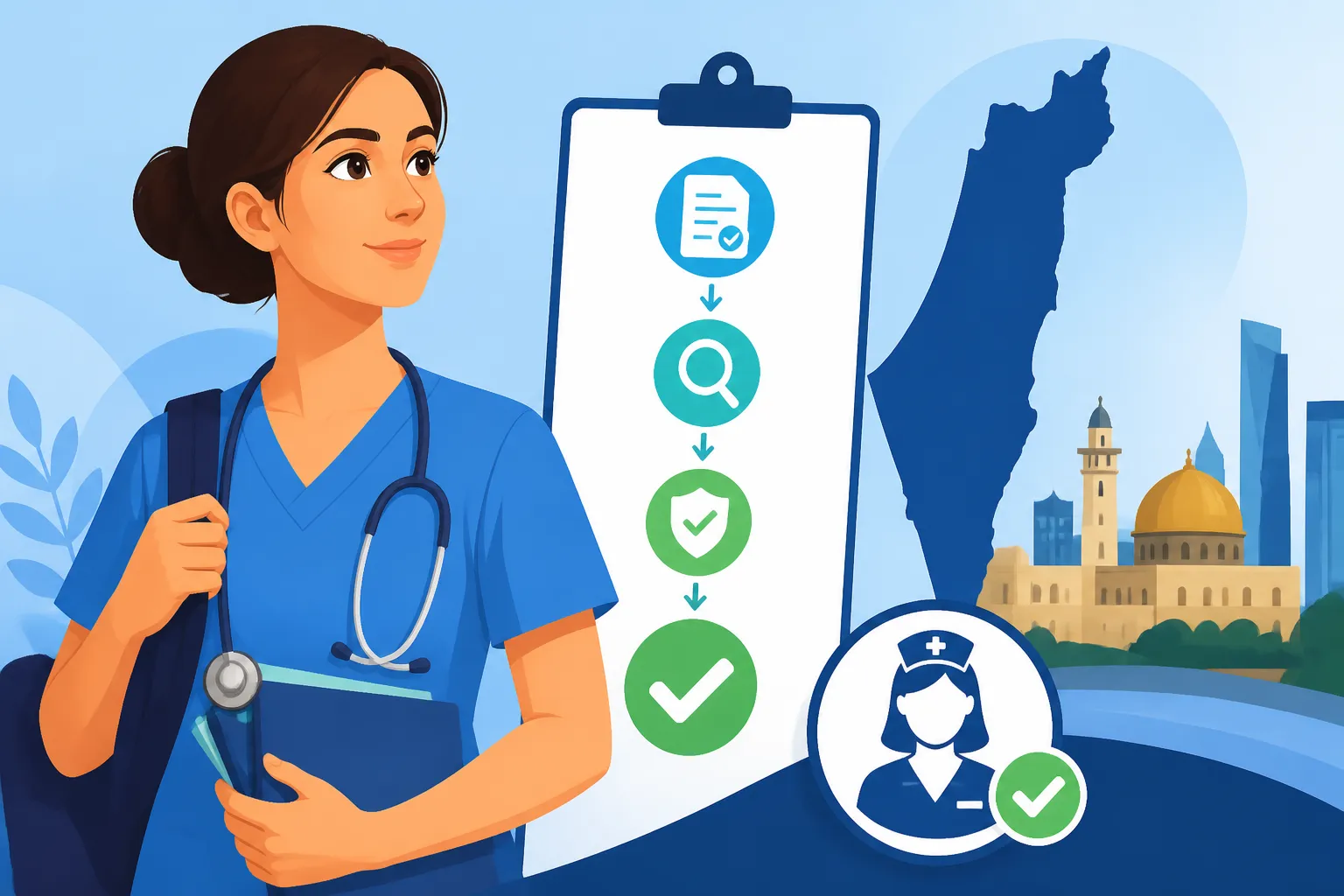
How Do I Validate My Nursing Qualification in Israel?
Moving to Israel as a qualified nurse often comes with a unique blend of excitement and an overwhelming sense of bureaucracy. You’ve got years of training, invaluable experience, and a passion for helping people, but the process of getting your foreign nursing qualification recognized here can feel like navigating a maze blindfolded. This guide is here to demystify the steps, requirements, and potential pitfalls you'll encounter when validating your nursing degree in Israel, helping you smoothly transition into the Israeli healthcare system.
Initial Assessment by the Ministry of Health: The First Hurdle
Before you can even think about donning scrubs in an Israeli hospital or clinic, your foreign nursing qualification needs to pass the rigorous scrutiny of the Israeli Ministry of Health (Misrad HaBriut). This isn't just a formality; it's a critical, often painstaking, process designed to ensure that your training meets Israel's high standards. It can feel like you're being asked to prove everything you've ever learned, and believe me, that frustration is completely valid. Many expats go through it.
Understanding the Baseline Requirements
First things first, you need to understand the basic criteria. The Ministry of Health wants to see that your education is equivalent to an Israeli Registered Nurse (RN) degree. This typically means a minimum of three years of full-time study in a recognized nursing program, with a strong emphasis on both theoretical knowledge and extensive practical clinical experience across various disciplines (med-surg, pediatrics, obstetrics, psychiatric nursing, etc.). They're not just looking at the number of hours, but the content and quality of those hours. For instance, if your program focused heavily on one area and barely touched another, you might be asked to complete supplementary courses here in Israel.
You'll need to have graduated from an accredited institution in your home country. "Accredited" means recognized by the relevant governmental or professional body in that country. If your school isn't well-known internationally or doesn't have clear accreditation, this can cause significant delays. It's not uncommon for the Ministry to require direct verification from your educational institution, which adds another layer of waiting and coordination. Be prepared for a lot of back-and-forth communication, often with significant time differences, making the whole process feel even more drawn out.
Gathering Your Mountain of Documents
This is where the real paper chase begins. The Ministry of Health requires an exhaustive list of documents, all of which generally need to be translated into Hebrew by a certified Israeli notary and apostilled (if your home country is part of the Hague Convention) or authenticated by an Israeli consulate/embassy. And yes, they usually want original copies or notarized true copies of everything. Don't even think about sending anything that isn't perfectly presented, or you'll be starting over.
Here's a breakdown of what you'll typically need to prepare:
- Proof of Identity: A copy of your passport (valid for at least six months beyond your application date) and, if you've made Aliyah, your Teudat Zehut (Israeli ID card).
- Academic Transcripts: Detailed records from all your nursing education, including course descriptions, clinical hours breakdown (specifying areas like internal medicine, surgery, pediatrics, obstetrics, psychiatry, community health, etc.), and grades. This is often the most critical document for assessment.
- Diploma/Degree Certificate: Your official nursing diploma or degree.
- Nursing License/Registration: Proof of your current and past nursing licenses from all countries/states where you’ve practiced. This shows you're legally authorized to practice.
- Letters of Good Standing: Official letters from the licensing bodies in every jurisdiction where you've held a nursing license, confirming that your license is active and free from disciplinary actions.
- Professional Experience Letters: Official letters from all your previous employers detailing your roles, responsibilities, dates of employment, and type of unit/department. These should be on company letterhead.
- Curriculum Vitae (CV): A detailed CV outlining your educational background and professional work history.
- Birth Certificate: A copy of your birth certificate.
- Marriage Certificate/Divorce Papers: If applicable, especially if your name has changed.
The sheer volume and precision required for these documents can be a nightmare. It's a good idea to start collecting and translating these well in advance, even before you arrive in Israel. Delays in getting documents from your home country are incredibly common, so factor in plenty of buffer time. Remember, the Ministry is looking for very specific information, and if a document isn't perfectly clear or translated, it will be rejected. I've heard countless stories of people sending things back and forth for months because one small detail was missed. For a broader understanding of how foreign degrees are recognized, you might find this guide helpful: How to Get Your Foreign Degree Recognised in Israel: The Full Guide.
Navigating the Application Process: Step-by-Step
Once you've wrestled your documents into submission, the actual application process with the Ministry of Health begins. This phase requires patience, persistence, and a healthy dose of organizational skills. It’s not a one-and-done submission; expect follow-ups and requests for additional information.
Submitting Your Application and Tracking Progress
The application for foreign nurses is typically submitted online through the Ministry of Health's dedicated portal. You'll create an account, upload your translated and notarized documents, and fill out various forms detailing your educational and professional history. After the initial online submission, you'll often be required to send the original, hard copies of the translated and apostilled documents by registered mail or submit them in person at the Ministry's offices, usually in Jerusalem. This dual process ensures they have both digital and physical records.
Here’s a simplified breakdown of the steps:
- Online Registration: Create an account on the Ministry of Health's professional licensing portal.
- Form Completion: Fill out all relevant application forms for foreign nurses.
- Document Upload: Upload high-quality scans of all your translated and notarized documents.
- Fee Payment: Pay the application processing fee. This fee is non-refundable, regardless of the outcome.
- Submission of Hard Copies: Mail or hand-deliver your original, authenticated documents to the Ministry.
- Confirmation and Waiting: You'll receive a confirmation, and then the long wait for assessment begins.
Once your application is in, you enter the dreaded waiting game. The Ministry will review your documents to determine if your foreign education and experience meet Israeli standards. This review can take several months, sometimes longer, depending on the complexity of your file, the workload of the department, and how easily they can verify information with your home institutions. You can usually track your application status online, but sometimes a good old-fashioned phone call (in Hebrew, ideally) or an email is necessary to get updates. Be prepared for potential communication challenges if your Hebrew isn't strong yet.
Dealing with Deficiencies and Appeals
It's actually quite common for the Ministry of Health to identify "deficiencies" in foreign nursing qualifications. This doesn't necessarily mean your degree isn't good; it just means there might be gaps between what you studied and what's required in Israel. For example, some countries might have fewer clinical hours in specific areas, or their curriculum might not cover certain topics as extensively as the Israeli curriculum. This is where your detailed transcripts and course outlines become crucial.
If deficiencies are found, you'll receive a letter from the Ministry detailing what's missing. This could range from needing to complete a supplementary course (often referred to as a "Hashlamah") at an Israeli academic institution, to gaining additional clinical experience in a specific department. These supplementary courses are typically offered at nursing schools within universities or colleges, such as Hadassah College in Jerusalem or Sheba Medical Center's nursing school. They can be costly and time-consuming, but they are a necessary step to bridge the gap.
In some cases, if you feel there has been a misunderstanding or misinterpretation of your documents, you have the right to appeal the Ministry's decision. This involves submitting a formal written appeal, often with additional clarifying documents or explanations. It's advisable to seek legal counsel specializing in professional licensing or consult with an experienced Israeli nurse who has gone through the process for guidance on appeals, as they can be complex. Remember, the goal here is to demonstrate equivalence, so framing your appeal to highlight how your existing qualifications do meet the standards is key.
Here's a quick overview of what to expect when you receive the assessment results:
| Outcome | Description | Next Steps |
|---|---|---|
| Full Recognition | Your foreign qualification is deemed fully equivalent to an Israeli RN. Congratulations! | You'll be eligible to take the Israeli nursing licensure exam. |
| Recognition with Deficiencies | Your qualification is mostly recognized, but specific gaps in education or clinical experience are identified. | You'll need to complete a supplementary course (Hashlamah) or gain additional clinical experience as specified by the Ministry of Health. |
| Non-Recognition (Rare but possible) | Your qualification is not recognized as equivalent due to significant differences in curriculum, accreditation, or insufficient documentation. | This is a tough one. You might need to consider enrolling in an entire Israeli nursing program or pursue an extensive appeal process, perhaps with legal assistance. |
The Hebrew Language and Licensure Exam Challenge
Even if your qualifications are deemed perfectly equivalent, there are still two major hurdles to clear: proving your Hebrew language proficiency and passing the national licensure exam. For many foreign nurses, especially those who haven't made Aliyah through a program that includes intensive Hebrew study, this can be the most daunting part of the entire process.
Mastering Medical Hebrew: A Non-Negotiable Step
Being a nurse in Israel means communicating effectively with patients, doctors, and colleagues, many of whom may not speak English. Therefore, a strong command of Hebrew, particularly medical Hebrew, is absolutely essential. The Ministry of Health mandates a certain level of Hebrew proficiency, which you'll typically need to demonstrate before or during the licensure exam process.
You'll need to achieve a level of Hebrew that allows you to understand complex medical terminology, patient histories, doctor's orders, and to articulate yourself clearly in a healthcare setting. This isn't just basic conversational Hebrew; it's specialized language. Many expats find great success enrolling in an Ulpan, which is an intensive Hebrew language school, but you'll likely need to supplement that with self-study focused on medical terms. Resources like online tutors or language exchange partners through platforms like iTalki can be incredibly beneficial for practicing conversational Hebrew and building your medical vocabulary with a native speaker.
For an in-depth look at mastering the language, check out Learning Hebrew: A Complete Guide to Ulpan and Language Levels. This will give you a solid roadmap for achieving the necessary fluency. You'll need to be able to read prescription labels, charts, and understand nuanced instructions, so don't underestimate this step.
Preparing for the Licensure Exam
Once your educational qualifications are approved and your Hebrew is up to snuff, you'll be invited to sit for the Israeli National Licensure Exam for Registered Nurses. This comprehensive exam covers a wide range of nursing topics, reflecting the scope of practice in Israel. It's designed to assess your theoretical knowledge and clinical judgment across all major nursing domains.
The exam is typically offered a few times a year and is usually administered in Hebrew. This means not only understanding the medical content but also deciphering the questions and possible answers in Hebrew under pressure. Many foreign nurses find this particularly challenging, as even with good Hebrew, the specific phrasing of exam questions can be tricky.
To prepare, you'll want to:
- Review Israeli Nursing Curriculum: Familiarize yourself with the core topics and emphasis of Israeli nursing education. The Ministry of Health sometimes provides syllabi or recommended study materials.
- Practice Exams: Seek out practice exams or study guides specifically designed for the Israeli licensure exam. Some private institutions and nursing schools offer preparation courses tailored for foreign nurses.
- Join Study Groups: Connect with other foreign nurses who are going through the same process. Sharing resources and practicing together can be invaluable.
- Focus on Medical Hebrew: Continue to immerse yourself in medical Hebrew. Reading Israeli medical articles, watching medical dramas in Hebrew, and practicing case studies with Hebrew-speaking peers can make a huge difference.
Passing this exam is the final academic hurdle. It demonstrates to the Ministry that you possess the necessary knowledge and clinical reasoning skills to practice safely and effectively as a Registered Nurse in Israel.
From Provisional to Permanent: Getting Your Israeli Nursing License
Clearing the academic and linguistic hurdles is a monumental achievement, but it's not quite the end of the road. There are still a few crucial steps to take before you receive your permanent Israeli nursing license and fully integrate into the local healthcare system.
Gaining Practical Experience and Full Registration
After successfully passing the licensure exam, you'll typically receive a provisional or temporary nursing license. To move from provisional to a full, permanent license, the Ministry of Health usually requires a period of supervised practical experience in an approved Israeli healthcare setting. This preceptorship or supervised practice period is designed to acclimate you to the Israeli healthcare environment, protocols, and culture. It's about putting your knowledge into practice under the guidance of an experienced Israeli nurse.
This practical period is not just a formality; it's an opportunity to learn the ropes of a new system. You'll get familiar with electronic health records used in Israeli hospitals like Hadassah, Ichilov, or Sheba, understand the flow of patient care, and adapt to local clinical practices. The duration and specifics of this supervised practice will be determined by the Ministry of Health based on your individual background and any identified needs during your initial assessment.
Once you've completed this supervised period satisfactorily, your preceptor or supervising institution will submit an evaluation to the Ministry of Health. Upon review and approval, you will finally be issued your permanent Israeli Registered Nurse license. This is the moment you've been working so hard for – the official recognition that you are a fully qualified and licensed nurse in Israel.
Finding Your Place in the Israeli Healthcare System
With your full license in hand, a world of opportunities opens up. The Israeli healthcare system is robust and diverse, comprising public hospitals, private clinics, community health centers (Kupot Holim), and specialized facilities. Knowing where to start your job search can be overwhelming, but several avenues can lead you to a fulfilling nursing career. You can learn more about the overall system here: Navigating the Israeli Healthcare System: An Expat's Roadmap (2027).
Many foreign nurses begin their search by targeting hospitals in larger cities like Tel Aviv, Jerusalem, or Haifa, as these often have more diverse staff and a higher patient population, sometimes including English speakers. However, don't rule out smaller towns or specialized clinics, which might offer a more intimate work environment.
Here are some tips for job searching:
- Networking: Attend nursing conferences, join professional organizations (like the Nurses' Association in Israel), and connect with other expat nurses. Personal referrals and connections are often powerful in the Israeli job market.
- Online Job Boards: Websites of major hospitals (e.g., Ichilov, Sheba, Hadassah, Rambam) often list vacancies. General Israeli job sites like AllJobs or JobMaster also frequently have nursing positions.
- Kupot Holim: The four main health funds – Clalit, Maccabi, Meuhedet, and Leumit – employ a vast number of nurses in their community clinics across the country. These roles often involve primary care, chronic disease management, and public health. You can explore How Israel's Health Funds (Kupot Holim) Work: A Full Overview to understand their structure better.
- Consider "Oleh" Specific Programs: If you made Aliyah, some institutions or government programs might have initiatives to help new immigrants integrate into the workforce.
- Resume/CV Customization: Tailor your CV to Israeli standards, focusing on key skills and experiences relevant to the positions you're applying for. Highlighting your language skills (Hebrew and others) is a major plus. For more general advice on finding employment, refer to The Expat Guide to Finding a Job in Israel (2027).
Finally, remember that as a working professional in Israel, you'll also need to understand the tax implications of your employment. It’s wise to consult with an expert on The Complete Guide to Taxes in Israel for Olim and Expats (2027), as navigating deductions and contributions to Bituach Leumi can be tricky, especially for newcomers. Services like Taxes for Expats can provide invaluable guidance to ensure you're compliant and maximizing any benefits available to you. While the journey to validate your nursing qualification in Israel is undeniably challenging, the reward of contributing your skills to a vibrant and innovative healthcare system is immense.
Disclaimer
The information provided in this guide is for general informational purposes only and does not constitute professional legal, medical, or immigration advice. While we strive to keep the information accurate and up-to-date, requirements and processes with the Israeli Ministry of Health, Population and Immigration Authority, and other government bodies can change frequently. Always consult with official government websites, the Israeli Ministry of Health, and qualified legal or immigration professionals for personalized advice regarding your specific situation. We cannot be held responsible for any outcomes based on the information presented herein.