How Much Does a Three-Room Apartment Cost in Jerusalem?
Trying to pin down the exact cost of living, especially for something as specific as a three-room apartment in Jerusalem, can feel like trying to catch smoke. This city, while incredibly rich in history and culture, is notoriously complex when it comes to its housing market, and newcomers often find themselves overwhelmed by the sheer range of prices and local nuances. This guide aims to pull back the curtain on what you can realistically expect to pay for a three-room apartment in Jerusalem, diving into the nitty-gritty of rental costs across various neighborhoods and shedding light on those often-surprising hidden expenses.
Decoding the "Three-Room Apartment" in Israel
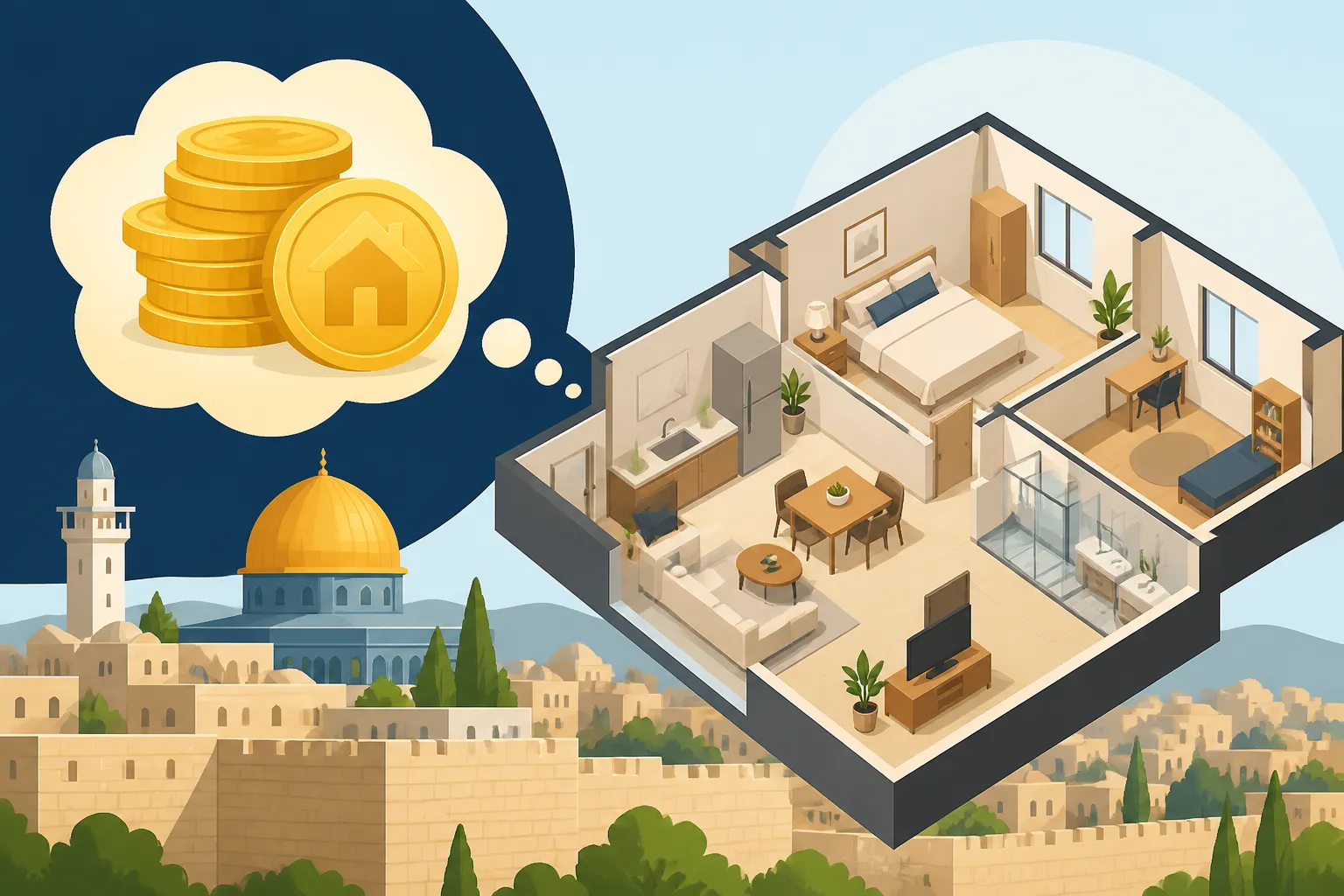
Before we even talk numbers, let's clarify what "three rooms" actually means in the Israeli context, because it's usually not what you'd expect if you're coming from North America or Europe. In Israel, a "room" generally refers to a separate living space that isn't a bathroom or kitchen. So, a "three-room apartment" (דירת שלושה חדרים, dirat shlosha hadarim) typically translates to two bedrooms plus a living room. It’s crucial to understand this distinction, as it directly impacts your search and expectations.
Often, these apartments come with a separate kitchen, which is standard, and at least one bathroom. Sometimes you'll find an additional small utility room or a mamad (a reinforced security room) that might technically be counted as a "half room" in some older listings, but for the purpose of a comfortable living space, assume it means two bedrooms and a living area. This configuration is a popular choice for young couples, small families, or individuals who want a dedicated guest room or home office.
Jerusalem's Diverse Rental Market Dynamics
Jerusalem is a city of layers, not just historically, but also economically and demographically. This incredible diversity deeply influences its rental market, creating pockets of entirely different housing experiences. Understanding these dynamics is key to not only finding a place but also to comprehending why prices fluctuate so wildly from one street to the next.
Factors Influencing Rental Prices
The cost of your three-room apartment in Jerusalem isn't just a random number plucked from the air; it's a careful dance of several critical factors. Location, of course, is paramount. Are you eyeing the bustling city center, the serene leafy streets of the German Colony, or the student-friendly vibe of French Hill? Each area comes with its own price tag. Proximity to amenities like supermarkets, public transport hubs, parks, and especially educational institutions or places of worship can drive costs up significantly. For many, being within walking distance of a specific synagogue or school district is a non-negotiable, and landlords know it.
The age and condition of the building also play a massive role. An older, unrenovated apartment in a historic stone building in Nachlaot will likely cost less than a freshly renovated unit in a modern high-rise in Talpiot. Square footage, whether or not it includes a mirpeset (balcony), private parking, or elevator access (a real luxury in many older Jerusalem buildings!) are all variables that add to the final price. Don't forget the level of furnishing; a fully furnished apartment, while convenient, will almost always command a higher monthly rent. The current supply and demand is also critical, especially for a particular size and type of apartment. If there are fewer three-room apartments available in a sought-after neighborhood, you can expect prices to be pushed upwards.
Neighborhoods and Their Unique Flavors
Jerusalem truly offers a different living experience depending on which neighborhood you choose. Each has its own rhythm, demographic, and, consequently, its own rental price scale.
-
Central & Upscale Areas: Think Rehavia, Talbiya, and the German Colony. These neighborhoods are highly desirable, known for their beautiful architecture, tree-lined streets, and proximity to cultural institutions and the city center. You'll find a mix of older, charming apartments and some newly renovated, luxurious options. These areas are popular with academics, foreign diplomats, and established families, and as such, come with a premium price tag. The ambiance is generally quiet and residential, offering a peaceful retreat while still being well-connected. A three-room apartment here will definitely be on the higher end of the spectrum.
-
Family-Friendly & Established: Baka, Katamon (especially Old Katamon), and Arnona offer a slightly more suburban feel while still being relatively central. Baka is famous for its lively Emek Refaim Street, full of cafes and shops, and its strong Anglo community presence. Katamon offers a mix of historic homes and newer constructions, often popular with religious Zionist families. Arnona, further south, is a quieter residential area, increasingly popular with English-speaking families looking for slightly more space and modern buildings. These neighborhoods strike a balance between amenities, community, and relative tranquility.
-
Bustling & Authentic: Nachlaot, adjacent to the famous Machane Yehuda Market, offers a vibrant, bohemian, and intensely local experience. Apartments here tend to be older, smaller, and often less renovated, but the appeal is in the atmosphere and community. It's fantastic for those who want to be immersed in authentic Jerusalem life and don't mind a bit of grit. Being so close to the Shuk means fresh food is always at your doorstep, but it also means more noise and less personal space.
-
Student-Oriented & More Affordable (Relatively): Areas like French Hill (Givat Shapira) are further out from the city center but offer more modern, spacious apartments, often with parking. It's popular with students due to its proximity to Hebrew University's Mount Scopus campus and offers a slightly lower cost of living. While not as centrally located, these neighborhoods generally have good public transport links to other parts of the city. For those on a tighter budget or seeking modern amenities, these areas provide a practical compromise.
Average Costs for a Three-Room Apartment in Key Jerusalem Neighborhoods
Alright, let's get down to brass tacks. You want to know what this is actually going to cost you. Based on current market trends in 2024, here’s a realistic breakdown of monthly rental prices for a three-room apartment (two bedrooms plus living room) in some of Jerusalem's most popular neighborhoods. Keep in mind, these are averages, and a specific unit's price will vary significantly based on its condition, amenities, and exact location within the neighborhood.
| Neighborhood | Average Monthly Rent (NIS) | Notes |
|---|---|---|
| German Colony | 7,500 – 11,000+ | Highly sought-after, beautiful architecture, excellent amenities, popular with expats. Prices can go significantly higher for renovated units or those with a garden/parking. |
| Rehavia | 7,000 – 10,000+ | Upscale, central, leafy streets, historical buildings. Very desirable location, close to cultural centers. Modernized apartments fetch top prices. |
| Baka | 6,500 – 9,500 | Family-friendly, strong Anglo community, vibrant Emek Refaim. Offers a good balance of community and amenities. Newer buildings or substantial renovations will be at the higher end. |
| Old Katamon | 6,000 – 9,000 | Residential, mix of older charming homes and new builds. Popular with religious Zionist families and those seeking a quieter residential feel. Good value for space compared to more central areas. |
| Nachlaot | 5,500 – 8,000 | Authentic, bohemian, lively, next to Machane Yehuda Market. Apartments tend to be older, smaller, and less renovated. The price reflects location and atmosphere more than modern comfort. |
| Arnona | 6,000 – 9,000 | Quieter residential, often newer buildings, growing expat presence. Offers good value, especially if you're looking for modern conveniences and a bit more space further from the city center. |
| French Hill | 5,000 – 7,500 | Further north, good for students (near Hebrew University), more spacious and modern buildings. Generally more affordable, but requires relying on public transport or a car to reach central areas. |
| City Center (Mahane Yehuda/Ben Yehuda areas) | 6,000 – 9,000 | Can be very noisy and crowded, but offers immediate access to shops, markets, and nightlife. Apartments can vary wildly in quality and age, from basic to surprisingly modern. |
These figures give you a starting point. When searching, use online platforms like Yad2, Facebook groups for expats in Jerusalem, and local real estate agents. Remember that Jerusalem’s rental market is competitive, especially for well-located, desirable properties. Be prepared to act quickly when you find something you like.
Short-Term vs. Long-Term Rentals
The rental landscape in Jerusalem can also differ significantly depending on whether you're looking for a short-term or long-term lease. If you're coming for an extended tourist visit, a sabbatical, or a short project, you might consider short-term rentals, often found on platforms like Airbnb or through specialized agencies. These typically cost more per month than a long-term lease but come fully furnished and often include utilities, making them convenient for temporary stays.
However, for anything over six months, a long-term rental is almost always more cost-effective. These leases usually run for a minimum of one year, with options for renewal. With a long-term lease, you’ll typically be responsible for setting up and paying for your own utilities and municipal taxes, which we'll delve into next. Securing a long-term rental means navigating more paperwork, often requiring bank guarantees or a significant security deposit, but it provides far greater stability and usually better value for your money.
Beyond Rent: Hidden Costs of Living in a Jerusalem Apartment
The monthly rent for your three-room apartment is just one piece of the financial puzzle. Many newcomers are caught off guard by the additional expenses that pile up each month or year. Being prepared for these "hidden" costs is crucial for accurate budgeting and avoiding unpleasant surprises.
Utilities: Keeping the Lights On and Water Flowing
Setting up utilities in Israel can be a bureaucratic maze, but it’s an unavoidable part of renting. You’ll typically need to register directly with the service providers.
-
Electricity (חברת החשמל – Chevrat HaChashmal): This is Israel's national electricity company. You'll usually need to transfer the existing account into your name. Bills are issued bimonthly and can vary significantly based on your consumption, especially with Jerusalem's hot summers and chilly winters. Air conditioning can send your bill soaring, so budget accordingly. For a three-room apartment, expect to pay anywhere from 300-800 NIS every two months, or even more if you're liberal with the AC. Don't forget, if you're moving internationally, you'll need to stay connected with your phone. Services like Airalo can provide eSIMs for immediate data access, which is invaluable for contacting utility companies and landlords as soon as you land.
-
Water (מקורות – Mekorot and local water corporations): While Mekorot is the national water company, you'll typically deal with the local municipal water corporation for billing (in Jerusalem, it's Hagihon). Water bills are also bimonthly and include a fixed charge plus consumption. Expect around 100-300 NIS every two months, depending on usage and the number of occupants. Remember that water conservation is encouraged, and rates can increase for higher consumption tiers.
-
Gas (גז – Gaz): Most apartments in Jerusalem use gas for water heating and/or cooking. This is typically provided by private companies like Supergas or Amisragas. You’ll usually be on a communal building system or have a private tank. Bills can be monthly or bimonthly, ranging from 50-150 NIS per month, again, depending heavily on your usage. If your apartment has a gas boiler for heating, expect higher costs in winter.
-
Internet & TV: These are generally separate services. Internet providers like Bezeq, HOT, Partner, and Cellcom offer various packages. For a decent speed internet connection (100-200 Mbps), expect to pay around 100-150 NIS per month. TV services, if you opt for them, can add another 50-100 NIS. Many expats choose streaming services over traditional TV packages to save money. You can find more details on how to choose a mobile and internet provider in Israel to help you get connected.
Arnona (Municipal Property Tax)
Ah, Arnona (ארנונה). This is the municipal property tax you'll pay to the Jerusalem municipality. It's a significant expense that often surprises new arrivals. The amount you pay is based on the size of your apartment (square meters) and the specific neighborhood you live in. Bills are usually bimonthly, but you can pay annually.
For a three-room apartment, you can expect Arnona to be anywhere from 400-800 NIS per month. The good news is that new immigrants (Olim Chadashim) and sometimes even long-term residents with low income are eligible for a discount. It's crucial to apply for these discounts as soon as possible after moving in. Learning more about understanding Arnona (municipal property tax) in Israel can definitely help you navigate this.
Vaad Bayit (Building Committee Fees)
If you live in an apartment building, you'll almost certainly pay Vaad Bayit (ועד בית), which translates to "Building Committee" fees. This is a monthly contribution towards the maintenance and upkeep of common areas in your building. This can include cleaning the stairwells, maintaining the garden, elevator maintenance, minor repairs, and sometimes communal water or electricity for shared spaces.
The cost varies wildly depending on the building's age, size, and amenities. A building with an elevator, large garden, or a fancy lobby will naturally have higher Vaad Bayit fees than a simple walk-up. For a three-room apartment, expect to pay anywhere from 80-300 NIS per month. Sometimes, the landlord will cover this, but more often, it's the tenant's responsibility. Make sure to clarify this in your rental contract!
Real Estate Agent Fees
While it's possible to find an apartment directly from an owner (often through Facebook groups), many expats choose to work with a real estate agent (metavech) to navigate the local market, especially if their Hebrew isn't strong. Agents can be incredibly helpful in finding suitable properties and guiding you through the contract process.
However, this convenience comes at a cost. The standard agent's fee in Israel is one month's rent plus 17% VAT (Ma'am). This is a one-time payment made when you sign the lease. So, if your rent is 8,000 NIS, you'll pay the agent 8,000 NIS + 1,360 NIS (VAT) = 9,360 NIS. This upfront cost, combined with security deposits, means you need a substantial amount of cash ready when you move. It's important to understand this fee structure when budgeting for your move. You can find more useful advice on how to find a reliable real estate agent (metavech) in Israel.
Security Deposits and Guarantees
Israeli landlords typically require some form of financial guarantee. This is designed to protect them in case of damages or unpaid rent. You might encounter one or more of the following:
- Bank Guarantee (ערבות בנקאית – Arvut Banka'it): This is the most common and often preferred method. Your bank issues a letter of guarantee to the landlord for a specified sum (usually 1-3 months' rent). If you default, the landlord can claim the money from the bank. You’ll need to have this amount frozen in your bank account, and the bank will charge a small annual fee for the service.
- Security Deposit (פיקדון – Pikadon): A cash deposit, usually 1-3 months' rent, held by the landlord. This is less common now, as the bank guarantee offers more protection for both parties.
- Bills Guarantee (שטר חוב – Shtar Chov): This is a promissory note for a much larger sum (e.g., 10,000-20,000 NIS) that the landlord can theoretically cash if you cause damages or don't pay. While it sounds scary, it's generally a deterrent and rarely acted upon unless there's a serious breach of contract.
- Guarantors (ערבים – Arvim): The landlord may ask for one or two Israeli citizens to act as guarantors, meaning they would be financially responsible if you fail to meet your obligations. This can be tricky for new expats who don't have local connections.
All these guarantee options mean you need access to a significant amount of money upfront, in addition to your first month's rent and agent fees. Prepare for this by having adequate funds readily available.
Practical Tips for Securing a Three-Room Apartment in Jerusalem
Finding your ideal three-room apartment in Jerusalem, especially when you're new to the country, requires a strategic approach. It's a unique market, and what works elsewhere might not fly here.
Start Your Search Early and Be Prepared
The Jerusalem rental market, particularly for well-located and reasonably priced apartments, moves quickly. Don't wait until the last minute. Start browsing listings several weeks, if not months, before your desired move-in date. Use popular Israeli rental websites like Yad2 and local Facebook groups (search for "Jerusalem rentals" or "apartments for rent Jerusalem expat"). These groups often have direct listings from owners or other expats leaving the country, which can save you agent fees.
When you find a place you like, be ready to move. This means having your documents in order: passport, visa (if applicable), proof of income, and possibly a letter from your employer. Landlords appreciate readiness and a smooth process. If you’re coordinating a move from abroad, services like Sirelo can help you compare international moving companies, ensuring your belongings arrive safely while you focus on securing your new home.
Navigating Rental Contracts and Legalities
Israeli rental contracts (chozeh schirut) can be lengthy and are usually in Hebrew. It is absolutely crucial to have your contract reviewed by a trusted Hebrew speaker or, ideally, a lawyer specializing in rental agreements before you sign anything. Don't assume anything. Pay close attention to clauses regarding:
- Rental Period and Renewal Options: Is it a 12-month lease with an option to extend for another year? What are the terms for breaking the lease early?
- Responsibilities for Repairs: Who is responsible for what? Generally, the landlord covers structural repairs, while the tenant handles minor wear and tear and general maintenance.
- Utility Transfers: Ensure it clearly states you are responsible for transferring utility accounts into your name and paying bills.
- Deposit/Guarantees: Confirm the exact amount and type of guarantee required, and clarify the conditions for its return.
Understanding renter's rights under Israel's Fair Rental Law can empower you during negotiations and throughout your tenancy. This law provides some protections for tenants, but knowing your rights is key.
Don't Be Afraid to Negotiate (Within Reason)
While it's a competitive market, negotiation is part of Israeli culture. You might not be able to drastically lower the rent on a hot property, but there could be wiggle room on terms like the deposit amount, minor repairs, or even the inclusion of a certain appliance. Always be polite, respectful, and prepared to walk away if the terms aren't right for you. Asking for a fresh coat of paint or a cleaning service before you move in is also a common request.
Being a reliable, responsible tenant can also be a strong negotiation point. If you have good references from previous landlords, highlight them. Landlords are often looking for tenants who will take good care of their property and pay on time, sometimes more than just the highest bid.
Stay Connected and Flexible
As you embark on your apartment hunt, especially if you're newly arrived, staying connected is non-negotiable. Whether you're coordinating viewings, asking questions about the contract, or simply navigating Jerusalem's streets, a reliable internet connection is vital. Consider an eSIM from Airalo for immediate data upon arrival, ensuring you can hit the ground running without scrambling for a local SIM card. This connectivity will be your lifeline during the intense apartment search period.
Finally, try to be flexible with your expectations. You might not find your dream apartment on day one, or it might be slightly different from what you envisioned. Jerusalem housing comes with its own quirks – smaller spaces, older buildings, sometimes less modern amenities than you’re used to. Embrace the adventure, and with patience and persistence, you'll find a three-room apartment that feels like home in this incredible city. Remember to also look into The Complete Guide to Renting an Apartment in Israel (2027) for broader insights.
Disclaimer
The information provided in this guide is for general informational purposes only and does not constitute professional advice. Rental prices and market conditions in Israel are subject to change rapidly. We recommend consulting with a local real estate agent, lawyer, or financial advisor for personalized advice specific to your situation. We make no representations or warranties of any kind, express or implied, about the completeness, accuracy, reliability, suitability, or availability with respect to the information contained herein.