How to Set Up Waste and Recycling Collection in Israel
Ah, the wonderful world of waste management in Israel! You've just found your perfect apartment, wrestled with the rental contract, and now you’re staring at a pile of boxes, wondering where on earth everything goes. Believe me, you’re not alone. Figuring out how to properly dispose of your trash and recyclables in a new country can feel like solving a Rubik's Cube while blindfolded, especially when everything is in Hebrew and local customs differ vastly from what you're used to. This guide is here to untangle the often confusing, sometimes frustrating, but ultimately manageable process of setting up and understanding waste and recycling collection in Israel for us expats.
The Basics of Waste Collection in Israel: What to Expect
Let's be honest, waste management probably wasn't high on your list of things to research before moving here. But it quickly becomes a daily reality. The Israeli system, like many things here, has its own unique rhythm and set of rules that can vary from one municipality to the next. For the most part, though, you'll be dealing with a combination of general waste bins and a growing, albeit sometimes inconsistent, recycling infrastructure.
General Household Waste (Ashpa): The Green Bin System
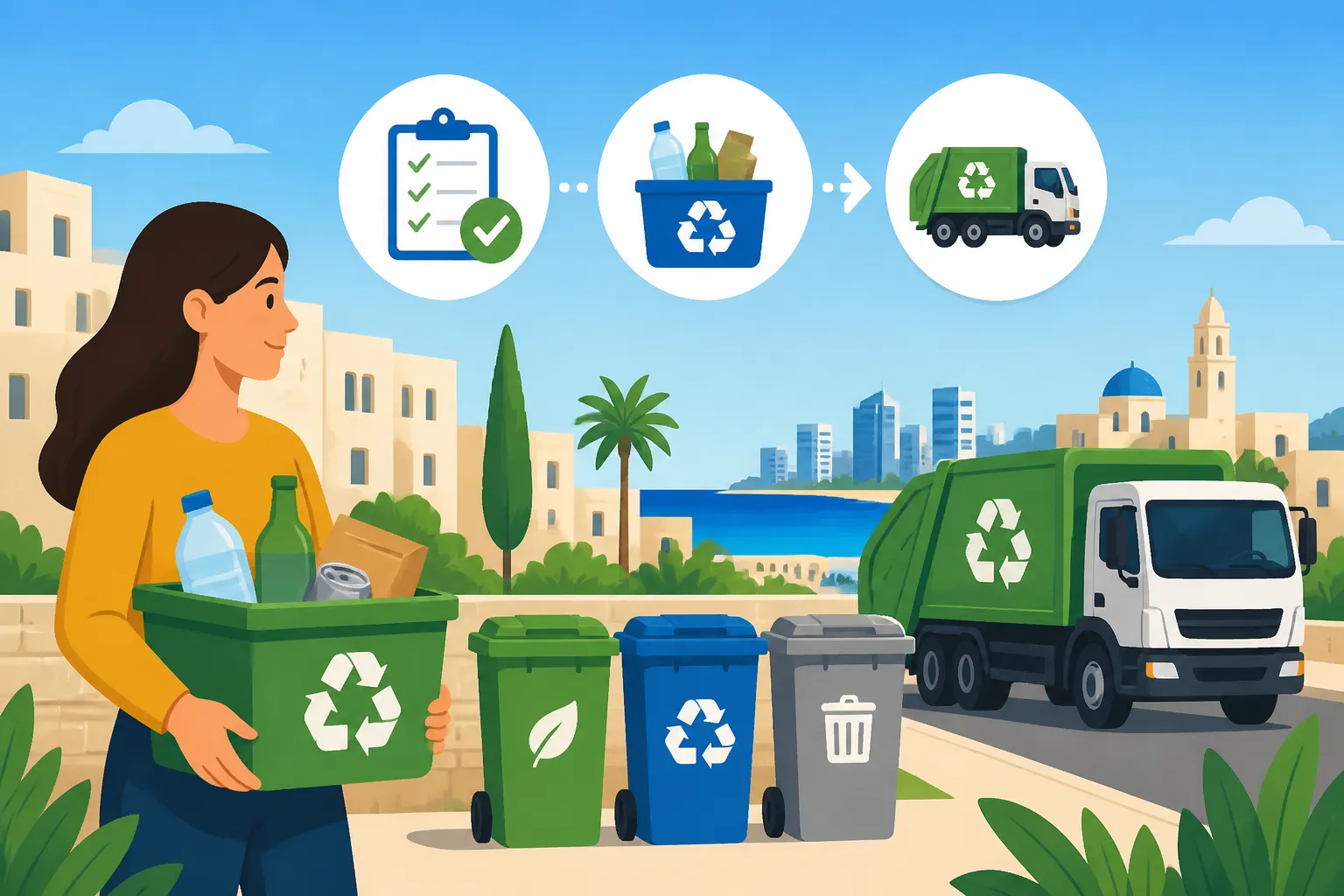
Your first introduction to Israeli waste disposal will likely be the ubiquitous large green bins, known as ashpa bins (פח אשפה). These are the workhorses of the system, designated for all your general household waste that isn't recyclable. You'll find them dotted around residential streets, at the entrance to apartment buildings, or sometimes even within a communal enclosure if you live in a larger complex.
These bins are typically emptied by the municipality''s sanitation services a few times a week, though the exact schedule can vary significantly based on your city, neighborhood, and even specific street. In dense urban areas like central Tel Aviv, you might find them emptied almost daily to combat overflowing, while in quieter residential areas, it could be two or three times a week. The sheer volume of trash, especially in apartment buildings where dozens of families are contributing to one bin, can sometimes lead to them overflowing well before collection day. This is a common expat frustration – the sight and smell of an overflowing ashpa bin on a hot Israeli summer day is, shall we say, a unique sensory experience. It's a constant battle between municipal services and the rapid accumulation of household refuse, often leaving you wondering if you've missed a secret collection day.
Moving Beyond the Bin: Bulky Waste (Pasole Gasa) and Special Items
So, you've unpacked your new apartment, but what do you do with those massive cardboard boxes, that old armchair, or a broken washing machine? This is where bulky waste, or pasole gasa (פסולת גסה), comes in. You absolutely cannot just cram these items into the green ashpa bins or leave them casually next to them. Not only is it against regulations, but you'll quickly become the bane of your vaad bayit (building committee) and neighbors.
Most municipalities offer a specific bulky waste collection service. The process usually involves checking your local council's website (often the part about "פינוי גזם וגרוטאות" – pruning and scrap removal) for designated collection days or areas. In some cities, you might have specific days of the month when you can leave large items on the curb, or designated drop-off points. In others, particularly for larger appliances, you might need to call the municipality directly to schedule a pickup. This can be tricky if your Hebrew isn't up to par, but persistence (or a kind Israeli friend) usually pays off. When you're dealing with the initial chaos of moving in, services like Sirelo can help with the larger logistics, but knowing your local pasole gasa rules is still your responsibility for those post-move-in discards. Don't forget, leaving bulky waste out on non-collection days can result in fines – a less-than-pleasant surprise for any newcomer.
Diving into Recycling: Making Sense of the Colors
Israel's recycling efforts have come a long way, but it’s still a patchwork quilt of systems and expectations. Unlike some European countries with highly standardized, multi-bin approaches, Israel’s system is still evolving, and what you find in Tel Aviv might be completely different from what’s available in Be'er Sheva. The key is to be adaptable and do a little research for your specific area.
Plastic Bottles and Cans: The Blue/Orange Cage (Mikluchit)
This is perhaps the most visible and widespread recycling effort. You’ll see large, often cage-like bins (sometimes blue, sometimes orange, or a mix of both) specifically for plastic bottles and aluminum cans. These are often referred to as mikluchiyot (מיקלחיות), though many just call them "the plastic bottle cage."
What goes in? Generally, plastic beverage bottles (water, soda, milk), plastic containers from cleaning products (shampoo, detergent), and aluminum cans (soda, beer). The crucial thing to remember is Israel's Deposit Law (Chok HaPikadon). Many plastic bottles (1.5 liters and under) and aluminum cans carry a deposit, typically 30 agorot (about 10 cents USD). These should not go into the cages. Instead, you can return them to any supermarket or convenience store that sells beverages, and they are legally obliged to give you back your deposit. It’s a great way to recoup some cash and ensure these specific items are properly recycled. The challenge? Remembering which bottles have a deposit and which don't, especially when the labels are in Hebrew! Often, the deposit amount is printed near the barcode, or there's a distinct symbol. It’s an ongoing learning curve, trust me. Understanding the rules for such everyday transactions can feel as complex as figuring out how Bituach Leumi health contributions work in Israel.
Paper and Cardboard: The Blue Bin (Pach Kachol)
The blue bins, or pach kachol (פח כחול), are designated for paper and cardboard recycling. These are usually smaller, standalone bins, distinct from the large green general waste bins. You'll find them in residential areas, near schools, and sometimes clustered with other recycling bins.
What goes in? Newspapers, magazines, brochures, advertising flyers, envelopes, and importantly, flattened cardboard boxes. It’s crucial to flatten your cardboard to save space and ensure the bins don’t fill up too quickly. The collection frequency for these can be less regular than general waste, perhaps once a week or every two weeks. These bins are a great place for all the paper mail you inevitably receive.
One common frustration, especially if you’re living in a building without its own dedicated recycling area, is that these blue bins often get full quickly, or people simply dump non-paper items into them. So, you might find yourself trekking a bit further to find an empty one. It makes you realize how vital infrastructure is for fostering good habits!
Glass and Textiles: Designated Collection Points
Glass recycling in Israel is less common than plastic or paper, but it is certainly growing. You might find specific brown or purple bins, sometimes labeled "זכוכית" (zkhuchit), for glass bottles and jars. These are typically located in central community areas, shopping centers, or near other recycling points, rather than on every residential street. Unlike in some countries where you separate glass by color, in Israel, it’s usually a mixed-glass bin.
Textile recycling is also available, usually through large, dedicated bins often run by charities or recycling organizations. These are for old clothes, shoes, and sometimes other fabric items that are still in reasonable condition. They often state that they’re for donations, implying reuse, but items that aren't suitable for wear are typically recycled into other materials. Finding these can sometimes be a scavenger hunt, but local municipal websites (which, yes, require some Google Translate magic or a good data plan from a provider like Airalo to navigate) are usually the best starting point. Just toss in your clean, dry clothes and shoes – no stained or wet items, please!
Municipality Specifics and Local Variations
Here's where it gets really fun (or frustrating, depending on your perspective). Israel is a small country, but its municipalities often operate with a high degree of autonomy, leading to different waste and recycling systems from one city to the next. What's standard practice in Haifa might be unheard of in Ashdod. It truly reinforces the need to familiarize yourself with your local rules, almost like learning how to navigate the Israeli healthcare system from scratch.
Navigating Tel Aviv's Recycling Landscape
Tel Aviv, being a major urban hub with a progressive population, is generally at the forefront of recycling efforts in Israel. You'll find the most comprehensive range of recycling options here compared to many other cities. Beyond the standard green ashpa bins, blue paper bins, and multi-colored plastic/can cages, Tel Aviv has been implementing more advanced systems.
Many newer apartment buildings, especially in neighborhoods like Florentin or Sarona, will have dedicated recycling rooms or specialized chute systems that separate waste internally. You might even find orange bins for packaging waste (plastics, metals, cartons that don't have a deposit) in some areas, part of a push for more comprehensive household waste separation. The municipality has also focused on public awareness campaigns and often provides information in English, which is a rare treat. Despite these efforts, the sheer density of population means overflowing bins are still a common sight, and finding an available, non-overflowing recycling bin can be a minor daily triumph. Don't be surprised if your building's vaad bayit has its own specific rules for waste disposal, especially if there are shared composting initiatives or special bulky waste collection days.
Jerusalem's Approach to Waste Management
Jerusalem presents its own unique set of challenges and solutions for waste management. The city's diverse population, historical architecture, and often narrow, winding streets make large-scale, standardized waste collection more complex. While you’ll still find the fundamental green ashpa bins, the frequency and method of collection can differ significantly by neighborhood.
In older parts of the city or densely populated areas like Nachlaot or the Old City, access for large municipal trucks can be difficult, leading to more reliance on smaller collection vehicles or even manual collection in some alleys. Recycling infrastructure is present but might not be as widespread or as visibly integrated as in Tel Aviv. You'll find blue bins for paper and cardboard, and plastic/can cages, but they might be concentrated in specific community centers or main roads rather than on every block. Bulky waste collection might be more regimented, with strict adherence to scheduled pick-up days that you'll need to confirm with the Jerusalem municipality's website or local neighborhood council. It’s a city where community input and local knowledge play an even greater role in understanding the system, often found through local WhatsApp groups or neighborly advice.
Other Cities and Regional Councils: What to Look For
Moving beyond the major metropolitan areas, the waste and recycling landscape can become even more varied. In smaller cities like Netanya, Herzliya, or Ramat Gan, you’ll generally find a system that blends elements of Tel Aviv and Jerusalem's approaches, though often with fewer advanced options. Standard green bins, blue paper bins, and plastic/can cages are common, but the presence of dedicated glass or textile recycling might be sparser.
In regional councils (moatzot ezoriyot) and smaller towns or yishuvim, waste collection might operate on a different scale entirely. Some might have centralized recycling centers where residents bring sorted waste, while others might rely on fewer, larger communal bins for general waste with less emphasis on door-to-door recycling. The best strategy, no matter where you settle, is to immediately check the local municipality's website (often through the Gov.il portal if you want to understand digital government services in Israel) or, even better, ask your new neighbors or landlord. They are usually the best, most up-to-date source of information on bin locations, collection schedules, and any unique local initiatives.
Here's a quick summary table of common waste and recycling categories:
| Waste Category | Common Bin Color/Type | What Goes Inside | Common Exclusions |
|---|---|---|---|
| General Household Waste | Large Green Bins (Ashpa) | Food scraps, non-recyclable plastics, dirty packaging, mixed waste | Recyclables, bulky waste, construction debris |
| Plastic Bottles & Cans | Blue/Orange Cages (Mikluchiyot) | Plastic beverage bottles (1.5L+), cleaning product bottles, aluminum beverage cans | Deposit bottles/cans (return for cash), plastic bags, yogurt cups |
| Paper & Cardboard | Blue Bins (Pach Kachol) | Newspapers, magazines, clean paper, flattened cardboard boxes | Wet/greasy paper, plastic-coated paper, tissues |
| Glass Bottles & Jars | Brown/Purple Bins (Zkhuchit) | Clean glass bottles (food/beverage), glass jars | Ceramics, broken glass (windows), light bulbs, mirrors |
| Bulky Waste | Curbside on specific days/by appointment | Furniture, large appliances, electronics, large construction debris | Regular trash, hazardous waste, garden waste |
| Textiles/Clothes | Designated Charity Bins | Clean, dry clothes, shoes, linens (for reuse/recycling) | Wet, dirty, or torn clothes (unless specified for rags) |
| Deposit Bottles/Cans | Supermarkets/Kiosks | Beverage bottles (up to 1.5L), aluminum cans with ₪0.30 deposit mark | Any other plastics or cans |
Practical Tips and Common Expat Frustrations
Navigating Israeli waste management as an expat can definitely throw a few curveballs your way. From linguistic barriers to practical space constraints, there are specific frustrations that most of us have experienced. But don't despair – there are ways to manage it all. It's all part of the journey of setting up your new home, much like registering your address with the Population Authority in Israel.
Deciphering Municipal Websites and Information
One of the biggest hurdles is often the language. Most municipal websites are primarily in Hebrew, and while Google Translate is a godsend, it’s not always perfect. Key terms related to waste collection might be buried deep in administrative sections. You might search for "recycling" and get nothing, but "מיחזור" (michzur) or "אשפה" (ashpa) could lead you to the right page.
My best advice here is to be persistent. Look for sections like "איכות הסביבה" (environmental quality) or "פינוי אשפה" (waste removal). If you're struggling, don't hesitate to ask. Your landlord, vaad bayit representative, or even a friendly neighbor can be invaluable sources of local knowledge. Many expat Facebook groups for your specific city are also treasure troves of information; someone has almost certainly asked about bin locations or collection schedules before. A robust mobile data plan, perhaps from a provider like Airalo, will be your best friend for on-the-go translation and information hunting.
Dealing with Limited Space and Odors in Israeli Apartments
Israeli apartments, especially in cities like Tel Aviv, are often smaller than what many expats are used to. This can make multi-bin recycling systems feel like an impossible luxury. You might find yourself with limited kitchen counter space or no dedicated utility room. This leads to the classic expat conundrum: where to store all the different types of waste before taking them to the communal bins?
- Food Waste: This is the big one. With hot weather for much of the year, food waste can quickly become smelly. Many Israelis simply bag their food waste and take it out daily to the ashpa bin. Consider a small, sealed bin for kitchen scraps that you can empty frequently.
- Recycling Storage: Get creative! Collapse cardboard boxes immediately. Use reusable bags for plastic bottles and cans, or hang a dedicated bag on a door handle in the kitchen. For paper, a small, open bin next to your desk works well.
- Frequent Trips: This might sound obvious, but frequent trips to the communal bins are key to avoiding odors and clutter in a small apartment. Think of it as a built-in exercise routine!
Leveraging Technology and Community Resources
Beyond municipal websites, there are other ways to stay informed and even improve your waste management game.
- Local WhatsApp Groups: Many neighborhoods, and even specific apartment buildings, have WhatsApp groups. These can be fantastic for getting real-time information about collection days, reporting overflowing bins (to the group or directly to the municipality), or asking where to find a specific recycling point.
- Municipal Apps: Some larger cities have developed apps where you can report issues, look up schedules, and find recycling points. Check your city's official website for links to such apps.
- Your Landlord or Vaad Bayit: As mentioned, these individuals are your first point of contact for anything building-specific, including waste disposal rules for common areas. They often know the ins and outs of the system, including when bulky waste collections are scheduled. Your vaad bayit fees might even cover communal recycling efforts, so understanding building committee (Vaad Bayit) fees in Israel is important.
- Neighborly Advice: Don’t underestimate the power of simply asking a neighbor. Israelis are often incredibly helpful, and they’ve been navigating this system for years. A quick "איפה זורקים פה נייר/פלסטיק?" (Where do we throw paper/plastic here?) can open up a wealth of local wisdom.
Future of Waste Management in Israel
Israel, like many developed nations, is facing increasing pressure to modernize its waste management and improve recycling rates. The country has ambitious environmental goals, and waste reduction is a significant component of that vision. As an expat, understanding these shifts not only helps you adapt but also allows you to contribute positively.
New Initiatives and Environmental Goals
The Ministry of Environmental Protection, along with local authorities, is continuously rolling out new programs. We're seeing more emphasis on source separation, where households divide their waste into several categories rather than just one or two. The orange bin system for general packaging waste (plastics, metals, and cartons that are not part of the deposit law) is an example of this, slowly being implemented in more municipalities. There's also a growing focus on organic waste and composting, though this is still in its nascent stages for widespread household collection.
The long-term vision includes reducing reliance on landfills, increasing waste-to-energy projects, and promoting a circular economy where materials are reused and recycled as much as possible. These goals are not just abstract government policies; they filter down to the local level, impacting the types of bins you see, the frequency of collection, and the information campaigns you encounter. Staying informed about these changes, perhaps through resources like The Complete Guide to Cost of Living in Israel for Expats, can give you a better grasp of the broader environmental landscape.
The Role of Expats in Promoting Sustainable Practices
As expats, we bring diverse experiences and habits from our home countries. This means we can play a surprisingly impactful role in Israel's evolving waste management. By diligently sorting our waste, even when it feels confusing or inconvenient, we contribute to higher recycling rates and help normalize these practices within our communities.
Think about it: when new systems are introduced, there's always a learning curve. By actively participating, asking questions, and even gently educating others (when appropriate), we help drive the change. If your building doesn't have good recycling options, you could even approach your vaad bayit about exploring solutions. Every small act, from returning deposit bottles to properly flattening cardboard, adds up. Your commitment to proper disposal and recycling not only minimizes your own environmental footprint but also sets an example, slowly but surely helping Israel achieve its ambitious environmental targets.
Disclaimer
The information provided in this guide is for general informational purposes only and does not constitute official advice. Waste and recycling regulations and services in Israel can vary significantly by municipality and are subject to change. Always consult your local municipal authority's website or contact them directly for the most accurate and up-to-date information specific to your area of residence.