How Do I Get an Israeli SIM Card as a New Arrival?
Stepping off the plane at Ben Gurion, a new life unfurling before you, can be exhilarating—until you realize your phone has no service. That initial scramble to find an open Wi-Fi network just to tell your family you’ve landed, or to call that taxi you pre-booked, is a shared pain point for almost every new arrival. This guide is designed to cut through the confusion and walk you through exactly how to get an Israeli SIM card, ensuring you stay connected from the moment you begin your adventure here.
Getting Connected Immediately: Your First Steps for Israeli Mobile Service
When you first land in Israel, the urge to get connected is paramount. It’s not just about updating your Instagram story or messaging friends back home; it’s about practical survival in a new country. Without a working phone, simple tasks like hailing a taxi through an app, navigating public transport, or even just calling your new landlord can become unnecessarily stressful hurdles.
Why Immediate Connectivity is Crucial for New Arrivals
Picture this: you've just landed, you're tired, maybe a little disoriented, and you need to find your way to your accommodation. Google Maps won't load, your WhatsApp messages aren't going through, and you can't even make a basic phone call. This isn't just an inconvenience; it can quickly escalate anxiety. Reliable phone service means you can confirm appointments, coordinate with your moving service (because let's be honest, those first few days are a blur of boxes and instructions, and if you've used a service like Sirelo to help you get organized, you know communication is key), and access crucial information on the go.
More importantly, in case of an emergency, having a local number and data can be a lifesaver. You'll need to know What Is the Emergency Phone Number in Israel?, and you’ll want to be able to call it. It’s about more than just convenience; it’s about your peace of mind and safety in those vulnerable first few days. Having a local number can also smooth over other initial administrative tasks, like when you start the process to How to Get a Teudat Zehut and Tax File Number in Israel.
Quick Solutions Right Off the Plane: Airport SIMs and Roaming
Your first impulse might be to grab a SIM card at Ben Gurion Airport. And yes, there are kiosks right in the arrivals hall offering tourist SIMs. These are undeniably convenient, allowing you to get online within minutes of clearing customs. However, convenience often comes at a price. Airport SIMs are typically more expensive than what you'd find in the city, offering less data or fewer call minutes for the same cost. Think of it as a tourist trap, albeit a necessary one for some.
Another option, if your home provider offers it, is international roaming. For many, this is a last resort due to the exorbitant charges. While it might give you a fleeting connection to let family know you're safe, sustained use can lead to a shocking bill. Unless you have a specific, pre-arranged international plan with your home carrier, roaming is generally not a sustainable or cost-effective solution for anyone planning to stay in Israel for more than a few hours. For those making aliyah, or even on a longer The Complete Visa Guide for Relocating to Israel (2027), you absolutely need a local solution. It's often worth the slight delay to wait until you can get into a city and explore better options.
Choosing Your Path: Physical SIM vs. eSIM in Israel
Once you’ve decided against expensive airport options or crippling roaming charges, you’re faced with a choice: the traditional physical SIM card or the increasingly popular eSIM. Both have their merits, and the best choice for you depends on your device, your length of stay, and your priority for immediate connectivity versus long-term value.
The Traditional Route: Getting a Physical SIM Card
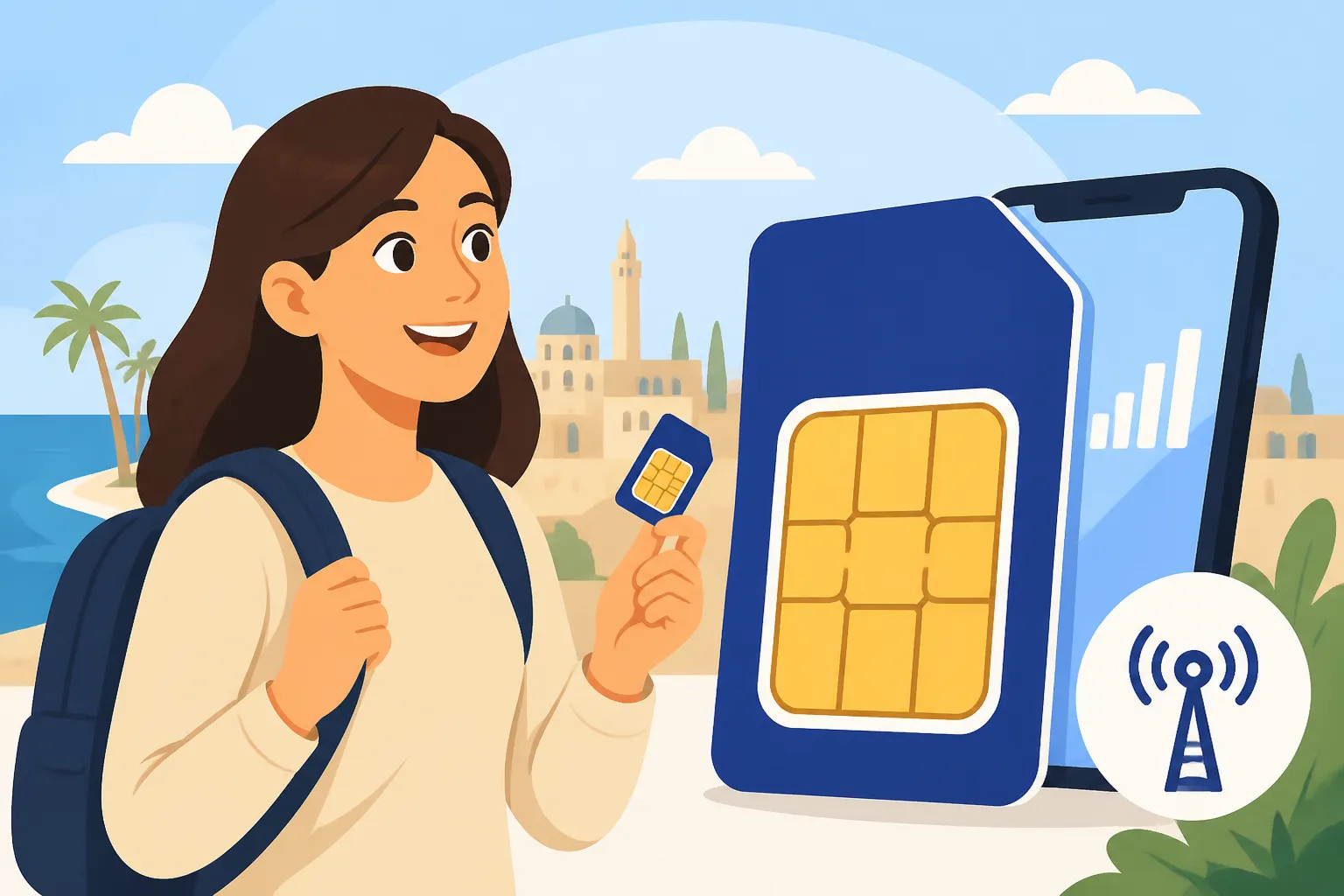
The physical SIM card is what most of us are familiar with: a small plastic chip that you insert into your phone. In Israel, getting one is fairly straightforward, assuming you know where to go and what documents to have ready.
You can purchase physical SIM cards from official stores of major mobile providers like Cellcom, Partner, or Pelephone, which you'll find in most shopping malls and city centers. Alternatively, smaller, independent phone shops (often called 'cellular' stores or chanut selularit) are ubiquitous, especially in bustling areas like Allenby Street in Tel Aviv or Jaffa Road in Jerusalem. These smaller shops often sell SIMs from various providers, sometimes at slightly discounted rates, though their English proficiency might vary. When you go, make sure you have your passport. If you’re a new immigrant with a Teudat Oleh or a Teudat Zehut, bring that along too, as it can sometimes simplify the process, especially for post-paid plans. The staff will help you choose a plan, activate the SIM, and get you up and running within minutes.
The Modern Solution: Understanding eSIMs for Israel
eSIMs, or embedded SIMs, are a game-changer for many travelers and new arrivals. Instead of a physical chip, the SIM profile is downloaded directly onto your phone. The biggest advantage? You can purchase and activate an eSIM plan before you even leave home, meaning you land in Israel with immediate, active mobile service. This eliminates the airport scramble entirely. Companies like Airalo specialize in providing eSIMs for various countries, including Israel, offering different data packages suitable for short trips or initial arrival periods.
However, eSIMs do have some drawbacks. Firstly, not all phones are compatible; generally, newer smartphone models (iPhone XS/XR and newer, most Samsung Galaxy S20 series and newer, Google Pixel 3 and newer) support eSIMs. You’ll need to check your device's specifications before relying on this option. Secondly, while convenient for data, eSIMs might offer more limited options for local calls and SMS compared to physical SIMs, depending on the provider and plan. For those planning a longer stay, an eSIM might serve as an excellent temporary solution for your first few days or weeks, allowing you to settle in and then calmly research and purchase a more robust, long-term physical SIM plan. This hybrid approach gives you the best of both worlds: instant connectivity upon arrival and a cost-effective local plan for your extended stay.
Navigating Israeli Mobile Providers and Plans
Once you've decided on a physical SIM, or after your initial eSIM plan runs out, you'll need to dive into the world of Israeli mobile providers. It can feel a bit like a maze with all the different companies, plans, and Hebrew terminology thrown around. But don't worry, you'll quickly get the hang of it.
Key Israeli Mobile Network Providers
Israel has a competitive mobile market, meaning plenty of options for consumers. The three largest and most established providers, often referred to as the "big three," are Pelephone, Cellcom, and Partner. These companies generally offer excellent coverage across the country, including rural areas and along major highways. They have numerous physical stores, a wider range of services, and often dedicated English-speaking customer support lines. Their plans might be slightly pricier than the budget options, but you're paying for reliability and comprehensive service.
Beyond the big three, there are several "virtual" or budget-friendly providers that use the infrastructure of the larger networks. These include Golan Telecom, Hot Mobile, and Rami Levy Communications. These providers are known for their aggressive pricing, often offering much more generous data packages for less money. While their customer service might be less robust or primarily in Hebrew, many expats find them perfectly adequate, especially if they are comfortable managing their account online. For example, Golan Telecom was a disruptor in the market and forced prices down significantly for everyone. Hot Mobile also offers competitive rates, often bundled with their home internet or TV services. Rami Levy, a supermarket chain, also has its own mobile service, known for simplicity and low costs. When choosing, consider how much data you need, your comfort with online account management, and whether you anticipate needing extensive customer support in English.
Prepaid (Pre-Paid) vs. Post-Paid (Post-Paid) Plans
The next big decision is whether to go with a prepaid plan (Tokanit Pre-Paid) or a post-paid plan (Tokanit Post-Paid).
Prepaid plans are ideal for new arrivals, short-term visitors, or those who prefer not to commit to a long-term contract. You pay upfront for a certain amount of data, calls, and SMS, and once you use it up, you simply top up your balance. This offers excellent flexibility and budget control, as you can’t accidentally overspend. The downsides are that prepaid rates can sometimes be slightly higher per gigabyte than post-paid plans, and you might need to actively monitor your usage to ensure you don't run out of credit at an inconvenient moment. To get a prepaid SIM, you generally only need your passport.
Post-paid plans, on the other hand, require a contract, usually for 12 or 24 months. You get a monthly bill for your usage. These plans often come with more benefits, like unlimited data (or very large allowances), unlimited calls/SMS, and sometimes international calling packages, all at a lower per-unit cost. The catch for new arrivals is that most post-paid plans require an Israeli bank account for direct debit payments and often an Israeli ID number (Teudat Zehut) and a history of residency or a work visa. This can be a hurdle for those who have just arrived and haven't yet established all their Israeli administrative infrastructure, such as opening an account at an Israeli bank like How to Open an Account at Bank Hapoalim as a Foreigner. If you're planning a long-term stay and have your documents sorted, a post-paid plan will likely offer the best value.
Here's a quick comparison of the major players for general guidance:
| Provider Name | Network Type | Typical Monthly Cost (NIS) | Data Allowance | Key Features for Expats |
|---|---|---|---|---|
| Cellcom | Major MNO | 50-80 | 100-500 GB | Wide coverage, good English support, competitive family plans |
| Partner | Major MNO | 50-80 | 100-500 GB | Excellent coverage, frequently bundles with home internet, good English support |
| Pelephone | Major MNO | 50-80 | 100-500 GB | Good coverage, long-standing provider, often offers international call packages |
| Golan Telecom | MVNO | 30-60 | 100-Unlimited GB | Very aggressive pricing, large data, basic English support online |
| Hot Mobile | MVNO | 30-60 | 100-Unlimited GB | Strong value, often part of home services bundle, primarily Hebrew customer service |
| Rami Levy | MVNO | 25-50 | 60-120 GB | Simple, budget-friendly plans, good for basic users |
Note: Prices and data allowances are estimates and can change frequently. Always check the provider's official website for the most up-to-date offers.
Activating, Topping Up, and Troubleshooting Your Israeli SIM
Getting the SIM card is just the first step. Knowing how to activate it, keep it topped up, and troubleshoot common issues will save you a lot of headaches down the line.
Activating and Managing Your Prepaid SIM
For prepaid SIMs, activation is usually instantaneous once the vendor registers it in the store. Sometimes, you might need to send a simple SMS message or make a quick call to a toll-free number to complete the process. The store assistant will typically handle this for you. Once active, you'll want to know how to check your balance and data usage. Most providers have a specific short code (e.g., #100) you can dial, or a mobile app you can download.
When it's time to top up your balance, you have several convenient options. You can often do it online through the provider's website, using an Israeli credit card or even some foreign cards. Many small convenience stores (makolets), post offices, and even some pharmacies offer 'reload' services for prepaid SIMs. Just tell the cashier your phone number and the amount you want to top up ("t'i'nah, tihun lifon mispar…" – "please, recharge number…"). This is a pretty common transaction, so even with a language barrier, it's usually straightforward. Learning How to Set Up Mobile and Internet Provider in Israel comprehensively involves understanding these practical steps, which are often overlooked in the initial excitement.
Navigating Customer Service and Common Challenges
One of the biggest hurdles for new arrivals in Israel is the language barrier, and mobile phone customer service is no exception. While the major providers (Cellcom, Partner, Pelephone) generally offer English support lines, navigating the automated menus in Hebrew can be frustrating. Be prepared for a bit of a wait, and always be polite and persistent. If you're struggling, consider asking a Hebrew-speaking friend or colleague for help.
Common challenges often include understanding your bill if you're on a post-paid plan, dealing with unexpected charges (always read the fine print, especially for international calls or premium SMS services), or troubleshooting network issues. Make sure to download your provider's app, as this is often the easiest way to monitor usage, pay bills, and access support without having to speak to anyone directly. For any major issues, visiting a physical store can sometimes be more effective than calling, as you can communicate face-to-face, perhaps with the help of a translation app. Keep in mind that a good chunk of The Cost of Healthcare in Israel: A Complete Breakdown for Foreigners (2026) (or any other costs) often includes unforeseen small expenses like these. For managing all your utilities and understanding your bills, checking out The Expat Guide to Setting Up Utilities in Israel will also be really helpful.
Remember, getting connected in Israel doesn’t have to be a daunting task. With a little preparation and understanding of your options, you'll be chatting, texting, and navigating with ease in no time. For everything else from registering your address with How to Register Your Address at the Misrad HaPnim in Israel to using The Expat Guide to Public Transport in Israel, having your phone working is your essential companion.
Disclaimer
The information provided in this guide is for general informational purposes only and is subject to change. While we strive to keep the content up-to-date and accurate, specific plans, prices, and requirements of mobile providers in Israel can vary. We recommend consulting the official websites or contacting the respective providers directly for the most current information.