How Do I Set Up Waste Collection in My Apartment Building in Israel?
Moving to an apartment in Israel means navigating a whole new set of rules, and trust me, waste collection, or פינוי אשפה (pinui ashpa), is one of those things that can feel surprisingly complicated at first. You might be used to a specific system from back home, only to find Israel does things a bit differently, leaving you wondering where to even put your pach zvel (garbage bin). This guide is here to unravel the local complexities of apartment building waste collection, helping you understand your responsibilities, the role of your building committee, and how to keep your little corner of the Holy Land clean and compliant.
Deciphering the Israeli Waste Collection System for Apartment Dwellers
When you first arrive, the sheer number of different bins, or lack thereof in some places, can be baffling. It's not just about tossing your trash; Israel, like many countries, is slowly but surely moving towards more sustainable practices, which means sorting. For those of us used to a single bin, this is a bit of a learning curve. But don't worry, once you get the hang of it, it becomes second nature.
Understanding General Waste and Recycling Bins
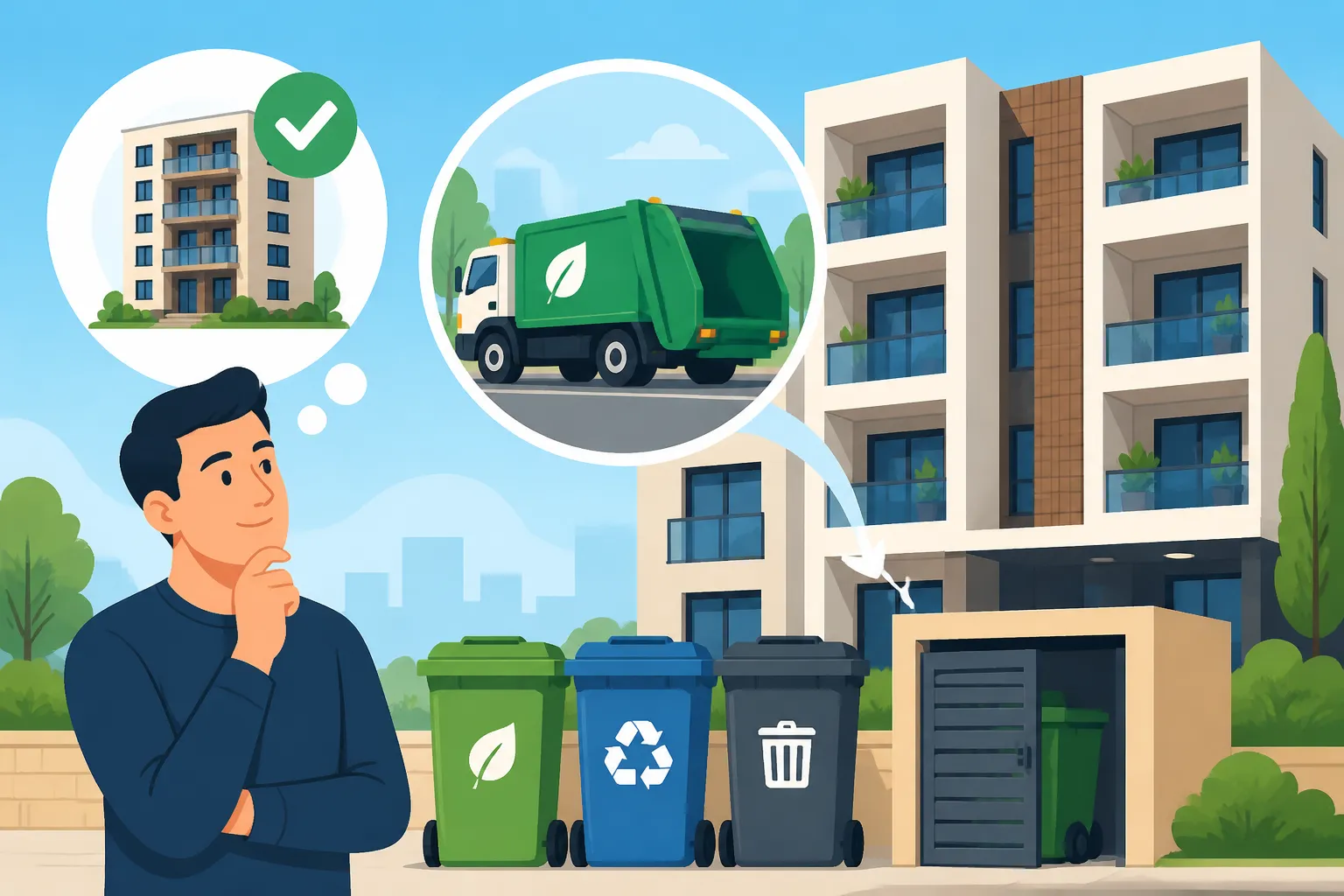
The most common sight around Israeli apartment buildings will be the large, green (or sometimes dark gray) dumpsters for general waste. These are for everything that can't be recycled or composted. You'll typically find them strategically placed near your building, or if you're in a larger complex, perhaps in a designated waste area. Make sure your bags are properly tied to prevent spills, especially with the hot Israeli climate making things… aromatic.
Beyond general waste, you'll see an increasing number of recycling options. The most prevalent are the "cartonit" (קרטונית) for cardboard and paper, and various colored bins for plastics, glass, and sometimes even textiles. The exact types and locations of these recycling bins can vary significantly from one municipality to another, and even within different neighborhoods of the same city. For instance, Tel Aviv is often ahead of the curve with accessible sorting, while smaller towns might still be catching up. It’s always a good idea to scout out the local options as soon as you settle into your new place. If you're using a moving service like Sirelo to help you settle in, remember to break down all those moving boxes into the cartonit to make sure they get recycled properly.
The Link Between Waste Services and Arnona
You might not realize it immediately, but your waste collection services are intrinsically linked to your municipal property tax, known as Arnona (ארנונה). When you rent an apartment, a portion of your Arnona payment, which is usually included in your monthly rent or paid directly to the municipality, goes towards funding these essential services. This includes not just the physical collection of garbage, but also the maintenance of public recycling infrastructure, street cleaning, and sometimes even pest control in public areas.
This means that even if you're meticulous about your personal waste, the overall cleanliness of your building's surroundings also depends on everyone contributing their share through Arnona. Understanding this connection can help you appreciate why local municipalities are so keen on residents paying their dues and adhering to regulations. If you're a new immigrant, there might even be special discounts available for Arnona, which you can learn more about in guides like How Do I Get an Arnona Discount as a New Oleh in Israel?. It’s another one of those essential cogs in the administrative machine that, for expats, can feel like a labyrinth at times.
The Pivotal Role of the Vaad Bayit in Apartment Waste Management
In an Israeli apartment building, the Vaad Bayit (ועד בית), or Building Committee, is absolutely central to how communal services like waste collection are managed. Think of them as the unsung heroes, or sometimes the slightly overzealous managers, of your shared living space. Their role is far more significant than just telling you off for leaving your shoes in the stairwell; they often serve as the primary interface between residents and municipal services.
Responsibilities of the Vaad Bayit Regarding Waste
The Vaad Bayit is typically responsible for overseeing the daily operations of the building's common areas, and waste management falls squarely within this domain. This usually means ensuring there are enough general waste bins, that they are accessible, and that they are being emptied on schedule by the municipality. They often handle communication with the local council if there are issues, such as overflowing bins, missed collections, or the need for additional recycling facilities. For example, if your building only has a general waste bin, the Vaad Bayit might be the ones pushing for a separate recycling bin to be placed nearby.
They also play a crucial role in setting and enforcing internal building rules regarding waste disposal. This might include specific times for taking out the trash, designated areas for bulky items, or rules about keeping shared trash rooms clean. These rules are usually communicated via notices in the stairwell or WhatsApp groups, so it’s vital to try and understand them, even with a language barrier. This is where having a local SIM with data, perhaps even an eSIM from providers like Airalo when you first arrive, can be incredibly helpful for deciphering messages or quickly translating texts.
How Vaad Bayit Fees Cover Waste-Related Costs
The Vaad Bayit operates on funds collected from all apartment owners and, by extension, tenants, in the form of monthly Vaad Bayit fees. These fees cover a range of communal expenses, and a significant portion is often allocated to waste-related costs. While the municipal Arnona covers the actual collection service, the Vaad Bayit might use its budget for things like purchasing new bins, hiring external cleaners for shared trash rooms, or even paying for special collections of bulky waste (like old furniture) that the municipality doesn't pick up regularly.
If your Vaad Bayit seems particularly efficient or, conversely, completely hands-off, it often comes down to how well-organized and funded they are. You can learn more about these charges in Understanding Building Committee (Vaad Bayit) Fees in Israel. Sometimes, expats express frustration when bins are perpetually full, only to discover that the Vaad Bayit has been struggling to get residents to pay their fees, impacting their ability to fund additional services. It's a cooperative system, and your participation, even if just paying your fees on time, helps keep things running smoothly.
Your Personal Role in Apartment Waste Disposal
While the municipality and Vaad Bayit handle the larger logistical framework, your daily actions as a resident are what truly determine the effectiveness of waste collection in your apartment building. Getting this right from day one will save you headaches and help you integrate smoothly into your new community. Remember, Israelis can be quite direct when they see something amiss, so it's best to be proactive.
Sorting Your Waste: The Key to Responsible Disposal
Israel is continually enhancing its waste sorting and recycling programs, so it's important to keep up. The most common separation you'll encounter is for paper/cardboard, plastic bottles, and glass. For example, plastic bottles (known as bakbukim) often have a deposit (pikadon) that you can redeem at supermarkets, which gives a nice incentive to recycle them properly. You'll find orange bins specifically for packaging waste (plastic, metal, and cartons for milk/juice), usually provided by Tamir Corporation, in many neighborhoods. Glass bottles go into purple bins, and paper/cardboard into blue ones or the large green "cartonit" bins.
It’s not just about finding the right bin; it’s about doing it correctly. Rinse out food containers before tossing them into recycling to avoid contamination. Break down cardboard boxes to save space. And remember, not everything can be recycled. Items like Styrofoam, plastic bags (unless specifically designated), and food-soiled paper generally go into the general waste. If you’re unsure, a quick search on your municipal website for "waste separation" (הפרדת אשפה) can often provide specific guidelines for your area. For general information on setting up your new home, you might also find guides like The Complete Guide to Renting an Apartment in Israel (2027) or How to Find and Rent Long-Term Accommodation in Israel useful.
Proper Disposal of Household Waste
For your regular household waste, ensure it's securely bagged before placing it in the general waste dumpsters. This isn't just for hygiene; it also helps prevent odors, especially during the warmer months, and deters pests. Many buildings have a designated trash room or specific hours during which trash can be placed outside the apartment door for collection. Always adhere to these rules. Ignoring them can lead to fines from the Vaad Bayit or, more commonly, stern passive-aggressive notes on the bulletin board (or active-aggressive complaints in the WhatsApp group).
For bulky items like old furniture, broken appliances, or construction debris, never just leave them by the general waste bins. These require special collection. Most municipalities have designated days or a call-in service for bulky waste (pasoleh פסולת). You might need to coordinate this with your Vaad Bayit or directly with the city. For hazardous waste like batteries, old electronics, or light bulbs, look for designated collection points, often found at larger supermarkets or specific municipal centers. Thinking ahead about all these practicalities, from waste to utilities, makes settling in so much smoother. You’ll want to be equally prepared when setting up other essentials, like your water and gas, as detailed in How to Set Up Water and Gas in My Israeli Apartment?.
Troubleshooting Common Waste Collection Challenges for Expats
Living in Israel as an expat means you’ll inevitably run into situations where things don’t quite work as expected, and waste collection is no exception. From language barriers to navigating bureaucracy, a little preparation and patience go a long way.
Dealing with Missed Collections or Overflowing Bins
One of the most common frustrations is waking up to an overflowing dumpster or realizing that the collection truck simply missed your building. This happens. If your bins are consistently overflowing or collection days are erratic, the first port of call should be your Vaad Bayit. They are generally responsible for reporting these issues to the municipality and pushing for a resolution. Often, they have a direct line of communication or a specific person they deal with at the city council.
If you don't have an active Vaad Bayit, or if they're unresponsive, you might need to contact your local municipality directly. Most city councils (עיריות – Iriyot) have a dedicated department for sanitation (machleket te'unah or agaf tichnun ve'tahzuka) and offer online reporting forms or a central call center. Keep in mind that calling might require some Hebrew, so having a helpful neighbor or a translation app ready is a good idea. Knowing how to efficiently communicate, even if it's just translating an email, is critical – and this is where an eSIM from Airalo, giving you instant connectivity, can genuinely simplify things during those initial, bewildering weeks.
Navigating Language Barriers and Local Customs
Understanding local customs and communicating effectively can be the biggest hurdles. For example, some buildings might have a tradition of leaving personal recycling bags next to the general bin for takers (people who collect recyclables for income), while others might strictly forbid anything outside the designated bins. Observational learning is key here – watch what your neighbors do.
When it comes to official communications about waste, they'll almost certainly be in Hebrew. This is where those translation apps, Hebrew classes (like Ulpan), or a friendly, English-speaking neighbor become invaluable. Don't be shy about asking for help; most Israelis are generally happy to assist, especially if you show an effort to understand and integrate. The complexities of everyday life often come down to these small interactions, much like understanding other vital services, such as setting up your electricity, which can be explored in How to Set Up Electricity (Chevrat HaChashmal) in Your Israeli Home. Patience, persistence, and a good sense of humor are your best tools here.
| Waste Type | Typical Bin Color/Type | What Goes In | What Stays Out | Common Israeli Term |
|---|---|---|---|---|
| General Waste | Green / Dark Gray | Food scraps, non-recyclable items, broken ceramics | Recyclables, bulky items, hazardous materials | Pach Zvel / Ashpah Klalit |
| Plastic/Packaging | Orange | Plastic containers, metal cans, milk cartons, Tetra Pak | Glass, paper, food waste | Pach Katom / Midur Psumet |
| Paper/Cardboard | Blue / Cartonit | Newspapers, magazines, cardboard boxes, paper | Wet paper, food-soiled paper, plastic-coated | Pach Kachol / Kartonit |
| Glass | Purple | Glass bottles and jars (rinsed) | Ceramics, broken mirrors, light bulbs | Pach Sagol |
| Plastic Bottles (Deposit) | Any public collection point | Plastic beverage bottles with deposit mark | Non-deposit bottles, other plastics | Bakbukim (Pikadon) |
Disclaimer
The information provided in this guide is for general informational purposes only and does not constitute professional advice. While we strive to keep the content up-to-date and accurate, waste collection rules, schedules, and municipal regulations in Israel can change frequently and vary significantly by municipality and even neighborhood. We recommend consulting your local municipality's website, your building's Vaad Bayit, or a local expert for the most current and specific information regarding waste collection in your particular area.