How Do I Get Israeli Citizenship Through the Law of Return?
For many, the dream of calling Israel home isn't just about moving; it's about connecting to a profound heritage and gaining citizenship under a unique law. But if you’re wondering, "How do I get Israeli citizenship through the Law of Return?", you’ve already begun navigating a path that, while incredibly rewarding, is famously steeped in paperwork, waiting, and a fair bit of head-scratching. This guide will meticulously walk you through every step, from understanding who qualifies to what happens once you land.
Understanding the Law of Return: More Than Just a Dream
The Law of Return (חוק השבות, Hok HaShvut), enacted in 1950, is truly one of a kind. It's the legislative cornerstone that offers Jews and those of Jewish descent the right to immigrate to Israel and gain citizenship. It embodies the Zionist vision of Israel as a homeland for the Jewish people. But, like many things in Israel, what seems simple on the surface often has layers of detail and, yes, a bit of bureaucracy underneath.
Who Qualifies Under the Law of Return? The Core Eligibility
This is where many people start their journey, digging into family history and wondering if they actually qualify. The Law of Return isn't just for individuals who are halachically Jewish (born of a Jewish mother or converted to Judaism); it extends much further to encompass family connections. Essentially, the law states that an Oleh (immigrant) is a person who has the right to immigrate to Israel. This right is granted to:
- A Jew: This means someone born to a Jewish mother or who has converted to Judaism (Orthodox, Conservative, or Reform conversions are generally accepted, though non-Orthodox conversions may face additional scrutiny if performed outside Israel by specific rabbis, especially for official religious matters). It's not enough to simply feel Jewish; there needs to be a recognized lineage or conversion.
- A child of a Jew: This includes biological or adopted children. So, if your father or mother is Jewish, even if you aren't considered halachically Jewish yourself, you have the right to make Aliyah. This is often a pleasant surprise for many.
- A grandchild of a Jew: This is the famous "grandchild clause." If one of your grandparents was Jewish, you qualify. This means even if neither of your parents is Jewish, but one of their parents (your grandparent) was, you're in! This part of the law aims to include those who might have lost their direct connection over generations but still have a link.
- The spouse of a Jew, a child of a Jew, or a grandchild of a Jew: This is a crucial expansion. If you are married to someone who qualifies under any of the above categories, you also qualify for Aliyah, regardless of your own religious background. This allows families to stay together. This also means if you’re the non-Jewish spouse of a Jewish grandchild, you qualify. The idea is to prevent family separation and encourage comprehensive immigration.
For example, imagine Sarah. Her grandmother on her mother's side was Jewish, but her mother married a non-Jewish man and didn't raise Sarah with any Jewish practices. Sarah herself isn't halachically Jewish, but because her grandmother was Jewish, Sarah qualifies under the "grandchild clause." Now, if Sarah is married to David, David, though not Jewish himself, would also qualify for Aliyah as Sarah's spouse. This comprehensive approach is designed to be inclusive, reflecting historical attempts to reunite families and provide refuge. The key is establishing that clear, documented link.
The "Catch" and Exclusions: Who Doesn't Qualify?
While the Law of Return is incredibly broad, it's not without its limitations. There are specific circumstances under which an individual, even if they would otherwise qualify by ancestry, might be excluded. These are often the source of significant emotional distress and confusion for applicants.
The most prominent exclusion is someone who has voluntarily converted to another religion. This is a deeply sensitive area. If you were born Jewish but later, as an adult, actively chose to convert to Christianity, Islam, or another religion, you are generally no longer considered eligible under the Law of Return. This is based on the interpretation that by converting, you have chosen to sever your connection to the Jewish people in a religious sense. However, this is distinct from someone who was born Jewish but simply doesn't practice Judaism; non-observance alone does not disqualify you. The emphasis here is on a voluntary conversion to another faith. The authorities will look for clear evidence of such a conversion.
Beyond religious conversion, other exclusions apply to maintain public safety and order:
- Persons with a criminal past: If you have a significant criminal record that could pose a danger to public welfare, your application for Aliyah may be denied. The Israeli government reserves the right to refuse entry to individuals deemed a threat. Minor offenses might be overlooked, but serious felonies are a definite red flag.
- Persons suffering from a severe illness that could endanger public health: This is rarely invoked and typically applies only to highly contagious and dangerous diseases that pose an immediate public health risk, which is very rare in modern contexts due to medical advancements.
- Persons acting against the Jewish people: This is a broad category, but it's designed to prevent those with demonstrable anti-Semitic views or actions from taking advantage of the law.
- Cases where the Minister of Interior deems entry detrimental to state security: This is a discretionary clause, used sparingly in matters of national security.
It's vital to be upfront and honest about any potential issues in your background during the application process. Attempting to hide information can lead to outright rejection and future complications. The Jewish Agency, a key facilitator of Aliyah, will conduct thorough background checks, so full transparency is always the best policy.
The Aliyah Process: Your Path to Israeli Citizenship
Once you've established your eligibility, the real work begins: navigating the Aliyah process itself. This isn't just about paperwork; it's a journey that often involves emotional preparation, logistical planning, and working closely with the organizations dedicated to helping new immigrants.
Applying Through the Jewish Agency and Nefesh B'Nefesh
For most prospective Olim, the journey to Israeli citizenship under the Law of Return starts with The Jewish Agency for Israel (JAFI) or, for North American and UK applicants, with Nefesh B'Nefesh (NBN). These organizations are the primary conduits for Aliyah, acting as liaisons with the Israeli government and providing invaluable support.
Your first step will usually be to contact one of these organizations. They have emissaries (shlichim) worldwide who are your first point of contact. These emissaries are there to guide you, answer questions, and help you understand the requirements specific to your situation. They've seen it all, so don't be shy about asking even the most seemingly silly questions.
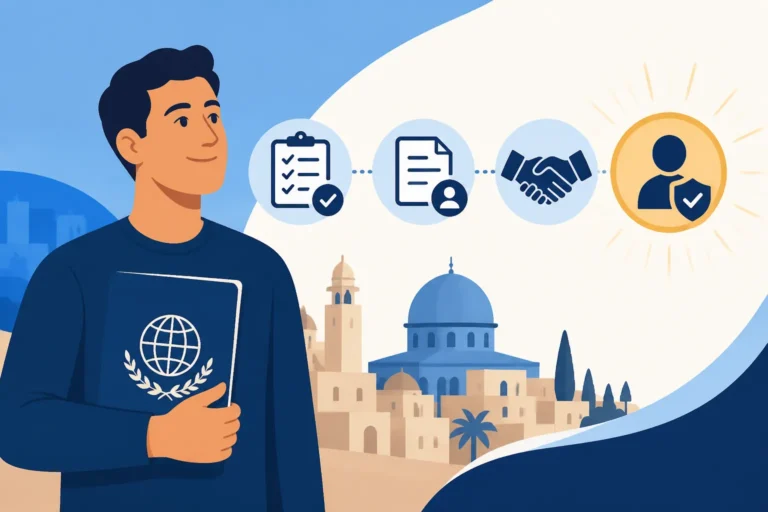
The application process typically involves:
- Initial Inquiry and Information Gathering: You'll usually start by filling out an online application or inquiry form. This provides the agency with basic information about you and your eligibility claim.
- Meeting with an Emissary: You'll have an interview with an Aliyah emissary. This can be in person, over the phone, or via video call. This meeting is crucial for verifying your eligibility, discussing your motivations for Aliyah, and explaining the full scope of the process. They'll also provide you with a comprehensive list of required documents.
- Document Submission: This is often the longest and most demanding part. You'll need to gather a substantial amount of paperwork to prove your Jewish lineage (if applicable), personal identity, marital status, financial standing, and good character. This can include birth certificates for you, your parents, and your Jewish grandparents, marriage certificates, divorce decrees, conversion certificates, police background checks, and even letters from rabbis or synagogues. Each document needs to be original or certified copies, and some may require an apostille stamp and translation into Hebrew. Take a deep breath; it's a marathon, not a sprint.
- Medical Clearance: You'll typically need to undergo a medical examination and provide medical records to ensure you don't fall under the public health exclusion criteria.
- Final Approval: Once all your documents are submitted and verified, and your interviews are complete, your file will be sent to the Israeli Ministry of Interior (Misrad HaPnim) for final approval. If everything is in order, you'll receive your Aliyah visa.
These organizations are an incredible resource, not just for the legal aspects but also for practical advice on finding a community, learning Hebrew, and settling in. They are your best friend through this often-overwhelming process. For a more detailed walkthrough, you can explore resources like How to Apply for Aliyah Through the Jewish Agency and Nefesh B'Nefesh.
Documents You'll Need: Prepare for the Paperwork Marathon
Ah, the documents! This is where the rubber meets the road, and many hopeful Olim find themselves overwhelmed. The sheer volume and specificity of the required paperwork can feel like a bureaucratic gauntlet. But remember, each document serves a purpose: to confirm your eligibility under the Law of Return and your identity.
Here’s a general rundown of the types of documents you'll need, but always check with your Aliyah agency for the exact list applicable to your specific situation and country of origin:
- Proof of Jewish Lineage/Eligibility:
- Birth certificates: Yours, your parents', and if you qualify through a grandparent, theirs as well. These are vital for establishing the chain of lineage.
- Marriage/Divorce Certificates: For you and your parents/grandparents, especially if names changed due to marriage.
- Conversion Certificate: If you converted to Judaism.
- Letters from Rabbis or Synagogues: Confirming Jewish status or participation, sometimes required to supplement official documents.
- Ketubah (Jewish marriage contract): Can be useful, though usually not sufficient alone.
- Personal Identification:
- Original Passport: Must be valid for at least six months beyond your planned Aliyah date.
- Birth Certificate: Your original, long-form birth certificate.
- Current Driver's License or other official ID.
- Passport-sized photos: Usually 2-4, adhering to specific requirements.
- Legal & Background Checks:
- Police Background Check/Criminal Record Certificate: From every country you've lived in for a significant period (e.g., 12 months or more) since the age of 16. This is essential to ensure you don't pose a security risk. These often need to be issued within a specific timeframe (e.g., 6 months).
- Sworn Declaration: A document affirming that you have not converted out of Judaism (if applicable) and have no criminal history.
- Financial & Other:
- Proof of financial means: While not a strict requirement for Aliyah, showing you have some financial stability can sometimes streamline the process or assist with certain benefits.
- Medical Certificate: A general health statement from your doctor.
- Academic Transcripts/Diplomas: Not strictly for Aliyah, but useful for job searching or academic recognition later.
- Proof of change of name: If your name has changed at any point.
Crucial Advice for Document Preparation:
- Originals and Certified Copies: Always bring originals to your interviews, but often the agencies will require certified copies. Make multiple copies!
- Translations: Any document not in Hebrew or English (and sometimes even English documents) may need to be translated by a notarized translator and potentially apostilled.
- Apostille: Many documents issued by government agencies (like birth certificates, police checks, marriage certificates) from countries that are part of the Hague Apostille Convention will need an apostille stamp. This international certification verifies the authenticity of the document's signature, making it legal in Israel.
- Start Early: Gathering these documents can take months, especially if you need to order records from different countries. The sooner you start, the less stressful it will be.
The process of gathering and preparing these documents is often a test of patience. Expect delays, unexpected requirements, and moments of frustration. But remember, every piece of paper is a step closer to your new life. For a deeper dive into the specifics of this stage, check out How to Prepare Documents for an Aliyah Application.
Arriving in Israel and Formalizing Your Citizenship
The day you land at Ben Gurion Airport (TLV) is monumental. It's the culmination of months, maybe years, of dreaming and planning. But the administrative journey doesn't end when you step off the plane; it truly begins with your formal entry as an Oleh.
Your First Steps at Ben Gurion Airport
Imagine this: you've just disembarked, feeling a whirlwind of emotions. This isn't just a regular arrival; it's your Aliyah arrival. Upon landing at Ben Gurion, new immigrants are typically directed to a dedicated Aliyah processing desk, often managed by the Ministry of Aliyah and Integration (Misrad HaAliyah VeHaKlitah) or a representative from your Aliyah organization (like Nefesh B'Nefesh). This is where the magic, and some more paperwork, happens.
Here’s what usually occurs:
- Verification of Aliyah Visa: Your Aliyah visa, which was stamped into your passport before you left, is checked and validated.
- Issuance of Teudat Oleh: This is your "Immigrant Certificate," a yellow booklet that is incredibly important. It's your official proof that you've made Aliyah and are entitled to all the benefits that come with it. Keep this safe; you'll need it constantly in your first few months.
- Issuance of Temporary Teudat Zehut: You will receive a temporary identity card number and, often, a temporary Teudat Zehut (Israeli ID card). This isn't the permanent, biometric one, but it's enough to start functioning. This card is your gateway to many services.
- Registration for National Health Insurance (Bituach Leumi): Right there at the airport, you'll begin the process of registering with Bituach Leumi, Israel's National Insurance Institute. This is essential for accessing healthcare. You'll typically choose one of the four public health funds (Kupot Holim) — Clalit, Maccabi, Meuhedet, or Leumit — though full coverage often has a waiting period.
- Initial Sal Klita Payment: For those eligible, you might receive the first installment of your Sal Klita (Absorption Basket) directly at the airport. This is a crucial financial aid package designed to help new Olim during their initial integration period.
This airport process can take a few hours, so be prepared to wait a bit. It’s overwhelming but also incredibly exciting. You are officially an Israeli citizen from the moment your Aliyah visa is activated. This initial processing ensures you leave the airport with the fundamental documents needed to begin your life in Israel. For a detailed rundown of what to expect, consider reading How to Complete the Aliyah Process at Ben Gurion Airport.
Registering at Misrad HaPnim and Bituach Leumi
After the initial whirlwind at the airport, your next crucial administrative steps involve visiting the Ministry of Interior (Misrad HaPnim) and solidifying your registration with Bituach Leumi. These appointments are essential for formalizing your status and accessing public services.
At Misrad HaPnim (Ministry of Interior):
Within your first few weeks, you'll need to schedule an appointment at a Misrad HaPnim branch near your new home. This is where you'll:
- Obtain Your Permanent Teudat Zehut: The temporary ID card from the airport is just that – temporary. At the Misrad HaPnim, you will apply for your biometric Teudat Zehut, which is a smart card containing your photo and fingerprint data. This is your official, permanent Israeli identity card, required for almost everything from opening a bank account to getting a job. You'll likely have your photo taken and fingerprints scanned.
- Register Your Address: It’s critical to register your residential address with Misrad HaPnim. This ensures you receive official mail and are recognized as a resident of a particular municipality. If you move, you must update this information.
- Receive Your Teudat Ma'avar/Israeli Passport: If you choose, and meet residency requirements, you can also apply for an Israeli passport (or a temporary travel document, Teudat Ma'avar) at this stage. Note that full passport eligibility for new Olim usually kicks in after a year of residency.
At Bituach Leumi (National Insurance Institute):
While you start the process at the airport, it’s advisable to visit a local Bituach Leumi office soon after your arrival. This is to ensure all your details are correctly registered and that you understand your obligations and entitlements.
- Confirm Health Fund Registration: Double-check that your chosen Kupat Holim (health fund) registration is active. While you choose at the airport, confirming it in person can resolve any early glitches.
- Understand Contributions: You'll need to understand your Bituach Leumi contributions, which are mandatory social security payments that fund national health insurance, unemployment, maternity leave, and more. Even if you're not yet working, there might be minimum payments.
- Claiming Benefits: Bituach Leumi manages various benefits, including the remaining installments of your Sal Klita, child allowances, and potentially unemployment benefits if you qualify.
These visits can be daunting, especially if your Hebrew isn't strong. Consider bringing a friend, a volunteer, or hiring a translator to help you navigate the process. Patience is key, as waiting times can be long. For more detailed guidance, refer to How to Get a Teudat Zehut (Identity Card) in Israel and How to Register Your Address at the Misrad HaPnim in Israel.
Understanding Dual Citizenship and Benefits
One of the most appealing aspects of acquiring Israeli citizenship through the Law of Return is Israel's generally accepting stance on dual citizenship. This means that in most cases, you don't have to renounce your previous citizenship to become an Israeli citizen. You can hold both passports, subject to the laws of your country of origin. For many, this offers peace of mind and flexibility, allowing them to maintain strong ties with their country of birth. However, it is crucial to check the specific laws of your home country, as some nations have restrictions on dual nationality. For instance, countries like India do not permit dual citizenship.
Beyond the ease of dual nationality, Olim are eligible for a range of benefits designed to ease their integration into Israeli society. These benefits, collectively known as the "Absorption Basket" or Sal Klita, aim to provide financial, linguistic, and logistical support during the challenging initial period of resettlement.
Key benefits often include:
- Financial Aid (Sal Klita): This is a direct financial grant paid out over several months to help cover initial living expenses. The amount varies based on family size and other factors. It’s a lifesaver for many during those first few months of job searching and setting up a new home. You can learn more about this by reading What Is the Sal Klita (Absorption Basket) and Who Gets It?.
- Hebrew Language Courses (Ulpan): New Olim are often eligible for subsidized or free Ulpan courses, intensive Hebrew language classes vital for integration into work and social life.
- Customs Benefits: Significant tax reductions or exemptions on importing household goods, a car, and other personal items for a specific period after Aliyah. This can save you a substantial amount when furnishing your new home.
- Housing Assistance: Subsidies for rental housing or assistance with purchasing a first home, often taking the form of discounted mortgages.
- Income Tax Exemptions: Perhaps one of the most significant benefits, new Olim generally receive a 10-year exemption from reporting and paying Israeli income tax on foreign-sourced income. This is a massive incentive for those with overseas investments, pensions, or remote work for foreign companies.
- Reduced Municipal Taxes (Arnona): Discounts on property taxes for a period.
- Professional Retraining and Employment Assistance: Programs designed to help Olim find suitable employment in Israel, including professional recognition services.
These benefits are dynamic and can change over time, so it's always best to check the most current information with the Ministry of Aliyah and Integration or your Aliyah agency. Understanding your entitlements is a key part of leveraging your new citizenship effectively. For broader understanding, refer to Understanding Dual Citizenship Rules in Israel.
Navigating Common Hurdles and Practical Advice
Making Aliyah is an adventure, but like any big move, it comes with its unique set of challenges. Being prepared for these hurdles can make all the difference in a smooth transition.
Health Insurance and Medical Care for New Olim
One of the most pressing concerns for any newcomer, especially with family, is access to healthcare. While Israel boasts an excellent public healthcare system, new Olim face a particular administrative nuance: the waiting period.
Once you've made Aliyah and registered with Bituach Leumi, there's typically a waiting period—usually several months—before you become fully eligible for comprehensive public health fund services. The exact length can vary depending on individual circumstances, such as whether you were previously insured in Israel or your age. During this waiting period, you will not have full access to the Sal Briut (Health Basket) services provided by the Kupot Holim. This means routine doctor visits, prescriptions, and non-emergency treatments might not be covered.
This gap can be incredibly stressful. Imagine arriving with children and realizing a sudden ear infection or a necessary vaccination isn't immediately covered. This is precisely why it's highly recommended, almost essential, to secure private health insurance for your initial months in Israel. A robust private plan can bridge this gap, covering doctor visits, medications, and minor emergencies until your public coverage kicks in. Many Olim choose to maintain private insurance even after their public coverage begins, supplementing the public system for quicker access to specialists or certain treatments. Companies like Cigna Global offer plans specifically designed for expats and new immigrants, providing comprehensive coverage from day one.
Understanding this waiting period is critical for planning your move and ensuring continuous medical coverage for yourself and your family. Don't leave it to chance; arrange for interim private health insurance before you arrive. For more in-depth information, you can read Understanding Health Insurance Waiting Periods for New Olim in Israel and The Expat Guide to National Health Insurance (Bituach Briut Mamlachti) in Israel.
Moving Your Life to Israel: Logistics and Support
Beyond the bureaucratic and health aspects, there's the monumental task of actually moving your entire life to a new country. This involves everything from deciding what to bring to choosing the right shipping method, and it can be a source of significant stress.
When it comes to moving your belongings, you have several options:
- Shipping by sea: This is the most common and cost-effective method for large quantities of household goods. It's slower but much cheaper per cubic meter. You'll need to decide between a full container load (FCL) or a less than container load (LCL) depending on the volume of your items.
- Shipping by air: Much faster but significantly more expensive, typically reserved for essential items you need quickly.
- Excess baggage: For smaller items, simply paying for extra luggage on your flight can be an option.
Many Olim utilize international moving companies that specialize in relocations to Israel. These companies can handle everything from packing and customs declarations to delivery to your new Israeli home. They understand the specific customs benefits available to new immigrants, which can save you a lot of money and hassle. Platforms like Sirelo can help you compare quotes from various international movers, ensuring you find a reliable and affordable service that understands the intricacies of moving to Israel.
Planning ahead for your move is crucial. Create an inventory of everything you plan to bring, research different moving companies, and factor in shipping times. Remember, customs clearance in Israel can be a process, and having a reputable mover on your side who knows the local regulations is invaluable. Don’t underestimate the logistics; they are just as important as the paperwork for a smooth start. For a full picture of your initial journey, check out The Complete Guide to Making Aliyah: Your First 90 Days in Israel (2027).
Language and Cultural Integration
While citizenship is granted through the Law of Return, truly becoming an integral part of Israeli society goes far beyond a passport. Language and cultural integration are perhaps the biggest personal hurdles and the most rewarding aspects of Aliyah.
Learning Hebrew: Hebrew is the official language of Israel, and while many Israelis speak excellent English, especially in major cities like Tel Aviv and Jerusalem, daily life, bureaucracy, and job opportunities are significantly easier with Hebrew proficiency.
- Ulpan: The government-subsidized Ulpan programs are designed specifically for new Olim. These intensive language courses are not just about learning vocabulary and grammar; they're also a crash course in Israeli culture. You'll meet other new immigrants from around the world, creating a unique support network. Even if you arrive with some Hebrew, a good Ulpan can drastically improve your conversational skills and confidence.
- Practice, practice, practice: Beyond formal classes, immerse yourself! Don't be afraid to make mistakes. Order coffee in Hebrew, ask for directions, listen to Israeli music and podcasts, and try to engage with locals. Israelis are generally very encouraging of Olim trying to speak Hebrew.
Cultural Differences: Israel is a vibrant, diverse country with a unique culture shaped by its history, religion, and diverse population.
- Direct communication: Israelis tend to be very direct, which can sometimes come across as abrupt or rude to those from more reserved cultures. Don't take it personally; it's just the way they communicate.
- Punctuality: Things often run on "Israeli time," which can be a bit more flexible than what you might be used to. Patience is a virtue here.
- Community and Family: Family and community are central to Israeli life. Be open to invitations and embrace the warmth.
- Bureaucracy: Prepare for layers of bureaucracy. Things often require persistence and patience. It helps to understand that processes can be less streamlined than in some Western countries.
Embracing the language and culture won't happen overnight, but it's an ongoing process that enriches your experience and truly makes Israel feel like home. For a comprehensive look at language learning, refer to Learning Hebrew: A Complete Guide to Ulpan and Language Levels.
| Eligibility Category | Requirements | Notes |
|---|---|---|
| A Jew | Born to a Jewish mother or converted to Judaism. | Conversion must be recognized by the State of Israel (Orthodox, Conservative, or Reform). |
| Child of a Jew | Biological or adopted child of a Jewish parent (mother or father). | The child does not need to be halachically Jewish. |
| Grandchild of a Jew | Biological or adopted grandchild of a Jewish grandparent. | Neither parent needs to be Jewish. |
| Spouse of an Oleh | Married to someone who qualifies as a Jew, child of a Jew, or grandchild of a Jew. | Applies regardless of the spouse's religious background. |
| Exclusions | Voluntary conversion to another religion; significant criminal record; danger to public health/security. | Non-practicing Judaism does not disqualify; voluntary conversion out does. |
Disclaimer
The information provided in this guide is for general informational purposes only and does not constitute legal or professional advice. While we strive to offer accurate and up-to-date content, immigration laws and procedures in Israel are complex and subject to change. It is essential to consult with the official Israeli government ministries (such as Misrad HaPnim and Misrad HaAliyah VeHaKlitah) or a qualified Aliyah agency, and potentially an immigration lawyer, for advice tailored to your specific situation. Reliance on any information in this guide is solely at your own risk.