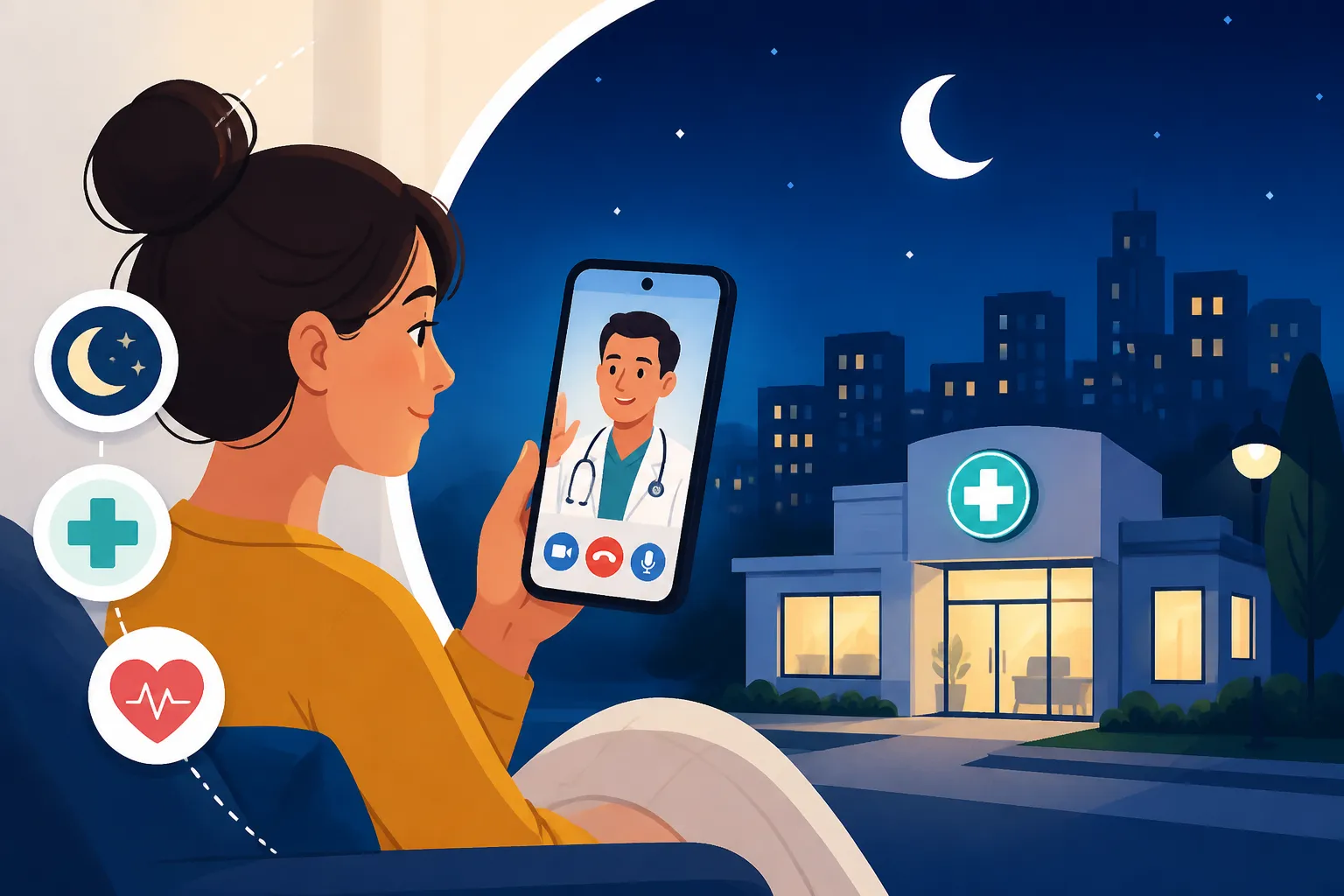
How Do I See a Doctor Outside of Business Hours in Israel?
Falling ill or getting injured outside regular clinic hours in Israel can be a stressful experience, especially if you are still figuring out how the local healthcare system functions. Standard health fund clinics close in the early evening and remain closed over Shabbat and holidays, leaving newcomers scrambling to find urgent care. This guide walks you through every after-hours medical option in Israel—from 24/7 nurse hotlines and urgent care centres to emergency room visits and night-time prescriptions—so you can get the care you need without facing administrative headaches or unexpected bills.
Navigating After-Hours Medical Needs in Israel: Your First Steps
When your primary care clinic closes its doors for the night or shuts down for Shabbat on Friday afternoon, your options for seeking medical advice depend heavily on your current residency status, your health insurance arrangement, and the severity of your symptoms.
The Frustration of After-Hours Illness in Israel
If you have spent any time living in Israel, you already know that medical issues rarely happen at convenient hours. A sudden high fever at 10 PM on a Tuesday, an unbearable toothache on Friday evening, or an allergic reaction during a holiday weekend can make anyone panic. The regular neighbourhood clinics operated by the major health funds (Kupot Holim)—Clalit, Maccabi, Meuhedet, and Leumit—generally operate during standard daytime business hours, often closing by 7 PM on weekdays and early on Friday afternoons.
For a new immigrant (oleh) or an foreign resident, the first hurdle is figuring out where to turn without making a costly mistake. If you walk directly into a hospital emergency room (Miyun) without an official referral or a qualifying condition, you may be presented with a substantial bill upon discharge. Understanding the hierarchy of night-time medical care saves both time and money. For general emergency preparation, reviewing Emergency Medical Care in Israel: What Every Newcomer Needs to Know is a great baseline for understanding local protocols.
Telemedicine and Kupah Hotlines
Your first line of defence outside of normal clinic hours should almost always be your health fund’s phone service or digital app. Every major Kupah operates a telephone triage line staffed by registered nurses and on-call physicians. These services are often available 24 hours a day, 7 days a week, including over Shabbat and religious holidays.
When you call your fund’s hotline, the triage nurse assesses your symptoms. They can provide immediate home care advice, issue an electronic referral (Hafnaya) to an urgent care clinic, or send an emergency referral to a hospital emergency room. Getting a referral through the telephone service before stepping out of your home is crucial because it often waives or significantly reduces the fees associated with urgent care centres and emergency rooms. To manage these digital tools effectively, take time to learn How to Book Appointments Through Clalit and Maccabi Apps before an urgent medical situation arises.
Private Expat Coverage and Nomadic Options
If you are visiting Israel, living in the country on a short-term visa, or waiting for your official residency status to clear, you might not yet be enrolled in the public system under How Israel’s Health Funds (Kupot Holim) Work: A Full Overview. In these scenarios, relying on public hotlines can be tricky due to system identification requirements like needing an Israeli identity card number (Teudat Zehut).
Foreigners, tourists, and digital nomads frequently rely on international private policies such as SafetyWing to handle unexpected after-hours medical expenses. Having a policy like SafetyWing allows you to visit private urgent care facilities or hospital emergency departments without worrying about paying entirely out-of-pocket for non-referred visits. If you are covered by SafetyWing, keep your digital membership card and payment receipts handy, as most non-resident claims involve paying the clinic directly upfront and requesting reimbursement later.
Urgent Care Centres and TEREM: How After-Hours Clinics Work
When your condition cannot wait until morning but is not severe enough to warrant an emergency room visit, an urgent care clinic—known locally as a Moked—is usually the best destination.
What Is TEREM and When Should You Go?
The most widespread urgent care network in Israel is TEREM (Emergency Medical Services). TEREM clinics operate in major cities across the country, including Jerusalem, Tel Aviv, Haifa, and Be’er Sheva. In addition to TEREM, some health funds run their own central Moked clinics or contract with private emergency centres like Bikur Rofeh.
Urgent care centres are equipped to treat a wide variety of non-life-threatening medical conditions. You should visit an urgent care centre for issues such as:
- Moderate cuts requiring stitches or surgical glue
- Suspected simple bone fractures, sprains, or severe dislocations
- Uncontrolled mild-to-moderate fever that does not respond to over-the-counter medicine
- Mild asthma attacks, severe sore throats, or ear infections
- Minor burns, animal bites, or localized skin infections
Most TEREM and Moked facilities are equipped with on-site X-ray machines, basic blood and urine testing laboratories, ECG equipment, and triage rooms where staff can administer intravenous fluids or antibiotics.
Costs, Referrals, and Co-Payments
Understanding how payment works at urgent care centres prevents uncomfortable surprises at the reception desk. If you are registered with an Israeli health fund, your co-payment fee depends on whether you have a doctor’s referral and what time you arrive.
If you arrive during the late night (typically after 7 PM or 11 PM, depending on your fund’s specific rules) or during Shabbat, the co-payment fee is structured under the standard framework of Understanding Co-Payments (Hishtatfut Atzmit) in the Israeli Health System. If you call your fund’s hotline first and receive an electronic referral, your co-payment is heavily discounted or completely waived.
If you show up at an urgent care centre as a tourist or non-resident without local public health insurance, you will be charged a flat private consultation rate. Tourists carrying private insurance like SafetyWing can submit the itemized invoice received at TEREM to recoup their expenses according to their policy guidelines.
What to Expect During a Nighttime Visit
When you arrive at an after-hours clinic, you must first register at the front desk. You will need to present your health fund card or your foreign passport if you are uninsured in Israel.
- Triage: A nurse will call you in to measure your vital signs (blood pressure, pulse, oxygen saturation, and temperature) and take a brief description of your medical history.
- Prioritisation: Patients are seen based on medical urgency rather than arrival time. Severe breathing difficulties or acute chest pain will always take priority over minor lacerations or routine illness.
- Doctor Consultation: An emergency physician examines you, orders necessary lab tests or X-rays, and determines treatment.
- Discharge or Transfer: You will receive a summary letter (Michtav Shichrur), any necessary prescriptions, and instructions for follow-up care. If the doctor determines that your condition is severe, they will issue an immediate hospital transfer via ambulance.
Visiting the Emergency Room (Miyun) and Call-Out Doctors
When an after-hours situation escalates into a serious medical crisis, heading to a hospital emergency room (Miyun) or summoning a doctor to your residence becomes necessary.
How to Avoid Unexpected ER Charges (Form 17 / Tofes 17)
In Israel, going to a hospital emergency department is not automatically free, even for citizens and permanent residents enrolled in the public system. To avoid paying a significant out-of-pocket emergency room fee, you generally need one of the following:
- A formal written or digital referral (Hafnaya) from your health fund doctor or hotline nurse.
- An official referral issued by an urgent care clinic (like TEREM) that examined you first.
- A medical situation that is exempt from fees by law (such as new bone fractures, joint dislocations, severe head injuries, or sudden active labor).
- Direct hospital admission from the emergency department to an inpatient ward.
If you go to the ER without a referral for a non-exempt condition, the hospital will send you a bill. To cover this bill post-visit, you must request a commitment form (Tofes 17) retroactively from your health fund, which is only granted if the fund agrees the ER visit was medically necessary.
For foreign visitors, tourists, and expats using policies like SafetyWing, an emergency room visit will require upfront payment or coordination between the hospital’s billing department and your insurance provider. Always keep all medical summaries, diagnostic test results, and original receipts to process your claim smoothly. If your situation requires emergency transit, it helps to understand How Much Does an Ambulance (Magen David Adom) Cost in Israel? ahead of time.
Home Doctor Visit Services (Bikur Rofeh)
If you are too ill to leave your apartment or house but your condition is not serious enough for an ambulance, you can request a home doctor visit (Bikur Rofeh).
Most health funds contract with private home-visit services. You can call your health fund’s emergency line or order a physician directly through home-visit companies. A general practitioner will travel to your address, carrying a diagnostic kit and basic medication.
Home visits are particularly popular for elderly residents, families with small children suffering from nighttime fevers, or individuals with debilitating flu symptoms. While home doctor visits carry a higher co-payment fee than attending a Moked clinic in person, they offer peace of mind when travelling across town at 2 AM is impractical.
Practical Comparison of After-Hours Options
To help you decide where to go when feeling unwell outside of standard business hours, refer to the breakdown below:
| Care Option | Best Used For | Referral Required? | Primary Payment Structure |
|---|---|---|---|
| Kupah 24/7 Hotline | Non-severe illness, medical advice, obtaining electronic referrals. | No | Free for health fund members. |
| Urgent Care (TEREM / Moked) | Simple fractures, cuts needing stitches, high fevers, moderate pain. | Recommended (lowers fee) | Low co-payment with referral; private fee for non-residents. |
| Home Doctor Visit (Bikur Rofeh) | Inability to travel, nighttime child fevers, debilitating non-emergency illness. | No | Fixed co-payment for members; private call-out fee for foreign visitors. |
| Hospital ER (Miyun) | Chest pain, severe trauma, breathing distress, sudden neurological symptoms. | Yes (to avoid full cost, unless exempt) | Covered by Kupah if referred/admitted; private claim for expats/tourists. |
Practical Tips for Foreigners, Expats, and Tourists
Navigating the healthcare system when you do not speak fluent Hebrew adds an extra layer of stress during an after-hours medical event. Taking a few proactive steps can make the entire process significantly easier.
Language Barriers and Phone Apps
While many Israeli doctors and medical professionals speak good English, administrative personnel at clinic reception desks or call centers may speak primarily Hebrew.
- Use Language Translation Apps: Keep Google Translate or similar tools on your phone with Hebrew downloaded offline.
- Request English-Speaking Staff: When calling your health fund hotline or checking in at TEREM, politely ask immediately: “Slicha, efshar לדבר [ledaber] Anglit?” (Excuse me, can we speak English?).
- Digital App Features: Health fund smartphone applications frequently feature auto-translation options or simplified interfaces that allow you to locate open Moked locations on a map based on your current location.
Handling Pharmacies and Late-Night Prescriptions
If an after-hours doctor issues you a prescription late at night, your standard neighborhood pharmacy will likely be closed. You will need to locate an on-call or 24-hour pharmacy (Beit Mirkachat Toren).
Major urban hubs like Tel Aviv, Jerusalem, and Haifa have designated pharmacies that operate late into the night or on 24-hour rotations. In smaller towns, pharmacies take turns remaining open on night shifts. You can check which pharmacy is currently open in your municipality by visiting your local municipality website, searching your health fund’s portal, or reading through What Pharmacies Are Open Late or 24 Hours in Tel Aviv?.
Keep in mind that purchasing prescription medicine at an on-call pharmacy outside regular business hours may incur a small additional emergency service fee (Agrat Toranut), which is added to the cost of your medications.
What to Do If You Are on a Work or Tourist Visa
If you are residing in Israel on a temporary work visa, student visa, or tourist visa, your access to after-hours care operates differently than it does for permanent residents:
- Verify Your Policy Details: Ensure you know whether your provider requires pre-authorisation before visiting a clinic like TEREM or going to a hospital.
- Keep Digital Copies of Documents: Carry a photo of your passport bio page, your visa stamp, and your medical insurance card on your mobile phone at all times.
- Understand Reimbursable Expenses: If you are using international expat coverage like SafetyWing, remember that out-of-pocket costs at private clinics, ERs, or late-night pharmacies must be backed up by detailed medical documentation (Michtav Shichrur) and itemized receipts (Kabalot) specifying the medical services rendered.
- Cross-Border Travel Consideration: If you plan on taking short trips outside Israel to neighbouring destinations during your stay, confirm how your health coverage operates across borders by reading How to Handle a Medical Emergency While Travelling Abroad with Israeli Insurance.
For comprehensive information regarding non-resident rights and access, see our guide on Can Tourists Get Emergency Care in Israel?. Being prepared in advance allows you to tackle unexpected nighttime health issues calmly, efficiently, and with total confidence.
Disclaimer
This article is for general informational purposes only and does not constitute professional advice. Laws, prices and regulations vary by location and change over time. Consult a qualified professional for guidance on your specific situation.