How Do I Open an Electricity Account in My Name in Israel?
Navigating the maze of Israeli bureaucracy can feel like a sport when you first arrive, and getting your utilities sorted is often one of the first hurdles. Setting up an electricity account in your name, particularly if you’re new to the country or don’t speak fluent Hebrew, can be surprisingly daunting. This guide will walk you through the entire process, sharing insider tips and common pitfalls to ensure your new Israeli home is powered up without unnecessary stress.
Understanding the Israeli Electricity Landscape
Before you dive into paperwork and phone calls, it helps to understand the lay of the land when it comes to electricity in Israel. It’s not quite like some countries where you have a dozen providers vying for your business. Here, things are a bit more centralized, which can be both a blessing and a curse.
Who is the Main Provider: Israel Electric Corporation (IEC)
In Israel, the vast majority of residential electricity is supplied by a single, government-owned entity: the Israel Electric Corporation, or as it's known in Hebrew, Chevrat HaChashmal L'Yisrael (חברת החשמל לישראל). For most of us, this means the IEC is who you'll be dealing with, whether you're moving into a shiny new apartment in Tel Aviv or an older house in Jerusalem.
While there's been talk and some pilot programs introducing more competition or allowing private producers (especially in the solar energy sector) to feed into the grid, for the average expat or oleh chadash (new immigrant), your direct interface for billing and service will almost certainly be the IEC. Think of them as the national backbone for power. This simplifies things in one way – you don't have to shop around for rates – but it also means dealing with a large, sometimes bureaucratic, entity.
Key Terms and What They Mean
Getting comfortable with a few Hebrew terms related to electricity will make your interactions much smoother. It’s like learning the secret handshake to get through the bureaucratic gates!
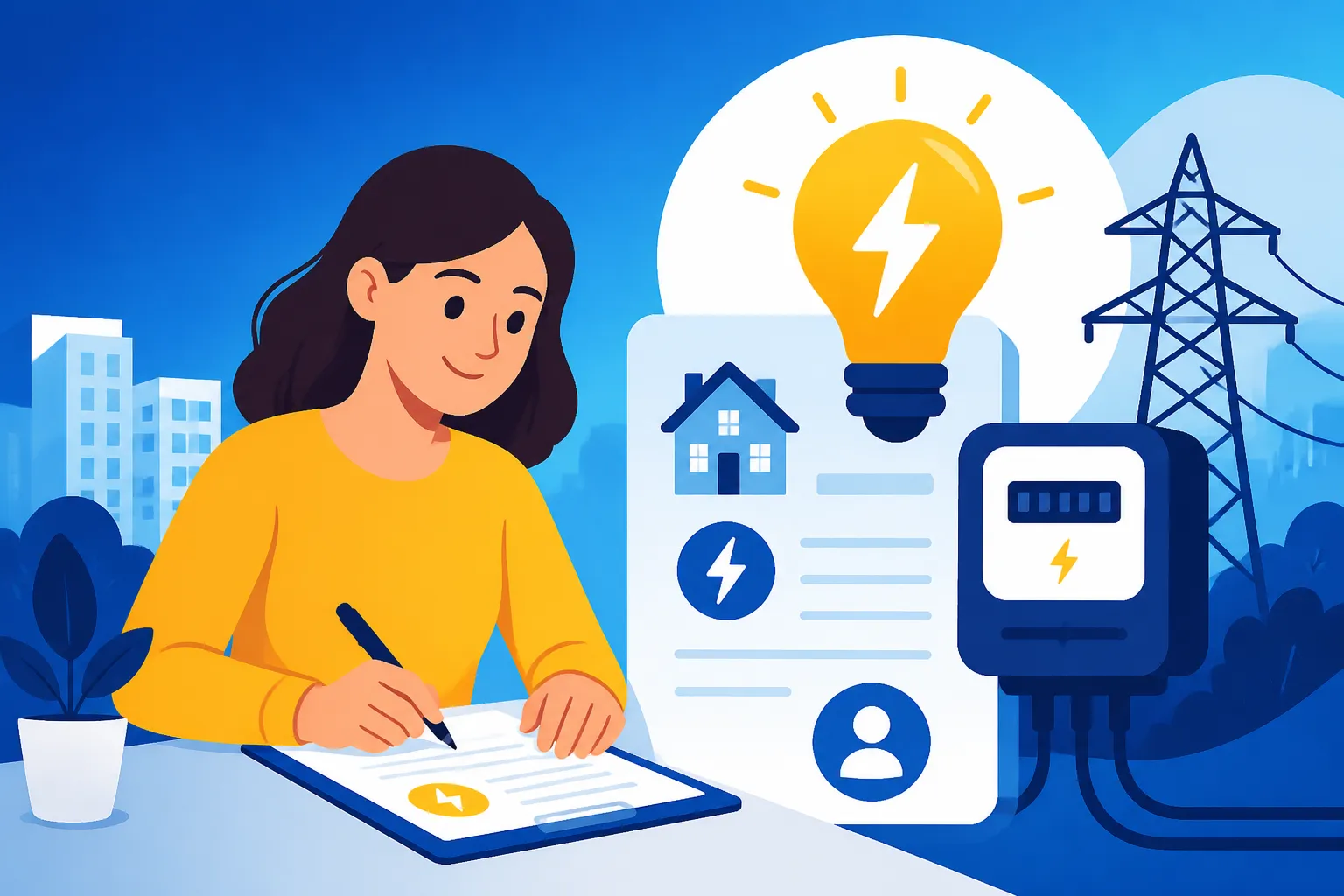
- Mona (מונה): This is your electricity meter. It’s the device that measures how much electricity your household consumes. Knowing where it is (usually outside your apartment, in a stairwell, or in a communal utility room) and how to read it can be helpful, especially when moving in or out.
- Cheshbon Chashmal (חשבון חשמל): Your electricity bill. You'll receive this bimonthly, detailing your usage and charges. Learning to decipher it is key to understanding what you're paying for.
- Mispar Nekhes (מספר נכס): This translates to "property number" or "asset number." It's a unique identifier for your specific property within the IEC system, distinct from your apartment number or street address. Having this number from a previous bill is incredibly useful for the IEC to locate your meter quickly.
- Hora'at Keva (הוראת קבע): Direct debit. This is the most common and convenient way to pay your electricity bills in Israel. You authorize the IEC to automatically deduct the bill amount from your Israeli bank account. Trust me, you want to set this up to avoid missing payments.
- Teudat Zehut (תעודת זהות): Your Israeli identity card. This is your primary form of identification here. If you're a new immigrant or a long-term resident, you'll likely have one. If you're on a work visa or haven't received yours yet, your passport and visa details will be crucial. For more details, you might want to check out our guide on How to Get a Teudat Zehut and Tax File Number in Israel.
Understanding these basic terms will empower you to communicate more effectively and feel less overwhelmed when you're speaking with an IEC representative or looking at your first bill.
The Step-by-Step Process to Open an Electricity Account
Alright, let's get down to business. Opening an electricity account in your name might seem like a mountain, but we'll tackle it one step at a time. It requires a bit of patience and preparation, but it's entirely doable.
Before You Even Start: Gather Your Documents
Preparation is half the battle when dealing with Israeli administration. Having all your ducks in a row before you contact the IEC will save you immense frustration and multiple follow-up calls.
Firstly, you’ll need your identity document. If you're a new immigrant, your Teudat Oleh (new immigrant certificate) along with your passport will usually suffice. For those on a work visa or other long-term permits, your passport and current Israeli visa are what they’ll ask for. If you’ve already received your official Israeli ID, the Teudat Zehut, that’s usually the easiest to use. Make sure you have the physical document or at least clear photos/scans of it ready.
Secondly, and this is non-negotiable, you must have proof of your address. This will typically be your rental contract (Chozeh Schirut) if you’re a tenant, or your purchase agreement (Shtar Mekher) if you’ve bought property. The contract needs to clearly state your full name, the exact address of the property (including apartment number if applicable), and the start date of your tenancy or ownership. This document proves to the IEC that you are the legal occupant responsible for electricity consumption from a specific date.
Thirdly, try your best to get the previous tenant's electricity bill or the property number (Mispar Nekhes). This is a golden ticket. It helps the IEC quickly identify the correct meter for your specific apartment, which can prevent mix-ups and ensure you’re not inheriting someone else's debt. If you can’t get a previous bill, make sure you know your exact apartment number and floor. Some landlords might even provide the last meter reading on your move-in date, which is incredibly helpful. For a deeper dive into rental agreements, check out The Complete Guide to Renting an Apartment in Israel (2027).
Finally, you’ll definitely want your Israeli bank account details. As mentioned earlier, setting up a Hora'at Keva (direct debit) is the most hassle-free way to manage your payments. You'll need your bank name, branch number, and account number. If you haven't opened an account yet, you should prioritize this; our guide on The Expat Guide to Opening a Bank Account in Israel can help you get started. Also, a local Israeli phone number is absolutely essential for communication. You'll need it for the IEC to contact you, and for you to call them without racking up international roaming charges. When you first land, quickly getting a local SIM or an eSIM from providers like Airalo can be a lifesaver for all your immediate communication needs, including this.
Contacting the Israel Electric Corporation (IEC)
Once your documents are in hand, it’s time to reach out to the IEC. There are a few ways to do this, each with its own pros and cons for expats.
The most common method is to call their customer service hotline at 103. This number is accessible from any Israeli phone. Be prepared for potential wait times, especially during peak hours. The biggest challenge here, for many, is the language barrier. While the IEC does have English-speaking representatives, they might not always be immediately available. If your Hebrew isn't strong, it's highly recommended to call with a Hebrew-speaking friend, colleague, or even a helpful Israeli neighbor. They can act as your translator and ensure all information is conveyed accurately. When you call, clearly state your intention: "Ani rotzeh le-ha'avir et cheshbon hachashmal al shemi ba'derech [street name] mispar [building number], dira [apartment number]" (I want to transfer the electricity account to my name at [street name], number [building number], apartment [apartment number]).
The IEC's online portal (www.iec.co.il) is another avenue. The website has improved significantly over the years and offers some services in English, but the most comprehensive options and forms are often still in Hebrew. You can usually find sections to transfer accounts or register as a new customer. If you're comfortable with online translation tools and navigating a site primarily in another language, this can be a convenient option. You'll typically need to create an account first.
For more complex issues, or if you prefer face-to-face interaction, visiting a local IEC service center is an option. While this can be time-consuming, it can be effective for cases where your meter isn't easily identifiable, or if there are previous debts to sort out (more on that later!). Bring all your documents, including your rental contract and ID. Check the IEC website for the nearest service center and their operating hours. Remember, these visits often require waiting in line, so factor that into your day.
Providing Information and Setting Up Payment
Once you're connected with an IEC representative (either by phone or in person), they will guide you through the specifics. You’ll need to provide your full name, your ID or passport number, and the exact address of your new home. This includes the street name, building number, and apartment number.
The most crucial piece of information, after your identity, is linking your account to the correct electricity meter. This is where the Mispar Nekhes from a previous bill becomes invaluable. If you have it, provide it. If not, the representative will try to locate your meter using your address. Sometimes, they might ask you to go to your meter and read the current numbers aloud to confirm it's the correct one. This step is vital to ensure you are billed for your usage, not someone else's. It's always a good idea to take a photo of your meter reading on your move-in day.
Finally, you’ll set up your payment method. As emphasized, direct debit (Hora'at Keva) is the simplest way. The IEC will ask for your bank details: the bank name, the branch number (mispar snif), and your account number (mispar cheshbon). They might also ask for your Mispar Zehut (ID number) associated with the bank account. Once set up, your bimonthly bills will be automatically paid, preventing late fees and ensuring continuous service. If you choose not to set up a direct debit, you’ll receive physical bills by mail (or electronically) and will need to pay them manually online, via phone, at a post office, or through your bank’s app each time. This is generally more cumbersome and prone to forgotten payments.
Common Challenges and Practical Tips for Expats
Even with all the right information, navigating the Israeli system can throw a curveball or two. As an expat, you often face unique challenges that locals might not. Let’s prepare for those.
The Language Barrier and How to Overcome It
This is, without a doubt, one of the biggest frustrations for many newcomers. The thought of explaining a complex issue like a faulty meter or a previous tenant's debt in a language you're still learning can be paralyzing. And yes, it’s frustrating when you just want to get things done!
My best advice here is to always try to have a Hebrew speaker assist you for crucial calls or visits. This could be a friend, a coworker, your landlord, or even a paid assistant. Even if you manage a basic conversation, having someone who can understand the nuances and advocate on your behalf can be invaluable. If you’re making Aliyah, sometimes the Jewish Agency or Nefesh B'Nefesh staff can offer guidance or even direct assistance for initial setups.
While translation apps are fantastic for quick phrases, they aren't equipped for dynamic, back-and-forth bureaucratic conversations. However, preparing a few key phrases in Hebrew beforehand, especially your address and intent, can still be very helpful for the initial contact. For example, "Ani gar bi'derech…" (I live on street…).
Dealing with Previous Debts or Unregistered Meters
This is a common expat nightmare. You move in, excited about your new place, only to find the IEC has a massive outstanding bill for the address from the previous tenant. Or, even worse, the meter isn't properly registered.
Crucial advice: Always take photos of your electricity meter on your move-in day, noting the date and time, and if possible, have your landlord or the previous tenant witness and sign off on the reading. This is your primary defense against inheriting old debts. Legally, you are not responsible for the previous tenant's debts unless you explicitly agreed to it in your contract (which you absolutely should not do!). If the IEC tries to hold you accountable, politely but firmly explain your move-in date, provide a copy of your signed rental contract, and your meter reading photo. Be persistent. If necessary, you can even seek legal advice, but often, calmly explaining the situation with proof will resolve it.
What if the meter isn't registered, or it's a very old unit? This can happen in older buildings or those undergoing renovations. In such cases, your landlord is typically responsible for ensuring the property has a properly functioning and registered meter. You might need to lean on them quite heavily to facilitate communication with the IEC or even send an electrician to sort out any physical issues with the meter itself. This is another reason why a clear rental contract is vital, as it outlines your landlord's responsibilities.
What to Do If You Don't Have a Teudat Zehut Yet
Many expats arrive in Israel before they receive their permanent Israeli ID card. This is particularly true for olim chadashim in their first few months, or individuals on various work and student visas. Don't worry, it doesn't mean you can't get electricity.
If you're a new immigrant, your Teudat Oleh (new immigrant certificate) combined with your foreign passport and Israeli entry stamp can often serve as sufficient identification. The IEC understands that new immigrants are in a transition phase. For those on work visas, your foreign passport with your valid Israeli visa (e.g., B/1 work visa) will be the primary identification they use. Make sure your visa number is clearly visible and ready to provide.
While it might feel like processes move slower without a Teudat Zehut, it's certainly not impossible to set up your electricity. Just be prepared to provide more detail and possibly be asked for additional verification. That said, getting your Teudat Zehut as soon as you're eligible is always recommended, as it streamlines almost all bureaucratic interactions in Israel, from banking to healthcare. For a more comprehensive look at your first 90 days, check out The Complete Guide to Making Aliyah: Your First 90 Days in Israel (2027).
Monitoring Your Bills and Usage
Once everything is set up, you'll start receiving your electricity bills every two months (bimonthly). Don’t just blindly pay them! It's good practice to understand what you're being charged for.
An IEC bill typically breaks down the charges:
- Usage (צריכה): This is the core charge based on how many kilowatt-hours (kWh) you’ve consumed.
- Fixed Fees (תשלום קבוע): A basic service fee.
- VAT (מע"מ – Ma'am): The Israeli value-added tax, which is added to most goods and services. For more on this, you can refer to The Complete Guide to VAT (Ma'am) in Israel for Businesses.
- Other charges: Sometimes there are minor adjustments or fees.
The IEC also has a user-friendly online portal on their website where you can view your past bills, track your payment history, and even monitor your estimated usage between billing cycles. This can be a great tool for understanding your consumption patterns and catching any discrepancies early.
Finally, a few quick energy-saving tips relevant to Israel: air conditioning is a massive power hog in the summer, so use it judiciously. Your electric water heater (Boyler) also consumes a lot; turn it on only when you need hot water and turn it off afterwards. Unplugging electronics when not in use can also make a small difference. Every little bit helps the environment and your wallet!
Connecting Other Utilities
While electricity is often the first utility to tackle, remember that your home runs on more than just power. You'll also need to consider water, gas, and getting connected to the internet and mobile networks. Many aspects of your move can be overwhelming; while international moving services like Sirelo can help with the larger logistics of getting your belongings here, the local utility hookups remain a personal task.
Water and Gas
Water services are typically handled by your local municipal water corporation or the municipality (Iriya) itself, not the IEC. When you rent or buy, ensure your name is transferred onto the water bill for your property to avoid issues. Like electricity, it's wise to take a meter reading when you move in. You can learn more about local municipal taxes and utilities in Understanding Arnona (Municipal Property Tax) in Israel.
Gas for cooking or heating water (especially in older apartments without an electric boyler) is usually provided by private companies such as Supergas, Pazgas, or Amisragas. This is a completely separate process from electricity and water. You'll likely need to contact one of these providers directly to set up an account in your name. Often, your landlord or previous tenant can tell you which company services your building. For a general overview of setting up various utilities, including water and gas, you might find our guide on The Expat Guide to Setting Up Utilities in Israel useful.
Internet and Mobile
These are thankfully much easier to set up compared to the statutory utilities. Israel has a competitive market for internet and mobile services, with several major providers like Partner, Cellcom, Hot, and Pelephone. You can typically sign up online or in person at one of their stores with just your passport/ID and an Israeli bank account. Plans are varied and often come with attractive packages. You can explore your options further in How to Choose a Mobile and Internet Provider in Israel.
Getting connected with mobile and internet is usually straightforward and quick, often within a day for mobile and a few days for internet, making them much less of a bureaucratic headache than electricity or water.
Essential Documents for Electricity Account Setup
To help you organize your thoughts and your paperwork, here's a quick summary of the documents you'll need, tailored to different expat statuses.
| Document Type | New Oleh (First Year) | Work Visa Holder | Israeli Citizen / Permanent Resident |
|---|---|---|---|
| Proof of Identity | Teudat Oleh & Passport | Passport & Work Visa | Teudat Zehut / Driver's License |
| Proof of Address | Rental Contract / Shtar Mekher | Rental Contract | Rental Contract / Shtar Mekher |
| Bank Details | Israeli Bank Account | Israeli Bank Account | Israeli Bank Account |
| Previous Bill Info | Optional, but highly recommended for meter ID | Optional, but highly recommended for meter ID | Optional, but highly recommended for meter ID |
| Local Phone Number | Required | Required | Required |
Disclaimer
The information provided in this guide is intended for general informational purposes only and does not constitute legal or professional advice. While we strive to keep the content up-to-date and accurate, regulations and procedures in Israel can change frequently. It is always recommended to verify specific details with the relevant authorities, such as the Israel Electric Corporation (IEC), or consult with a local expert for personalized advice regarding your individual circumstances.