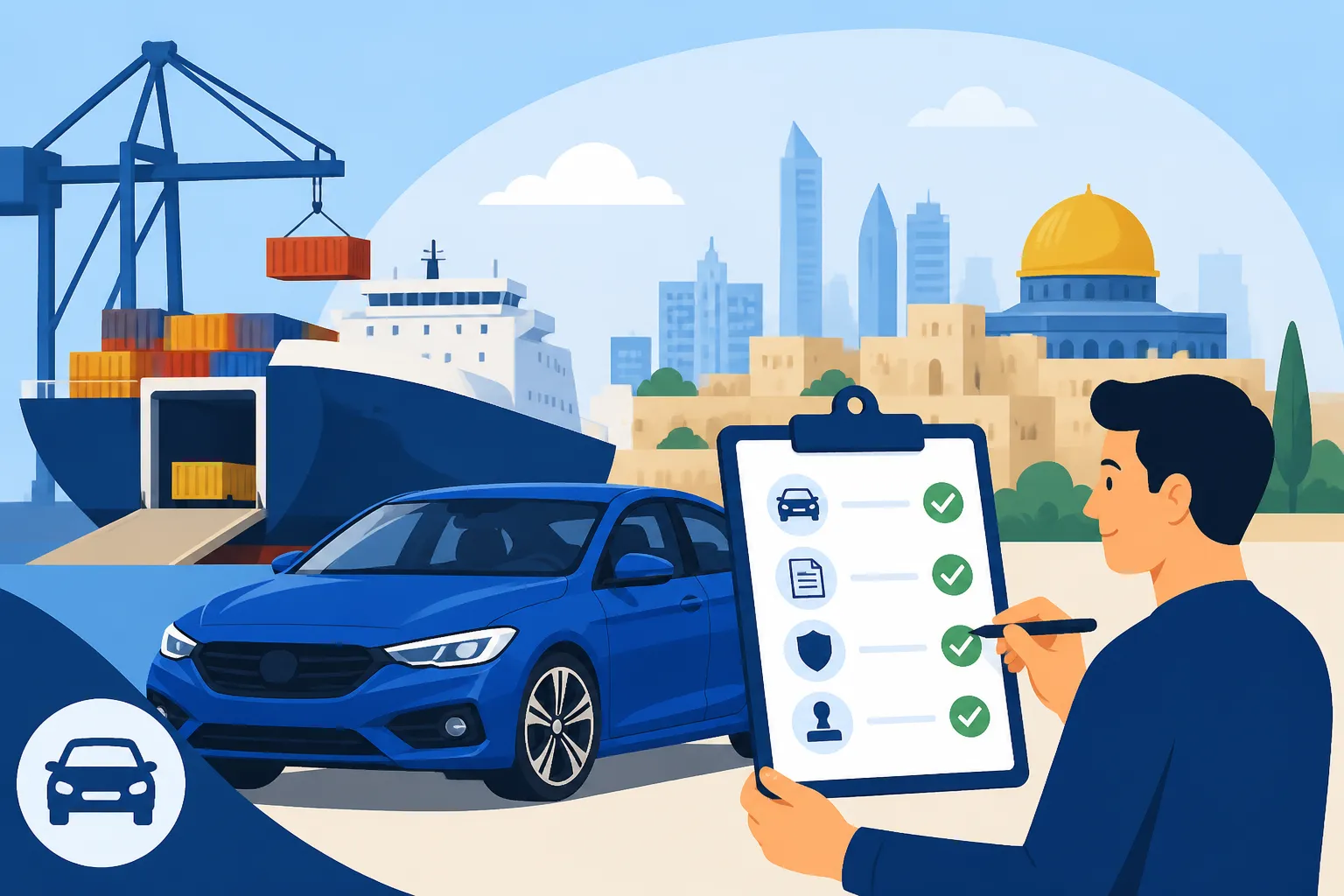
How Do I Register an Imported Car in Israel?
Oh, the imported car saga! If you're anything like me, you probably arrived in Israel, looked at the prices of local vehicles, and thought, "Surely, bringing my car from back home must be a smarter, more economical option, right?" And then you dove headfirst into the rabbit hole of regulations, taxes, and endless forms, quickly realizing that registering an imported car in Israel is far from straightforward. It's a bureaucratic marathon, often expensive, and frankly, a test of patience, but I'm here to walk you through every twist and turn.
The Maze of Importing: Why Bringing Your Car to Israel Isn't for the Faint of Heart
Let's just get this out of the way: importing a car to Israel is notoriously complex and expensive, and it's not because the government wants to make your life difficult (well, maybe a little). It's primarily due to a combination of high import taxes designed to protect the local automotive market and strict European-standard safety and environmental regulations. Many of us arrive thinking it'll be just like shipping household goods, but it's a completely different ballgame. The Israeli government sees cars as a luxury, especially imported ones, and taxes them accordingly. This means even if you bought your car years ago, you'll likely pay a hefty sum in duties and VAT, not on what you paid for the car originally, but on its current assessed value plus shipping costs. It’s a bitter pill to swallow, especially when you consider the already high cost of living in Israel.
Understanding the Israeli Import Landscape
The Israeli car market operates under a system that heavily favors local dealerships and distributors. This isn't just about revenue; it's also about controlling the types of vehicles on the road, ensuring they meet specific safety and emissions standards that might differ from your home country. This protective stance makes parallel imports (bringing in a car not via an authorized dealer) incredibly difficult for individuals, especially non-Olim.
For individuals like us, navigating this landscape means understanding a few critical distinctions. Are you a new immigrant (Oleh Chadash) or a returning resident (Toshav Chozer)? Your status makes a monumental difference in the concessions and tax breaks you might be eligible for. A new immigrant, for example, typically receives significant tax reductions on importing a vehicle, making it a potentially viable option. For anyone else, the standard tax rates apply, which can effectively double or even triple the car's value by the time it's road-legal here. This isn't just a financial burden; it's a mental one as you try to wrap your head around taxes that can reach well over 100% of the vehicle's value. It’s a stark contrast to many countries where bringing your personal vehicle is a relatively simple customs declaration.
Eligibility and Restrictions: Not Every Car Makes the Cut
Before you even dream of packing your beloved sedan onto a container ship, you need to verify if your car is even eligible for import. Israel has a blacklist of vehicles that cannot be imported, usually due to safety standards, emissions, or simply not being approved for the Israeli market. There are also age restrictions, typically limiting imported vehicles to models no older than four years, though this can vary for Olim and certain other categories. You can't just bring in any car you please; it needs to have a valid European or U.S. standard homologation certificate.
For example, if you're bringing an older, classic car, you might face different rules, but for standard daily drivers, these restrictions are firm. Vehicles must generally meet Euro 5 or Euro 6 emission standards, depending on the year of manufacture. If your car doesn't have an ABS braking system, airbags, or electronic stability control, forget about it. The Israeli Ministry of Transport is very particular about these things, and there are no shortcuts. It’s a good idea to check their official website or consult with a licensed customs agent before you even start planning, because finding out your car is ineligible halfway through the shipping process is a headache you absolutely don't want.
The Paper Trail and Bureaucracy: Your Step-by-Step Guide to Importing
Alright, so you've determined your car is eligible, and you're ready to tackle the Israeli bureaucracy head-on. This is where the real fun begins. The process is multi-layered, involving several government ministries and a fair amount of waiting. You'll need the patience of a saint and an organized folder for all your documents.
Pre-Import Clearance and Documentation
Before your car even touches Israeli soil, you need to initiate the import process. This typically starts with obtaining a preliminary import permit from the Ministry of Transport. This isn't just a formality; it's them confirming that, in principle, your specific vehicle model is allowed. You’ll need a stack of documents for this: your passport, your Israeli ID (Teudat Zehut if you have it), your foreign driving license, proof of car ownership, the vehicle's original registration certificate, technical specifications (often called a 'Manufacturer's Certificate of Conformity'), and possibly a recent appraisal. If you're a new immigrant, you'll also need your Teudat Oleh. It's an overwhelming amount of paperwork, and ensuring every single detail matches perfectly is crucial to avoid delays.
For new immigrants, the process is slightly different as you'll also need to prove your Oleh status to qualify for reduced taxes. This means having all your Aliyah paperwork in order. If you're still waiting to get your How Do I Get a Teudat Zehut After Making Aliyah? or struggling with other initial administrative tasks, you might want to hold off on the car import until your status is fully solidified. The tax benefits for Olim are substantial, so you definitely don't want to miss out on them. Many people opt to hire a customs agent (Amil) at this stage. While it's an added expense, these agents specialize in navigating the Israeli customs and transport regulations and can often save you immense headaches and potentially costly errors. They know the forms, the offices, and the specific jargon, which is invaluable if your Hebrew isn't fluent.
Customs Clearance and the Dreaded Taxes
Once your car arrives at an Israeli port, typically Ashdod or Haifa, it enters the customs process. This is where your wallet will feel the biggest pinch. Regardless of your status (though Olim get significant discounts), you'll be liable for customs duties, purchase tax, and VAT (Ma'am). These taxes are calculated based on the car's value, which customs officials will assess, sometimes using their own pricing guides rather than your purchase invoice. For non-Olim, these taxes can easily reach 83% (for customs and purchase tax) plus 17% VAT on top of that, making the total tax burden well over 100% of the car's value. It’s no wonder many people reconsider importing.
The customs declaration involves submitting a detailed manifest and all your import documents. If you're using a customs agent, they will handle this for you, presenting the necessary forms to the Israel Tax Authority. You’ll need to pay the taxes and duties before the car can be released from the port. This isn't a small amount, so make sure you have the funds readily available. Sometimes, you might even need to engage with the How the Israel Tax Authority (Rashut HaMisim) Works for specific clarifications or payment methods. The car will usually be held in a bonded warehouse at the port, incurring daily storage fees, so efficiency is key to minimize these additional costs. I know it sounds like a lot, and it is, but getting through this stage is a huge step.
Ministry of Transport Inspection and Homologation
After clearing customs and paying your dues, the next major hurdle is the Ministry of Transport (Misrad HaTachbura). Your car needs to undergo a thorough inspection to ensure it meets all Israeli safety and environmental standards. This isn't just a casual glance; it's a detailed examination. They will check everything from the headlights (which might need to be adjusted or replaced to meet Israeli standards, especially if your car is from a right-hand drive country), to the tires, emissions, and structural integrity. They'll also verify all the technical specifications you provided during the pre-import clearance.
You'll need to schedule an appointment for this inspection at an authorized testing center. This can often involve waiting periods, so be prepared. If your car fails any part of the inspection, you'll be required to fix the issue and bring it back for re-inspection, which means more time and more money. Common issues include non-compliant headlights, tinted windows that are too dark, or missing safety features required in Israel. Once your car passes this rigorous inspection, the Ministry of Transport will issue a Rishayon Rechev (vehicle license), a temporary one at first, which is essentially your car's birth certificate in Israel. It’s a huge relief when you get this, believe me.
Getting Your Wheels on the Road: Licensing, Insurance, and Maintenance
You’ve battled customs, conquered the Ministry of Transport, and your car is now officially recognized in Israel. Congratulations! But you’re not quite done yet. There are a few more essential steps before you can legally drive your imported beauty on Israeli roads.
Obtaining Your Israeli Vehicle License Plates
With your temporary Rishayon Rechev in hand, your next stop is a licensed plate manufacturer. These shops are usually located near the Ministry of Transport offices or larger vehicle testing centers. You'll present your temporary license, and they will produce the distinctive yellow and blue Israeli license plates for your car. Remember, these plates are specific to Israel, and you cannot drive with foreign plates once your car has been registered for import, even if you still have your old ones on.
The vehicle license (Rishayon Rechev) itself also needs to be finalized. You might receive a temporary paper version after the initial inspection. You'll often be directed to pay the annual vehicle licensing fee at the post office or via the online government portal (Gov.il). Once the payment is processed, you'll receive the official Rishayon Rechev, which is a critical document you must keep in your car at all times. This document proves your car is road-legal and includes all its identifying details. Getting those blue and yellow plates on your car feels like a real milestone, a tangible sign that your long journey is nearing its end.
Essential Insurance Coverage for Imported Vehicles
Driving in Israel requires mandatory vehicle insurance, known as Bituach Chova (compulsory insurance). This covers bodily injury to drivers, passengers, and pedestrians in case of an accident. You cannot register your car or drive it without this basic coverage. For imported cars, especially those with unique or rare models, finding Bituach Chova can sometimes be a bit more challenging or expensive, as insurers might have less data on parts and repair costs. It's always a good idea to shop around, but generally, the prices are regulated.
Beyond the compulsory insurance, most drivers opt for Bituach Makif (comprehensive insurance), which covers damage to your vehicle, theft, fire, and third-party property damage. Given the cost of importing a car, comprehensive insurance is highly recommended. The cost of Bituach Makif for an imported car can be significantly higher than for a locally purchased vehicle due to the higher assessed value and potential difficulty in sourcing parts. You'll need to provide your Rishayon Rechev to the insurance company to get a quote. Make sure you understand the terms, deductible (hishtatfut atzmit), and what is and isn't covered. If you've just dealt with all this paperwork, you'll be glad to know that many of the same principles for insurance apply as they would for any car, as detailed in guides like The Expat Guide to National Health Insurance (Bituach Briut Mamlachti) in Israel – just be prepared for potentially higher premiums.
The Annual Vehicle Inspection (Test Rishui)
Just like in many other countries, cars in Israel are subject to an annual vehicle inspection, colloquially known as the "Test" (Rishui). This inspection checks your car's roadworthiness, including brakes, lights, steering, tires, and emissions. You'll receive a notification in the mail (or via text/email if you've registered for digital services) reminding you when your car's "Test" is due, typically around the anniversary of its initial registration.
You must take your car to an authorized testing center for this annual inspection. If your car passes, you'll receive a sticker to place on your windshield, and you can then pay the annual licensing fee. If it fails, you'll be given a list of issues to fix and a limited time to rectify them before bringing it back for a re-test. Missing your annual "Test" or driving with an expired Rishayon Rechev can result in hefty fines and potential impoundment of your vehicle. It’s a recurring task, but a vital one to ensure your imported car remains legal and safe on Israeli roads. For a deeper dive into the general rules of driving, check out Driving in Israel: Licences, Registration and Rules for Expats (2027).
The Financial Reality Check: Is Importing Your Car Truly Worth It?
After all that, you might be wondering, "Was it even worth it?" That's a question many expats grapple with, and the answer isn't always clear-cut. The financial implications are significant, and it’s crucial to weigh them carefully against the emotional attachment to your vehicle and potential benefits.
A Breakdown of Potential Costs
Let’s be brutally honest about the costs involved. Importing a car is not cheap, especially if you're not eligible for Oleh tax benefits. Here's a simplified breakdown of the expenses you can expect:
| Cost Category | Description | Estimated Range (ILS) – Excluding Oleh Benefits |
|---|---|---|
| Shipping Costs | From your origin country to an Israeli port (e.g., Ashdod or Haifa). | 5,000 – 15,000+ |
| Customs Duties | Calculated on car's assessed value + shipping. Varies widely by car type/engine. | 10,000 – 50,000+ |
| Purchase Tax | Further tax on car's value + shipping. Typically high for cars. | 20,000 – 100,000+ |
| VAT (Ma'am) | 17% on total value (car + shipping + duties + purchase tax). | 15,000 – 70,000+ |
| Customs Agent Fees | For handling all paperwork and liaison with customs/Ministry of Transport. | 3,000 – 8,000 |
| Port Storage Fees | Daily fees if car is not cleared quickly. | 100 – 300 per day |
| Ministry of Transport Inspection Fee | For the initial technical inspection. | 500 – 1,000 |
| License Plate Fees | For manufacturing the Israeli license plates. | 150 – 300 |
| Annual Licensing Fee (Agrat Rishuy) | Depends on engine size and car value. Paid yearly. | 1,000 – 5,000+ (per year) |
| Insurance (Bituach Chova & Makif) | Annual cost, varies significantly by driver profile, car type, and coverage. | 4,000 – 15,000+ (per year) |
| Miscellaneous Costs | Minor repairs for inspection, adjustments (e.g., headlights), transportation from port. | 500 – 3,000 |
Please note: These figures are highly generalized and can vary wildly based on your car's value, engine size, origin, and your personal status (Oleh Chadash benefits are excluded from this higher estimate).
As you can see, the costs quickly add up, often pushing the total price of owning an imported vehicle well beyond what you would pay for a similar car locally. If you're coordinating your move with international relocation services like Sirelo, they might offer guidance or partners for vehicle shipping, but remember car import is a beast of its own, separate from your general household goods. And trust me, you'll be spending a lot of time on your phone coordinating with customs agents and the Ministry of Transport, so having a reliable eSIM from a provider like Airalo will be crucial to stay connected without breaking the bank on roaming charges.
Buying Local: The Often Simpler Alternative
For many, especially non-Olim without significant tax breaks, the hassle and expense of importing a car simply don't make financial sense. Buying a car locally in Israel, whether new or used, eliminates all the import duties, shipping costs, and the complex bureaucratic dance. While car prices in Israel are generally higher than in many Western countries, the upfront costs and headaches are considerably less.
The How Much Does It Cost to Buy a Used Car in Israel? provides a good overview of what to expect in the local market. You'll find a wide range of vehicles, though popular models tend to be smaller, more fuel-efficient, and often automatic due to urban driving conditions. The local used car market has its own quirks, but it's often a more predictable and less stressful path to getting wheels. You can test drive, inspect the car directly, and typically complete the ownership transfer in a single visit to a post office or the Ministry of Transport.
Final Considerations and What to Expect Down the Line
Even after your car is registered, be prepared for ongoing costs. Spare parts for uncommon imported models can be difficult to source and expensive. Mechanics might not be familiar with your specific car, leading to higher labor costs or longer repair times. Reselling an imported car can also be challenging, as the market generally prefers locally distributed models.
Ultimately, the decision to import your car or buy locally depends heavily on your individual circumstances. If you're a new Oleh and eligible for the significant tax benefits, importing might be financially advantageous, especially if your car is relatively new and in excellent condition. For others, the administrative burden and exorbitant costs often make buying a car in Israel the more sensible choice. It's a tough pill, especially when you love your car, but sometimes, letting go is the easiest path in the Israeli bureaucratic landscape. Take a deep breath, weigh your options, and make the choice that will cause you the least stress and financial strain in the long run.
Disclaimer
The information provided in this guide is for general informational purposes only and does not constitute legal, financial, or professional advice. Israeli laws and regulations, particularly concerning vehicle import and taxation, are complex, subject to change, and often require interpretation by qualified professionals. Always consult with a licensed customs agent, tax advisor, or legal expert in Israel for advice tailored to your specific situation before making any decisions related to importing a vehicle. The author and publisher are not responsible for any actions taken based on the information presented herein.