Prescription Medications and Pharmacies in Israel: The Complete Guide
Moving to a new country means learning an entirely new way of handling basic healthcare needs, and few tasks feel more daunting than standing at a pharmacy counter trying to explain a medication you have taken for years in a language you may not fully speak. In Israel, the pharmaceutical system is efficient, highly digitized, and deeply integrated into the national healthcare network, yet navigating local brand names, health fund subsidies, foreign prescriptions, and bureaucratic approvals often leaves newcomers feeling completely overwhelmed. This guide breaks down everything you need to know about navigating pharmacies, securing refills, managing costs, and obtaining your required medications across Israel without unnecessary stress.
Navigating the Israeli Pharmacy System
Public Kupah Pharmacies vs Private Chains
When you first walk down an Israeli street, you will quickly notice two distinct types of pharmacies: those operated directly inside or alongside public health fund clinics, and commercial retail chains. Every resident in Israel belongs to one of four public health funds known as Kupot Holim (Clalit, Maccabi, Meuhedet, or Leumit). Each health fund maintains its own in-house pharmacy network, frequently located in the very same building as your family physician. These internal clinic pharmacies exist primarily to dispense subsidized medications directly to members, streamlined through the digital system.
On the commercial side, you will find giant retail chains like Super-Pharm and Be by Shufersal, as well as independent neighborhood pharmacies known locally as a Beit Mirkachat. Commercial chains function much like major drugstores in North America or Western Europe, stocking cosmetics, toiletries, electronics, and household goods alongside their prescription counters. Understanding the Israeli Pharmacy (Beit Mirkachat) System helps you decide where to head when you need a refill; while you can often fill public health fund prescriptions at major private chains that hold a government contract, doing so might require a slightly different co-payment or digital verification step than stepping into your dedicated health fund clinic.
The primary practical difference between these environments comes down to convenience and stock diversity. Public clinic pharmacies focus strictly on medical items, maintaining deep stock of routine medications covered under public subsidies, but they rarely carry luxury wellness goods. Private chains offer standard retail convenience and late-night opening hours, making them ideal for picking up toiletries or emergency over-the-counter remedies alongside your regular scripts, though the queue at the prescription desk can be long during peak evening hours.
Understanding How Pharmacists Operate in Israel
Pharmacists in Israel are highly trained healthcare professionals who play a far more interactive role in your care than you might expect coming from overseas. In Israel, a pharmacist does not simply slide a box across the counter; they serve as a critical check and balance within the medical system. They regularly review dosage guidelines, check for dangerous drug interactions across your medical history, and offer direct advice on how and when to take your medication.
Because of this clinical role, pharmacists have a reasonable degree of professional discretion. For example, if you run out of a vital non-controlled daily medication over a weekend, a pharmacist may occasionally grant a short emergency bridge supply if they can see your active history in the national network, though this is never guaranteed. They are also empowered to explain generic substitutions, helping you understand why the brand name printed on your physical box might look different from what your doctor discussed in the examination room.
Do not be surprised if the pharmacist asks detailed questions about your symptoms or medical history, even when you present a valid prescription. This is standard clinical practice across the country. Engaging openly with your pharmacist can save you a return trip to your doctor, as they can clarify dosage schedules, advise on dietary restrictions associated with the drug, or point out cheaper generic options available through your specific coverage tier.
Working Hours, After-Hours Emergency Access, and Shabbat
Planning your pharmacy visits requires an understanding of the local Israeli calendar and weekly schedule. Standard operating hours for independent pharmacies and health fund clinic dispensaries generally run from Sunday morning through Thursday evening, usually opening around 8:00 AM and closing between 6:00 PM and 8:00 PM. On Fridays and the eves of major Jewish holidays, public clinic pharmacies close early, often by 12:00 PM or 1:00 PM, and remain closed throughout Shabbat until Sunday morning.
If you find yourself requiring urgent medication outside standard business hours, commercial chains in major metropolitan areas offer extended schedules. Knowing What Pharmacies Are Open Late or 24 Hours in Tel Aviv? and other urban hubs can save critical time during a midnight health issue. Larger cities maintain rotating duty pharmacies (known as a Beit Mirkachat Toran) mandated to remain open overnight, on Shabbat, and during national holidays. Municipal websites and health fund hotlines publish updated duty lists showing which local pharmacy is designated for overnight coverage on any given date.
Keep in mind that visiting a duty pharmacy during off-hours or on Shabbat often incurs a small standardized call-out or emergency service fee mandated by municipal regulations. This minor extra charge covers the operational cost of keeping late-night facilities staffed. To avoid this surcharge and the hassle of hunting down an open location, always audit your prescription supplies mid-week and arrange for routine refills before Friday morning.
How Prescriptions Work in Israel
Digital Prescriptions and the Kupat Holim Network
Israel boasts one of the most advanced digital health networks in the world, meaning the era of carrying handwritten, hard-to-read paper prescriptions from your doctor to the pharmacy is largely a thing of the past for residents. When you visit your family doctor or a specialist within your health fund, the physician enters the prescription directly into your central electronic medical record. This prescription is instantly linked to your national identity number (Teudat Zehut) or foreign passport number in the health fund database.
To retrieve your medication, you simply walk up to the pharmacy counter inside your health fund clinic or an affiliated chain, hand the pharmacist your magnetic health card (Kartis Magon), and allow them to scan it. The pharmacist’s computer immediately pulls up all active, pending, and past prescriptions issued by your doctors. This seamless digital integration drastically reduces dispensing errors, prevents duplicate prescribing, and makes tracking your long-term medication history effortless across different clinics and regions.
This paperless system also simplifies managing prescriptions for dependents. Parents can link their children’s records to their own primary account, allowing a mother or father to scan their own card or present their child’s ID details to collect pediatric medications without needing physical notes. Learning How Do I Fill a Prescription at a Pharmacy in Israel? digitally is one of the first smooth administrative victories you will experience after settling into the country’s public healthcare structure.
Paper Prescriptions, Specialist Referrals, and Refills
While digital prescribing is the standard across public clinics, physical paper prescriptions still play a role in specific healthcare scenarios. If you see a private specialist outside your health fund network, receive care at a hospital emergency room, or consult a private practitioner in a clinic, they will hand you a printed or handwritten paper prescription. These paper documents must contain the physician’s full name, medical license number, official stamp, signature, date, and exact dosage instructions to be accepted by a pharmacist.
If you want your public health fund to cover or subsidize a prescription issued by a private physician, you cannot simply take that private paper prescription straight to the counter and expect a subsidized rate. Instead, you must first take the paper document to your registered public family doctor. Your family physician will review the external specialist’s recommendation and, if appropriate, transcribe it into the public system, generating an official electronic health fund prescription that unlocks subsidized pricing.
Refills for chronic medications are managed with equal digital efficiency. Most family doctors set up recurring multi-month authorizations for stable conditions. Through your health fund’s mobile app or online portal, you can request monthly script renewals with a single click, eliminating the need to book an in-person appointment every time your bottle runs low. Once your doctor approves the digital request, the refill appears on your health card within 24 to 48 hours.
What To Do If You Have a Foreign Prescription
A common trap for newly arrived expats, tourists, and relocating professionals is assuming that a paper prescription from their home country can be filled at a local Israeli pharmacy. Legally, Israeli pharmacists cannot dispense prescription-only medications based directly on a document issued by a medical practitioner licensed outside Israel. If you arrive with a doctor’s note from the United States, the United Kingdom, Canada, or Europe, the pharmacist will politely decline to dispense the drug.
If you arrive in the country with overseas scripts, your immediate priority must be establishing a connection with a local physician who can validate your regimen. Knowing Can I Use a Foreign Prescription at an Israeli Pharmacy? in advance prevents dangerous gaps in your treatment plan. You must present your foreign medical records, diagnostic summary, and original pill bottles to an Israeli-licensed physician—either through the public system or via a private clinic—who will then write a valid domestic prescription.
To bridge the gap while waiting for your local doctor appointment, always travel with at least a 30-to-90-day personal supply of essential daily medications in their original pharmacy-labeled packaging. If an unexpected emergency occurs and your imported supply is lost or stolen before you can see a local doctor, you will need to visit an urgent care clinic (such as Terem) or a hospital emergency room, where an on-duty doctor can evaluate your medical state and issue an emergency domestic prescription.
The Health Basket (Sal Briut) and Prescription Costs
How the Sal Briut Subsidises Medication
The financial backbone of Israeli pharmaceutical access is the Sal Briut, officially known as the National Health Basket. Established under the National Health Insurance Law, the Sal Briut is a comprehensive, government-mandated list of medical services, diagnostic procedures, devices, and prescription medications that every public health fund must provide to its registered residents. The government reviews and updates this basket annually, assigning public funding to include cutting-edge therapies, life-saving drugs, and daily maintenance medications.
When a medication is included in the Sal Briut, its retail price is heavily controlled and subsidized by the state. This means that instead of paying the true market cost of a drug—which could run into hundreds or thousands of shekels per month for advanced formulations—members of a health fund pay only a standardized, deeply discounted out-of-pocket co-payment. This system ensures that basic and advanced healthcare remains accessible regardless of an individual’s personal financial standing.
The process of deciding which new drugs enter the basket each year involves an intensive public committee evaluation that weighs clinical efficacy, cost-benefit ratios, and public need. For expats coming from countries without universal drug coverage, seeing how much the state absorbs for routine conditions like hypertension, diabetes, or high cholesterol is often a incredibly welcome relief.
Tiered Subsidies, Co-Payments, and Out-of-Pocket Cap Limits
Medications listed within the Sal Briut are organized into specific pricing tiers, determining the exact co-payment (Hishtatfut Atzmit) required at the register. Standard essential drugs attract the lowest fixed co-payments or a low percentage fee of the base cost. Generic medications are heavily prioritized to keep costs low for both the healthcare system and the patient.
To protect patients with complex medical needs from financial hardship, the public system enforces quarterly out-of-pocket spending caps for chronic disease sufferers. If you are officially registered with your health fund as a chronic patient (Bimachela Krunit), the total amount you pay in prescription co-payments per quarter is capped at a strict maximum figure. Once you reach that ceiling within a three-month cycle, all subsequent basket-covered medications for your registered condition are dispensed at no additional cost for the remainder of that quarter.
For general users asking Are Prescription Medications Expensive in Israel?, the answer largely depends on whether the required formulation sits inside or outside the national basket. Understanding Co-Payments (Hishtatfut Atzmit) in the Israeli Health System helps you budget effectively for monthly health expenses, ensuring you are never caught off guard by the difference between public co-payments and full retail pricing.
Non-Basket Drugs and Private Insurance Coverage
While the Sal Briut covers thousands of necessary formulations, it cannot cover every single branded medication, complex biotech treatment, or modern lifestyle drug available on the international market. If a physician prescribes a medication that is explicitly excluded from the national basket, the public health fund will not subsidize its cost, leaving the patient responsible for paying the full commercial retail price at the pharmacy.
This financial gap is precisely where supplementary insurance (Bituach Mashlim) offered by your health fund, or private commercial health insurance policies, become invaluable. Supplementary public tiers (such as Clalit Platinum or Maccabi Sheli) often provide partial discounts or specialized reimbursements for high-cost medications that fall outside the basic state basket. Private commercial health insurance policies often include dedicated riders for non-basket drugs, offering coverage for expensive global treatments, orphan drugs, or specialized oncology medications.
When facing a prescription for a non-basket drug, always ask your prescribing doctor if a clinically equivalent alternative exists within the Sal Briut. Physicians are accustomed to working within basket parameters and can frequently adjust your prescription to an equally effective, fully subsidized alternative, saving you substantial out-of-pocket expenses every month.
| Pharmacy & Prescription Category | Public Health Fund Clinic Pharmacy | Major Commercial Chain (e.g., Super-Pharm) | Private Independent Pharmacy |
|---|---|---|---|
| Primary Focus | Subsidized prescription dispensing for members | Retail goods, cosmetics, and full-service pharmacy | Community service, personalized care, local access |
| Prescription Format | Direct electronic card scan (Kartis Magon) | Electronic card scan or paper conversion | Paper prescriptions or specific contracted electronic cards |
| Sal Briut Subsidies | Full automatic public co-payment rates | Standard public co-payment (if contracted) | Retail rates unless specifically contracted |
| Operating Hours | Standard day hours; closed Friday afternoon & Shabbat | Extended evening hours, weekends, select 24/7 hubs | Local business hours; closed Friday afternoon & Shabbat |
| Foreign Prescriptions | Not accepted (must be transcribed by doctor) | Not accepted (must be transcribed by doctor) | Not accepted (must be mandated domestically) |
Over-the-Counter Medications and Foreign Equivalents
Finding Common Brand Equivalents in Israel
One of the most frustrating aspects of moving to a new country is searching the store shelves for familiar brand names when you feel unwell. The familiar packaging you relied on back home—whether it is Tylenol, Advil, Panadol, Nurofen, or Excedrin—may either carry a completely different trade name in Israel or be marketed under local pharmaceutical labels. Learning to identify active chemical ingredients rather than relying on global brand logos is essential for smooth shopping.
For instance, if you are looking for acetaminophen or paracetamol, you will find it sold widely in Israel under the popular brand names Acamol or Dexamol. If you need ibuprofen, you will easily spot it sold as Nurofen, Advil, or local generic equivalents like Adex and Artofen. Diphenhydramine (commonly known as Benadryl overseas) is not sold over the counter in the same manner for general allergies; instead, local pharmacists will steer you toward cetirizine (Histazine), loratadine (Lorastine), or fexofenadine (Ahistam).
To avoid confusion at the store, keep a list of the generic chemical names (such as paracetamol, ibuprofen, loperamide, or omeprazole) saved on your phone. When you approach the counter, showing the pharmacist the active chemical name allows them to immediately pull the exact local equivalent off the shelf, regardless of how the product is branded in your home country.
OTC Restrictions and What You Must Ask the Pharmacist For
The retail layout of over-the-counter (OTC) medications in Israel differs significantly from what shoppers in North America or parts of Europe might expect. While you can find basic pain relievers, cough drops, and simple antacids on open store shelves in large supermarket chains or convenience aisles, a wider selection of stronger OTC remedies is stored strictly behind the pharmacy counter.
Drugs like pseudoephedrine-based decongestants, higher-dose pain relievers, specific topical hydrocortisone creams, and comprehensive motion sickness pills cannot be picked up off an open shelf. You must queue at the pharmacy counter and verbally request them from the pharmacist. This setup allows the pharmacist to briefly screen customers, ensuring that the patient does not have underlying conditions like high blood pressure that could interact poorly with decongestants.
Furthermore, package sizes for over-the-counter medications sold without a prescription are legally restricted to relatively small quantities. You will generally not find giant 500-count bottles of pain relievers in Israel. If you require larger quantities of routine medications for long-term daily management, obtaining an official prescription from your family doctor—even for drugs available over the counter—is far more economical, as it unlocks subsidized bulk packaging through your health fund.
Bringing Personal Medications Into the Country
If you are relocating to Israel, making Aliyah, or visiting for an extended stay, bringing a personal supply of your required medications with you is the smartest way to ensure continuity of care. The Israeli Ministry of Health allows incoming travelers and residents to bring up to a 90-day supply of personal medications for self-use in their personal luggage without requiring prior special import permits.
To ensure a smooth transition through customs at Ben Gurion Airport, all imported medications must remain in their original pharmaceutical packaging, complete with the original pharmacy labels showing your full name, dosage, and prescribing doctor’s details. You should also carry a comprehensive medical summary letter written in English by your physician detailing your diagnosed conditions, current treatment regimen, and exact generic names of all prescribed drugs.
Never pack vital medications in checked baggage. Luggage can be delayed or lost in transit, leaving you stranded without essential daily treatments in a foreign country. Always carry your entire 90-day medication supply, along with your doctor’s documentation, inside your carry-on bag so it remains accessible throughout your travel journey.
Controlled Substances, Chronic Conditions, and Special Approvals
Form 29C (Tofes 29 Gimmel) for Unregistered Drugs
Occasionally, a patient moving to Israel requires a highly specialized medication that is legally approved in their home country (such as by the US FDA or the European EMA) but has not yet been formally registered or imported commercially into Israel. Alternatively, a patient might need an approved drug for an off-label usage scenario not covered by standard Israeli regulatory protocols. In these complex medical situations, the Israeli healthcare system utilizes an official authorization mechanism known as Form 29C (Tofes 29 Gimmel).
Form 29C is an official medical application submitted by a licensed specialist physician directly to the Ministry of Health on behalf of an individual patient. This form requests exceptional permission to import, prescribe, and dispense an unregistered drug or an off-label formulation specifically tailored to that patient’s critical health requirements.
Navigating the Form 29C process requires patience, as approval involves administrative review by hospital directors and Ministry of Health officials. Once approved, the permit allows a designated pharmacy—often located within a major medical center—to order the drug specifically for you. If you know you rely on a niche or cutting-edge medication, initiate discussions with your Israeli specialist as early as possible to start the paperwork before your foreign supplies run dry.
Regulated Medications: ADHD, Narcotics, and Psychotropics
Israel enforces strict, uncompromising regulatory controls over medications classified as narcotics, psychotropic drugs, or potential substances of misuse. This category includes common ADHD medications (such as Methylphenidate/Ritalin, Concerta, and Vyvanse), strong opioid painkillers, sedatives, and severe anxiety management drugs. If you rely on any of these medications, you must prepare for additional administrative requirements compared to routine daily scripts.
Foreign prescriptions or simple doctor notes for controlled substances are completely invalid for obtaining these drugs in Israel. To receive controlled medications, you must be formally evaluated by a relevant Israeli specialist physician—such as an Israeli board-certified psychiatrist, neurologist, or pain clinic specialist. A general family doctor often cannot initiate first-time prescriptions for controlled substances without a written directive from an accredited specialist on file.
Once evaluated, prescriptions for controlled substances carry strict procedural limitations:
* They are issued for a maximum supply of 30 days per fulfillment.
* They carry a short validity window, requiring you to collect the medication within 15 days of issuance.
* Refills cannot be processed automatically online; they require monthly physician sign-offs.
* You must present physical government picture identification (such as your Teudat Zehut or passport) at the counter every single time you collect the prescription.
Registering a Chronic Condition with Your Kupat Holim
If you live with a long-term medical condition—such as asthma, diabetes, hypertension, hypothyroidism, or autoimmune disorders—it is vital to formally register your diagnosis in your health fund’s central system as soon as you settle into Israel. Do not assume that simply telling your doctor during your initial routine consultation completes the administrative process.
To officially register a chronic illness, ask your former overseas physician for a full clinical summary, including diagnostic test results, lab work, and imaging reports. Present these documents to your local Israeli family doctor. Once you know How to Choose a Family Doctor (Rofeh Mishpacha) in Israel, your physician will upload these verified records into your central file, formally tagging your status as a chronic patient within the system.
This formal registration unlocks several key structural benefits:
* It sets up automatic monthly refill requests in your mobile app without requiring repeated clinic visits.
* It activates the statutory quarterly out-of-pocket spending cap on all related Sal Briut medications.
* It ensures seamless coordination between your family doctor, local specialists, and your dispensing pharmacy.
* It prevents unexpected interruptions in your long-term medication management.
Knowing How Do I Register a Chronic Condition with My Israeli Doctor? accurately guarantees that your health fund recognizes your status from day one, protecting both your physical health and your monthly budget.
Pharmacy Services for Expats, Tourists, and Digital Nomads
Managing Medications Before Your Public Coverage Kicks In
When you arrive in Israel as a new immigrant (Oleh Chadash), foreign worker, student, or long-term visa holder, there is frequently a temporary administrative lag between your day of arrival and the official activation of your public health fund coverage. During this transition period—which can range from a few days to several weeks depending on your visa class and administrative appointments—you must take active steps to safeguard your pharmaceutical needs.
If you fall ill or run out of routine medication during this gap, you cannot access public health fund pharmacies at subsidized rates. You will need to visit a private doctor or an urgent care center to secure a domestic paper prescription, and then pay full commercial retail prices at a commercial pharmacy chain.
To prevent exorbitant out-of-pocket expenses during this initial arrival window, ensure you carry a generous personal supply of all necessary routine drugs from home. If you suffer an unexpected acute medical issue before your public health card is active, having private travel or temporary expat health coverage ensures you can recover these out-of-pocket pharmacy costs after the fact.
Using Travel Insurance Solutions for Acute Medication Needs
For digital nomads, tourists, and short-term visitors who are not eligible for public healthcare under the National Health Insurance Law, private international health insurance is essential. When you experience a sudden illness, ear infection, or acute injury while traveling in Israel, visiting a private clinic or hospital emergency room will result in out-of-pocket charges for both the consultation and the prescribed medications.
In these acute situations, flexible international insurance providers like SafetyWing offer vital coverage for unexpected medical expenses and prescription drugs required to treat new, sudden medical conditions incurred during your journey. When using SafetyWing or similar coverage, you will pay for your acute prescription out of pocket at the local Israeli pharmacy counter, retain the detailed itemized receipt along with the doctor’s prescription note, and submit them through your online portal for reimbursement.
Keep in mind that travel medical insurance policies are designed primarily for emergency, unexpected acute illnesses or injuries rather than long-term maintenance of pre-existing chronic conditions. If you take daily maintenance medications for a long-standing condition, you should bring your complete supply with you from home, relying on providers like SafetyWing to cover unexpected health emergencies, sudden infections, or accidental injuries while exploring the country.
Telemedicine, Home Delivery, and Online Refill Ordering
Israel’s public health funds and major commercial chains lead the world in integrated digital pharmacy conveniences. Once you are fully registered within a health fund system, you gain access to comprehensive online portals and smartphone applications that allow you to manage your entire household’s pharmaceutical needs remotely.
Through your health fund app, you can track remaining refill quantities, view digital copies of active prescriptions, and consult with on-duty physicians via secure telemedicine video chats. If you develop a common mild ailment over the weekend, you can schedule an urgent telemedicine appointment through the app; the online doctor can review your medical file remotely and issue an electronic prescription directly to your digital card within minutes.
Furthermore, major health funds and retail chains like Super-Pharm offer home delivery services for prescription drugs and medical supplies. You can order your monthly chronic refills online, select a delivery window, and have your medications delivered directly to your front door. Learning Can I Get My Prescriptions Delivered in Israel? adds incredible convenience to your routine, particularly for elderly residents, busy parents, or individuals recovering from surgery at home.
Step-by-Step Guide to Filling Your First Prescription in Israel
Step 1: Securing Your Referral or Digital Record
The process of obtaining your prescription begins in the examination room with your physician. If you are enrolled in a public health fund, ensure the doctor enters the prescription into the central computer system under your ID card. Ask the doctor to verbally confirm the generic name of the medication, the correct dosage, and how many monthly refills are authorized on the record.
If you are seeing a private doctor outside the public health system, make sure they hand you a clearly printed physical paper prescription. Verify that the document includes the physician’s full printed name, valid license number, official ink stamp, signature, date, and clear dosage instructions. If you plan to seek reimbursement or transcription, request a brief medical summary note explaining the diagnosis behind the prescription.
Step 2: Choosing the Right Pharmacy Location
Once your prescription is secured in the system or on paper, decide on the best location to collect your medication based on urgency, cost, and convenience:
* For Maximum Savings: Go directly to a pharmacy located inside your assigned health fund clinic. These dispensaries guarantee direct access to public basket co-payment rates without extra processing steps.
* For Evening or Weekend Access: Head to a major commercial chain like Super-Pharm or Be that holds an active contract with your health fund. Ensure you bring your physical magnetic health card so the chain pharmacist can access your digital public records.
* For Private Paper Prescriptions: Visit any commercial pharmacy counter. If you want public subsidies applied to a private script, take the paper document to your public family doctor first for digital transcription.
Step 3: Presenting Documents and Managing Co-Payments
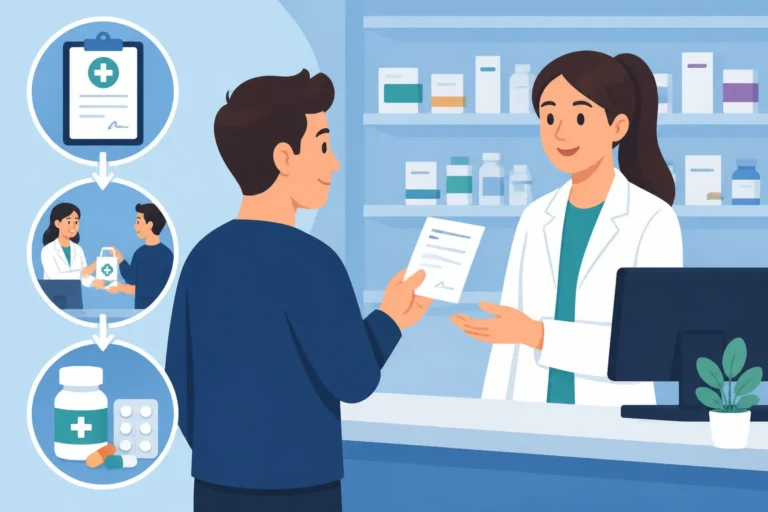
When you arrive at the pharmacy counter, hand the pharmacist your magnetic health card (Kartis Magon) or physical paper prescription along with your government-issued photo ID (Teudat Zehut or passport). The pharmacist will scan your card, view your active electronic scripts on their screen, and select the correct medication from their dispensary stock.
The pharmacist will then calculate your required payment. If the medication is covered under the Sal Briut, the system automatically applies your health fund co-payment discount at the register. You can pay the balance using cash, an Israeli debit card, or a major credit card. Before leaving the counter, check that the medication name matches your doctor’s instructions, and feel free to ask the pharmacist to clarify dosage timing, storage requirements (such as refrigeration), or potential food interactions.
Key Differences Between Public and Private Medical Insurance Coverage for Drugs
Public Kupah Coverage Limitations
While the public healthcare system provides exceptional baseline coverage for the vast majority of medical needs, relying solely on basic public health fund coverage comes with distinct structural limitations regarding prescription medications. The public system is strictly bound by the legal boundaries of the annual Sal Briut; if a drug is not listed in the basket, your basic public coverage will not pay for it, regardless of how strongly your doctor recommends it.
Additionally, public health funds enforce strict generic substitution rules. If an off-patent generic version of a medication exists, the public pharmacy will dispense the generic formulation rather than the expensive original brand-name version, unless your doctor submits specialized medical justification proving that you suffer from a severe adverse reaction to the generic’s inactive binding ingredients.
Public coverage also involves mandatory wait times for newly developed global drugs to undergo committee evaluation and achieve inclusion in the annual health basket update. This means there can be a time lag between when a new breakthrough medication becomes available internationally and when it becomes accessible via subsidized public co-payments in Israel.
Private Health Insurance Rider Extensions
To overcome the inherent limitations of the public basket, many expats and locals maintain comprehensive private commercial health insurance policies alongside their mandatory public coverage. Private health policies in Israel are designed explicitly to plug the gaps left by the public system, particularly through specialized riders for non-basket medications and advanced overseas treatments.
A robust private prescription rider provides crucial financial protection in severe health scenarios by covering:
* Unregistered and Non-Basket Medications: Advanced therapies, novel biotech formulations, and target-specific drugs not included in the Sal Briut.
* Personalized Cancer Therapies: Cutting-edge oncological drugs tailored to individual genetic profiling.
* Brand-Name Specificity: Coverage allowing you to receive original brand-name drugs rather than mandated generic substitutions when medically preferred.
* Global Sourcing: Financial support for importing rare foreign medications approved overseas but unavailable domestically.
By combining public health fund enrollment with a targeted private insurance rider, you create a complete safety net that guarantees access to essential baseline medications at low public co-payments while maintaining high-tier financial protection for complex, non-standard medical conditions.
Navigating Emergency Supplies While Abroad or In Transition
Managing prescription continuity becomes particularly complex when you travel internationally or find yourself transitioning between countries for work or study. Public health fund prescriptions are designed strictly for domestic fulfillment within Israel; you cannot use your domestic health card to pick up subsidized medications at a pharmacy in Europe, Asia, or the Americas.
If you plan an extended trip abroad, you must coordinate with your family doctor several weeks before departure to request an advance travel supply. Public health funds allow doctors to issue up to a 90-day advance refill for chronic medications if you provide proof of overseas travel (such as flight confirmations). This ensures you carry a sufficient personal supply throughout your journey without breaking your routine treatment plan.
For unpredictable travel gaps, digital nomads and frequent foreign travelers should rely on international health coverage like SafetyWing to cover sudden medical emergencies, unexpected infections, or urgent doctor consultations while away from Israel. Maintaining active travel insurance guarantees that if you fall ill abroad or lose your imported medication supply, you can access local medical evaluation and secure emergency replacement scripts anywhere in the world.
Summary Checklist for Managing Prescriptions in Israel
To ensure your experience with Israeli pharmacies remains completely smooth and hassle-free, keep this practical action checklist in mind:
- Carry Overseas Records: Bring a complete English medical summary and original pill bottles with you when relocating to Israel.
- Pack a 90-Day Supply: Always travel into the country with three months of essential personal daily medications in carry-on baggage.
- Learn the Generic Name: Know the active chemical ingredient of your medications rather than relying strictly on foreign trade brands.
- Register Chronic Conditions Early: Submit medical files to your Israeli family doctor immediately to set up app refills and activate out-of-pocket spending caps.
- Keep Your Magnetic Card Handy: Carry your health fund card (Kartis Magon) to every pharmacy visit for quick digital card scans.
- Understand Controlled Drug Rules: Prepare for monthly in-person specialist evaluations and ID verification for ADHD and narcotic scripts.
- Utilize Mobile App Features: Use your health fund’s app for easy online refill approvals, telemedicine consults, and home delivery orders.
- Secure Private Gap Protection: Consider private insurance riders or international coverage like SafetyWing to handle non-basket drugs, transition windows, and overseas travel emergencies.
By understanding how the digital system operates, aligning with a reliable family doctor, and knowing your options at both public and private pharmacy counters, you can easily navigate the Israeli pharmaceutical system and keep your health fully protected throughout your time in the country.
Disclaimer
This article is for general informational purposes only and does not constitute professional advice. Laws, prices and regulations vary by location and change over time. Consult a qualified professional for guidance on your specific situation.