Understanding Train Travel with Israel Railways (Rakevet Yisrael)
Oh, the sheer adventure of navigating public transport in a new country, especially one where the language can feel like a secret code and the systems seem to have a mind of their own! For many expats and tourists arriving in Israel, figuring out how to get around efficiently and comfortably can be one of the first big hurdles. This guide is here to demystify train travel with Israel Railways (Rakevet Yisrael), breaking down everything from buying tickets to understanding the unspoken rules, so you can ride the rails like a seasoned local.
The Basics of Israel Railways: What You Need to Know
When you first arrive in Israel, whether it's for an exciting new job or a long-awaited adventure, the public transportation system can feel a bit overwhelming. Buses are everywhere, but the trains offer a different, often faster, and more comfortable experience, particularly for intercity travel. Israel Railways, or Rakevet Yisrael (רכבת ישראל) as it's known locally, is the national railway company and your primary choice for train journeys across the country.
A Brief Overview of Rakevet Yisrael's Network
Israel's train network has seen a massive transformation in recent years, expanding dramatically to connect major urban centers and beyond. Gone are the days when trains were a novelty; now they're an indispensable part of daily life for countless Israelis and a fantastic option for foreigners. The network primarily runs along the bustling coastal plain, connecting cities like Nahariya in the north, through Haifa, Tel Aviv, and down to Ashkelon and Beer Sheva in the south.
However, it's not just coastal. A significant recent addition is the high-speed line connecting Tel Aviv and Jerusalem, a game-changer that slices through the mountains in impressive tunnels. You'll find modern, double-decker trains on many routes, offering a vastly more pleasant experience than battling traffic on the highways. While it doesn't reach every corner of the country, it serves as a vital artery for many popular destinations, making it an excellent choice for everything from daily commutes for those working in Tel Aviv to weekend getaways.
Key Terminology and Understanding Train Types
Getting acquainted with a few Hebrew terms can make your journey significantly smoother. "Rakevet" (רכבת) is the word for train, and "Tahanat Rakevet" (תחנת רכבת) means train station. You'll hear announcements and see signs in both Hebrew and English at most major stations, but knowing the basics helps. All trains operated by Israel Railways are essentially commuter and intercity trains; there aren't separate "express" or "local" categories in the same way you might find in other countries. Generally, all trains on a particular route will stop at the same designated stations.
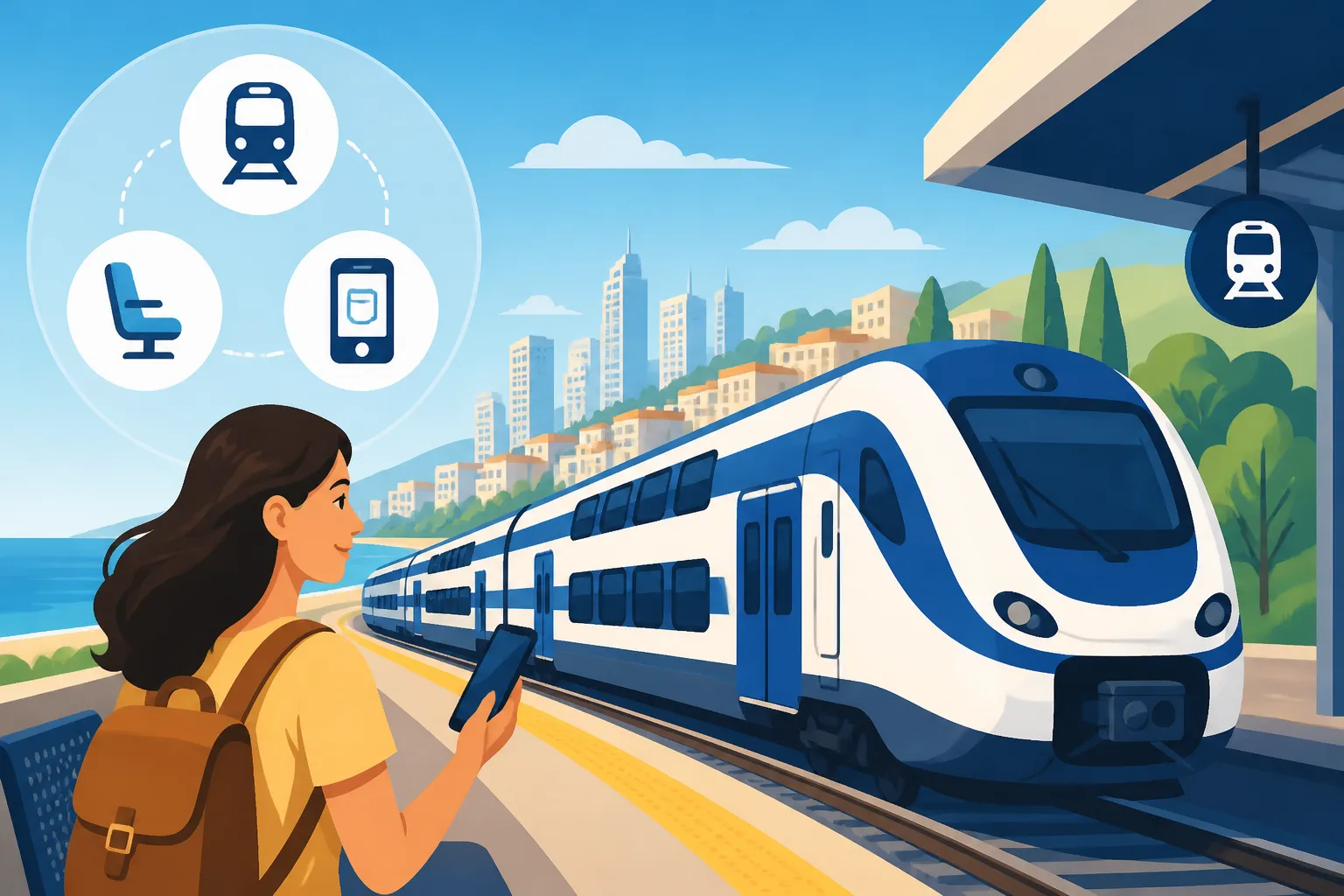
The trains themselves are predominantly modern, air-conditioned, and comfortable, especially the double-decker models which are becoming increasingly common. You'll find power outlets on many trains, and free Wi-Fi is usually available, though its reliability can sometimes be a bit of a lottery, much like anywhere else! Understanding the direction of travel, for instance, "Tel Aviv HaHagana" (Tel Aviv South/Central) or "Haifa Hof HaCarmel" (Haifa Beach Carmel), will be crucial for getting on the right platform. Don't be shy to ask a fellow passenger if you're unsure – Israelis are generally quite helpful.
Accessibility and Special Services
Israel Railways has made considerable strides in improving accessibility for passengers with disabilities. Most major stations are equipped with ramps, elevators, and accessible restrooms. You'll also find designated accessible coaches on trains, typically indicated by a wheelchair symbol, with space for wheelchairs and priority seating. Station staff are usually available to assist passengers with special needs, and it's always a good idea to notify them in advance if you require specific assistance.
Beyond physical accessibility, the railway also offers various services to enhance the passenger experience. For instance, dedicated bicycle cars are available on some routes for those who want to combine cycling with train travel. There are also usually designated quiet cars for those who prefer a more peaceful journey without phone calls or loud conversations, a blessing during a busy commute! Keep an eye out for these markings on the train cars themselves.
Planning Your Journey: Tickets, Routes, and Apps
The digital age has certainly made planning travel much easier, even in Israel. While paper tickets still exist, the smart way to travel by train is usually through digital means. Getting your head around the ticketing system is probably the most critical step to a smooth journey.
Purchasing Tickets: Rav-Kav and Single Use
For any regular public transport user in Israel, the How to Use the Rav-Kav Card and Public Transport in Israel is your absolute best friend. This smart card is a reloadable public transport card that works across all buses, trains, and light rail systems nationwide. You can purchase a Rav-Kav at major train stations, central bus stations, and designated service points. There are two types: personal (with your photo and details, offering various discounts) and anonymous (which anyone can use, but without personalized benefits).
Once you have your Rav-Kav, you can load "Erekh Nekudat" (value) onto it, which gives you discounted travel, or specific monthly/weekly passes if you're a frequent commuter. Validation is done by tapping your card on the reader at the entrance and exit gates of train stations. For single-use journeys, if you don't have a Rav-Kav, you can still buy a one-off paper ticket from the ticket machines at any station. These machines are user-friendly, offering English language options, and accept cash and credit cards. However, single-use tickets are often slightly more expensive than using a Rav-Kav, so if you plan on using public transport more than a couple of times, investing in a Rav-Kav is definitely worth it for the long run.
| Ticket Type | Best For | Benefits | Considerations |
|---|---|---|---|
| Rav-Kav (Personal) | Residents, frequent travelers, students, seniors | Personalized discounts (e.g., student, senior, Oleh Chadash), multi-ride passes, ability to restore balance if lost/stolen. | Requires photo and personal details for issue; balance must be loaded. |
| Rav-Kav (Anonymous) | Tourists, infrequent travelers, shared use | Convenient, reloadable, allows use of "Erekh Nekudat" (stored value) for basic discounts. | No personalized discounts; balance not recoverable if lost. |
| Single-Use Paper Ticket | One-off journeys, new arrivals | Immediate purchase and use, no registration needed. | Slightly higher fare than Rav-Kav, no discounts, cannot be re-used. |
| Daily/Weekly/Monthly Passes | Commuters, intensive travel within a zone | Unlimited travel within a specific region/timeframe, significant cost savings for regular users. | Requires a personal Rav-Kav; validity tied to specific dates/zones. |
Navigating Routes and Schedules
Israel Railways has a comprehensive website and mobile apps that are incredibly helpful for planning your journey. The website, rail.co.il, offers an English interface where you can easily search for routes, view timetables, and even check real-time updates. This is particularly useful for avoiding surprises, as schedules can occasionally change, especially during holidays or due to maintenance work.
Most lines run frequently during peak hours, often every 15-30 minutes, with reduced frequency during off-peak times, evenings, and weekends. Remember that in Israel, public transport, including trains, typically stops operating from Friday afternoon until Saturday evening (Shabbat), resuming service after sundown. This is a critical point for expats and tourists to remember when planning weekend excursions! Always double-check the exact timings, especially around the holidays, as The Expat Guide to Public Transport in Israel will tell you.
Essential Apps and Online Resources
Beyond the official Israel Railways app, there are other fantastic apps that can revolutionize your public transport experience. Moovit is a crowd favorite, offering real-time updates for trains and buses, step-by-step navigation, and even estimated arrival times. Google Maps is also generally reliable for train routes and schedules. Having one of these on your phone is highly recommended, as they can save you a lot of guesswork and potential headaches, especially if you're trying to figure out connections or alternative routes due to delays.
Another tip: ensure you have a reliable data plan on your phone. While most stations and trains offer Wi-Fi, it can be spotty. Having a good data connection means you can check schedules on the fly and stay connected. Consider getting a local SIM card, or for shorter stays, an eSIM from a provider like Airalo can be a lifesaver, ensuring you're never without internet access when you need it most. This kind of preparation goes a long way in managing the inherent uncertainties of a new country's infrastructure.
Onboard Experience and Station Etiquette
Stepping onto an Israeli train or into one of its bustling stations offers a unique slice of daily life here. It's often a blend of efficiency and characteristic Israeli informality. Knowing what to expect can help you navigate the environment with ease and respect.
What to Expect on Israeli Trains
Israeli trains are generally clean, modern, and air-conditioned, which is a blessing during the scorching summers. Most trains have both upper and lower decks, with comfortable seating. You'll find power outlets, and as mentioned, free Wi-Fi, which can be useful for catching up on emails or browsing the news. Luggage racks are available overhead and sometimes at the ends of carriages.
Commutes can get very crowded, especially during morning and evening rush hours (roughly 7:00 AM – 9:00 AM and 4:00 PM – 6:30 PM) on routes connecting major cities like Tel Aviv and Haifa. During these times, finding a seat might be a challenge, so be prepared to stand. General etiquette is similar to most places: offer your seat to the elderly, pregnant women, or those with small children. While Israelis are known for being boisterous, most commuters respect the general quiet car rule if you choose to sit there, and talking on the phone loudly in other cars is common but generally tolerated. Don't be surprised if you hear a variety of languages spoken around you, including Hebrew, Arabic, Russian, French, and, of course, English.
Station Facilities and Services
Major train stations in Israel are much more than just platforms. They often function as small commercial hubs. Take Tel Aviv Savidor Central, for example: it's a bustling complex with cafes, fast-food outlets, mini-markets, ATMs, and sometimes even small clothing or book stores. Jerusalem Yitzhak Navon station, built deep underground, is another modern marvel, connecting directly to shopping areas and the light rail.
You'll find clear signage in Hebrew and English for platforms, exits, and facilities. Ticket machines are plentiful, and there are often staffed customer service counters if you prefer to speak to a person or have a complex query. Restrooms are usually available, though their cleanliness can vary. Security is visibly present at all stations, with guards often checking bags at entrances, especially at larger terminals. This is standard procedure and nothing to be alarmed about; it's simply a part of daily life in Israel.
Navigating Peak Hours and Holidays
Understanding the rhythm of Israeli train travel is key. Peak hours, as mentioned, are a crush. If you have flexibility in your schedule, try to travel outside these times for a more relaxed experience. Mid-morning (9:30 AM – 12:00 PM) and early afternoon (1:30 PM – 3:30 PM) are generally less busy.
Holidays (Chagim) are a whole different beast. Public transport schedules can be drastically altered or suspended entirely, not just for Shabbat but also for major Jewish festivals like Rosh Hashanah, Yom Kippur, Sukkot, and Passover. For example, during Sukkot or Passover, many people travel across the country to visit family, leading to extremely crowded trains before and after the holiday period. Always check the Israel Railways website or app well in advance during these times. It's common for extra trains to be added before holidays to accommodate demand, but equally common for services to shut down completely during the holiday itself. Being aware of this will save you from being stranded!
Common Challenges and Troubleshooting for Expats
Even with the best preparation, traveling in a new country can throw a few curveballs. For expats, the initial period involves a steep learning curve, and the train system is no exception.
Language Barriers and Customer Service
While many Israelis, especially younger generations and those in customer service roles, speak English, you will encounter situations where Hebrew is dominant. At smaller stations or with older staff members, you might find it challenging to communicate complex issues in English. This is where a translation app on your phone can be incredibly useful, or simply practicing a few basic Hebrew phrases like "Excuse me," "Which platform?" or "How much?" can go a long way.
When it comes to customer service, be prepared for an Israeli directness that might seem abrupt to some. It's not rudeness; it's just a different cultural style of communication. If you have a specific problem, such as a Rav-Kav issue or a complaint, approaching the staffed ticket counters is usually the best option. They can sometimes be found at a separate information desk rather than just the ticket purchase window. Don't be afraid to ask for help, even if it feels a bit daunting at first. Remember that Learning Hebrew: A Complete Guide to Ulpan and Language Levels can significantly reduce these kinds of communication hurdles over time.
Dealing with Delays and Cancellations
Unfortunately, just like train systems worldwide, Israel Railways isn't immune to delays and cancellations. Mechanical issues, track work, and even security alerts can cause disruptions. The key is to stay informed. The Israel Railways app and website are generally good at providing real-time updates. If you're at a station, announcements are made over the loudspeaker (in Hebrew and often English), and digital display boards provide updated timings.
If your train is significantly delayed or cancelled, alternative transport might be arranged, usually buses, but this is not always guaranteed, especially for minor delays. If you're on a tight schedule, always build in some buffer time, especially if you're trying to catch a flight from Ben Gurion Airport. This is why having apps like Moovit is so valuable, as they can sometimes suggest alternative bus routes faster than waiting for the train. When moving to a new country, expecting the unexpected is part of the charm, or the frustration, depending on your perspective!
Lost and Found and Emergency Procedures
Losing something on a train or at a station is a nightmare, but Israel Railways does have a lost and found department. If you realize you've left an item behind, contact their customer service line as soon as possible or visit a lost and found office at a major station (like Tel Aviv Savidor Central or Jerusalem Yitzhak Navon). You'll need to provide details of your journey, the item, and your contact information. Be patient, as it can take some time to track down lost belongings.
In case of an emergency on a train or at a station, immediately notify railway staff, call the emergency services (101 for Magen David Adom, 100 for police, 102 for fire), or use the emergency intercoms found on most trains. Train staff are trained to handle various emergencies, and security personnel are always present at stations. For general medical emergencies, knowing the local Emergency Medical Care in Israel: What Every Newcomer Needs to Know procedures will also be useful.
Popular Routes and Destinations for Expats and Tourists
The train network, while not exhaustive, provides excellent access to many of Israel's key cities and attractions, making it a preferred mode of transport for both daily commutes and leisurely explorations.
Connecting Major Cities: Tel Aviv, Jerusalem, Haifa, Be'er Sheva
The backbone of Israel Railways connects the country's main metropolitan areas. The route from Tel Aviv to Haifa, for instance, is a vital artery for commuters and tourists alike, with frequent trains taking you along the beautiful coast. Stops include Netanya and Herzliya, popular expat locations.
- Tel Aviv: As the country's economic and cultural hub, Tel Aviv has several major stations, including Tel Aviv Savidor Central, HaHagana, and Shalom. These stations are well-connected to local bus routes and offer easy access to the city's vibrant neighborhoods, beaches, and businesses for those navigating The Complete Guide to Working in Israel as a Foreigner.
- Jerusalem: The high-speed train to Jerusalem (Yitzhak Navon station) is a marvel of modern engineering, whisking you from Tel Aviv in about 35 minutes. It's a fantastic way to visit the capital without dealing with traffic or parking.
- Haifa: In the north, Haifa's various stations (Haifa Center HaShmona, Hof HaCarmel) serve as gateways to the city's stunning Baha'i Gardens, port, and tech industry.
- Be'er Sheva: Further south, Be'er Sheva Central and University stations connect the Negev desert capital to the central region, serving students, military personnel, and those exploring the south.
These major city connections are invaluable for anyone living in or exploring Israel, offering a comfortable and scenic alternative to driving.
Coastal Escapes and Northern Adventures
Beyond the major cities, Israel Railways can take you to charming coastal towns and serves as a starting point for northern adventures.
- Akko (Acre): A UNESCO World Heritage site with an ancient port and Crusader history, Akko is easily reachable by train, offering a fascinating day trip from Haifa or Tel Aviv. The train station is conveniently located near the Old City.
- Nahariya: At the northernmost point of the coastal line, Nahariya is a pleasant beach town, and a good base for exploring the Western Galilee region. From there, you could take local buses or taxis to places like Rosh HaNikra or the beautiful Gali'an beaches.
- Caesarea: While the train station isn't directly at the ancient Roman ruins, it's a short taxi ride away, making it a viable option for visiting one of Israel's most impressive archaeological sites.
For those eager to explore the diverse landscapes and rich history of Israel, the train offers a relaxing way to begin your journey, often allowing you to see parts of the country you might miss from a car.
Southern Connections and the Airport Link
The train network also extends southwards, connecting to cities like Ashdod and Ashkelon, which are developing coastal communities, as well as the aforementioned Be'er Sheva.
One of the most crucial and convenient train routes for almost every expat and tourist is the link to Ben Gurion Airport (Natbag). There's a dedicated train station right at the airport, making arrivals and departures incredibly smooth. Trains run frequently between the airport and major cities like Tel Aviv, Jerusalem, and Haifa (with a transfer). This high-speed connection is usually the quickest and most hassle-free way to get to and from the airport, especially when carrying luggage. Just remember to account for potential security checks and allow ample time before your flight.
Practical Tips for a Smooth Train Journey
Living in Israel means learning to navigate its unique quirks, and train travel is no different. A few insider tips can help make your journey not just tolerable, but genuinely enjoyable.
Maximizing Your Rav-Kav Benefits
The Rav-Kav card truly is your key to unlocking simpler and often cheaper public transport. Don't just load it with single rides; explore the various profiles and subscription options available. If you're a student, a senior citizen, or a new immigrant (Oleh Chadash), you might be eligible for significant discounts. Make sure to register your personal Rav-Kav for these benefits. For example, new olim receive a 50% discount on all public transport for the first year, which is a huge saving, as detailed in guides like The Complete Guide to Cost of Living in Israel for Expats (2026). You can also link your Rav-Kav to a credit card through apps like Rav-Kav Online or Moovit, allowing for easy top-ups directly from your phone, which is far more convenient than queuing at machines.
Beyond just individual rides, consider multi-ride passes if you frequently travel the same route. For example, a monthly pass for your commute from Rehovot to Tel Aviv will almost certainly be cheaper than buying daily tickets. These passes are usually purchased for specific zones or city pairs but offer unlimited travel within those parameters for their validity period. This forward planning can save you a pretty penny over time.
Staying Connected on the Go
Having a charged phone and a reliable data plan is paramount. As mentioned, while Israel Railways often provides free Wi-Fi, it's not always dependable. For continuous connectivity, especially if you're traveling for work or simply want to stream media, a robust mobile plan is a must. If you're new to the country, sorting out your mobile plan is one of the first things you'll do, and you can find comprehensive advice on How to Set Up Mobile and Internet Provider in Israel.
For short-term visitors or those who want maximum flexibility without committing to a local SIM card provider immediately, an eSIM service like Airalo can be an excellent option. You can download a data plan to your phone before you even land, ensuring you have internet access from the moment you step off the plane at Ben Gurion. This means you can immediately check train schedules, navigate with Google Maps, and stay in touch with family or friends without hunting for Wi-Fi or buying a physical SIM card. It’s a small convenience that makes a big difference in reducing travel stress.
Handling Luggage
For the most part, Israeli trains are luggage-friendly. There are overhead racks for smaller bags and designated spaces at the end of carriages for larger suitcases. If you're traveling with very large items, like a bicycle (remember to check if the route has designated bike cars) or heavy boxes, aim for off-peak hours when the trains are less crowded. This makes it easier to maneuver your belongings without inconveniencing other passengers.
If you're making a big move to Israel, you'll likely be dealing with a lot more than just a suitcase. For shipping personal effects or coordinating larger deliveries, using a reliable international moving company is essential. Platforms like Sirelo, which specialize in connecting users with reputable movers, can be incredibly helpful in this process. While they won't help you on the train, their services are vital for getting your possessions to Israel, leaving you free to manage your train travel with just your essentials. Packing light for your initial train journeys after arrival will certainly make things easier!
Disclaimer
The information provided in this guide is intended for general informational purposes only and is subject to change. While we strive to keep the content accurate and up-to-date, public transportation rules, schedules, and costs in Israel can be updated by relevant authorities without prior notice. Always consult the official Israel Railways website and local resources for the most current information before planning your journey.