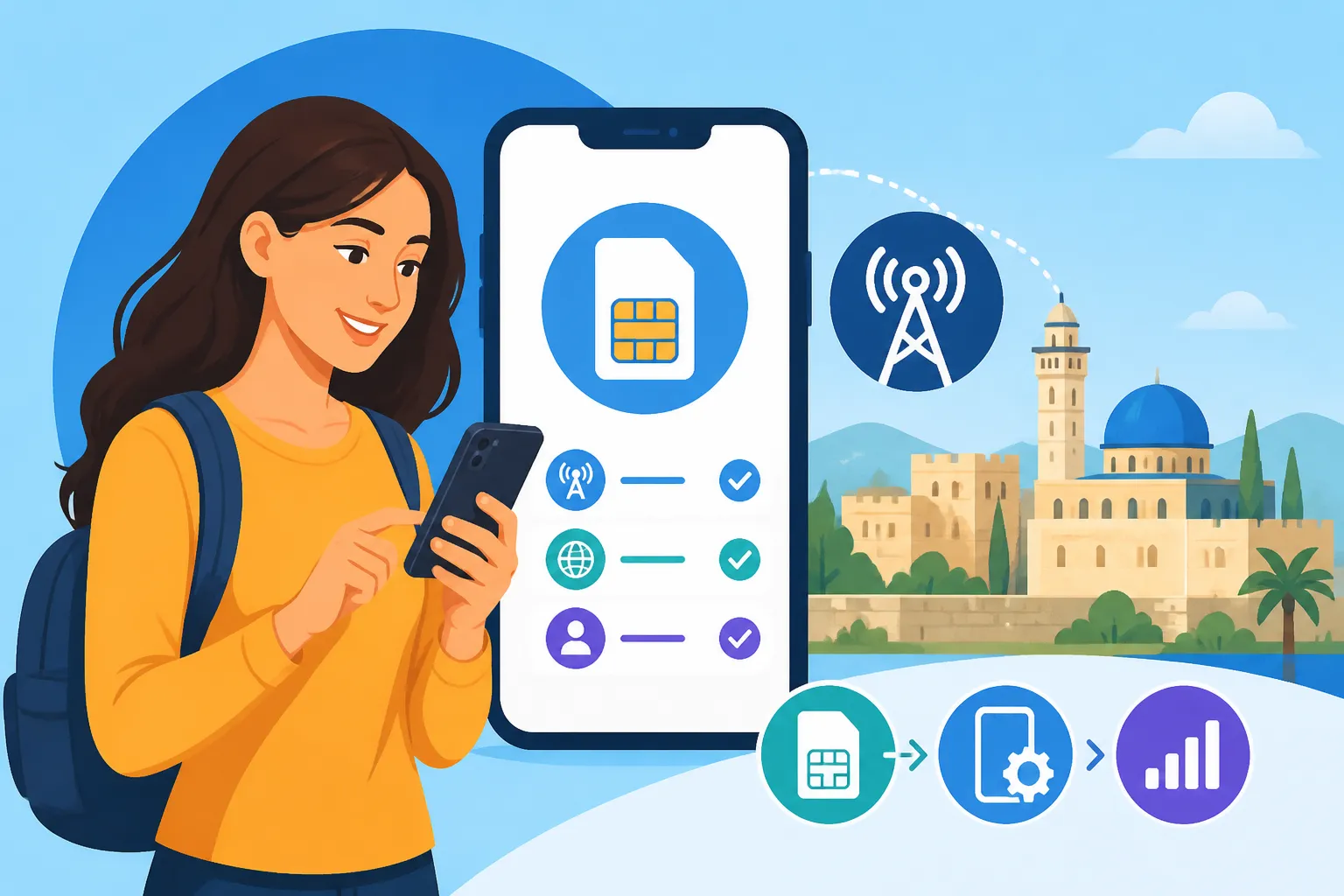
How Do I Set Up a Mobile Plan with Cellcom or Partner in Israel?
Arriving in Israel is a whirlwind of emotions, administrative tasks, and often, a moment of stark realization: you need to communicate! Getting a local mobile plan is one of the first hurdles, and if you’re like most expats, the idea of navigating Hebrew websites or deciphering complex contract terms can feel overwhelming. This guide is here to demystify the process of setting up a mobile plan in Israel, focusing specifically on the major players, Cellcom and Partner, to get you connected smoothly and efficiently.
Understanding Israel's Mobile Landscape
When you first land in Israel, you’ll quickly notice that the mobile market is quite competitive, which is generally good news for consumers. However, for a newcomer, it can also mean a dizzying array of options, plans, and technical jargon to wade through. The key is to understand who the main players are and what general service models they offer before you commit.
The Major Players: Cellcom, Partner, and Others
Israel's mobile network is dominated by a few large providers, with many smaller virtual operators (MVNOs) piggybacking on their infrastructure. For most expats, especially those just starting out, sticking with one of the established networks like Cellcom or Partner (formerly Orange) offers a sense of security, broader coverage, and generally more robust customer support options, often in English.
- Cellcom: A veteran in the Israeli market, Cellcom boasts a wide network coverage and has a reputation for being reliable. They offer a range of plans, from basic talk-and-text to unlimited data packages. Historically, they've been a go-to for many Israelis, and their infrastructure is extensive. They have physical stores across the country, which can be a huge plus when you need in-person assistance, especially if your Hebrew isn't quite there yet.
- Partner: Another major player, Partner is well-known for its competitive pricing and often innovative plans. They've invested heavily in their network, including 5G rollout, and frequently offer attractive deals, particularly for data-heavy users. Like Cellcom, Partner has numerous branches, making it easier to walk in, ask questions, and get assistance in person.
- Pelephone: While the focus here is on Cellcom and Partner, Pelephone is the third main network operator, also offering extensive coverage and a variety of plans. Many smaller providers like Hot Mobile, 012 Mobile, and Golan Telecom operate using the networks of these three giants. These smaller players can sometimes offer even cheaper deals, but be aware that their customer service might be less accessible for non-Hebrew speakers, and their physical presence is often minimal.
Prepaid vs. Postpaid: What's Right for You?
One of the first decisions you'll make is whether to opt for a prepaid or a postpaid plan. Each has its pros and cons, especially for expats in various stages of settling in.
- Prepaid (Pre-Paid SIM / Talkman or Bigti Plans): This is often the easiest entry point for new arrivals or those with short-term stays, like tourists or temporary workers. You buy a SIM card, load credit onto it, and use it until the credit runs out or expires.
- Pros: No contract, no long-term commitment, easy to manage spending, no need for an Israeli bank account or a Teudat Zehut immediately. You can often buy these at the airport, kiosks, or any mobile store. You just need to choose a local phone number, and you're good to go.
- Cons: Generally more expensive per minute/MB than postpaid plans, you have to remember to top up, and if you run out of credit, you can't make calls or use data until you recharge. For heavy users, this can become a hassle.
- Postpaid (Monthly Contract Plans): This is the standard for long-term residents. You sign a contract for a monthly fee, and in return, you get a set allowance of talk, text, and data.
- Pros: Usually more cost-effective for regular use, often comes with larger data packages, and you don't have to worry about topping up. Many plans now offer unlimited calls and texts within Israel, with generous data allowances.
- Cons: Requires a contract, which typically means you need an Israeli bank account for direct debits and usually a valid Israeli ID such as a Teudat Zehut or a Teudat Oleh. There might be early termination fees if you leave the contract before its term, although many plans are now month-to-month. The initial setup can be more involved.
If you’ve just arrived and are still navigating the initial stages of getting your Israeli ID, a prepaid SIM from Cellcom or Partner (or even a smaller provider at Ben Gurion Airport) can be a lifesaver. It gets you connected immediately, allowing you to use navigation apps, communicate with landlords, or coordinate with immigration services. Once you're more settled and have your documents in order, you can then easily switch to a postpaid plan. For those making Aliyah, remember your initial 90 days are packed with tasks, so easing into things with a prepaid can reduce stress.
Step-by-Step Guide to Setting Up Your Mobile Plan
The process might seem daunting at first, but breaking it down into manageable steps makes it much clearer. Whether you’re opting for a prepaid or a postpaid plan, certain preparatory steps remain the same.
Gathering Your Documents
For a prepaid SIM, you'll generally just need your passport. For a postpaid plan, the requirements are a bit more rigorous. Don't worry, many service providers understand that new expats might not have all their Israeli documents immediately.
- Passport: Always carry your passport. It's your primary form of identification in Israel, especially before you receive your Israeli ID card.
- Israeli ID (Teudat Zehut / Teudat Oleh): If you're a new immigrant (Oleh Chadash) or a long-term resident, your Teudat Zehut (identity card) or Teudat Oleh (new immigrant certificate) will be essential for signing up for a postpaid plan. These documents verify your residency status and are crucial for most administrative processes in Israel, including opening an Israeli bank account.
- Israeli Bank Account Details: For postpaid plans, you'll need an Israeli bank account for monthly direct debits (Horaat Keva or Hova'at Keva). Make sure your account is active and you have your bank name, branch number, and account number ready. If you haven’t opened one yet, you can typically arrange to pay with a credit card for the first month or two, but they will expect bank details eventually.
- Credit Card: Many providers will accept an international credit card for initial payments, but for ongoing direct debits, an Israeli bank account is usually preferred or required for the best rates. Always double-check if your foreign credit card will incur international transaction fees.
- Proof of Address: While not always strictly required for a mobile plan, sometimes a utility bill or rental contract might be requested. It’s always good to have some form of proof of address, even if it's just your rental agreement. This is less common for mobile plans than for, say, setting up home internet.
Choosing a Plan and Provider
Now that you have your documents in order, it's time to choose a plan. This is where you might feel the culture shock of Israeli customer service, which can be direct and fast-paced!
-
Assess Your Needs:
- Data Usage: Are you a heavy streamer, always on social media, or do you mostly use Wi-Fi? Unlimited data plans are common and often very affordable in Israel.
- Call/Text Usage: Most plans now come with unlimited calls and texts within Israel, so this is usually less of a concern.
- International Calls: Do you need to call family abroad frequently? Some plans offer international call packages or discounted rates. Otherwise, consider using VoIP apps like WhatsApp or Zoom.
- Short-Term vs. Long-Term: As discussed, this dictates prepaid vs. postpaid.
-
Research Deals:
- Check the websites of Cellcom, Partner, and other providers. Many have English versions. Look for "Oleh Chadash" (new immigrant) or "foreigner" deals, as these sometimes offer special rates or more flexible terms.
- Compare prices and what's included. Don't just look at the monthly fee; consider data allowances, international call minutes, and any hidden fees. Many expats find that comparing options is easier in person at a store, even if it means waiting a bit.
- Look out for promotions. Israeli companies are famous for their promotions, especially around holidays or back-to-school season.
-
Visit a Store (Recommended for Newcomers):
- While you can sign up online, visiting a physical branch of Cellcom or Partner is often the best approach for expats. You can ask questions, clarify terms, and often find an English-speaking representative.
- Cellcom Branches: You'll find them in major shopping malls (like Azrieli Center in Tel Aviv or Malha Mall in Jerusalem) and city centers.
- Partner Branches: Similarly, Partner stores are widely available in commercial areas.
- Bring all your documents with you. Be patient. The process can take a little longer than you might expect due to identity verification and contract explanations.
Here’s a simplified comparison of typical postpaid plans from the major providers, though prices and offerings change frequently:
| Feature | Cellcom (Typical Postpaid) | Partner (Typical Postpaid) | Smaller Provider (e.g., Golan Telecom) |
|---|---|---|---|
| Monthly Cost | ₪40 – ₪70 | ₪35 – ₪65 | ₪25 – ₪50 |
| Data Allowance | 100GB – 500GB+ (often "unlimited" with fair use policy) | 100GB – 500GB+ (often "unlimited" with fair use policy) | 50GB – 300GB+ |
| Calls & SMS (Israel) | Unlimited | Unlimited | Unlimited |
| International Calls | Limited minutes or add-on packages | Limited minutes or add-on packages | Rarely included, usually an add-on |
| Network Coverage | Excellent (nationwide) | Excellent (nationwide) | Good (piggybacks on a major network) |
| Customer Service | Accessible in-store, phone (English available), online | Accessible in-store, phone (English available), online | Primarily phone/online, less English support |
| Contract Term | Often month-to-month or 12-24 months | Often month-to-month or 12-24 months | Often month-to-month |
| SIM Card Fee | ~₪10-₪50 (sometimes waived with promotions) | ~₪10-₪50 (sometimes waived with promotions) | ~₪10-₪30 |
Note: Prices are approximate and subject to change. Always verify current offers directly with the provider.
Activation and Initial Setup
Once you’ve chosen your plan and signed the contract (or bought your prepaid SIM), the activation is usually quick.
- SIM Card Insertion: The representative in the store will likely insert the SIM card for you and ensure your phone is working. If you bought a prepaid SIM from a kiosk, simply insert it into your phone.
- Number Porting (if applicable): If you're switching from an existing Israeli number, the new provider will handle the number porting (transferring your old number to the new SIM). This process is usually seamless and takes a few hours, sometimes up to one business day.
- App Downloads: Most providers, including Cellcom and Partner, have dedicated mobile apps. Download these! They are incredibly useful for checking your usage, managing your plan, paying bills, and accessing customer support. For example, you can often monitor your data consumption through the My Cellcom or My Partner apps, which is a lifesaver for avoiding unexpected charges.
- APN Settings (rarely needed): In most modern smartphones, the Access Point Name (APN) settings for data will configure automatically when you insert the new SIM. If you have trouble accessing mobile data, the provider can give you the correct settings, which you'll enter manually in your phone's network settings.
Don't be shy about asking questions during setup. Ensure you understand the billing cycle, how to check your usage, and how to contact English-speaking support.
Navigating Common Expat Challenges and Tips
Even with a smooth setup, living in a new country comes with its unique set of challenges. Here’s how to navigate some common mobile-related issues in Israel.
Language Barriers and Customer Service
This is often the biggest hurdle for new arrivals. While the major companies like Cellcom and Partner do offer English-speaking support, finding it can sometimes feel like a treasure hunt.
- In-Store: As mentioned, visiting a physical store is often your best bet for finding someone who can communicate with you effectively in English. Many representatives, especially in larger cities like Tel Aviv, Jerusalem, and Haifa, will speak English. Don't hesitate to ask, "Ata medaber Anglit?" (Do you speak English?).
- Phone Support: When calling customer service (e.g., Cellcom customer service at 180 or Partner at 054 and then following prompts for service), listen carefully for options to select English. If there isn't a direct option, try pressing '0' or staying on the line until you can speak to a representative and then politely ask for English assistance. Be prepared for potentially longer wait times.
- Online and Apps: The mobile apps for Cellcom and Partner often have English interface options or at least use clear icons. You can also use online chat services, where translation tools might help bridge the gap if a human agent isn't available in English.
Understanding Your Bill and Contract Terms
Israeli phone bills, like many utility bills, can look like an alien language at first glance. It's vital to understand what you're being charged for.
- Monthly Fee: This is your basic plan cost.
- Usage Beyond Plan: If you've gone over your data allowance (though most plans now throttle speed instead of charging extra), made international calls not included in your package, or sent premium SMS messages, these will appear as extra charges.
- SIM Card Fee: Often a one-time charge, but sometimes spread out.
- Activation Fee: A one-time fee sometimes applied.
- VAT (Ma'am): All prices in Israel are subject to VAT, which is currently 17%. Make sure you know if the price quoted to you is before or after VAT. Most retail prices include VAT, but it's always good to clarify.
- Contract Length and Exit Fees: While many plans are now flexible month-to-month, some still have a commitment period. Understand any penalties for early termination. This is particularly important if your stay in Israel is uncertain or you anticipate switching jobs or leaving the country.
Always ask for an English summary of your contract or at least key terms. Keep a copy of your signed contract. The more you know upfront, the fewer surprises you'll have. If you're struggling to understand, consider asking a trusted Israeli friend or colleague to review it with you. For a broader understanding of utility setup, you might find our guide on The Expat Guide to Setting Up Utilities in Israel helpful.
Alternatives for Short-Term Stays or Data-Only Needs
Not everyone needs a full Israeli mobile plan, especially if you're only here for a short visit or have specific data requirements.
- eSIMs for Tourists/Short Stays: For short trips or immediate connectivity upon landing, an eSIM can be incredibly convenient. Companies like Airalo offer international eSIMs that allow you to get data access as soon as you land at Ben Gurion Airport, without needing to swap physical SIM cards or deal with local providers immediately. This is excellent for navigation, ordering taxis, and basic communication until you can get a local SIM. They are digital SIMs that you can activate directly on compatible phones.
- Travel SIMs: Some travel SIM cards offer competitive rates for Israel, but often come with limitations on talk/text or data speed after a certain usage threshold. Compare these carefully with local prepaid options.
- Data-Only Plans: If you primarily communicate via messaging apps and VoIP services (WhatsApp, Telegram, Signal, Facetime), you might only need a robust data plan. Many Israeli providers offer generous data packages, making data-only effectively the norm. However, having a local Israeli number is invaluable for local services, deliveries, and official communication.
Remember, getting your mobile setup sorted is one of the foundational steps in feeling truly settled in Israel. Whether it's connecting with family abroad, navigating the local bus system using Moovit or Google Maps, or simply getting vital updates, a reliable phone connection is indispensable. For those arriving as new immigrants, managing your initial integration will involve many such administrative tasks, so a solid communication link from day one is essential. Our guide on How Do I Get an Israeli SIM Card as a New Arrival? could also provide supplementary information during your initial days.
Moving Forward: Staying Connected in Israel
Once you’ve successfully set up your mobile plan with Cellcom, Partner, or another provider, you’ve conquered a significant hurdle in your expat journey. Don't be afraid to revisit your plan periodically. The Israeli mobile market is dynamic, and new deals often emerge. It’s not uncommon for people to switch providers every year or two to take advantage of better rates or features.
Keeping an eye on your usage and understanding your bill will prevent surprises. Utilize those provider apps – they really are your best friend for managing your account independently. And remember, while the initial setup can feel like a gauntlet, the freedom of being fully connected in Israel is truly empowering. The administrative aspects of moving, whether it's setting up utilities, finding housing, or securing services, all become a little easier when you're connected. If you’re coordinating a larger move, services like Sirelo can help organize the logistics, ensuring you have one less thing to worry about so you can focus on getting settled, including your phone.
Disclaimer
The information provided in this guide is for general informational purposes only and does not constitute professional advice. While we strive to provide accurate and up-to-date information, regulations, prices, and available services in Israel can change frequently. It is always recommended to consult directly with mobile service providers, financial institutions, or relevant government authorities for the most current and personalized information. We do not endorse any specific brand or service mentioned.