How to Use the Rav-Kav Card and Public Transport in Israel
If you've just landed in Israel, or you're planning your move, the public transport system can feel like a daunting puzzle, especially with all the Hebrew signage and the initial administrative hurdles. Trying to figure out bus routes, train schedules, and how to pay without a local ID can easily lead to frustration, making simple trips into a full-blown mission. This guide is here to untangle the complexities of the Rav-Kav card and Israel's public transport, offering a comprehensive, expat-friendly roadmap to getting around like a seasoned local.
Understanding the Israeli Public Transport Network
Israel's public transport network is surprisingly extensive, connecting cities, towns, and even many rural areas. While it might seem chaotic at first glance, especially during peak hours in places like Tel Aviv or Jerusalem, it’s actually a pretty efficient way to get around once you understand the rhythm. It’s designed to be used frequently by residents, so learning the ropes is key to integrating into daily life here.
Buses: The Backbone of the System
Buses are absolutely everywhere in Israel, serving as the main mode of transport within cities and between them. In any major city, you’ll find numerous bus lines crisscrossing every neighborhood, running frequently during the day. Companies like Egged and Dan are the big players, operating most of the urban and intercity routes. For example, if you're in Tel Aviv, the orange and white Dan buses will become your best friend for navigating the bustling streets. In Jerusalem, it's mostly Egged.
The system can be a bit overwhelming with the sheer number of lines and stops, but remember, there's always an app for that – we’ll get to those later. Buses generally run from early morning until late evening, though their frequency drops significantly after 8-9 PM and on Friday afternoons as Shabbat approaches. This is a crucial point for expats: public transport largely shuts down for Shabbat, from Friday afternoon until Saturday evening, and also on major Jewish holidays. This takes a lot of getting used to, and it’s a common source of planning headaches for newcomers, so always factor this into your weekend plans!
Trains: Connecting the Cities
Israel Railways (Rakevet Yisrael) offers a surprisingly modern and comfortable way to travel between major cities. If you’re looking to go from Tel Aviv to Haifa, Beersheba, or even down to Ben Gurion Airport, the train is often the quickest and most pleasant option. The train network has expanded quite a bit in recent years, with new lines and improved stations making it a viable alternative to buses for longer distances.
For example, the express train from Ben Gurion Airport to Tel Aviv or Jerusalem is a lifesaver, cutting travel time dramatically. Trains are generally punctual and offer amenities like Wi-Fi and air conditioning, which are much appreciated during the hot Israeli summers. Just like buses, trains also adhere to Shabbat and holiday schedules, meaning no service during those times. It’s important to note that while the train connects major hubs, you'll often need to transfer to a bus or taxi to reach your final destination within a city.
Light Rail and Metronit: Urban Transit
Beyond buses and trains, some cities offer additional urban transit options. Jerusalem has its light rail system, which runs along a central corridor, connecting major neighborhoods, the central bus station, and the Old City area. It’s a fantastic way to bypass traffic and move efficiently through the city's main attractions and commercial centers. The Jerusalem Light Rail is easily identifiable and typically less confusing than the bus network for tourists and new arrivals.
In Haifa, you'll find the Metronit, a bus rapid transit system that operates much like a light rail but uses dedicated lanes for articulated buses. It connects different parts of the city, including Hadar, the German Colony, and Neve Sha'anan, offering fast and reliable service. These specialized urban transit systems integrate fully with the Rav-Kav card, making them seamless to use once you have your card loaded. They’re a testament to Israel’s ongoing efforts to enhance public accessibility, something that benefits us all as residents trying to get around.
Getting Your Rav-Kav Card: Options and Process
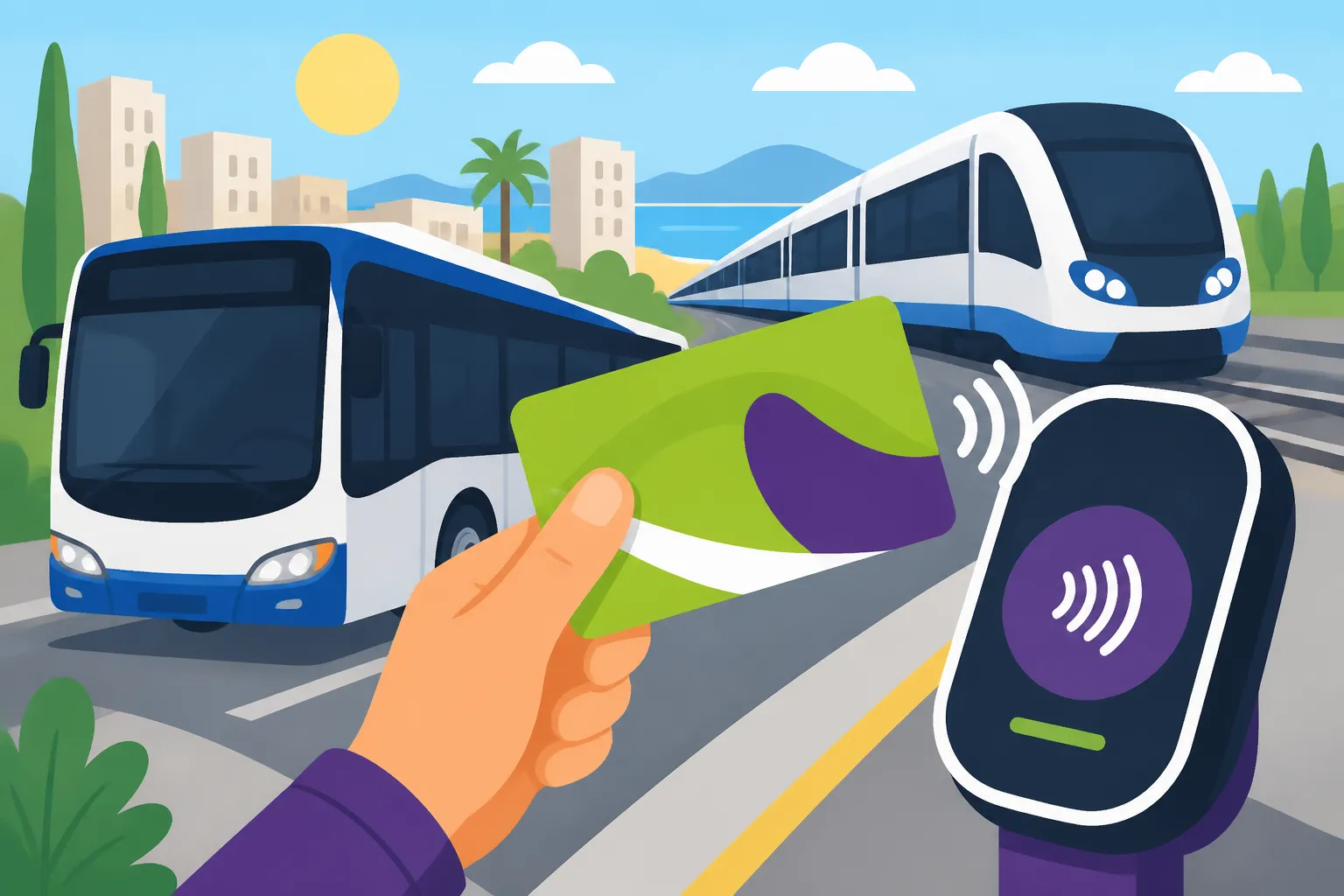
The Rav-Kav card is your essential passport to Israel's public transport. Forget fumbling with cash for individual tickets; this reloadable smart card is what you’ll use for buses, trains, and light rail across the country. Navigating the initial process can feel like a classic Israeli administrative challenge, but with a bit of patience, you’ll get there. It’s a lot like trying to figure out how to get a Teudat Zehut and Tax File Number in Israel – seemingly complicated at first, but totally manageable with the right information.
Anonymous vs. Personalized Rav-Kav: What's the Difference?
When you first encounter the Rav-Kav, you'll learn there are two main types: anonymous and personalized.
An anonymous Rav-Kav is the easiest to acquire. You can get one from a bus driver (though this is becoming less common for initial issue), at Rav-Kav service stations, or through vending machines at train stations. It costs a small fee, usually around 5-10 NIS, and it's not registered to any individual. This means if you lose it, your money is gone – no way to recover the balance. It's great for tourists or those who need a card immediately, but it only allows you to load "Erek Tzavur" (stored value) which gives a fixed discount on fares. You won’t get access to monthly passes or the significant discounts available to certain groups.
A personalized Rav-Kav, on the other hand, is issued in your name, complete with your photo and ID number. This is the one you really want if you’re planning on staying for any length of time. The biggest advantage is security: if you lose it, you can block the card and transfer the remaining balance or an active contract to a new card. More importantly, it grants you access to various contracts and discounts, such as monthly passes (known as "Hofshi Hodshi" or "Hofshi Shnati" for annual) and special fares for students, seniors, and those with disabilities. It can be a bit more of a process to obtain, but the benefits far outweigh the initial hassle, especially for the long run.
Where to Get Your Rav-Kav
For a personalized Rav-Kav, your best bet is to head to a dedicated Rav-Kav service center (called Al Hakav or Rav-Kav Online stations) found in major cities like Tel Aviv, Jerusalem, and Haifa, often near central bus or train stations. You can also start the process online through the official Rav-Kav website or apps, though you'll often still need to pick up the physical card or activate a profile at a service point. Some post offices also offer Rav-Kav services, but it's always best to check in advance.
For an anonymous card, you can often pick one up at any Rav-Kav vending machine in train stations, or at larger bus stations. Some small kiosks or convenience stores might also sell them, especially in areas with many tourists. Remember, if you're a new immigrant or a long-term resident, investing the time to get a personalized card will save you money and headaches in the long run.
| Feature | Anonymous Rav-Kav | Personalized Rav-Kav |
|---|---|---|
| Eligibility | Anyone | Israeli residents (Teudat Zehut/Oleh) |
| Registration | No personal registration | Registered to your ID number and photo |
| Loss Protection | None (balance lost if card is lost) | Yes (balance/contracts recoverable) |
| Discounts | Only Erek Tzavur (stored value) standard discount | Erek Tzavur, monthly/annual passes, student, senior, disabled discounts |
| Card Cost | ~5-10 NIS (can vary) | Free (after initial issuing process) |
| Acquisition | Vending machines, bus drivers (limited), kiosks | Rav-Kav service centers, online application + pickup |
| Proof Needed | None | ID (Teudat Zehut/Oleh), passport, sometimes a photo |
The Documentation You'll Need
To get a personalized Rav-Kav, you'll need to prove your identity and residency. Typically, this means bringing your valid passport and your Teudat Zehut (Israeli ID card) or Teudat Oleh (New Immigrant Certificate). If you’re a new arrival and still figuring out your residency status, you might feel a bit lost in the bureaucratic maze, but trust me, getting your How to Get a Teudat Zehut and Tax File Number in Israel is one of the first crucial steps for so many things, including this. They’ll also take your photo on the spot for the card, so no need to bring passport photos.
If you're trying to get a student discount, you'll need to bring valid student ID from an accredited Israeli institution. For senior discounts, your ID will usually suffice to prove your age. The process usually involves filling out a short form, presenting your documents, getting your picture taken, and then waiting a few minutes for the card to be printed. It’s a good idea to go during off-peak hours if you can, as lines can be long. While it might feel like a bit of a bureaucratic dance, remember that this card will simplify your daily life immensely.
Loading and Using Your Rav-Kav: Payment Profiles and Zones
Once you have your Rav-Kav card, the next step is to load it up with credit or a travel contract. This is where things can get a little nuanced, as Israel offers several payment options designed to suit different travel patterns. Understanding these options, and the geographic zones they apply to, is key to making the most of your public transport budget.
Loading Options: Online, App, and Physical Stations
You have several convenient ways to load your Rav-Kav. The most modern and arguably easiest methods are through dedicated apps like Rav-Kav Online or Moovit. These apps allow you to load credit directly from your smartphone, using a compatible device (most newer Android phones and iPhones can read NFC-enabled Rav-Kav cards). You just tap your card to your phone, select your desired contract or amount, pay with a credit card, and then tap your card again to load it. This is incredibly convenient, especially if you've already sorted out your How to Get an Israeli SIM Card as a New Arrival and have a data plan with a provider like Airalo, ensuring you're always connected.
If you prefer a physical touch, you can visit Rav-Kav service centers, some post offices, or dedicated loading machines at major bus and train stations. Many bus drivers no longer load cards with anything other than a single ride (and even that's becoming less common as cashless payments are pushed), so don't rely on them for topping up. You can pay with cash or credit card at physical loading points. Some small kiosks (like those in Tel Aviv's Kiosks & More chain) also offer Rav-Kav loading services, which can be a lifesaver in a pinch.
Understanding Derech Kav and Flexible Contracts
Beyond simply loading Erek Tzavur (stored value, which gives you a percentage discount, usually 25%, on any ride), personalized Rav-Kav cards unlock more flexible and cost-effective contracts.
The most popular option for regular commuters is the Hofshi Hodshi (monthly pass). This allows unlimited travel within specific geographic zones for a calendar month. For example, a Hofshi Hodshi for the Tel Aviv Metropolitan Area (Zone 1) covers all buses and the light rail within that zone, offering incredible value if you commute daily. There are also Hofshi Shnati (annual passes) for even greater savings.
More recently, Israel introduced the Derech Kav (flexible contract) option. This allows you to load a certain amount of money onto your card and receive an increased discount compared to Erek Tzavur, sometimes up to 50% for specific groups or routes. The beauty of Derech Kav is that it’s less restrictive than a monthly pass; it doesn’t expire at the end of the month and can be used as long as you have a balance. It's an excellent middle-ground for those who don't commute daily but use public transport frequently. It's worth comparing the various options based on your typical usage to find the most economical solution for your The Complete Guide to Cost of Living in Israel for Expats (2026).
Geographic Zones and Fare Structure
Israel operates on a zonal fare system, which can be a bit tricky to grasp at first. The country is divided into different geographic zones, and the cost of your journey depends on how many zones you travel through. Major metropolitan areas like Tel Aviv, Jerusalem, and Haifa each constitute a primary zone, with surrounding suburbs and towns falling into additional concentric rings.
A ride within a single city (e.g., within Tel Aviv) will be one price, while a ride from Tel Aviv to a neighboring city like Herzliya will be slightly more expensive, and a ride from Tel Aviv to Jerusalem significantly more. The beauty of the Rav-Kav, especially with monthly or flexible contracts, is that it automatically calculates the fare based on your route and the contract you have. For instance, a "Hofshi Hodshi" often covers a specific metropolitan area and its immediate surroundings, simplifying travel within that region. Always check the zones relevant to your travel plans, particularly if you’re commuting between cities, as this directly impacts the cost of your pass.
Navigating Different Modes of Transport with Rav-Kav
The true magic of the Rav-Kav card lies in its universality across different modes of public transport in Israel. Once you've got your card loaded, you can essentially hop on and off buses, trains, and light rail with ease. It truly simplifies what could otherwise be a fragmented and confusing experience for expats.
Tapping On and Off: The Golden Rule
For buses, the process is straightforward: simply tap your Rav-Kav card on the reader located near the bus driver when you board. The system will automatically deduct the correct fare based on your loaded contract or stored value. You generally don't need to tap off unless you're using a specific type of contract that requires it for accurate fare calculation (e.g., for longer intercity rides where the system needs to know your destination). Always listen for the "tik" sound or look for the green light on the reader to confirm your tap was successful.
On trains and light rail, the "tap on, tap off" rule is critical. When entering a train station, you'll find yellow Rav-Kav validation machines. Tap your card on one of these before you enter the platform area. When you arrive at your destination, you must tap your card again on a validator before exiting the station. If you forget to tap off, the system will assume you traveled to the furthest possible station on your route and charge you the maximum fare. This is a common mistake newcomers make, so commit it to memory! It’s all part of understanding The Complete Guide to Making Aliyah: Your First 90 Days in Israel (2027) and adapting to local systems.
Transfers and Fare Discounts
One of the best features of the Rav-Kav system is its generous transfer policy. Once you've paid for a ride, you typically have 90 minutes (though this can sometimes vary by region or route) to transfer to another bus, train, or light rail within the same geographic zone without incurring an additional charge. This is incredibly useful for journeys that require multiple connections, as it ensures you’re only paying for the overall journey, not each individual segment.
When you tap your card for a transfer within the allotted time, the system will recognize your previous ride and indicate a free transfer. If you’re traveling to a different zone, or if more than 90 minutes have passed, a new fare will be deducted, often with a discounted rate if you have Erek Tzavur or a flexible contract loaded. This seamless integration is a huge benefit, making multi-leg journeys far less expensive and complicated than they would be otherwise.
Using Rav-Kav on Shared Taxis (Sherut)
While the Rav-Kav primarily covers buses, trains, and light rail, it’s worth a mention that it generally doesn't work on shared taxis, known as sheruts. Sheruts are popular, often cheaper alternatives to regular taxis, especially for intercity travel or specific urban routes, and they typically operate on Shabbat when public transport is shut down.
However, payment on sheruts is almost exclusively cash-based, paid directly to the driver or by passing the money up the row of passengers. So, while your Rav-Kav is your best friend for formal public transport, make sure to always carry some small denomination shekels for sheruts. It's a small detail, but one that can save you a moment of panic when you’re relying on a sherut to get you home on a Friday night!
Tips and Tricks for Expats Using Public Transport
Adjusting to a new public transport system in a foreign country requires more than just understanding the payment method. It means learning the local quirks, navigating language barriers, and figuring out the best tools to make your journeys smooth. As an expat, you'll quickly discover that these small tips can make a huge difference.
Essential Apps for Planning Your Journey
Forget paper maps and asking strangers for directions – in Israel, apps are your absolute best friend for public transport. The undisputed champion is Moovit. This app provides real-time public transport information for buses, trains, and light rail across Israel. It tells you exactly when the next bus is coming, which line to take, where to transfer, and how long your journey will be. It’s available in English and integrates seamlessly with Rav-Kav loading options within the app. I honestly don’t know how anyone gets around without it, especially during those early days when everything feels new.
Another invaluable app is Rav-Kav Online. While Moovit is for planning, Rav-Kav Online is specifically for managing your Rav-Kav card. As mentioned earlier, you can use it to check your balance, load new contracts, and review your travel history. It requires an NFC-enabled phone to read your physical card, but it's incredibly convenient for topping up on the go. Having a reliable internet connection is crucial for both these apps, so make sure your How to Set Up Home Internet and TV in Israel is sorted, and you've got a robust mobile data plan.
Understanding Hebrew Announcements and Signage
Let’s be real: for non-Hebrew speakers, the language barrier can be a significant hurdle. While most modern buses and trains have digital displays showing the next stop in both Hebrew and English, bus drivers don’t always make clear announcements, or they might be entirely in Hebrew. This can lead to missed stops and a general sense of anxiety, especially on an unfamiliar route.
My advice? Always track your journey on Moovit. It shows your current location and upcoming stops, so you can see exactly where you are and know when to get off. Don't be shy about asking fellow passengers for help, either. Most Israelis are very friendly and willing to point you in the right direction, especially if you try a few basic Hebrew words like "Slicha, kama taḥanot l'____?" (Excuse me, how many stops to ____?). This approach will serve you well in many aspects of Israeli life, including when you're trying to How to Find an English-Speaking Doctor in Israel.
Night Buses and Shabbat Considerations
As I mentioned, public transport pretty much grinds to a halt for Shabbat and major Jewish holidays. This is a massive adjustment for expats from countries with 24/7 transport. Buses and trains typically stop running around 3-5 PM on Friday afternoon and resume service Saturday evening, usually an hour or two after sundown. The exact timings depend on the season and the specific route, so always double-check.
However, some cities, like Tel Aviv, have introduced "night bus" lines (often called Kavim Le'ila or Line Night) that run on Friday and Saturday nights. These are limited in scope and don't cover the entire city, but they can be a lifesaver if you're out late. Also, shared taxis (sheruts) often fill the void during Shabbat, running on popular routes, though usually at a slightly higher price. Planning your weekend travel well in advance and understanding these limitations is crucial, especially if you're exploring What Is the Cost of Living in Haifa Compared to Tel Aviv? and comparing weekend activities.
Common Issues and Troubleshooting
Even with the best preparation, things can sometimes go awry. Your Rav-Kav card might mysteriously stop working, or you might find yourself in a dispute over a fare. These situations are frustrating, but knowing how to handle them can save you a lot of grief.
Lost or Stolen Cards
Losing your Rav-Kav card is a major annoyance, but how big of a problem it is depends on whether you have an anonymous or personalized card. If you lose an anonymous Rav-Kav, unfortunately, there's not much you can do. The card isn't tied to your identity, so there's no way to prove ownership or recover the balance. Consider the money gone, and simply get a new card. This is why I always recommend getting a personalized card for long-term residents.
If you lose a personalized Rav-Kav, breathe a sigh of relief! Because it's registered to your ID, you can report it lost or stolen. Contact Rav-Kav customer service immediately (you can usually find the number on the Rav-Kav Online website or app, or simply search "Rav-Kav customer service Israel"). They will block your old card, and you can then go to a Rav-Kav service center to get a new card issued with your existing balance and contracts transferred over. There might be a small fee for the new card, but it's a small price to pay for recovering your funds. Keep a screenshot of your card's ID number or keep it written down somewhere safe.
Fare Disputes and Customer Service
Occasionally, you might find yourself questioning a fare deduction or having an issue with your card not reading correctly. When this happens on a bus, the driver might not always be able to resolve it, especially if there's a language barrier or they're just focused on keeping to their schedule.
For more complex issues, or if you believe you’ve been overcharged, your best course of action is to contact Rav-Kav customer service. They have phone lines and often an online inquiry form. If you’re not comfortable speaking Hebrew, look for an English-speaking representative or ask a Hebrew-speaking friend to help you. It's often helpful to have your Rav-Kav card number, the date and time of the incident, and specific details about the route. While it can feel like shouting into the void sometimes, persistence usually pays off. Navigating these kinds of interactions is a common part of expat life in Israel, much like Registering Your Address with the Population Authority in Israel – it requires patience.
Keeping Track of Your Balance and Transactions
To avoid surprises, it’s a good habit to regularly check your Rav-Kav balance and review your transaction history. The easiest way to do this is through the Rav-Kav Online app, as described earlier. Simply tap your card to your NFC-enabled phone, and you’ll see your current balance, any active contracts, and a detailed list of your recent rides and deductions. This level of transparency is really helpful for budgeting and ensuring you don't run out of credit unexpectedly, especially if you rely on public transport for your daily commute to your The Expat Guide to Finding a Job in Israel (2027).
You can also check your balance at any Rav-Kav loading station or vending machine. By making this a regular practice, you can preempt most payment issues and ensure your Rav-Kav is always ready for your next adventure across Israel. Many expats, myself included, rely on moving services like Sirelo for their initial relocation, but getting the hang of local transport is an equally important step to feeling settled.
Disclaimer
The information provided in this guide is intended for general informational purposes only and may be subject to change. While we strive to provide accurate and up-to-date information, public transport regulations, fares, and services in Israel can evolve. Always refer to official government and transport operator websites or contact their customer service for the most current and specific details.