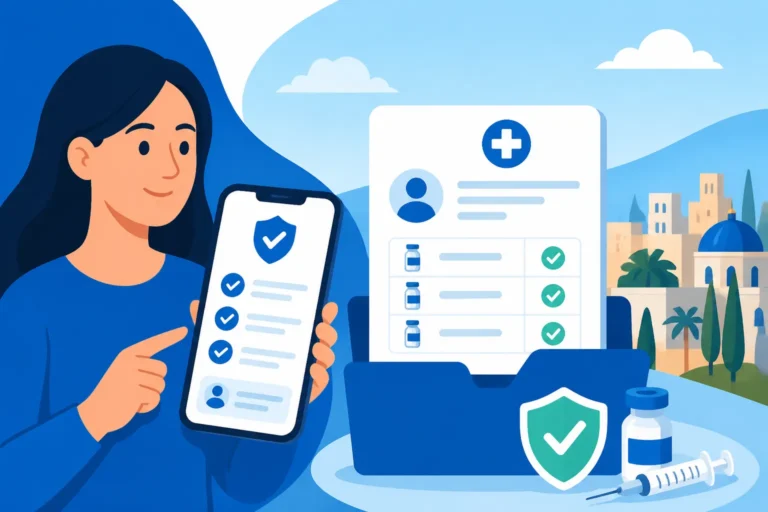
What Medical Documents Should I Bring When Moving to Israel?
Moving to Israel often feels like a whirlwind of bureaucracy, packing boxes, and emotional goodbyes, but nothing creates more stress than the sudden realization that you are missing a critical piece of paperwork while sitting in a sterile clinic in Tel Aviv. This guide solves that anxiety by providing a definitive checklist of the medical documents you must bring to ensure your transition into the Israeli healthcare system is seamless and your care remains uninterrupted.
Core Medical Records for the Kupat Holim
When you first arrive, your primary goal will be registering with one of the four health funds, known as Kupot Holim. Whether you are an Oleh Chadash or an expat on a work visa, the doctors here are highly skilled, but they are not mind readers. They need a clear, documented history of your health to provide the best care possible. Israeli medicine is highly digitized, but your past records from abroad are likely trapped in a physical folder or a different digital portal that won't communicate with Israeli systems.
Chronic Illness and Ongoing Treatment Summaries
If you or a family member manages a chronic condition—such as diabetes, hypertension, or an autoimmune disorder—you cannot simply tell your new Israeli doctor what you have. You need a formal "Letter of Continuity" or a detailed medical summary from your current specialist. This letter should outline your diagnosis date, the progression of the condition, and any major interventions or hospitalizations you have had.
When you sit down for your initial intake, having this document allows the physician to quickly How Do I Register a Chronic Condition with My Israeli Doctor in the local system. This is crucial because it often dictates your eligibility for subsidized medications and specific specialist tracks within the health fund. Without these records, you may find yourself repeating expensive diagnostic tests that you have already undergone in your home country just to prove your status to the Israeli "Sal Briut" (Health Basket) administrators.
Prescription History and Current Medications
Israel has a very specific list of approved drugs, and your specific brand name might not exist here. Bring a complete list of your current medications, including the generic names and dosages. It is also wise to bring a three-month supply of your essential meds to cover the "settling in" period. During those first few weeks, you might use a bridge insurance like SafetyWing to ensure you have coverage for any immediate needs while your local registration is being processed.
Once you are in the system, you will need to understand How Do I Get a Specialist Referral Quickly in Israel to see someone who can replicate your home country's treatment plan. Your past prescription history serves as the evidence your new doctor needs to justify why you require a specific class of medication. If you use specialized biologics or "orphan drugs," the documentation requirements are even stricter, often requiring a history of "failed" alternative treatments to get the Kupah to cover the more expensive options.
Recent Diagnostic Results and Imaging
Do not assume that your new doctor can "just look it up." If you have had an MRI, CT scan, or major blood work in the last twelve months, bring the actual reports and, if possible, the images on a USB drive or via a digital cloud link. Israeli radiologists are excellent, but they need baseline images to compare against future scans.
For instance, if you have a history of thyroid nodules or cardiovascular issues, the comparison between an old scan from London or New York and a new scan in Jerusalem is vital for detecting changes. This is particularly relevant when you are Navigating the Israeli Healthcare System: An Expat's Roadmap (2027) for the first time, as it prevents unnecessary radiation and speeds up your diagnostic timeline.
Specialty Documentation for Children and Family Planning
The Israeli healthcare system is world-renowned for its maternal and pediatric care, but the entry point for these services—the "Tipat Halav" clinics—requires specific paperwork that can be a headache to source once you have already left your home country. If you are moving with a family, your medical folder will likely be the heaviest thing in your carry-on.
Immunization Records and the Pink Book
Every child in Israel is tracked via a vaccination record, often referred to as the "Pink Book." To integrate your child into the local system, you must provide a certified record of every vaccine they have received since birth. This is not just for medical reasons; it is often required for school and "Gan" (preschool) enrollment.
You should look closely at Understanding Childhood Vaccination Schedules in Israel to see where your child might have gaps. Some countries vaccinate for different strains at different ages. Having a clear, translated (if not in English) record allows the nurses at Tipat Halav to create a "catch-up" schedule. If your records are incomplete, the default position of many clinics is to restart certain series, which is an unnecessary stress for your child that can be avoided with a simple, stamped document from your previous pediatrician.
Prenatal Records and Reproductive History
If you are arriving in Israel while pregnant, or planning to start a family soon, your OB-GYN records are gold. Israel’s prenatal care is intensive, involving frequent ultrasounds and genetic screenings. Bringing your records of previous births, including any complications like pre-eclampsia or gestational diabetes, is essential.
The system provides extensive support, as detailed in Understanding Maternity and Prenatal Care in Israel, but your new Israeli doctor needs to know your history to categorize your pregnancy as "high risk" or "standard." Similarly, if you have undergone IVF or other fertility treatments, bring the full lab reports. Israel is the IVF capital of the world, and the specialists here can do amazing work, but they need to see exactly what protocols were used in your previous cycles to optimize your treatment in the local system.
Dental Records and Orthodontic Plans
Dental care is one of the few areas in Israel that is largely private, although the Kupot Holim do offer supplementary plans. If you or your children are in the middle of orthodontic treatment—like braces or Invisalign—you must bring the original treatment plan, x-rays, and the most recent molds.
Finding a new orthodontist who is willing to take over a case started abroad can be tricky and expensive. Understanding Dental Care Coverage in Israel will help you realize that while basic care is subsidized for children, complex work is not. Having your records allows an Israeli dentist to give you a realistic quote and continue the work without having to "strip" the existing hardware and start over, saving you thousands of shekels.
Administrative and Legal Medical Paperwork
Beyond the clinical data, there is a layer of administrative paperwork that proves you have the right to care and helps you manage the financial side of Israeli medicine. This is where many expats get tripped up, thinking that a simple passport is enough.
Proof of Prior Insurance and Waiting Period Waivers
For new Olim, there is generally no waiting period for the "basket" of services, but for certain supplementary levels of insurance, having "continuity of coverage" can sometimes help waive waiting periods for pre-existing conditions. If you are an expat on a work visa, you will likely need to show Do I Need Private Insurance for an Israeli Work Visa? to the authorities.
In the interim, a plan like SafetyWing can provide the necessary documentation of coverage that satisfies local requirements while you wait for your Bituach Leumi (National Insurance) to activate. Keeping a copy of your previous policy's "Certificate of Creditable Coverage" can be a lifesaver if you are trying to negotiate a waiver for a specific waiting period on a private Israeli policy.
Powers of Attorney and Living Wills
If you have specific wishes regarding your medical care or have appointed a healthcare proxy in your home country, these documents do not automatically carry over to Israel. However, they serve as a vital template for your Israeli lawyer to create a local "Power of Attorney" (Yipuy Koach).
The Israeli medical system is very proactive, but it is also legally cautious. If you are managing the care of an elderly parent or have complex medical needs yourself, having your original legal medical documents translated ensures that your intentions are clear to the ethics committees at Israeli hospitals. This is a crucial part of The Complete Guide to Healthcare in Israel for Olim and Expats (2027) that is often overlooked until an emergency occurs.
Essential Medical Document Checklist
To make your life easier, here is a breakdown of the documents you should have ready before you head to the airport.
| Document Category | Specific Item | Format Recommendation |
|---|---|---|
| General Health | Summary of Chronic Conditions | Physical Letter + PDF |
| Medication | List of Generics and Dosages | Printed List |
| Pediatrics | Full Immunization History | Stamped Official Record |
| Imaging | MRI/CT/X-ray Reports & DICOM files | USB Drive / Cloud Link |
| Labs | Blood Work (last 12 months) | |
| Surgical | Operative Reports for major surgeries | |
| Maternity | Prenatal records / Genetic testing | Physical Folder |
| Legal | Health Proxy / Living Will | Original + Translation |
Practical Tips for Managing the Transition
The most important thing to remember is that while most Israeli doctors speak excellent English, the administrative staff and the "clerical" side of the Kupah might not. Having a summary of your medical history translated into Hebrew is not strictly required, but it is a massive "shortcut" to getting what you need.
Digital vs. Physical Copies
In Israel, the digital revolution is everywhere, but the "system" still loves a good stamp. Always carry a physical folder with your most critical documents (vaccinations, major surgery summaries, and current prescriptions) for your first few appointments. Once the doctor scans them into the Kupah's system, they are there forever, and you can transition to using the app.
During the gap before your official registration is finalized, you might find yourself in a situation where you need to know What Happens If I Get Sick Before My Kupah Registration Is Complete. In these instances, having digital copies on your phone via a secure app or cloud service is essential, as a private clinic or an emergency room will need to see your history immediately to treat you safely. Using SafetyWing during this transition period also means you have a digital portal to manage claims and records for any "gap" treatments.
Language and Translation Hurdles
You do not need to translate every single lab result from the last ten years. Focus on the "Conclusion" or "Summary" sections of your records. If your records are in a language other than English, a professional medical translation into Hebrew is highly recommended. For English records, most Israeli specialists are comfortable reading them, but a one-page "Executive Summary" of your health history can save 20 minutes of back-and-forth during your first appointment.
You should also look into How to Find an English-Speaking Doctor in Israel to ensure that the person reviewing your records fully understands the nuances of your history. A veteran expat tip: when you find a doctor you like, ask them for their direct email or "WhatsApp" number (a very common practice in Israel) so you can send them digital updates of your records as you find them.
Finalizing the Move
Before you leave your home country, do one last "sweep" of your medical portals. Download every PDF, print every immunization record, and ask your specialists for a "transfer of care" summary. Once you are in Israel, getting these records from a distance becomes significantly harder due to privacy laws and time zone differences.
If you are wondering How to Transfer My Health Records to Israel officially, the answer is that there is no central "bridge." It is a manual process of bringing your past into your new Israeli future, one document at a time. Be patient with the process, be organized with your folders, and remember that once you are in the system, the level of care and the ease of digital management in Israel is among the best in the world.
Disclaimer
The information provided in this guide is for informational purposes only and does not constitute professional medical or legal advice. Healthcare regulations and document requirements in Israel are subject to change. Always consult with the Israeli Ministry of Health, your chosen Kupat Holim, or a qualified legal professional to ensure you are meeting the most current requirements for your specific situation.