How Do I Pay for Private Healthcare in Israel as a Foreigner?
Walking into a bright, modern clinic in the heart of Tel Aviv only to realize your foreign insurance card looks like a confusing piece of plastic to the receptionist is a stress-inducing rite of passage for many. Whether you are a digital nomad, a tourist, or a new expat waiting for your residency papers to process, the Israeli healthcare system can feel like a fortress. This guide explains exactly how to navigate and pay for private medical care so you are never left stuck with a bill you can't manage.
Understanding the Private vs. Public Divide in Israel
In Israel, the backbone of the medical system is the public health funds known as Kupot Holim. While this system is world-class, it is largely built around residents who contribute monthly via their salaries. For a foreigner, the path to care isn't always through these public doors. Often, you are diverted to the private sector, which operates with its own set of rules, prices, and administrative expectations.
The Kupat Holim Gap for Foreigners
If you have just arrived and are still navigating the paperwork of your move, you might find yourself in a "waiting period." Even if you have applied for residency, it can take months for your name to appear in the systems of the four main health funds. During this interim, you are technically a "private patient" in the eyes of most clinics. This is why How Israel's Health Funds (Kupot Holim) Work: A Full Overview is essential reading, as it helps you understand what you are currently missing out on.
For those on a B/1 work visa or a student visa, the employer is often required to provide a basic insurance plan, but these plans are frequently restricted to specific networks. If you decide to step outside that network for a faster appointment or a specific English-speaking surgeon, you enter the realm of private payment. Understanding how these tiers interact is the first step to ensuring you aren't overpaying for basic consultations.
Why You Might Choose Private Care
Expats often choose the private route for three main reasons: speed, language, and choice. In the public system, waiting for a specialist like a dermatologist or an endocrinologist can take weeks or even months. In the private sector, you can often get an appointment within 48 hours. Furthermore, if you are looking for a specific professional, such as a doctor who studied in the US or UK, the private sector is where you are most likely to find them.
Navigating the system to How to Find an English-Speaking Doctor in Israel often leads you to private clinics in areas like Herzliya Pituach or Central Tel Aviv. These facilities are designed for efficiency and comfort, but that comfort comes at a price that isn't subsidized by the "Health Basket." You are paying for the doctor’s time and the clinic’s overhead directly, which means the financial logistics become your personal responsibility.
Direct Payment What to Expect When Paying Out of Pocket
Paying out of pocket (often called "Self-Pay") is the most straightforward but most expensive way to access care in Israel. Most private clinics are accustomed to this and will have a set price list for foreign patients. It is vital to ask for this price "before" you sit down in the consultant's chair, as prices can vary wildly depending on the neighborhood and the doctor's seniority.
Typical Costs for Private Specialist Consultations
For a standard consultation with a specialist in an urban center like Tel Aviv or Jerusalem, expect to pay anywhere from 600 ILS to 1,500 ILS. If the doctor is a "Head of Department" at a major hospital like Ichilov or Sheba, that price can climb even higher. It is a significant jump from the nominal co-pays that residents pay, and it reflects the true market value of medical expertise in Israel. To get a better sense of these variations, you should look at The Cost of Healthcare in Israel: A Complete Breakdown for Foreigners (2026).
Diagnostic tests add another layer of cost. A private ultrasound might cost 800 ILS, while a private MRI can easily exceed 4,000 ILS. Because there is no government subsidy on these private transactions, you are also often charged the 17% Value Added Tax (VAT), known locally as "Ma'am." Always ask if the quoted price includes Ma'am, as it can be a nasty surprise when you get to the payment terminal.
Methods of Payment Accepted in Israeli Clinics
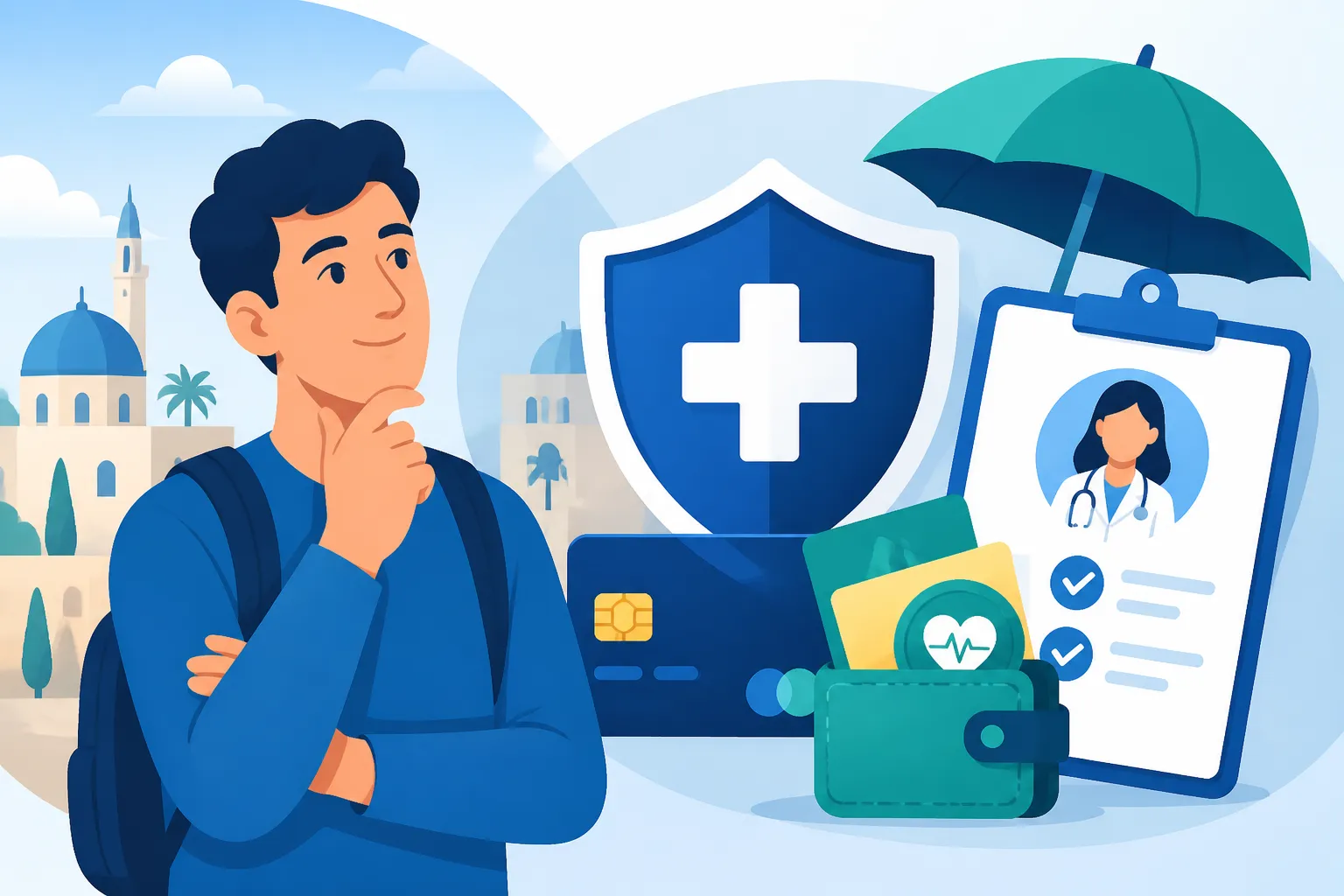
Israel is a highly digitized society, but medical payments can still be surprisingly varied. Most large private clinics accept major international credit cards (Visa and Mastercard), but American Express is less widely accepted due to its high merchant fees. If you are seeing a doctor in a small, independent office, they might prefer payment via a local app like Bit or PayBox. As a foreigner, you might not have access to these apps yet, so always have a backup payment method.
Cash is still accepted in many private practices, but there are strict laws in Israel regarding cash transactions to prevent money laundering. Currently, you cannot pay more than 6,000 ILS in cash to a business. If your surgery or treatment costs more than that, you must use a credit card, a bank transfer, or a check. For many expats, using a travel-friendly insurance like SafetyWing can mitigate the need for these large out-of-pocket outlays by providing a framework for reimbursement or direct billing in some cases.
Private Insurance Solutions for Foreigners
Since out-of-pocket costs are high, most savvy foreigners in Israel utilize some form of private insurance. This can be a local Israeli policy, a supplementary layer added to a public fund, or an international plan designed for nomads and expats. Each has a different mechanism for how you actually "pay" the doctor at the time of service.
Supplementary Insurance Bituach Mashlim
If you have managed to register with a health fund, you have the option to buy "Bituach Mashlim." This is a supplementary layer offered by the Kupah itself (like Clalit Mushlam or Maccabi Gold). When you have this, you don't exactly pay "private" prices; instead, you pay a "reduced private" rate. You might see a private doctor who has an agreement with your fund, and instead of 1,000 ILS, you pay 150 ILS.
The balance is handled behind the scenes between the doctor and the health fund. However, for many newcomers, there is a waiting period of 3 to 6 months before these benefits become active. During this time, you are essentially on your own. Many ask, Is Bituach Mashlim Worth It for Expats in Israel?, and the answer is almost always yes, provided you are staying long-term and can survive the initial waiting period.
International Health Insurance and SafetyWing
For those who are in Israel on a temporary basis, such as digital nomads or those on a multi-month tourist visa, international health insurance is the gold standard. SafetyWing, for example, is frequently used by the nomad community in Tel Aviv because it handles the "catastrophic" costs that the private Israeli system can generate. When using international insurance, the payment process usually follows a "pay and claim" model. You pay the clinic with your credit card, gather all the Hebrew documentation, and submit it for reimbursement.
In some major medical events, international insurers like SafetyWing can coordinate direct billing with large private hospitals such as Assuta. This saves you from having to find thousands of shekels upfront. If you are here on a specific visa, you should check Do I Need Private Insurance for an Israeli Work Visa? to see if your mandatory local insurance is enough, or if you need the extra protection of an international carrier to cover private specialist visits.
Navigating the Hospital Sharap System
A unique feature of the Israeli system, particularly in Jerusalem, is "Sharap" (Sherut Refuah Prati). This is a private medical service that operates "inside" public hospitals. It allows you to choose your specific surgeon or consultant and see them within the hospital walls, but outside the standard public queue. It is one of the most common ways foreigners interact with private healthcare payment.
What is Sharap and How Does it Differ
Sharap is most prevalent at hospitals like Hadassah (Ein Kerem and Mt. Scopus) and Shaare Zedek. When you use Sharap, you are treated as a private patient. You will have a separate administrative office to visit where you pay the "Sharap fee" before your appointment. This fee covers the doctor’s private consultation. For a deeper look at this hybrid model, check out What Is Sharap and How Do Private Services Work in Israeli Hospitals?.
The benefit of Sharap is that you get the incredible infrastructure of a major teaching hospital but the personalized care of a private clinic. However, the billing is distinct. You will often receive two separate bills: one from the doctor for their professional service and one from the hospital for the use of the facility and equipment. Keeping these receipts organized is crucial for any insurance claims you plan to make later.
Financial Logistics of Private Surgery
If you require surgery and choose the private route—perhaps at Assuta, which is Israel’s largest private hospital chain—the costs escalate quickly. A private gallbladder removal or hernia repair can cost between 20,000 ILS and 50,000 ILS. If you do not have an Israeli insurance policy that covers "Private Surgeries," the hospital will require a deposit or a "Letter of Guarantee" (LOG) from your international insurer before they even book the operating room.
For foreigners, the logistics of getting this LOG can be a headache due to time zone differences. This is where having a proactive insurer like SafetyWing becomes a lifesaver, as they are accustomed to the high costs of Israeli private hospitals and can often communicate directly with the finance departments at Assuta or Herzliya Medical Center. Without this, you may be expected to pay the full estimated amount via bank transfer several days before the procedure.
Reclaiming Costs and Handling Paperwork
The "payment" isn't actually finished when you tap your card at the clinic. For a foreigner, the final step is ensuring you have the correct documentation to either get reimbursed or to prove the expense for tax purposes. The Israeli bureaucracy loves stamps, specific headings, and itemized lists.
Getting the Right Invoices Kabbalot
In Israel, a receipt is called a "Kabbala," and a tax invoice is a "Heshbonit Mas." When you pay for private care, you must ensure you receive a "Heshbonit Mas/Kabbala" (a combined invoice and receipt). This document must include the doctor's license number, their tax ID (H.P. or I.D. number), and a clear description of the service provided in English or Hebrew.
If you are planning to How Do I Claim Reimbursement from Your Kupat Holim in Israel?, the fund will strictly reject any receipt that doesn't clearly state the date of service and the specific medical code for the consultation. Many private doctors are used to writing these for expats, but you must be firm in asking for a "detailed" receipt. A simple credit card slip is never enough for insurance or government purposes.
Dealing with Foreign Insurance Reimbursements
If you are using an international policy, the insurer will often require a medical report (Sikum Refui) to accompany the receipt. Even if the doctor's English isn't perfect, ask them to write the diagnosis and treatment plan in English. Translating Hebrew medical documents is expensive and can delay your reimbursement by weeks.
| Service Type | Typical Private Cost (ILS) | Payment Timing | Documentation Needed |
|---|---|---|---|
| Specialist Consult | 600 – 1,500 | At time of visit | Heshbonit Mas + Medical Summary |
| Diagnostic (Ultrasound) | 500 – 1,200 | At time of visit | Referral + Itemized Receipt |
| Private MRI | 3,500 – 5,000 | Pre-payment often req. | Prior Authorization + Receipt |
| ER Visit (Private Pay) | 900 – 1,200 | Post-treatment | Discharge Papers + Receipt |
| Minor Surgery | 15,000 – 30,000 | Pre-payment / LOG | LOG from Insurer + Full Invoice |
If you find yourself needing urgent help and aren't sure where to go, remember that Emergency Medical Care in Israel: What Every Newcomer Needs to Know is your baseline. For non-residents, even an ER visit starts as a private transaction. You will be handed a bill at the end of your stay at the hospital's "Kupa" (cashier), and it is your job to settle it before leaving or ensure your insurance has sent the necessary guarantees.
Don't be afraid to negotiate if you are paying entirely out of pocket without insurance. While prices for surgeries are often fixed, some private consultants may offer a "cash discount" or a lower rate for "uninsured foreigners" if you explain your situation. It isn't common, but in the Israeli "shuk" mentality, it never hurts to ask respectfully. Finally, if you are caught out after hours, How Do I See a Doctor Outside of Business Hours in Israel? provides alternatives to the expensive private ER route, such as "Terem" clinics, which offer a middle ground in terms of pricing and speed.
Medical Disclaimer
The information provided in this guide is for educational and informational purposes only and does not constitute professional medical or financial advice. Healthcare laws, insurance policies, and medical costs in Israel are subject to frequent change. Always consult with a qualified healthcare provider or a licensed insurance agent regarding your specific medical needs and coverage options. The author and publisher are not responsible for any financial losses or medical issues arising from the use of this information.