How to Enrol Your Child in an Israeli Public School
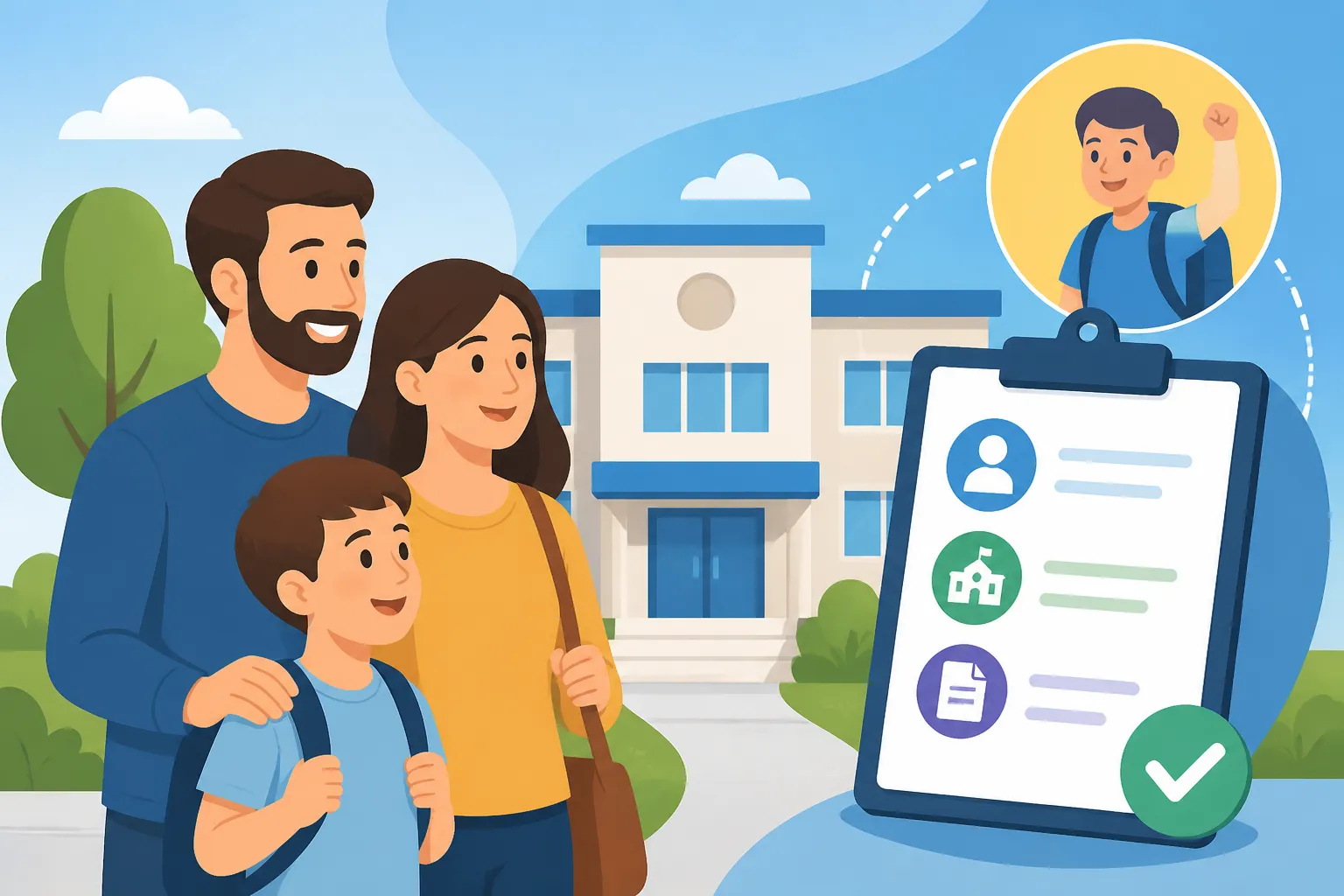
Moving your family to Israel is an adventure, but the thought of enrolling your child in a new school system, especially in a foreign language, can feel like climbing Mount Everest without a map. The Israeli public school system, while robust and free, has its own unique administrative quirks and cultural nuances that can make the process opaque for newcomers. This guide aims to demystify enrolling your child in an Israeli public school, walking you through each step with practical advice and a bit of expat empathy.
Understanding the Israeli Education System for Expats
Before you even start gathering documents, it's crucial to get a lay of the land regarding the Israeli education system. It's quite different from what many expats are used to, and understanding its structure will save you a lot of headaches down the line. We're talking about a system that's deeply rooted in local municipalities and cultural values.
Public vs. Private vs. Religious Schools
Israel offers a range of educational options, and it's not always a clear-cut choice. The vast majority of Israeli children attend public (state) schools, which are funded by the Ministry of Education and local municipalities. These are generally free, though parents often contribute to supplementary activities and materials. Within the public system, you'll find different streams:
- State Schools (Mamlachti): These are the most common and teach a secular curriculum, often with a focus on Zionism, Jewish heritage, and Israeli culture.
- State-Religious Schools (Mamlachti Dati): These schools integrate religious studies and observance into the daily curriculum, with separate classes for boys and girls in some subjects at older ages. They cater to a religious Zionist population.
- Haredi Schools (Chinuch Atzmai/Ma'ayan HaChinuch HaTorani): These are ultra-Orthodox schools, often segregated by gender from a young age, with a heavy emphasis on Torah study and minimal secular studies. They are largely independent but receive some state funding.
Beyond the public system, there are private schools, including many international schools, which offer various curricula (IB, American, British, etc.) and teach primarily in English. These come with significant tuition fees. For new arrivals, especially those on a budget or keen for their children to integrate fully, the public system is often the first choice. It's a fantastic way for kids to quickly pick up Hebrew and make local friends, truly becoming a part of Israeli society.
Age Requirements and Grade Levels
The Israeli education system is mandatory from age three (pre-kindergarten, gan hova) up to the end of 12th grade. The academic year typically runs from September 1st to June 30th. Here's a general breakdown:
| Grade Level | Hebrew Term | Age (as of Jan 1st of school year) | Typical Duration |
|---|---|---|---|
| Pre-Kindergarten (Mandatory) | Gan Hova (גן חובה) | 5 | 1 year |
| Kindergarten | Gan (גן) | 3-4 (optional) | 1-2 years |
| Primary School | Beit Sefer Yessodi (בית ספר יסודי) | 6-11 (Grades 1-6) | 6 years |
| Junior High School | Chatvat Benayim (חטיבת ביניים) | 12-14 (Grades 7-9) | 3 years |
| High School | Beit Sefer Tichon (בית ספר תיכון) | 15-17 (Grades 10-12) | 3 years |
It's vital to know your child's exact birthdate because the cutoff for each grade is usually January 1st. If your child turns five by January 1st of the upcoming school year, they are eligible for gan hova. If they turn six by January 1st, they will start first grade. This can sometimes lead to situations where children are slightly older or younger than their peers in other countries' systems, so be prepared for a potential shift in their grade level. The Ministry of Education website (in Hebrew, of course!) has precise calendars, but your local municipality will confirm specific cutoff dates for your area.
The Role of the Municipality (Rashiya)
This is where the rubber meets the road. In Israel, public school enrollment is managed by your local municipality, or Rashiya. Each city or town has its own education department (Agaf HaChinuch), and they are the gatekeepers. Your specific address determines which schools your child is zoned for. You cannot just pick any public school you like; placement is usually based on geographical proximity and available space.
The municipality will dictate the registration period, required documents, and school assignments. For example, if you're living in Tel Aviv, you'll register through the Tel Aviv Municipality's education department. If you're in Jerusalem, it's the Jerusalem Municipality. They hold all the power. This can be frustrating because policies and procedures can vary slightly from one city to another, meaning what worked for your friend in Ra'anana might not be the exact process in Modi'in. Expect a bit of bureaucracy and patience will be your best friend here. Having all your documents neatly organized, as we'll discuss next, will make this stage much smoother.
Pre-Registration Steps: Gathering Your Documents
As with anything administrative in Israel, the key to success is documentation, and lots of it! Before you even think about stepping foot in the municipality's education department, ensure you have every single piece of paper requested, translated, and possibly notarized. Missing even one document can set you back weeks.
Essential Identification and Residency Proof
First and foremost, you'll need to prove who you are and where you live. This is non-negotiable. For new immigrants (Olim Chadashim), your Teudat Zehut (identity card) and Teudat Oleh (immigrant certificate) are paramount. If you're here on a work visa or other temporary residence, you'll need your passport with the valid visa and any temporary ID cards issued by the Ministry of Interior (Misrad HaPnim).
Crucially, you absolutely must have Registering Your Address with the Population Authority in Israel. The school system relies on your official registered address to assign your child to a school. Without a current and updated address on your Teudat Zehut or in the Misrad HaPnim system, they simply won't process your application. Imagine trying to enroll your child in a school in Tel Aviv without an official Tel Aviv address – it's a non-starter. You'll also need proof of residence, such as a rental contract (chozeh schirut) or property ownership documents, and recent utility bills (electricity, water, arnona – municipal tax) in your name. These show you're actually living where you claim. Make multiple copies of everything; they'll often ask for copies even after seeing the originals.
Birth Certificates and Prior School Records
Your child's official birth certificate is another crucial document. If it's not in Hebrew or English, you'll likely need an official translation by a notary in Israel. Don't just assume a translation from your home country will suffice; Israeli authorities can be particular. For older children, especially those entering primary or secondary school, you'll need their previous school records. This includes report cards, transcripts, and any letters from their former schools detailing their grade level, attendance, and possibly even behavioral notes or special educational needs.
While schools generally place children based on age, these records can provide valuable context. They might help the school understand your child's academic background, especially if they are coming from a very different curriculum. For instance, if your child completed Year 5 in the British system, which might not perfectly align with an Israeli 5th grade, the records help the Israeli school make an informed placement decision. While not always mandatory for kindergarten, having them on hand for older kids is always a good idea. Think of it as painting a full picture of your child's educational journey so far.
Medical Records and Immunizations
Health records are vital for school enrollment everywhere, and Israel is no exception. You'll need an up-to-date immunization record translated into Hebrew or English. This is usually a standard form provided by your Kupat Holim (health fund) doctor or a Tipat Halav (Well-Baby Clinic) nurse. If your child received vaccinations abroad, you'll need to have them officially translated and reviewed by a doctor here to ensure they meet Israeli requirements. Sometimes, supplementary vaccinations are needed if there are differences in the Understanding Childhood Vaccination Schedules in Israel.
Additionally, some municipalities may ask for a general health declaration or a form signed by a doctor stating your child is fit for school. If your child has any allergies, chronic conditions, or special needs, ensure you have detailed medical reports (translated, of course) from their doctors. This is crucial for the school to be aware of and accommodate any specific health requirements, like needing an EpiPen or regular medication. It's not just about compliance; it's about ensuring your child's safety and well-being in their new learning environment.
The Registration Process: Step-by-Step
Alright, documents in hand, deep breaths taken, it's time to tackle the actual registration. This part involves direct interaction with the local authorities and can be a test of patience, especially if your Hebrew isn't fluent. Remember, a smile and a good attitude can go a long way, even when faced with seemingly endless paperwork.
Locating Your Local Municipality's Education Department
The first step is figuring out where to go. Each major city and even smaller towns have a municipal building (Iriyat Ha'Ir or Moatza Mekomit) that houses various departments. You're looking for the Agaf HaChinuch (Education Department) or sometimes it's called HaMachlaka LeChinuch (Department for Education). A quick search on the municipality's website for your city (e.g., "Iriyat Haifa Agaf HaChinuch") should give you their address and operating hours. Be aware that many municipal offices have very specific, and often limited, public reception hours, usually just a few mornings a week. Always check before you go.
For instance, if you're in Rishon LeZion, you'd head to their central municipal building. In smaller towns, the education department might be a smaller office within the main council building. It’s also worth calling ahead if your Hebrew is strong enough, or bringing a Hebrew-speaking friend, to confirm what exactly you need to bring. Sometimes, especially for new immigrants or those with complex situations, they might have a dedicated desk or a particular contact person, so it's good to inquire. This is where getting a local phone plan with a company like Partner or Cellcom (and maybe even a virtual SIM from a provider like Airalo for easy data upon arrival) becomes really handy for those crucial phone calls and online checks.
Filling Out Forms and Submitting Documentation
Once you're there, you'll be given a stack of forms to fill out. These forms, almost exclusively in Hebrew, will ask for your child's personal details, your contact information, your address, and often details about your child's previous schooling and any special needs. Don't be shy about asking for help! Many municipalities have English-speaking staff, especially in cities with large expat populations like Tel Aviv, Jerusalem, or Herzliya. If not, a friend or a local Oleh (immigrant) organization might be able to assist.
You'll then submit all your meticulously gathered documents. This is where those multiple copies come in handy, as they often keep a set for their records. The municipal staff will verify your address against their system, check your Teudat Zehut, and ensure all necessary paperwork is present. They will likely give you a receipt or a confirmation that your application has been received. This piece of paper is incredibly important – keep it safe! It's your proof that you've completed this step and can be used to follow up if there are any delays. This part of the process is often manual and can take time, so try to go when you're not rushed and feeling patient.
Placement and Acceptance Notification
After you submit everything, it’s a waiting game. The municipality will review your application and assign your child to a public school in your catchment area. This assignment considers various factors including your address, school capacity, and sometimes balancing demographics. You typically cannot choose your preferred school within the public system, though you might be able to request a specific stream (e.g., religious vs. secular) if your municipality offers options and space permits.
You'll usually receive notification by mail or sometimes by email. This notification will state the name of the school your child has been assigned to, the grade level, and often details about an orientation meeting or how to contact the school directly. For gan hova and first grade, these notifications usually go out in late spring or early summer, well before the September 1st start date. For mid-year enrollments or older children, the process can be quicker but still requires some lead time. If you haven't heard anything after a few weeks, don't hesitate to call the education department (with your receipt number!) to follow up. Perseverance is key here.
Navigating the First Days and Beyond
Getting your child enrolled is a huge hurdle, but the journey doesn't end there. Helping them integrate and thrive in a new school, especially one in a new language and culture, requires ongoing support and engagement from you as a parent.
Orientation and Integration Programs
Many schools, particularly in cities with significant Olim populations, understand the challenges new immigrant children face. Some schools or municipalities offer special orientation sessions for new immigrant families before the school year officially begins. These can be invaluable for meeting teachers, seeing the classrooms, and getting a feel for the school environment. Don't underestimate the power of these sessions to alleviate anxiety for both you and your child.
For children arriving without Hebrew, some schools might have Ulpanit programs (mini-Ulpan classes) for a few hours a week to help them accelerate their Hebrew acquisition. Others might pair new students with a "buddy" (often a veteran Oleh child or a particularly empathetic Israeli child) to help them navigate the social aspects and day-to-day routines. Inquire directly with the school once you receive your placement notification about any such programs or support systems for new immigrant children. This type of support can make a world of difference in your child's initial comfort level and speed of integration.
School Communication and Parent Involvement
Communication with the school is predominantly in Hebrew. Most schools use platforms like Komme or internal messaging apps to send out notices, homework assignments, and updates. Parent-teacher conferences (asifat horim) will also be in Hebrew. If your Hebrew isn't strong yet, you'll need to find strategies to bridge this gap. This could mean using translation apps for written communication, asking a Hebrew-speaking friend to help with phone calls, or requesting an interpreter for important meetings. Some schools in expat-heavy areas may have a few English-speaking staff members, but don't count on it.
Parent involvement (Va'ad Horim or Parent Committee) is also a big part of Israeli school culture. Parents often volunteer for events, organize class activities, and help raise funds. While it might seem daunting, participating, even in a small way, can help you feel more connected to the school community and understand your child's experience better. Getting to know other parents can also be a fantastic support system for you. Remember, the school is your partner in your child's education, and clear, consistent communication is vital for a successful partnership. You might even discover that a fellow expat parent is a lifeline for sharing tips and tricks.
Dealing with Language Barriers and Support Systems
The biggest hurdle for most expat children, especially older ones, is the language barrier. Israeli kids are generally very welcoming, but learning in a new language is tough. Be patient with your child, and celebrate every small victory – a new word learned, a sentence understood. Encourage them to speak Hebrew, even if it's broken, and resist the urge to immediately translate everything for them. Immersion is truly the best teacher here.
Many children pick up Hebrew remarkably quickly, especially the younger ones. They are little sponges! For older children, it can take longer, and they might experience frustration, exhaustion, or even sadness. Be prepared for emotional ups and downs. Seek out resources for Learning Hebrew: A Complete Guide to Ulpan and Language Levels for your child if the school doesn't offer adequate language support, or even consider private tutors. Some Kupot Holim might offer mental health support for children struggling with adjustment; don't hesitate to explore these options if needed. The goal is to make the transition as supportive as possible, acknowledging that it's a significant undertaking for your child.
Practical Considerations for Expat Families
Beyond the direct enrollment, there are numerous practical aspects of Israeli school life that expat families need to consider. These elements are often overlooked but can significantly impact your child's daily experience and your family's routine.
Transportation to School
Unlike some countries where school buses are universal, in Israel, parents are generally responsible for getting their children to and from public school. This usually means walking, driving, or using public transport. If you live close to the school, walking is a great option and a perfect way for your child to socialize with classmates on the way. For longer distances, you'll need to factor in driving time or Understanding the Rav-Kav Card and Public Transport in Israel.
Some municipalities might provide transport for children attending special education schools or those living in very remote areas, but this is not standard for regular public schools. Carpooling with other parents is a popular solution in many neighborhoods, so don't be afraid to ask around once your child starts school. Also, be aware of morning traffic, especially in larger cities like Tel Aviv and Jerusalem. School start times are usually around 8:00-8:30 AM, which often coincides with peak commuter hours. Planning your route and timing is crucial to avoid those stressful last-minute rushes.
After-School Programs (Tzaharonim) and Activities
The school day in Israel often finishes relatively early, especially for younger children. Primary school might end around 1:00 PM or 2:00 PM. This can be a challenge for working parents. This is where Tzaharonim come in – these are after-school programs, usually run by the municipality or a private contractor, which operate within the school premises or nearby. They typically offer lunch, homework help, and supervised activities until around 4:00 PM or 5:00 PM.
Tzaharonim usually come with a monthly fee, which can vary depending on the program and city. You'll need to register for these separately, often through the municipality or the school administration. Availability can be limited, so inquire early. Beyond Tzaharonim, there's a vibrant array of extracurricular activities available, from sports leagues (chugim) to music lessons and art classes, often run by community centers (matnasim) or private providers. Engaging your child in these activities is another excellent way for them to make friends and integrate into Israeli culture. Don't forget to budget for these additional costs when planning for The Complete Guide to Cost of Living in Israel for Expats (2026).
Dealing with Special Needs and Educational Support
If your child has diagnosed special needs, navigating the Israeli education system requires even more specific planning and advocacy. Israel has a legal framework for inclusive education, and children with special needs are entitled to appropriate support. However, the exact resources and services can vary by municipality and school.
You'll need to provide all existing diagnostic reports (translated, of course) during the registration process. The municipality's education department, in conjunction with psychological services (Sherut Psichologi Chinuchi – Shepch), will assess your child and determine the most appropriate placement and support. This could be in a regular classroom with siyua (support staff), in a special education class within a regular school, or in a dedicated special education school. The process can be lengthy and involves committees and evaluations. Be prepared to advocate strongly for your child's needs and ensure all their documentation is comprehensive. Finding an English-speaking psychologist or educational consultant can be immensely helpful here.
Challenges and Tips for a Smooth Transition
Let's be realistic: moving countries and changing school systems is never entirely seamless. There will be bumps, language barriers, and moments of frustration. But knowing what to expect, and having a few tricks up your sleeve, can make the journey smoother for everyone involved.
Common Frustrations and How to Overcome Them
One of the biggest frustrations for expats is the bureaucracy. Things don't always move quickly, and what seems logical in your home country might not be the Israeli way. Phone calls might go unanswered, and appointments can be hard to get. The best way to overcome this is to embrace patience, persistence, and politeness. Always double-check operating hours, show up with all documents, and bring a Hebrew speaker if possible. Don't take delays or curt responses personally; it's often just how the system operates.
Another challenge is the language. Not just for your child, but for you as a parent trying to communicate with teachers, administrators, and other parents. Make a conscious effort to learn basic Hebrew phrases for school interactions. Even a little bit goes a long way. Consider joining an Ulpan for yourself, as your improved Hebrew will directly benefit your child's integration by allowing you to advocate and communicate more effectively. And remember, the school curriculum itself might be different, focusing heavily on Jewish history, holidays, and Israeli current events, which can be unfamiliar. Take the time to learn alongside your child to help them contextualize what they're learning.
Building a Support Network for Your Child and Yourself
No one makes a move like this in a vacuum. Your child will need a social support network, and so will you. Encourage your child to participate in school activities, invite classmates over for playdates, and join after-school chugim. These are crucial for forming friendships and feeling a sense of belonging. For you, connect with other expat parents. Search for expat groups on social media, attend community events, or simply strike up conversations at the school gates. Veteran expats have been there, done that, and often have invaluable advice and empathy to share.
Don't isolate yourself. Moving is tough, and parenting through it is even tougher. A strong support network can provide practical tips, emotional validation, and a sense of community. You'll find that many expats share similar experiences and are often eager to help out. Platforms like Sirelo, focused on relocation, can also help you connect with others who have navigated similar moves, offering advice on everything from finding a new home to The Expat Guide to Setting Up Utilities in Israel.
Leveraging Technology for Communication and Learning
In today's world, technology can be a powerful ally in bridging gaps. For communication with the school, translation apps can instantly translate written messages from Hebrew to English and vice-versa. Many Israeli schools also use various online learning platforms where teachers post assignments, announcements, and sometimes even grades. Familiarize yourself with these platforms early on.
For your child's learning, there are numerous Hebrew language apps and online resources that can supplement their school-based learning. YouTube is also a treasure trove of educational content in Hebrew for children of all ages. Don't be afraid to use these tools to help your child reinforce what they're learning in class or to explore topics they might be struggling with due to the language barrier. Remember that while face-to-face interaction is irreplaceable, technology can certainly smooth out many of the communication and learning bumps along the way. And always remember to keep a fully charged phone with a local SIM (like one from Airalo) to quickly access these tools when you're on the go!
Disclaimer
The information provided in this guide is for general informational purposes only and does not constitute legal or official advice. While we strive to provide accurate and up-to-date information, the Israeli education system and municipal regulations can change. Always consult with the relevant Israeli government authorities (such as your local municipality's education department or the Ministry of Education) for the most current and specific information pertaining to your individual situation.