How Do I Set Up Internet and Mobile Service in Israel?
Landing in Israel is an exciting, often overwhelming experience, and one of the first practical hurdles you’ll face is getting connected – both to the internet at home and with a functioning mobile phone. The telecom landscape here, while vibrant and technologically advanced, can feel like a labyrinth designed by Kafka if you're not fluent in Hebrew or familiar with the local quirks. This comprehensive guide will walk you through the often-frustrating, but ultimately manageable, process of setting up your internet and mobile service in Israel, helping you avoid common pitfalls and get online with minimal stress.
Understanding the Israeli Telecom Landscape
The moment you land, you'll realize just how much Israelis rely on their mobile phones and fast internet. But connecting as a foreigner isn't always straightforward. The system has its unique characteristics that often baffle newcomers.
The "Wild West" of Providers: Mobile Edition
Israel’s mobile market is fiercely competitive, which is generally good news for consumers as it drives prices down. However, it can also lead to a bewildering array of promotions, temporary deals, and plans that change faster than the Tel Aviv traffic. You've got the "big three" – Cellcom, Partner, and Pelephone – who own their network infrastructure, and then a host of smaller Mobile Virtual Network Operators (MVNOs) like HOT mobile, Golan Telecom, Rami Levy Communications, 012 Mobile, and more. These MVNOs essentially "rent" network access from the big players, often offering incredibly aggressive pricing, especially for data-heavy plans.
The constant churn of deals means that what was a great deal last month might not be today, and your Israeli friends might be switching providers every year to chase the latest low price. This creates a culture where loyalty is rarely rewarded, and being proactive about checking new offers is key. Donating your old phones or selling them to a store is rare here; most people just upgrade and pass them down or recycle. For a deeper dive into the overall cost of living, you might find our guide on The Complete Guide to Cost of Living in Israel for Expats (2026) helpful.
The "Two-Provider" Puzzle: Home Internet
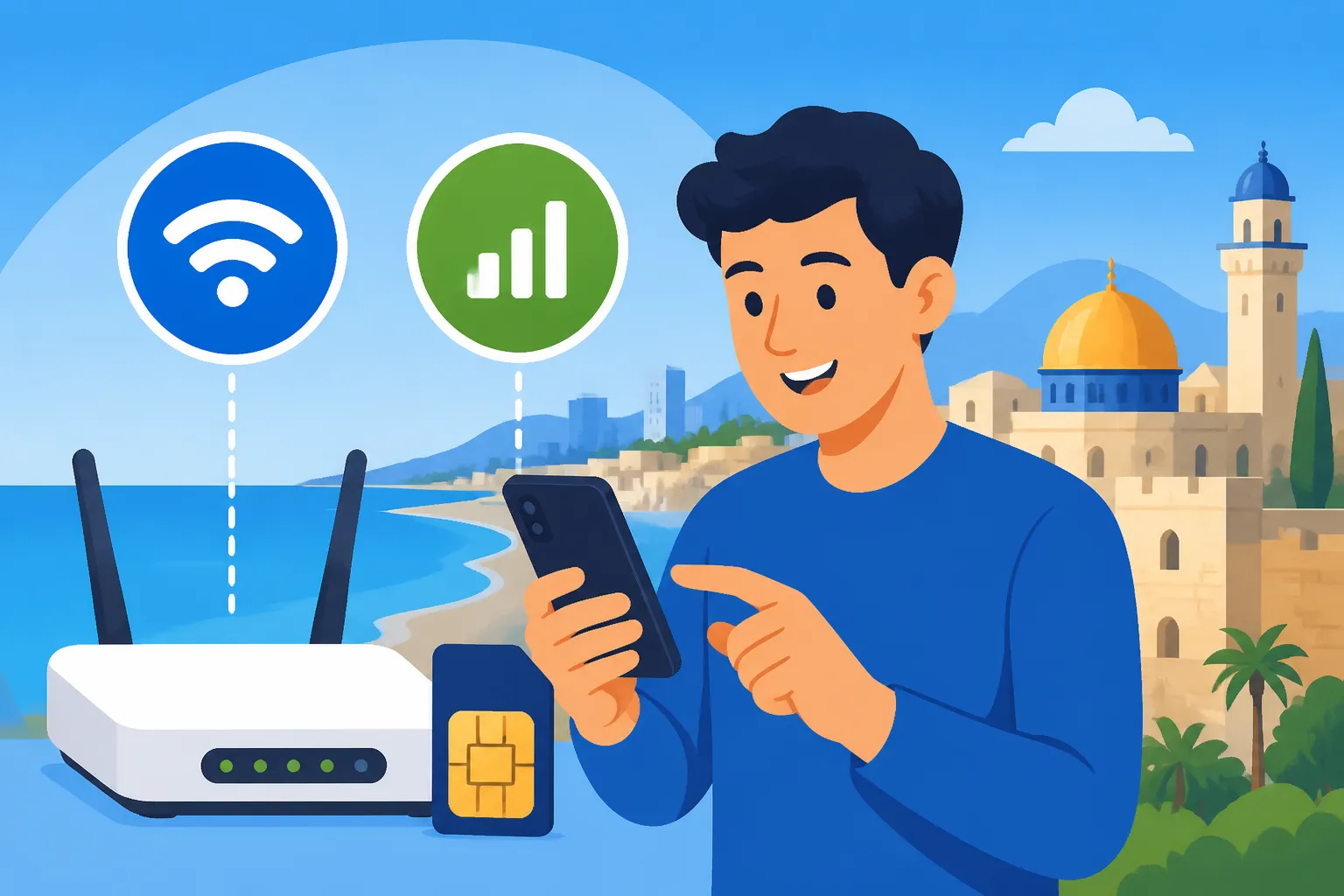
This is where things get truly unique and often confusing for expats. Unlike many countries where one company provides both the physical line and the internet service, Israel operates on a two-tiered system for fixed-line internet (ADSL/VDSL or fiber optics).
First, you need an infrastructure provider (תשתית – tashtit). These are the companies that own the physical cables and lines running into your building and home. Historically, this was primarily Bezeq (for DSL/VDSL) and HOT (for cable internet). Now, fiber optic networks are rapidly expanding, with Partner and Cellcom becoming significant infrastructure players alongside Bezeq Fiber.
Second, you need an internet service provider (ספק – sapak). These companies buy bandwidth from the infrastructure providers and then sell you the actual internet access, IP address, and customer support. You can choose from dozens of service providers, including 012 Smile, 013 Netvision, Partner, Cellcom, and many others.
This means you pay two separate bills for your home internet: one to your infrastructure provider and one to your service provider. Often, companies will try to sell you a "bundle" that includes both, but it's important to understand you're still dealing with two entities, and if you have a problem, you might need to troubleshoot with both. It's a bureaucratic dance that takes some getting used to.
Getting Your Mobile Service Sorted
Your phone is your lifeline. From navigating unfamiliar streets to staying in touch with family back home, getting mobile service quickly is a top priority.
SIM Cards vs. eSIMs: Your First Connection
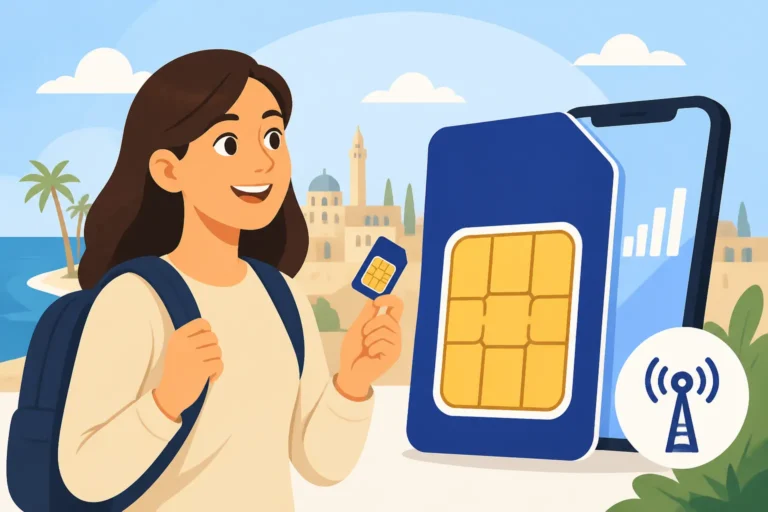
As soon as you land, you'll want to get connected. For short-term visitors or new arrivals waiting for their paperwork, eSIMs are a godsend. Companies like Airalo offer digital SIM cards that you can activate instantly on a compatible phone, giving you immediate data access without having to find a physical store or worry about your original SIM. It's a fantastic way to bridge the gap during your first few days or weeks while you get settled. This is especially useful for coordinating your move with companies like Sirelo, which might require constant communication.
For a more permanent solution, you'll likely want a physical Israeli SIM card. You have two main options:
- Prepaid SIM Cards (טוקמן – talkman or פריפייד – prepaid): These are great for initial setup. You buy the SIM, top up credit, and use it until it runs out. You don't need a contract, a Teudat Zehut (Israeli ID card), or a bank account. You can pick these up at Ben Gurion Airport, post offices, local kiosks, or dedicated phone shops. However, they tend to be more expensive per GB than contract plans and often come with usage limits after a certain period.
- Post-paid (Contract) Plans: This is what most residents use. These plans offer unlimited calls and texts within Israel, generous data packages (often 100GB or more, which is effectively unlimited for most users), and sometimes international call minutes, all for a fixed monthly fee. To get a post-paid plan, you'll typically need an Israeli ID number (even if it's just your temporary one from your Teudat Oleh or work visa) and an Israeli bank account for direct debit payments.
Major Mobile Providers and Plans
Let's look at the key players you'll encounter:
- Cellcom: One of the largest and oldest providers. They have their own robust network and often offer competitive packages, including international calls and roaming options. They have physical stores across the country, making it easier for face-to-face support.
- Partner: Another major player, also with its own infrastructure. Partner often markets itself with modern services and offers, including home internet bundles. They also have a good network of stores.
- Pelephone: The third of the big three. Pelephone was the first mobile operator in Israel. They have a solid network, and like Cellcom and Partner, they often have customer service available in English, which is a massive plus.
- HOT mobile: Part of the HOT cable company, they are a significant MVNO that often comes in with aggressive pricing, especially for data. Their customer service can be a bit more challenging to navigate for non-Hebrew speakers, but the prices are hard to beat for many.
- Golan Telecom: Known for revolutionizing the Israeli mobile market with extremely low prices, Golan Telecom (now under Cellcom's network) still offers very competitive plans, often with generous data and international call packages.
- Rami Levy Communications: An MVNO operating on Pelephone's network, associated with the popular supermarket chain. They are known for straightforward, affordable plans, and you can often get assistance at Rami Levy supermarkets.
When choosing a plan, always consider:
- Data allowance: Most plans offer generous data, but double-check if you're a heavy user.
- International calls: If you frequently call abroad, look for plans that include international minutes or have good rates for them.
- Customer service: Do they offer support in English? This can be a deal-breaker.
- Contract length and cancellation policy: While many plans are "month-to-month" without a long-term commitment, always confirm cancellation procedures.
Navigating Contracts and Customer Service
Signing up for a mobile contract will usually require your Teudat Zehut (or temporary ID number) and your Israeli bank details. You'll likely need to set up a Horaat Keva (direct debit) for monthly payments. If you're still in the early stages of your move and don't have a Teudat Zehut, our guide on How to Get a Teudat Zehut and Tax File Number in Israel might be useful.
Customer service can be a bit of a maze. While the major companies often have English-speaking representatives, reaching them can sometimes require patience or navigating automated Hebrew menus. Don't be afraid to ask a Hebrew-speaking friend for help or to physically go to a store if you’re struggling. Always keep a record of your plan details, contract number, and any customer service interactions.
Setting Up Home Internet
Getting home internet in Israel means understanding the unique two-provider system. It's not as simple as calling one company.
The "Two-Provider" System Explained
As mentioned, this is the most common point of confusion. Let's break it down further:
-
Infrastructure Provider (Tashtit): This is the foundation. They lay the cables (copper for DSL, coaxial for cable, or fiber optic lines) to your building and apartment. You pay them for the access to their physical network.
- Bezeq: The national telecom company. Primarily offers DSL/VDSL over copper lines, but has a rapidly expanding fiber optic network (Bezeq Fiber). If your building has Bezeq fiber, it's often the fastest option.
- HOT: The main cable company. They offer internet over coaxial cables, which often performs well. They are also expanding their fiber network.
- Partner and Cellcom: While primarily mobile operators, they have heavily invested in their own fiber optic infrastructure. If your building is wired for Partner or Cellcom fiber, these are excellent choices for speed and reliability.
-
Internet Service Provider (Sapak): This is who you pay for the internet service itself. They "rent" the bandwidth from the infrastructure provider and sell it to you.
- 012 Smile, 013 Netvision, Partner, Cellcom, HotNet, Bezeq International, and many more: You have a huge selection here. The key is to find one that offers good service, competitive pricing for your desired speed, and decent customer support. Often, your infrastructure provider will also have its own service provider arm (e.g., Bezeq International for Bezeq infrastructure, HotNet for HOT infrastructure), and they will try to sell you a combined package.
So, for example, you might have Bezeq as your infrastructure provider and 012 Smile as your service provider. Or HOT infrastructure with HotNet service. The combinations are endless!
Choosing Your Infrastructure and Service Providers
Here's how to approach this:
- Check Your Building's Infrastructure: This is the first and most crucial step. When you move into a new apartment, ask your landlord or previous tenants what infrastructure is already installed.
- Is it wired for Bezeq DSL/fiber?
- Is it wired for HOT cable/fiber?
- Does it have Partner fiber or Cellcom fiber?
- Some buildings have multiple options, giving you more flexibility. Newer buildings are often pre-wired for fiber optics from one or more providers, offering significantly faster speeds.
- Decide on Speed: What do you need? For casual browsing and email, 100-200 Mbps is fine. For streaming 4K, gaming, or working from home with video calls, you'll want 300 Mbps or more. Fiber optic connections can offer gigabit speeds (1000 Mbps).
- Compare Bundles vs. Separate Contracts:
- Bundles: Many companies will offer you a single price for both infrastructure and service (e.g., "Bezeq fiber + Bezeq International service"). This simplifies billing but might not always be the cheapest option.
- Separate Contracts: You can call Bezeq (or HOT, Partner Fiber, Cellcom Fiber) for the infrastructure and then call a completely separate service provider like 012 Smile. This allows you to mix and match for the best price, but requires two separate contracts and bills.
- Look for Expat-Friendly Providers: Some providers are better at catering to English speakers. Partner and Cellcom are generally good in this regard. When setting up your bills, our guide on The Expat Guide to Opening a Bank Account in Israel will be useful, as you'll need a local bank account for direct debits.
A key thing to remember when coordinating your move to Israel is that services like internet setup often take time. Using a professional relocation service like Sirelo can sometimes help streamline such processes, as they might have local contacts or knowledge to expedite connections.
Installation and Troubleshooting
Once you've chosen your providers, here's what to expect:
- Installation Appointment: For new connections or upgrading to fiber, a technician from the infrastructure company (e.g., Bezeq, HOT, Partner Fiber) will need to come to your apartment to install the modem and ensure the line is active. This can take anywhere from a few days to a few weeks to schedule, especially in peak seasons. Be prepared for potential delays.
- Modem and Router: The infrastructure provider usually supplies the modem. You might need to buy your own Wi-Fi router, or you can often rent one from them for an additional monthly fee. Consider buying a good quality router, as it significantly impacts your Wi-Fi performance.
- Activation: After the technician leaves, you might need to call your service provider to activate the internet. They will give you login details for your modem.
- Troubleshooting: If your internet goes down, you'll first need to determine if the problem is with the infrastructure or the service. If your modem lights are off or red, it's likely an infrastructure issue – call Bezeq or HOT. If the modem lights are normal but you can't get online, it's probably a service provider issue – call your sapak. This is where the two-provider system can be frustrating.
Practical Tips for Expats
Navigating the Israeli telecom world requires patience and a few tricks up your sleeve.
Language Barrier and Support
This is arguably the biggest hurdle.
- English-speaking hotlines: Many of the larger companies have options for English customer service. Listen carefully to the automated menus (often press '9' for English).
- Local friends: Don't hesitate to ask a Hebrew-speaking friend or colleague for help, especially with complex issues or cancellations.
- In-store visits: Sometimes, a face-to-face visit to a branch, particularly in cities like Tel Aviv or Jerusalem with large expat populations, can be more effective than phone calls.
Essential Documents
For setting up post-paid mobile plans or home internet contracts, you'll generally need:
- Teudat Zehut (Israeli ID card) or your temporary ID number from your Teudat Oleh or work visa. For the early days after Aliyah, understanding The Complete Guide to Making Aliyah: Your First 90 Days in Israel (2026) can give you context on obtaining these documents.
- Israeli Bank Account Details: For direct debit payments (Horaat Keva). This is crucial for monthly billing.
- Proof of Address: Sometimes requested, especially for new home internet installations. Your rental contract (Chozeh Schirut) or a utility bill might suffice. You can also refer to our guide on How to Register Your Address at the Misrad HaPnim in Israel for official address registration.
Managing Your Bills and Contracts
Israeli companies love direct debits. Make sure you set this up with your bank so you don't miss payments. You can often manage your account and view bills online through the provider's website or app. Remember to check your bills periodically to ensure you're being charged correctly, as promotional prices can sometimes revert to higher rates after a year.
Cancellation is a process. If you decide to switch providers, do not assume your old service will automatically cancel. You almost always need to actively call and cancel your old contract, giving them notice as per your agreement. This can be another point of frustration, as companies may try to retain you with new offers. Be firm and clear about your intention to cancel.
Comparing Your Options: Mobile and Internet at a Glance
To give you a clearer picture, here’s a simplified comparison of typical offerings. Remember, prices and specific plans change frequently, so these are just illustrative averages.
| Service Type | Provider (Examples) | Typical Monthly Cost (NIS) | Key Features / Notes |
|---|---|---|---|
| Mobile (Post-paid) | Cellcom, Partner, Pelephone | 35 – 70 | Unlimited local calls/SMS, 100GB+ data (often effectively unlimited), sometimes international minutes. Stable networks, good coverage. Pricing depends heavily on current promotions. |
| HOT mobile, Golan Telecom, Rami Levy Communications | 25 – 50 | Highly competitive prices, very large data packages. May use partner networks. Customer service can be more challenging for non-Hebrew speakers, but often worth it for the price. | |
| Home Internet (Fiber) | Infrastructure: Bezeq Fiber, Partner Fiber, Cellcom Fiber Service: 012 Smile, 013 Netvision, HotNet etc. |
80 – 150 (Tashtit) + 20 – 50 (Sapak) = 100 – 200 total | Speeds from 300 Mbps to 1 Gbps. Requires fiber optics installed in your building. Offers the fastest, most reliable connection. Total cost depends on bundle vs. separate providers and speed. |
| Home Internet (DSL/Cable) | Infrastructure: Bezeq (DSL), HOT (Cable) Service: 012 Smile, 013 Netvision, HotNet etc. |
60 – 100 (Tashtit) + 20 – 40 (Sapak) = 80 – 140 total | Speeds up to 100-200 Mbps. More widely available in older buildings. Can be less stable than fiber, especially during peak hours. Good for general use but might not be enough for heavy streaming/gaming for multiple users. |
Note: Prices are approximate and subject to change. Always check the latest offers directly with providers.
Setting up your internet and mobile in Israel might test your patience, but by understanding the system, knowing your options, and being prepared with the right documents, you'll be connected in no time. Whether you choose the immediate convenience of an eSIM like Airalo or dive into the competitive local market, remember that perseverance is key.
Disclaimer
The information provided in this guide is for general informational purposes only and does not constitute professional advice. While we strive to keep the information up-to-date and accurate, telecom policies, pricing, and regulations in Israel can change frequently. Readers are advised to verify all information directly with service providers, the Israel Tax Authority, or relevant government bodies. Individual experiences may vary.