Understanding Toll Roads (Kvish 6) and the Highway System in Israel
Driving in Israel can feel like a high-stakes game of Tetris, especially when you’re a newcomer trying to figure out the nuances of the roads. The Israeli highway system is efficient, yes, but it’s also brimming with its own set of rules, cultural quirks, and, perhaps most notably, a fascinating electronic toll road known as Kvish 6 (Highway 6). This guide will peel back the layers of Israel’s major roadways, with a special focus on Kvish 6, helping you navigate the system like a seasoned local.
Navigating Israel's Major Highway Network
Getting around Israel by car is often the most convenient way to explore, especially once you venture outside the major city centers that are well-served by public transport. However, it's not simply a matter of getting behind the wheel and going. Understanding the highway system, road etiquette, and the unique challenges can save you a lot of headaches, and potentially, a lot of fines.
The Backbone: National Routes and Regional Roads
Israel's road network is surprisingly comprehensive for a country of its size. You'll primarily encounter national routes and regional roads, each with their own numbering system that can sometimes feel a bit haphazard if you're used to more linear systems.
National routes, often signified by single or double-digit numbers, are the major arteries connecting cities and regions. Highway 1, for instance, is the main conduit between Tel Aviv and Jerusalem, a bustling, multi-lane road that can feel like a racetrack during peak hours. Then there's Highway 2, the picturesque Coastal Road, stretching along the Mediterranean from Tel Aviv northwards towards Haifa. These are the roads you'll spend most of your time on for intercity travel.
Regional roads, typically marked with three-digit numbers, branch off the national routes and connect smaller towns, settlements, and rural areas. While these are generally less frantic than the national highways, they can still present their own challenges, such as narrower lanes, less consistent signage, and sometimes a surprising amount of traffic for what seems like a minor road.
The traffic itself is an experience. Israelis drive with a certain… assertiveness. Lanes can feel like suggestions, especially when merging, and the concept of personal space in traffic is often non-existent. You'll quickly learn that hesitation is seen as a weakness, and if you don't push your way in, you might be stuck for a while. It’s not malicious, just a different style. Be prepared for rapid acceleration, sudden braking, and a constant symphony of honking – not always in anger, sometimes just as a friendly "hello, I'm here!" warning. Speed cameras are ubiquitous, however, so while the driving style might seem aggressive, authorities are certainly trying to keep a lid on excessive speeding.
General Driving Culture and Rules for Expats
As an expat, adapting to Israeli driving culture is crucial. It’s not just about knowing the rules, but understanding the unspoken codes. For starters, patience is a virtue, but assertiveness is a necessity. Don't be afraid to use your horn to signal your presence, but don't overdo it. High beams are often used to signal "move over" on multi-lane highways, though they're technically meant for low-visibility conditions. It's a dance you'll learn with time.
Speed limits are generally 50 km/h in urban areas, 80-90 km/h on intercity roads, and up to 110-120 km/h on highways like Kvish 6 or parts of Highway 1. However, these limits are often treated as guidelines rather than strict laws by many drivers. That said, traffic enforcement is increasingly strict, with speed cameras (often unmarked) and police patrols becoming more common. Ignore them at your peril, because tickets in Israel can be hefty.
Roundabouts are plentiful, and the rule here is similar to most of Europe: yield to traffic already in the roundabout. However, it’s not uncommon for drivers to enter aggressively, so always be on alert. Navigating these can be particularly challenging in smaller towns where the lanes leading into and out of the roundabout might not be clearly marked.
One of the most important things you’ll need to do if you plan on driving long-term in Israel is to convert your foreign driving licence in Israel. This isn't just a legal requirement; it ensures you're fully integrated into the system and avoids potential issues with insurance or law enforcement. And speaking of bureaucracy, ensure you stay on top of other administrative tasks too, like registering your address with the Population Authority in Israel, as this can impact various aspects of your life, including vehicle-related matters.
Kvish 6 (Highway 6): Israel's Electronic Toll Road
Now, let's talk about the beast of the bunch: Kvish 6, often referred to as "Derech Eretz" (literally "Way of the Land," also the name of its operating company). This isn't just another highway; it's a game-changer for north-south travel in Israel, and understanding how it works is vital for any driver here.
What is Kvish 6 and How it Works?
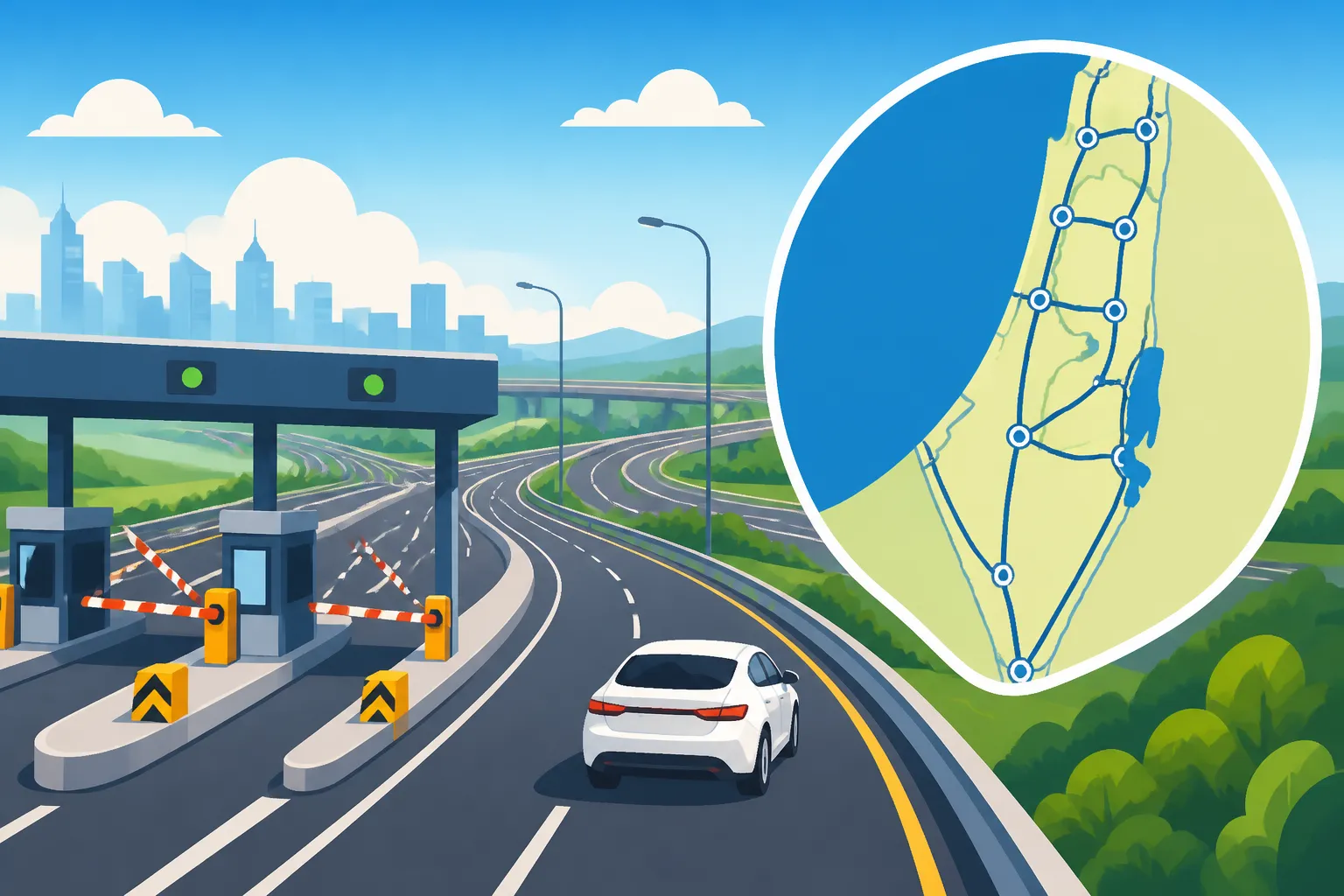
Kvish 6 is Israel's main electronic toll road, effectively a superhighway designed to bypass the often-congested central coastal plain. It stretches for well over 100 kilometers, extending from the northern Galilee region all the way down to the northern Negev. Its primary purpose is to offer a faster, more direct route for intercity travel, saving considerable time, especially during peak hours, by avoiding the countless traffic lights and slower speeds of other major routes.
What makes Kvish 6 unique is its complete lack of physical toll booths. Forget fumbling for change or waiting in long lines. Instead, the entire system operates on a "free-flow" model, utilizing advanced camera technology to read your vehicle's license plate as you enter and exit different segments of the highway. This means you just drive on and off, and the system automatically calculates your toll based on the distance traveled and the specific entry/exit points.
This seamless process is incredibly convenient, but it also means there's a crucial step involved: you need to understand how the billing works, or better yet, register your vehicle beforehand. If you don't, you'll still get a bill, but it might arrive later, potentially incurring higher fees or making payment more cumbersome. For a country that sometimes feels like it still runs on paper forms and stamps, Kvish 6 is surprisingly high-tech, which can be a double-edged sword if you're not prepared.
Registration Options and Billing for Kvish 6
Navigating the payment system for Kvish 6 is where many expats initially stumble. There are essentially two main ways to handle payment:
1. Automatic Billing (Subscription): This is by far the most convenient and recommended method for anyone who plans to use Kvish 6 regularly or even occasionally. You register your vehicle with the operating company, Derech Eretz (or the relevant northern sections operator), providing your vehicle's license plate number and your payment details (usually a credit card or direct debit from an Israeli bank account). Once registered, the system automatically bills you for your trips. You'll receive monthly statements, often via email, detailing your usage and the charges. This way, you don't have to worry about missing payments or incurring late fees.
2. One-Time Payment / Pay-As-You-Go: If you use Kvish 6 without prior registration, the cameras will still record your license plate. A bill will then be sent to the registered owner of the vehicle. For private vehicles, this means it goes to your address registered with the Ministry of Transport. For rental cars, the bill goes to the rental company, which will then typically add an administrative fee on top of the toll cost and charge it to your credit card. This method is less ideal because:
* Bills can take time to arrive, sometimes weeks or even months.
* If your address isn't updated, the bill might go missing, leading to fines.
* The administrative fees from rental companies can add up.
* It generally costs more per trip than if you have a subscription.
How to register your vehicle: You can typically register online through the Derech Eretz website (derecheretz.com) or by calling their customer service. You'll need your Israeli ID number (Teudat Zehut), vehicle registration details, and payment information. If you've just moved to Israel and are still getting your ducks in a row with your Teudat Zehut and other paperwork, remember to get everything in order promptly, as things like registering your vehicle and transferring ownership in Israel will depend on it.
It's crucial to register promptly, especially if you've just bought a car. If you don't, you might find yourself facing escalating charges. The system is designed to encourage registration, and the fines for delayed payment are not trivial.
Here's a quick comparison of the registration options:
| Feature | Automatic Billing (Registered Account) | One-Time Payment (Unregistered) |
|---|---|---|
| Convenience | High, automatic charges | Low, requires manual payment/waiting for bill |
| Cost Per Trip | Generally lower, often with discounts | Higher, plus potential admin fees (rentals) |
| Billing | Monthly statement via email | Physical bill mailed to registered owner |
| Risk of Fines | Low, if payment method is valid | High, if bill is missed or delayed |
| Best For | Regular users, private vehicle owners, expats | Infrequent users, short-term rentals (with caveats) |
For expats new to the country, this entire process can feel like another layer of administrative burden. It's often the small, recurring tasks like this, or even getting your utilities set up in Israel, that can be surprisingly time-consuming and frustrating due to language barriers or unfamiliar systems.
Understanding Kvish 6 North and Fast Lane 2000
Beyond the main Kvish 6 segment, the Israeli highway system also features extensions and specialized toll lanes that are worth understanding. These help further alleviate traffic congestion, particularly around the heavily populated central region.
Kvish 6 North: The Extensions and Differences
While the original Kvish 6 is a long, continuous stretch, the northern part has seen significant expansion. "Kvish 6 North" or "Road 18" (its official name) extends the high-speed corridor deeper into the Galilee region, connecting areas like Somech and Shlomi. The aim here is to provide seamless, fast travel from the far north down to the center and south, truly making it a national artery.
The operating principle for Kvish 6 North is largely the same as the main Kvish 6: electronic tolling via license plate recognition. However, it's worth noting that the northern sections are managed by a slightly different consortium or entity, though they generally strive for a unified billing experience with Derech Eretz. This means that if you're registered with Derech Eretz, your usage on Kvish 6 North will typically be included in your regular monthly statement. Always double-check with the respective operators or your account to ensure comprehensive coverage, especially if you're a heavy user of these northern extensions.
These extensions are vital for regional development and for people living outside the central bubble. For expats considering living outside of Tel Aviv or Jerusalem, perhaps in a place like Haifa or Netanya, Kvish 6 North becomes an integral part of your travel plans, making visits to family or work in the center much more feasible. It's one of those infrastructures that significantly impacts the perceived distances and accessibility across the country.
Fast Lane 2000 (Netiv Plus) and Other Toll Sections
Beyond the north-south expanse of Kvish 6, there's another crucial piece of toll road infrastructure, particularly for those commuting into the bustling metropolis of Tel Aviv: the Fast Lane (Netiv Plus) on Highway 1. This isn't just a regular toll road; it's a dynamic pricing system designed to reduce congestion during peak hours.
Here's how the Fast Lane works: It's a special lane on the eastbound approach to Tel Aviv on Highway 1, starting near Ben Gurion Airport and extending towards the Shapirim interchange. It's unique because its toll price fluctuates in real-time based on the level of congestion. The more traffic there is, the higher the price, with the current price displayed on electronic signs before you enter. The idea is to incentivize drivers to choose other routes or public transport, or to pay a premium for a guaranteed faster commute.
To use the Fast Lane, you need to register and obtain a special transponder called a PassKal. While you can technically enter without one and get billed by plate, having the PassKal ensures you get the real-time pricing and avoid potential misunderstandings.
There's a fantastic bonus for carpoolers: If you have three or more occupants in your vehicle (including the driver), you can use the Fast Lane for free, even during peak hours! You still need a PassKal transponder for the system to identify you as a carpool, but you won't be charged. This is a huge benefit for families or colleagues commuting together.
While the Fast Lane is the most prominent dynamically-priced toll section, Israel also has other, smaller toll segments you might encounter. The Carmel Tunnels in Haifa are a prime example. These tunnels provide a quick bypass beneath the Carmel mountain, saving drivers a lot of time compared to navigating the city's surface streets. Like Kvish 6, they operate on an electronic toll system, and you can either register for automatic billing or pay by plate.
For expats, especially those living in or commuting to Tel Aviv, understanding the Fast Lane can significantly improve your quality of life by cutting down on soul-crushing traffic jams. It's an investment, both in terms of registration and potentially daily tolls, but the time saved can be invaluable. It’s also a good reminder that while Israel has a dense urban environment, there are always routes being built and adapted to handle the ever-growing population and car usage.
Costs, Fines, and Expat Considerations for Toll Roads
Let's be frank: driving in Israel can be expensive, and toll roads are an added cost that needs to be factored into your budget. It’s not just the direct toll fees, but also the potential for fines, especially if you’re not familiar with the system.
Breakdown of Toll Costs and Payment Methods
The actual cost of using Kvish 6 or the Fast Lane can vary. For Kvish 6, the cost is calculated per segment. A full north-to-south journey on the main Kvish 6 can cost anywhere from 30-50 NIS, depending on the number of segments you pass through. These prices are generally fixed, though they might see minor adjustments over time. You can usually find a detailed price list on the Derech Eretz website.
The Fast Lane, as mentioned, operates on dynamic pricing. During very congested times, the price can climb significantly, sometimes reaching 20-30 NIS or more for a single short segment. Conversely, during off-peak hours, it might be very cheap or even free (if the lane is largely empty). The digital signs before the entry point will always display the current price, allowing you to make an informed decision.
Payment methods:
- Registered Account (Recommended): If you've registered your vehicle with Derech Eretz (for Kvish 6) or the Fast Lane operator, payments are automatically deducted from your linked credit card or Israeli bank account. You'll receive a monthly invoice. This is by far the most hassle-free method.
- One-Time Online Payment: If you drove on Kvish 6 without an account, you can typically go to the Derech Eretz website, enter your license plate number, and pay the outstanding bill within a few days of your trip. This helps you avoid the delayed physical bill and potential fines.
- Rental Cars: For rental cars, the rental company will eventually charge your credit card for the tolls plus their administrative fee. This can sometimes take weeks or months to appear on your statement, which can be frustrating when you've already returned home. Always clarify the rental company's policy on toll charges when you pick up the car.
It’s truly important to manage these payments, especially as managing your finances and understanding income tax in Israel, or how to claim tax credit points, is already a significant learning curve. Adding unexpected driving fines into the mix is something you definitely want to avoid.
Avoiding Penalties and Common Expat Pitfalls
The biggest pitfall for expats using Kvish 6 and other toll roads is simply forgetting about them, or not understanding the billing process. Since there are no physical toll booths, it's easy to drive on, enjoy the smooth ride, and then forget that a bill is coming.
Here's how to avoid penalties:
- Register your vehicle: If you own a car, take the few minutes to register it for automatic billing. It’s a one-time effort that saves endless hassle.
- For rental cars, be proactive: Ask the rental company explicitly about their Kvish 6 and Fast Lane policy. Some offer daily toll packages; others simply pass on the cost plus an admin fee. Document their explanation. Consider doing a quick online search for your rental car's license plate on the Derech Eretz website a week or two after your trip to see if any tolls have appeared, and if you can pay them directly before the rental company gets to it.
- Keep your address updated: If you move, remember to update your address with the Ministry of Transport and the Population Authority. If a physical bill is sent to an old address and you don't receive it, the fines will still accrue.
- Check online regularly: Even if you have an automatic account, it's good practice to log in every few months to ensure everything is being charged correctly and your payment method is still valid.
Unpaid tolls can quickly escalate into significant fines. Derech Eretz, for example, is not shy about adding penalties for late payments. These fines are legally enforceable and can even impact things like your ability to renew your annual vehicle test. As part of managing your new life, you'll find that managing other utilities in Israel, like electricity (Chevrat HaChashmal), also require diligent tracking of bills, making you no stranger to this administrative challenge. For instance, How to Set Up Electricity Chevrat HaChashmal in Your Israeli Home might feel just as complex.
Beyond the actual driving, having reliable navigation is key. Apps like Waze (an Israeli invention, of course!) and Google Maps are invaluable for real-time traffic updates and often show toll estimates. To make sure you’re always connected on the go, consider picking up a local SIM card or an eSIM like Airalo. This will ensure your navigation never cuts out when you most need it, whether you're battling the Tel Aviv rush hour or trying to find a quiet spot in the Negev.
Strategic Planning Your Drives: Public Transport & Alternatives
Driving in Israel, especially using toll roads, is a choice. Sometimes it’s the best choice, but it’s crucial to weigh the benefits against the costs and consider alternatives.
Weighing the Benefits: Time Savings vs. Cost
Kvish 6, the Fast Lane, and the Carmel Tunnels all exist for one primary reason: to save you time. In a country where traffic congestion is a growing problem, particularly around the central region, these roads can drastically cut down your travel duration.
- When Kvish 6 is worth it: If you're traveling a significant north-south distance, say from Be'er Sheva to Hadera, during peak hours (morning and evening commutes), Kvish 6 is almost always worth the toll. It can shave off 30-60 minutes or more compared to older, more congested routes. For business travelers or those with tight schedules, the time savings often outweigh the cost.
- When it might not be: For shorter distances, or if you're traveling during off-peak hours (middle of the day, late night, Saturdays/holidays when traffic is generally lighter), the time savings might be minimal, and the toll might feel like an unnecessary expense. For instance, if you're only going one or two segments, the old roads might not add much time.
The cost can certainly add up, especially if you're not registered and are paying higher, non-subscription rates. For families, these costs accumulate rapidly. It’s part of the wider picture of the cost of living in Israel for expats, where every shekel spent on transport, housing, and groceries needs careful consideration.
Ultimately, the decision to use a toll road comes down to your personal priorities: is your time more valuable than the monetary cost? For many, especially when navigating a new country, reducing stress and travel time makes the toll worthwhile.
Public Transport as a Viable Alternative
While this guide focuses on driving, it would be remiss not to mention Israel's increasingly robust public transport system as a viable alternative. Especially in and between major cities, buses and trains can often be a stress-free and cost-effective way to travel, completely sidestepping the complexities of toll roads and parking.
Israel Railways (Rakevet Yisrael) offers comfortable and efficient train services connecting many major cities, including Tel Aviv, Jerusalem, Haifa, and Be'er Sheva. For shorter distances and within cities, the bus network is extensive.
The key to unlocking Israel's public transport is the Rav-Kav card. This reloadable smart card works on all buses and trains across the country, making payments simple and often offering discounted fares. If you're serious about exploring public transport, you'll definitely want to check out The Expat Guide to Public Transport in Israel to understand how to get and use this card.
For those pondering a move to Israel, the choice between bringing your car, buying one locally, or relying solely on public transport is a big one. Companies like Sirelo specialize in international moving services and can provide insights into shipping your vehicle versus other options, factoring in logistical challenges and costs.
Think strategically about your daily commute and weekend travel. For trips within Tel Aviv or Jerusalem, public transport or even walking and cycling are often faster and less frustrating than driving. For intercity travel, particularly if you're heading to areas not directly served by Kvish 6, the train might be a more relaxing option than facing the traffic on Highway 2 or 4. It's about finding the right tool for the right job, or rather, the right mode of transport for the right journey.
Tips for Smooth Driving and Roadside Assistance
Beyond understanding the toll system, a few practical tips can make your Israeli driving experience much smoother and safer.
Essential Apps and Navigation Tools
In Israel, your smartphone is your co-pilot, and you'd be lost without it. Literally.
- Waze (Google-owned, Israeli-born): This app is ubiquitous in Israel, and for good reason. It provides real-time traffic updates, accident alerts, police presence warnings (including speed cameras!), and often suggests the fastest routes, sometimes incorporating Kvish 6 or the Fast Lane. Waze is typically very accurate and often reflects the "local knowledge" of drivers.
- Google Maps: While Waze is great for daily driving, Google Maps is excellent for longer-term planning, public transport integration, and often has more detailed information about specific locations and businesses. It also offers driving directions and can show toll road options.
Both apps require a solid internet connection, which brings us to another crucial point for new arrivals: getting a reliable mobile and internet provider in Israel. A stable data plan is non-negotiable for navigation, communication, and generally navigating life here. You might consider an eSIM provider like Airalo, especially for your initial weeks or if you're traveling frequently and need flexible data plans without committing to a local contract right away. Staying connected is key to feeling less lost, both on and off the road.
What to Do in Case of a Roadside Emergency
Even the most experienced drivers can encounter issues. Knowing what to do in an emergency is crucial.
-
Emergency Numbers:
- 100: Police (Mishtera)
- 101: Magen David Adom (MDA – ambulance and emergency medical services)
- 102: Fire Department (Kaba'ut)
- 1700-70-66-70: Derech Eretz (Kvish 6) Roadside Assistance (for issues on Kvish 6 itself)
-
Breakdowns: If you experience a breakdown, try to pull over to the shoulder safely. Turn on your hazard lights. If you're on a major highway, there are often emergency call boxes at regular intervals. For rental cars, contact your rental company's emergency roadside assistance number, which should be provided with your rental agreement. For private vehicles, you'll need to call your roadside assistance provider if you have one, or a local towing service.
-
Accidents: If you're involved in an accident, ensure everyone's safety first. Move to the side of the road if possible and safe. Call 100 for police, especially if there are injuries or significant damage. Exchange insurance details with the other driver(s) and take photos of the scene, vehicle damage, and license plates. If you don't speak Hebrew, ask for an English-speaking officer or passerby to assist. Remember, a cool head is your best tool in these situations.
Driving in Israel, particularly on its efficient yet sometimes chaotic highway system, is an adventure. Mastering Kvish 6 and the Fast Lane is an integral part of becoming a truly local driver. With a bit of preparation, patience, and the right digital tools, you’ll be cruising confidently in no time.
Disclaimer
The information provided in this guide is for general informational purposes only and does not constitute legal, financial, or professional advice. While we strive to keep the information up-to-date and accurate, regulations and procedures in Israel can change frequently. Always consult with relevant authorities, legal professionals, or service providers for the most current and specific advice tailored to your situation.