How Do I Get an Israeli Driving Licence from Scratch?
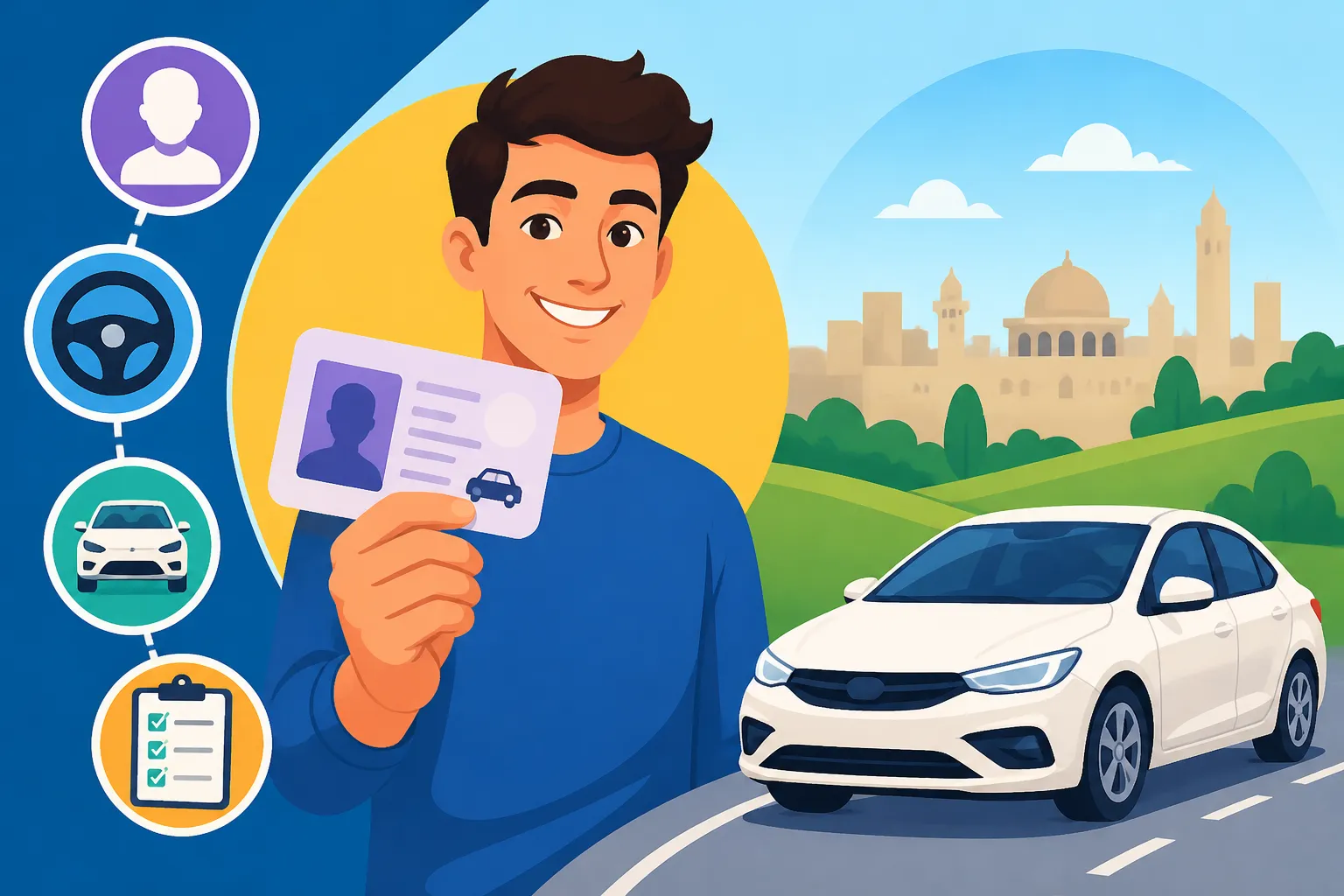
Getting around in Israel without your own set of wheels can feel incredibly limiting, especially if you're used to the freedom of driving back home. While the public transport system is comprehensive in many areas, if you're looking to truly explore the country, manage daily errands with ease, or simply enjoy the independence, getting an Israeli driving licence from scratch is a significant journey many of us expats eventually embark on. It's a process, to say the least, filled with paperwork, patience, and sometimes, a bit of unexpected bureaucracy, but with this guide, you’ll be well-equipped to navigate every turn.
The Initial Hurdles: Eligibility and First Steps at Misrad HaRishui
Before you even think about getting behind the wheel, there are a few foundational steps you absolutely must take. This isn't just about proving you're old enough; it's about getting yourself registered in the system, which, in Israel, often feels like a rite of passage for every new arrival.
Meeting the Age and Health Requirements
First off, let's talk about age. To obtain a Category B (private vehicle) driving licence in Israel, you need to be at least 16 years and 9 months old to start lessons, and 17 years old to take the practical test. So, if you're still a teenager looking for that first taste of freedom, Israel offers a relatively early start compared to some other countries.
Beyond age, you need to be deemed medically fit to drive. This involves an eye test and a health declaration. The health declaration is usually a self-assessment, but in some cases, particularly if you have certain medical conditions, you might need a doctor to sign off on it. Don't gloss over this part; honesty is the best policy here for everyone's safety on the road.
Navigating the Misrad HaRishui and the "Green Form"
Your first major interaction will likely be with the Ministry of Transport, known locally as Misrad HaRishui, or what many of us would simply call the DMV. This is where the magic (or sometimes, the headache) begins. You need to obtain a document called the "Green Form" (Tofes Yarok), officially known as the "Application for a Driving Licence" (Bikush Le'Rishayon Nahiga). This isn't just a piece of paper; it’s your golden ticket to starting the process.
You can usually get this form at a licensed optometrist's office or certain medical centres. When you go, you'll need to bring your Teudat Zehut (Israeli ID card) or another valid identification document, like your Teudat Oleh if you're a new immigrant. This step is critical, as it combines your eye test results with your initial health declaration. The optometrist will perform the eye test, check your vision (including colour perception), and then stamp the form. They might also ask you about your general health, existing medical conditions, and medications. Be prepared for some waiting, as these offices can get busy, so make sure your phone is charged and maybe load up on entertainment via an eSIM from a provider like Airalo to pass the time. Once the optometrist has completed their part, they'll often electronically submit your form to the Misrad HaRishui. This step formalizes your application and allows you to move on to the theory test.
The frustration of dealing with bureaucracy in Israel is a common expat experience, and the Misrad HaRishui is often where many first encounter it. Don't be surprised if you need to visit the office more than once, or if you encounter language barriers. Patience and a good sense of humor are your best allies here. Having your Teudat Zehut is essential for almost any administrative task in Israel, including this one, so ensure you have yours in hand. For more guidance on this crucial identification, consider reading our guide on [How to Get a Teudat Zehut].
The Learning Curve: Theory, Driving School, and Practical Lessons
Once you’ve cleared the initial bureaucratic hurdles and have your Tofes Yarok registered, it’s time to hit the books and then, eventually, the road. This phase is where you gain the knowledge and practical skills necessary to become a safe and competent driver in Israel.
Mastering the Theory Test (Test Teoriti)
The theory test, or Test Teoriti, is your first major examination. It’s a multiple-choice computer-based test covering Israeli traffic laws, road signs, and safe driving practices. Many expats find this test challenging, not necessarily because the material is overly complex, but due to the potential language barrier and the specific phrasing of questions.
The test can be taken in several languages, including Hebrew, Arabic, English, Russian, French, and Amharic. If your Hebrew isn't yet fluent – and for many new arrivals, it's a significant hurdle – taking it in English is a perfectly valid option. However, even the English translation can sometimes be a bit clunky or unclear, so it’s wise to study using resources specifically designed for the Israeli theory test, ideally in English. There are numerous apps and websites available, some specifically tailored to help English speakers prepare. Look for practice tests that mimic the official format and question style. These resources are invaluable for getting familiar with the specific quirks of Israeli road rules and how they’re articulated in the test.
Booking the test is usually done online or through designated test centres. You’ll need to pay a fee, and then you can select a time slot that works for you. Don't underestimate this test; it requires dedicated study. Even if you're an experienced driver from another country, Israeli traffic laws have their nuances that you need to learn. Understanding the nuances of Learning Hebrew: A Complete Guide to Ulpan and Language Levels might even indirectly help you grasp some of the Hebrew signs and everyday driving instructions, making your life easier.
Finding the Right Driving School and Instructor
After passing your theory test, the next monumental step is finding a driving instructor and enrolling in practical lessons. In Israel, it’s mandatory to take a minimum number of lessons with a certified driving instructor. For a Category B licence, the current requirement is 28 lessons. Each lesson typically lasts 40 minutes.
Finding the right instructor is crucial, especially as an expat. You’ll want someone who is patient, experienced, and, ideally, speaks English well enough to explain concepts clearly and provide constructive feedback. A good rapport with your instructor can make a world of difference in your learning experience. Word-of-mouth recommendations are often the best way to find a suitable instructor. Ask other expats in your community for their suggestions. Don't be afraid to try a lesson or two with different instructors before committing to one. The cost of lessons can vary, but expect to pay anywhere from ₪120-₪180 per lesson. This can quickly add up, so factor it into your budget when considering The Complete Guide to Cost of Living in Israel for Expats.
Once you start lessons, your instructor will also help you obtain your student driver permit (known as Rishayon L’Midat Nahiga), which allows you to drive with a qualified instructor.
The Art of Practical Driving Lessons
Practical lessons are where you learn to apply the theory to real-world driving situations. Israeli roads can be… an experience, to say the least. You’ll encounter everything from assertive drivers and sometimes unclear road markings to unique parking challenges. Your instructor will teach you the fundamentals: how to start, stop, change gears (if driving manual), parallel park, reverse park, perform U-turns, and navigate various traffic scenarios.
Beyond the official curriculum, a good instructor will also give you insights into the unwritten rules of Israeli driving – when to be assertive, how to anticipate common manoeuvres from other drivers, and the general flow of traffic. It's a blend of strict adherence to rules and a dash of "go with the flow." These lessons are also about building your confidence and reflexes, preparing you for the practical test. Remember, the goal isn't just to pass the test, but to become a safe and confident driver in Israel's unique driving environment.
Throughout your lessons, it's wise to practice as much as possible, if you have access to a vehicle and a licensed driver willing to supervise. This hands-on experience, even outside of formal lessons, can significantly boost your skill and confidence.
The Grand Finale: The Test, Licensing, and What Comes Next
You've studied, you've practiced, you've endured the bureaucracy – now comes the moment of truth: the practical driving test. And after that, the sweet reward of an Israeli driving licence, alongside some important rules for new drivers.
The Practical Driving Test (Test Ma'asi)
Once your instructor feels you are ready and you've completed the minimum required lessons, they will apply for your practical driving test, known as the Test Ma'asi or simply "the test." This is where the waiting game often begins. Test slots can be limited, and depending on your area, you might face a wait of several weeks, or even a couple of months. This can be one of the most frustrating parts of the process. Your instructor will typically book the test for you, and they will accompany you to the testing centre on the day.
The test itself is usually around 20-30 minutes long. You'll drive in your instructor's car, and a Ministry of Transport examiner will sit beside you, assessing your driving skills, adherence to traffic laws, and overall control of the vehicle. They'll ask you to perform various manoeuvres, such as parallel parking, reverse parking into a bay, three-point turns, and driving on different types of roads – urban, main roads, and sometimes even a quick highway stretch. They’re looking for smooth, confident, and safe driving. Don't forget your mirrors, indicate properly, and pay close attention to road signs, pedestrians, and other drivers. The examiner isn't there to trick you, but they are assessing whether you can handle the complexities of Israeli roads safely and independently.
The Moment of Truth: Passing and Getting Your Licence
If you pass, congratulations! Your examiner will inform you immediately. It's a huge relief and a moment to celebrate. You'll then receive a temporary driving licence (often just a printed paper) from your instructor or the examiner on the spot. This temporary licence allows you to drive immediately, but it typically has a validity of a few months.
Within a few weeks, your official plastic driving licence card will be mailed to your registered address. Ensure your address with the Population and Immigration Authority (Misrad HaPnim) is up-to-date. For more on this, you might find our guide on Registering Your Address with the Population Authority in Israel helpful. The permanent card will arrive, and then you’ll finally hold that tangible proof of your driving freedom in Israel!
If, unfortunately, you don't pass, the examiner will explain why. It’s disheartening, but it’s not the end of the road. You'll need to schedule additional lessons with your instructor to work on the areas where you fell short and then re-apply for another test. There's usually a minimum waiting period (often 21 days) before you can take another practical test, and each re-test incurs additional fees. Keep your chin up, learn from the experience, and try again!
What Comes Next: New Driver Restrictions
Even after passing, you're not entirely in the clear. Israel has specific restrictions for "new drivers" (nahag chadash). This status typically applies for the first two years after obtaining your licence.
During this nahag chadash period, you cannot drive with more than two passengers (unless an experienced driver, aged 24+, with at least five years of driving experience, is also in the car). This rule is in place to encourage safer driving habits among new drivers and reduce accidents. Additionally, if you're under the age of 21, for the first six months of your new driver period, you must have a licensed driver (24+, 5+ years experience) accompanying you whenever you drive. Make sure you understand these restrictions fully to avoid any fines or issues.
Finally, with your new licence in hand, you'll want to explore vehicle options. Whether it's buying a used car or understanding Driving in Israel: Licences, Registration and Rules for Expats in more detail, your driving journey has just begun.
Common Pitfalls and Pro Tips for Expats
Getting an Israeli driving licence from scratch is certainly doable, but as an expat, you might encounter specific challenges that are good to be aware of upfront. A little preparation and a lot of patience can save you a lot of stress.
Overcoming the Language Barrier
Even with the option to take the theory test in English, and with many English-speaking driving instructors available, the language barrier can still be a significant hurdle. Road signs are often in Hebrew (and sometimes Arabic and English), and understanding local driving culture often requires listening to advice that might be given in Hebrew by other drivers, mechanics, or even police officers.
Pro Tip: While your primary goal is to pass the test, try to learn the Hebrew terms for common road signs and driving instructions. Flashcards, or even just asking your instructor for the Hebrew equivalent of what they're saying, can be incredibly beneficial. This will not only help you feel more comfortable on the road but also improve your general integration. For broader language support, remember that resources like Ulpan courses are available, as detailed in Learning Hebrew: A Complete Guide to Ulpan and Language Levels.
Navigating Israeli Bureaucracy
The Israeli bureaucracy is legendary, and getting a driving licence is no exception. From multiple visits to the Misrad HaRishui to unexpected delays in scheduling tests or receiving your card, it can test your patience. Appointments are often mandatory for government offices like Misrad HaRishui, and walk-ins are increasingly rare or involve incredibly long waits.
Pro Tip:
- Be Patient and Persistent: Don't expect things to happen quickly or smoothly on the first try. Prepare for delays and accept that you might need to make multiple phone calls or visits.
- Bring ALL Your Documents: Always bring your Teudat Zehut, Teudat Oleh, passport, and any other relevant identification documents. Make copies of everything. It's better to have too much paperwork than not enough.
- Utilize Online Services: The Israeli government (Gov.il) has been working to digitize many services. Check if any part of your process can be done online, such as booking theory tests or checking your application status.
- Ask for Help: Don't hesitate to ask friends, fellow expats, or even your driving instructor for help with Hebrew forms or navigating complex instructions. Many people have been through it before and can offer valuable advice.
The Financial Investment
Getting a driving licence from scratch isn't cheap. The costs quickly accumulate:
- Eye Test/Medical Declaration: A small fee, often around ₪50-₪100.
- Theory Test: Around ₪65.
- Driving Lessons: This is the biggest expense. At 28 mandatory lessons (minimum) at ₪120-₪180 each, you're looking at ₪3,360-₪5,040 just for the basics. Many people need more than the minimum.
- Practical Test Fee: Around ₪140, plus an additional fee to your instructor for using their car and their time on test day (can be another ₪300-₪500).
- Licence Issuance Fee: Around ₪250-₪300 for the actual plastic card.
- Total: Expect the entire process to cost anywhere from ₪4,000 to ₪7,000 or more, depending on how many lessons you need.
Pro Tip: Budget for more than the minimum number of lessons. It's an investment in your safety and skill, not just a tick-box exercise. Look for instructors who offer package deals for a certain number of lessons. Consider these costs when evaluating your overall budget in The Complete Guide to Cost of Living in Israel for Expats.
Adapting to Israeli Driving Culture
This is perhaps one of the most significant adjustments. Israeli driving can be perceived as aggressive or chaotic by newcomers. There's a certain assertiveness that's common, and sometimes the rules of the road feel more like suggestions.
Pro Tip:
- Be Assertive, But Safe: Learn to merge confidently, use your indicators consistently, and maintain appropriate distances. Don't be timid, but always prioritize safety.
- Defensive Driving: Assume other drivers might not do what you expect. Be prepared for sudden stops, last-minute lane changes, and horn-honking that can mean anything from "hello" to "get out of my way."
- Parking: Prepare for tight parking spaces and ingenious (sometimes illegal) parking solutions. Practice your parallel and reverse parking religiously.
- Familiarize Yourself with Major Roads: Before you start driving independently, try to get a feel for the major routes and highways, perhaps even with your instructor or a friend. Understanding Toll Roads Kvish 6 and the Highway System in Israel will be vital once you're on your own.
Getting your Israeli driving licence from scratch is a journey, but it unlocks a new level of independence and exploration in this vibrant country. Embrace the challenge, learn from the process, and soon you'll be cruising the highways and byways of Israel. And remember, once you have your license, imagine the freedom! No more relying on others for those big errands or even a move. Speaking of moves, if you're still settling in and dealing with boxes from your initial relocation, services like Sirelo can simplify your logistics.
Disclaimer
The information provided in this guide is for general informational purposes only and does not constitute legal, financial, or professional advice. Driving laws, fees, and procedures in Israel are subject to change by relevant authorities. While we strive to keep the information up-to-date, it is always recommended to verify the latest requirements and regulations with official Israeli government sources, such as the Ministry of Transport (Misrad HaRishui) and the Ministry of Interior (Misrad HaPnim), or to consult with a qualified professional.