Understanding Sick Leave (Yemei Machala) and Medical Certificates in Israel
Moving to Israel often brings a whirlwind of new experiences, but nothing quite prepares you for the unique bureaucratic dance of the Israeli healthcare and employment systems, especially when it comes to something as universal as sick leave. If you've found yourself staring blankly at a "bilateral" (sick note) from your doctor, wondering how many days you'll actually get paid for, or even how to properly inform your employer, you're not alone. This guide will walk you through the ins and outs of Yemei Machala (sick days) and medical certificates in Israel, offering clarity and practical advice to help you navigate this essential aspect of working life here.
The Basics of Sick Leave in Israel (Yemei Machala)
Understanding sick leave in Israel, known as Yemei Machala (ימי מחלה), is crucial for any expat or new oleh working in the country. It's not just about taking a day off when you're under the weather; there are specific rules about how these days accumulate, how they're paid, and what documentation you need. The system can feel a bit convoluted at first, especially if you're used to different regulations in your home country, but once you grasp the fundamentals, it becomes much clearer.
What is Yemei Machala and Who is Covered?
At its core, Yemei Machala refers to the days an employee is absent from work due to illness or injury, for which they are entitled to receive payment, provided certain conditions are met. This isn't a discretionary benefit; it's a fundamental right enshrined in Israeli labor law, specifically the Sick Pay Law (חוק דמי מחלה). This law aims to protect employees from losing their entire income when they are too unwell to work, ensuring a basic level of financial security during periods of ill health. Almost all employees in Israel, whether full-time, part-time, or even temporary workers, are covered by this law, as long as they have an employer-employee relationship. This includes new immigrants and expats, although the initial period of employment might have some nuances regarding accrual.
The purpose of Yemei Machala is pretty straightforward: it's there to allow you to recover without the added stress of lost wages. However, the system also has safeguards to prevent abuse, which is why medical certificates become so important. For many new arrivals, the first time they encounter the term Yemei Machala might be when they receive their first pay stub or need to call in sick for the first time. It's a key component of your overall employment package and something you should be aware of from day one. Navigating the Israeli employment landscape can be tricky, and understanding your rights regarding sick leave is just one piece of the puzzle.
Accruing Sick Days: How it Works
Unlike some systems where you might be granted a fixed number of sick days at the start of each year, sick days in Israel are accrued gradually, much like vacation days. The standard accrual rate is one and a half sick days (1.5 days) for every full month of employment. This means that over a full year of employment, a worker accrues 18 sick days. This accrual continues, and unused sick days can be carried over from year to year. However, there's a cap on how many sick days you can accumulate. Generally, an employee can accrue up to a maximum of 90 sick days. Beyond this limit, no further days are accrued until the balance drops below 90.
Let's break that down with an example: If you start a new job in January and work consistently, by the end of January, you'll have 1.5 sick days. By the end of February, you'll have 3, and so on. If you fall ill after only a couple of months, you might not have many accrued days to draw upon. This system means that long-term employees benefit more from the accumulated days, providing a safety net for longer illnesses. It's important to keep track of your accrued sick days, which should typically be detailed on your monthly pay slip (tlush sachar). If you're ever unsure about your balance, don't hesitate to ask your employer or HR department for clarification. This gradual accrual is a key difference from systems where a lump sum of sick days is provided upfront, and it can catch some expats off guard.
Understanding Medical Certificates (Ishur Machala)
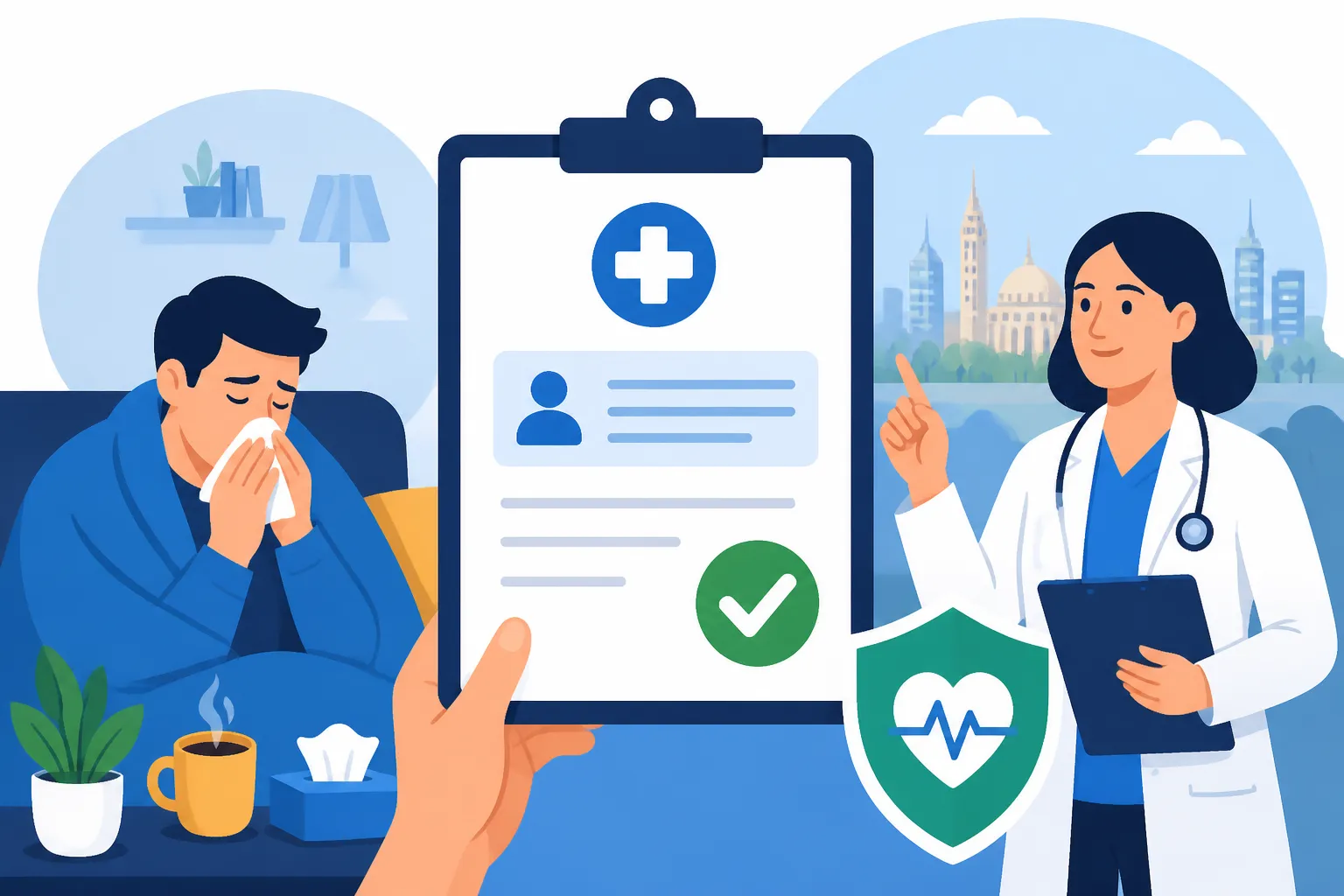
Getting sick is never fun, especially in a new country, but dealing with the administrative side of it can be even worse. In Israel, your absence due to illness often requires a Ishur Machala (אישור מחלה), commonly known as a medical certificate or sick note. This document is your official proof of illness and is critical for ensuring you receive your Yemei Machala pay. Without it, your employer might consider your absence unauthorized, and you could lose out on pay.
When Do You Need an Ishur Machala?
The need for a medical certificate kicks in relatively quickly in Israel. By law, if you are absent from work for more than one day due to illness, you generally need to provide an Ishur Machala to your employer. This means if you're only out for a single day, a simple phone call or email to your employer might suffice, depending on your company's specific policies and your relationship with your manager. However, for any absence lasting two days or more, a doctor's note is a standard requirement.
It's crucial to understand that even for a single day's absence, some employers might request a medical certificate, especially if it's a recurring issue or if there are specific company policies in place that are stricter than the minimum legal requirement. Always check your employment contract or ask your HR department about their specific sick leave policy. It's always better to be proactive and understand the expectations to avoid any misunderstandings. For example, if you wake up feeling terrible on a Monday, and you anticipate being out for Tuesday as well, it's wise to plan on seeing a doctor on Monday to get that certificate for both days. The rules are designed to balance employee rights with employer needs for accountability.
Getting a Medical Certificate: From Your Kupat Holim or Private Doctor
Once you've determined you need an Ishur Machala, the next step is to actually get one. In Israel, your primary source for a medical certificate will almost always be your Kupat Holim (health fund) doctor. Whether you're registered with Clalit, Maccabi, Meuhedet, or Leumit, your family doctor or a doctor at one of their clinics is authorized to issue these certificates. The process typically involves booking an appointment, either in person or via the app (for example, How to Book Appointments Through Clalit and Maccabi Apps), explaining your symptoms, and if the doctor deems it necessary, they will issue the certificate. Make sure to specify to the doctor that you need an Ishur Machala for work, and they will usually print it out for you on the spot. These certificates will state the period for which you are unable to work.
Sometimes, especially if you're new to the country, still waiting for your Kupat Holim registration to fully process, or perhaps here on a temporary visa, you might not have immediate access to a regular Kupat Holim doctor. In such situations, visiting a private doctor is an option. Private doctors can also issue medical certificates, but be aware that these visits are not covered by your Kupat Holim and can be quite expensive, and you might not be able to claim reimbursement later. For those in a transitional phase or without formal health fund coverage yet, it's really important to ensure you have some form of medical protection. This is where options like travel insurance or short-term expat insurance from providers like SafetyWing can be incredibly useful, providing a safety net for unexpected medical needs and ensuring you can see a doctor and get the necessary documentation without a massive out-of-pocket expense before your formal Israeli healthcare is fully established. Remember, the certificate needs to be legitimate and from a licensed medical professional. If you're struggling to find an English-speaking doctor, especially when you're feeling unwell, check out our guide on How to Find an English-Speaking Doctor in Israel, which can be a lifesaver.
Payment for Sick Leave and the Waiting Period
This is often where the most confusion and frustration arise for expats in Israel: understanding how much you'll actually get paid when you're on sick leave. The Israeli system for sick pay isn't as straightforward as a full salary replacement from day one, and there's a "waiting period" that can significantly impact your take-home pay during an illness.
The "Waiting Period" and How It Affects Your Pay
The Israeli Sick Pay Law includes a specific structure for how sick leave is compensated, which features a "waiting period" (תקופת המתנה). This means you generally won't receive full pay for the very first days of your absence. Here's how it typically breaks down:
- First Day of Absence: This day is usually unpaid. Yes, you read that right. If you're out for only one day, you won't get paid for it. This is a common point of contention and surprise for many new arrivals, especially those coming from countries with immediate sick pay.
- Second and Third Days of Absence: For these days, you are typically entitled to 50% of your regular daily wage.
- Fourth Day of Absence and Beyond: From the fourth day onwards, and for the duration specified on your medical certificate, you are entitled to 100% of your regular daily wage.
This staggered payment system means that short illnesses can be financially impactful, as you bear a greater percentage of the lost income. For example, if you're sick for three days, you essentially lose one full day's pay and half a day's pay. If you're sick for five days, you lose one day's pay, get 50% for two days, and 100% for two days. This structure is designed to discourage minor absences, but it can feel quite harsh when you're genuinely unwell. It’s also crucial to remember that these payments are based on your accumulated sick days. If you don't have enough accrued sick days, then your employer is not legally obligated to pay you, regardless of the medical certificate. Your Kupat Holim takes care of your medical needs, but the financial aspect of sick leave is managed through your employer based on these laws.
To illustrate, consider this table:
| Day of Sick Leave | Payment Percentage of Daily Wage |
|---|---|
| Day 1 | 0% (Unpaid) |
| Day 2 | 50% |
| Day 3 | 50% |
| Day 4 | 100% |
| Day 5+ | 100% |
It's a system that takes some getting used to, and it's certainly one of the first questions many expats ask when they get their first Ishur Machala. It’s important to factor this into your financial planning, especially during the initial months of your employment when your accrued sick days might be limited.
National Insurance (Bituach Leumi) and Long-Term Sickness Benefits
While your employer is responsible for paying Yemei Machala for a certain period, for prolonged illnesses or more severe conditions that lead to long-term incapacity, the National Insurance Institute (Bituach Leumi) can step in. Bituach Leumi is Israel's social security system, and it provides a range of benefits, including those for long-term sickness or disability. However, accessing these benefits is a different process entirely from claiming standard sick days from your employer. Our guide on How Bituach Leumi Health Contributions Work in Israel offers a deeper dive into this often-complex topic.
If an illness extends beyond the maximum number of sick days you've accrued with your employer, or if you're deemed to have a permanent disability, you might be eligible for Bituach Leumi's disability benefits. This usually involves a medical examination by Bituach Leumi doctors and a determination of your percentage of disability and incapacity to work. The process can be lengthy and requires significant documentation from your doctors and employer. It's a critical safety net, but it's not a substitute for your regular sick leave. Understanding when Bituach Leumi takes over from your employer for sick pay is essential for long-term financial planning, especially if you face chronic health challenges. For severe medical issues requiring specialist attention, it's also important to know How to Get a Referral (Hafnaya) to a Specialist in Israel within the Kupat Holim system.
Employer Obligations and Employee Rights
Navigating sick leave isn't just about understanding your rights; it's also about knowing your employer's obligations and what they can and cannot ask of you. The relationship is governed by law, but also by company policy and mutual respect. For new immigrants, this can be a delicate balance, as you try to integrate while asserting your legal entitlements.
Your Employer's Role: What They Can and Cannot Ask For
Under Israeli law, employers have a clear responsibility to honor Yemei Machala in accordance with the Sick Pay Law, provided the employee meets the conditions (accrued days, valid medical certificate). Your employer can certainly request a valid Ishur Machala for absences exceeding one day, and they are entitled to keep a copy of this certificate for their records. They can also expect to be notified of your absence in a timely manner, as per company policy, typically on the first day of your illness. It's common practice to call or email your direct manager and HR to let them know you won't be in.
However, your employer's rights are not limitless. They cannot demand to know the specific details of your illness beyond what is stated on the medical certificate. A doctor's note typically specifies the dates you are unable to work and sometimes the general nature of the illness (e.g., "viral infection"), but it usually won't delve into private medical details. Your employer also cannot pressure you to come to work if you have a valid medical certificate indicating you are unfit, nor can they legally fire you solely for taking legitimate sick leave, especially if it's within your accrued days. There are protections in place, though proving discrimination can sometimes be challenging. Always keep copies of your medical certificates and any correspondence related to your sick leave. If you feel your rights are being violated, seeking advice from an employment lawyer specializing in Israeli labor law is highly recommended. For those covered by the national health insurance, The Expat Guide to National Health Insurance (Bituach Briut Mamlachti) in Israel provides more context on the broader system.
When Sick Leave Intersects with Vacation or Holidays
Life in Israel is full of holidays, and sometimes, illness inconveniently strikes during planned vacation time or around public holidays. The good news is that Israeli law generally protects your sick leave entitlement in these scenarios. If you fall ill during your pre-approved vacation, and you provide a valid Ishur Machala for those days, those days will typically be reclassified as sick days, and your vacation days will not be deducted. This means you effectively get your vacation days back to use at another time. This is a significant protection, ensuring you don't lose both your health and your relaxation time.
Similarly, if you are on sick leave and a public holiday falls within your approved sick period, that holiday is usually treated as a regular paid holiday, not a sick day. Your employer is expected to pay you for the holiday as normal, and it doesn't count towards your Yemei Machala accrual. This prevents you from "losing" a holiday due to illness. These rules are designed to ensure employees aren't penalized for being sick at inconvenient times. Understanding Annual Leave (Yemei Chufsha) Entitlements in Israel is key to managing your time off effectively, blending sick days, vacation, and holidays. Always make sure to inform your employer immediately if you fall ill during a vacation and obtain a medical certificate for the duration of your illness, even if you are out of the country.
Common Challenges for Expats and Solutions
For many of us who've moved to Israel, the initial period is a steep learning curve, and getting sick can amplify those challenges. From navigating a new medical system to understanding different workplace norms, there are specific hurdles that expats often face when it comes to Yemei Machala.
Language Barriers and Doctor's Notes
One of the most immediate challenges for non-Hebrew speakers when trying to get an Ishur Machala is the language barrier. While many doctors in Israel, especially in larger cities like Tel Aviv and Jerusalem, speak English, it's not always a guarantee. Explaining your symptoms clearly, understanding the doctor's instructions, and then ensuring the medical certificate is correctly filled out for your employer can be daunting. The standard Ishur Machala forms are usually in Hebrew, which can cause confusion when presenting them to an employer if you don't understand what it says.
A common scenario might be needing to clarify the exact dates of the sick leave or the doctor's signature. My advice: don't hesitate to ask your doctor for clarification if you don't understand the Hebrew on the certificate. Many will be happy to briefly explain or even write a small note in English for you. If you have a friend or colleague who speaks Hebrew and can help, that's a bonus. Alternatively, make sure to find an English-speaking doctor in your Kupat Holim system. How Israel's Health Funds (Kupot Holim) Work: A Full Overview can give you context on how to choose a health fund that caters to English speakers. Some larger Kupot Holim clinics, like those from Maccabi or Clalit, often have administrative staff who can also help clarify general questions about medical certificates. For new arrivals without full Kupat Holim coverage, especially for initial emergency needs, a good temporary insurance like SafetyWing can provide the flexibility to see a doctor who speaks your language, easing the immediate pressure of navigating a foreign system while unwell.
Navigating Different Work Cultures and Employer Expectations
Workplace culture around sick leave can vary significantly from country to country, and Israel is no exception. In some cultures, there's a strong emphasis on presenteeism, while in others, taking time off for illness is fully expected. Israeli workplaces, particularly in sectors like high-tech, can be very fast-paced and demanding. This can sometimes create an unspoken pressure to minimize sick days, even when legally entitled to them. Expats might come from environments where a single sick day requires no doctor's note, or where sick pay is immediate. The Israeli "waiting period" and the need for a certificate for longer absences can feel more formal or even punitive.
It's vital to communicate openly and professionally with your employer. Understand their specific policies (beyond the legal minimum) for reporting sick leave. For example, some companies might prefer a phone call first thing in the morning, followed by an email. Always adhere to these communication protocols. If you anticipate a longer illness, keep your employer updated on your expected return date. While you don't need to overshare medical details, providing a general update (e.g., "I'm still recovering and will be out until X date as per my doctor's note") is usually appreciated. Navigating the Israeli Healthcare System: An Expat's Roadmap (2027) offers a broader perspective on managing health-related interactions in Israel. By understanding and respecting both the legal framework and local workplace norms, you can ensure a smoother process when you need to take sick leave.
Specific Scenarios and Special Cases
Beyond the typical cold or flu, there are several specific scenarios and special cases where understanding Yemei Machala and medical certificates becomes particularly important. These often involve longer periods of absence or conditions that require different legal considerations.
Chronic Illnesses and Extended Sick Leave
For individuals living with chronic illnesses, the concept of Yemei Machala takes on added significance. Israeli labor law provides protections for employees with disabilities or chronic conditions, ensuring they are not unfairly discriminated against. If a chronic illness necessitates frequent or extended periods of sick leave, the cumulative nature of Yemei Machala accrual is beneficial, as it allows for a larger bank of paid days. However, managing a chronic condition often involves more than just routine sick days. It might require accommodations at work, regular medical appointments, and potentially longer periods of absence for treatments or flare-ups.
In such cases, it's advisable to have an open conversation with your employer and HR department, particularly if the illness is expected to impact your work long-term. While specific medical details remain private, discussing necessary accommodations or the possibility of recurring absences can help manage expectations. If an illness extends beyond the maximum accrued sick days or leads to a permanent reduction in work capacity, exploring disability benefits through Bituach Leumi or seeking legal advice regarding employee rights under the Equal Rights for Persons with Disabilities Law (חוק שוויון זכויות לאנשים עם מוגבלות) becomes crucial. Regular check-ups and preventative care are essential, and remembering that Understanding Co-Payments (Hishtatfut Atzmit) in the Israeli Health System can help manage the costs of ongoing treatment.
Maternity-Related Sick Leave
Maternity leave itself, known as Chufshat Leida, is a distinct entitlement separate from Yemei Machala. However, there can be instances where sick leave is related to pregnancy or post-childbirth recovery, both before and after the official maternity leave period. For example, if a pregnant employee experiences complications that require bed rest or makes them unable to work before their maternity leave officially begins, these days can be covered by Yemei Machala. Similarly, if there are medical complications after childbirth that extend beyond the standard maternity leave and prevent a new mother from returning to work, these days can also be covered by sick leave, provided a valid medical certificate is issued.
It's important to distinguish between general sick leave and the specific provisions for maternity. The law provides for paid maternity leave through Bituach Leumi for a certain duration, and the rules around this are quite specific. Our guide on Understanding Maternity and Parental Leave for Workers in Israel covers the full spectrum of these entitlements. For any illness directly related to pregnancy or childbirth that falls outside the official maternity leave period, a doctor from your Kupat Holim (often a gynecologist) will issue an Ishur Machala specifically stating that the absence is due to pregnancy-related complications. This ensures that these days are correctly categorized and compensated according to sick leave law, rather than being confused with regular, unrelated illness. For comprehensive information about care during pregnancy, our article on Understanding Maternity and Prenatal Care in Israel can be very helpful.
Disclaimer
The information provided in this guide is for general informational purposes only and does not constitute legal or medical advice. While we strive to provide accurate and up-to-date information, Israeli labor laws and healthcare regulations can be complex and subject to change. For specific advice regarding your individual situation, including employment rights, sick leave claims, or medical conditions, it is highly recommended to consult with a qualified Israeli labor law attorney, your HR department, and/or your healthcare provider at your Kupat Holim.