What Is the Annual Vehicle Test (Test) and How Does It Work?
Navigating the Israeli bureaucracy can feel like trying to solve a Rubik's Cube blindfolded, and vehicle ownership is no exception. For many expats, the annual vehicle test, or "Test Rishui" as it's known here, can be a particularly bewildering experience. You're not alone if the thought of it fills you with dread – it's a rite of passage for every driver in Israel. This guide is here to unravel the mysteries of the annual car inspection, helping you understand the process, what's required, and how to get through it with minimal stress.
Understanding the "Test Rishui": A Necessary Check for Israeli Drivers
When you own a car in Israel, you quickly learn about the "Test" – it’s a non-negotiable part of the annual vehicle licensing process. This isn't just about paying a fee; it's a mandatory physical inspection of your vehicle to ensure it meets safety and environmental standards. If you've ever dealt with an MOT in the UK or a state inspection in the US, you'll find similarities, but with a uniquely Israeli flavor of efficiency (or lack thereof, depending on the day!).
What Exactly is the Annual Vehicle Test?
At its core, the annual vehicle test, officially called Bdikkat Rishui (literally "licensing inspection") or colloquially just "the Test," is a comprehensive check-up for your car. Its primary purpose is to ensure that every vehicle on Israeli roads is safe to drive and isn't polluting excessively. Think of it as your car's yearly physical exam. The Ministry of Transport mandates this inspection for almost all vehicles. It includes checks on critical components like brakes, steering, suspension, tires, and lights, as well as an emissions test to measure exhaust pollutants.
Unlike in some other countries where these checks might be integrated with routine servicing, in Israel, the Test is a separate, official procedure conducted at licensed testing stations (makhonei rikshui). It’s an essential precursor to renewing your annual vehicle license (rishayon rechev). Without a valid Test, you cannot renew your vehicle's registration, and driving an unregistered vehicle carries significant penalties, including fines and potential impoundment. This system is designed to keep our roads safer, although sometimes the process itself can feel like a test of patience!
Who Needs to Undergo the Test?
Essentially, anyone who owns a vehicle in Israel that is more than a few years old needs to undergo this annual inspection. This applies to private cars, commercial vehicles, motorcycles, and even some types of agricultural machinery. New cars are typically exempt from the annual test for their first two or three years, depending on the vehicle type, but after that grace period, they join the yearly ritual. For instance, a new private car will usually need its first test in its third year.
If you're an Oleh Chadash or an expat who's managed to How to Register an Imported Car in Israel, you'll also be subject to these rules once your vehicle is integrated into the Israeli system. There aren't special exemptions for foreigners, so this is one aspect of life here where everyone is on the same (often crowded) playing field. The testing stations don't care about your teudat zehut or your accent; they only care about the condition of your car.
The Step-by-Step Process of Getting Your Vehicle Tested
Getting through the Test Rishui might seem daunting, especially if your Hebrew isn't fluent, but with a little preparation, it's quite manageable. It’s a process that can take anywhere from an hour to half a day, depending on how busy the testing station is and how smoothly things go with your vehicle. Many expats find it easier once they've done it once or twice, and knowing the steps beforehand can save you a lot of hassle.
Essential Documents and Preparations
Before you even think about driving to a testing station, you need to gather your documents and do some preliminary checks on your car. This proactive approach can significantly reduce the chances of a failed test and the need for a re-inspection, which can be a real headache.
First, the paperwork:
- Vehicle License (Rishayon Rechev): This is your car's registration document. You'll receive a renewal notice in the mail each year, usually several weeks before your current license expires. This notice will also include details on how much your annual license fee (agra rishui) is.
- Proof of Mandatory Insurance (Bituach Hova): You absolutely cannot get your car tested without valid compulsory insurance. This is non-negotiable. Make sure your Bituach Hova is active and you have the physical document or digital proof readily available. This is distinct from comprehensive insurance (bituach makif).
- Identification (Teudat Zehut or Passport): The person bringing the car for the test needs to present their ID. It doesn't necessarily have to be the owner, but the person needs to be identifiable. If you've just arrived, make sure you know How to Get a Teudat Zehut (Identity Card) in Israel.
Next, the car itself. Think of these as common reasons for immediate failure that you can easily address:
- Lights: Check all exterior lights – headlights (high and low beam), turn signals, brake lights, reverse lights, and license plate lights. Even a single burnt-out bulb can result in a failure.
- Tires: Ensure your tires have adequate tread depth and are correctly inflated. Look for any visible damage, bulges, or cracks.
- Wipers: Make sure your windshield wipers are functional and clear the glass properly. Replace worn-out blades if necessary.
- Fluids: While not always a direct test component, ensuring adequate oil, brake fluid, and windshield washer fluid levels is just good practice and might prevent issues during the more dynamic parts of the test.
- Horn: A working horn is mandatory for safety.
- Seatbelts: All seatbelts must be present, functional, and free from damage.
- Mirrors: Exterior and interior mirrors must be intact and properly secured.
- Warning Triangle & First Aid Kit: While not typically inspected in detail, it's a legal requirement to carry a reflective warning triangle and a first aid kit in your car. It's better to be prepared.
Many Israelis will take their car to a local garage for a pre-test check, often called a Bdikkat Kdam Test, to identify and fix any issues before heading to the testing station. This is highly recommended, especially if you're not mechanically inclined or if your car is older. It might cost a bit extra, but it saves you the headache of failing, getting repairs, and then going back for a re-test.
Finding a Licensed Testing Station (Machon Ribuy)
Once you're ready, you need to find a licensed vehicle testing station, known as a Machon Ribuy. These stations are privately operated but overseen by the Ministry of Transport. You'll find them in most major cities and towns across Israel.
How to find one:
- Online Search: A quick search on Google Maps for "מכון רישוי" (Machon Rishui) will show you the closest options. You can often see reviews, opening hours, and sometimes even busy times.
- Word-of-Mouth: Ask Israeli friends or colleagues for recommendations. They'll likely have a favorite (or least favorite) local spot.
- Ministry of Transport Website: The official government website (gov.il) usually lists all licensed stations, though navigating it in Hebrew can be a challenge.
Tips for choosing and visiting:
- Opening Hours: Most stations operate during standard business hours, Sunday to Thursday, and sometimes a half-day on Friday. Saturdays are typically closed. Check specific hours before you go.
- Rush Hours: Mornings, especially Sunday mornings, and the last few days of the month (when many people realize their license is expiring) tend to be the busiest. Consider going mid-week, mid-day if possible.
- Language Barrier: This is where services like Airalo can come in handy. Having reliable data on your phone means you can quickly use translation apps or make calls if you get stuck. While some stations might have English-speaking staff, it's not guaranteed. Be prepared to use basic Hebrew or a translation app.
- Payment: The annual license fee (agra rishui) must be paid before you arrive at the testing station. You can pay this online through the Ministry of Transport website, via an automated phone service, at any post office, or at licensed banks. You must bring proof of payment with you. The test itself has a separate, smaller fee, which you'll pay directly at the station.
When you arrive at the Machon Ribuy, you'll typically enter a queue for registration. This is where you hand over your documents (vehicle license, proof of insurance, ID, and proof of annual fee payment). You'll pay the test fee, get a number, and then usually wait in another line to actually drive your car into the inspection bay. The process can sometimes feel a bit like organized chaos, but try to remain patient and observe what others are doing.
The Inspection Process Itself
Once you drive your car into the inspection bay, a technician will guide you through various checks. You'll often be instructed to turn on specific lights, press the brake pedal, engage the handbrake, and so on. The key is to follow their instructions carefully, even if there's a language barrier. Pointing and hand gestures are common methods of communication here.
Here's a general overview of what they typically check:
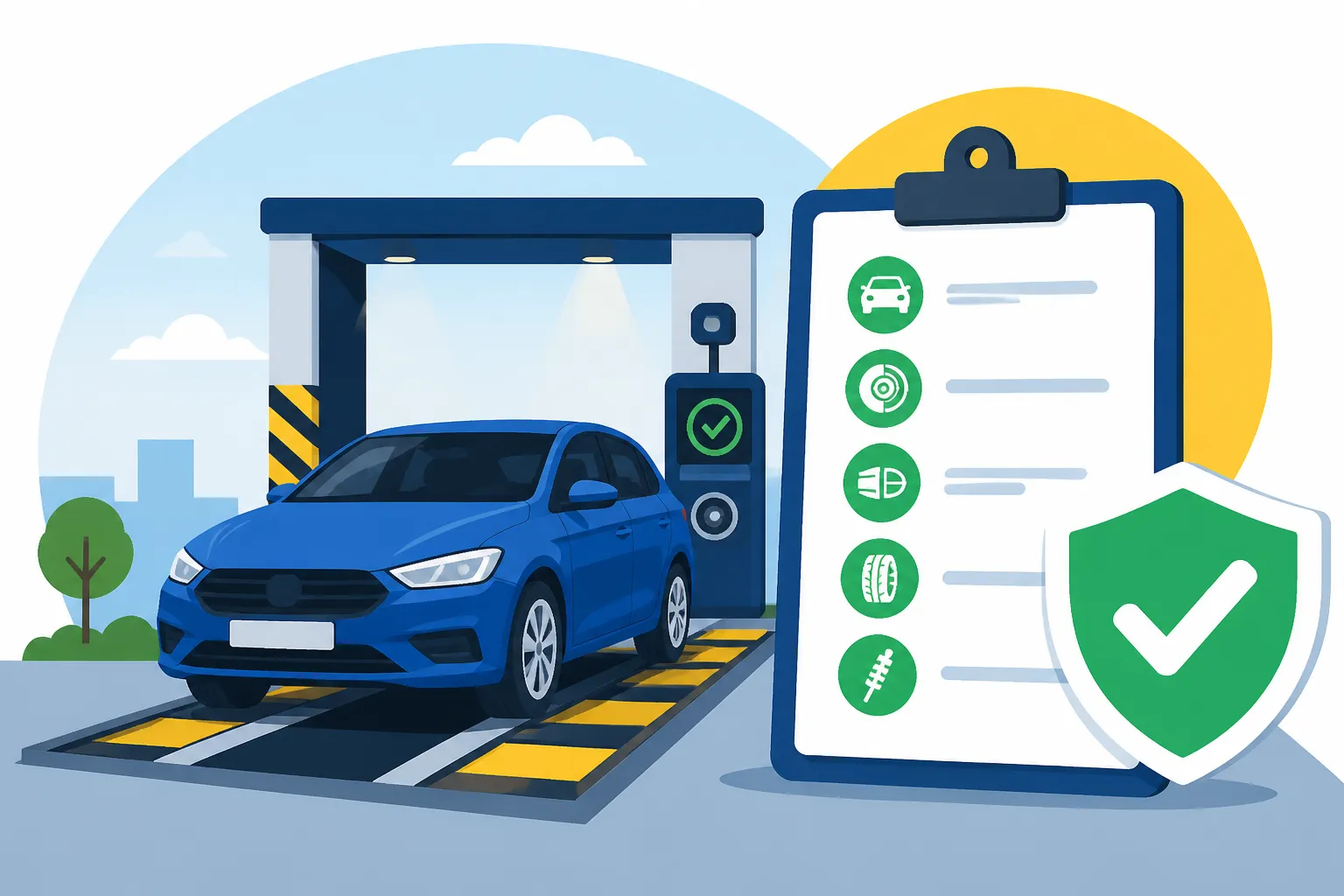
- Brakes: Your car will go through a dynamic brake test on a roller system to check efficiency and balance. They'll test both your service brakes and your parking brake.
- Lights: All external lights are checked for functionality, alignment, and correct color.
- Steering and Suspension: Technicians will look for excessive play in the steering wheel and check suspension components for wear and damage.
- Tires: Tread depth, overall condition, and matching tires are inspected.
- Exhaust System: They'll check for leaks, damage, and excessive noise.
- Emissions Test: This is a crucial part, especially for older vehicles. A probe is inserted into your exhaust pipe to measure carbon monoxide and hydrocarbon levels. If your emissions are too high, you'll fail.
- Other Checks: Wipers, horn, seatbelts, mirrors, and general structural integrity of the vehicle are also typically inspected.
If your car passes everything, congratulations! You'll receive a stamp on your vehicle license (often a sticker for the windshield too) confirming its roadworthiness. You can then officially renew your license. If you're successful, you'll be free to drive for another year. If you plan to move any vehicles, or even your belongings, within Israel or internationally, consider checking out Sirelo for reputable moving companies that can help with logistics once your car is legally on the road.
Navigating Common Challenges and Post-Test Procedures
Even with the best preparation, things can sometimes go sideways. It's Israel, after all! Knowing what to do if you encounter a hitch can save you a lot of anxiety and time. The most common challenge is, of course, a failed test.
Dealing with a Failed Test and Re-inspection
So, your car failed. Take a deep breath. It's not the end of the world, and it happens to many people, especially with older cars. The technician will provide you with a detailed report outlining exactly why your vehicle failed (called a du"ach kishlon). This report is crucial.
- Understanding the Failure Report: If you can't read Hebrew, immediately ask someone to translate the reasons for failure. It's often specific, such as "low beam headlight left side not working" or "excessive exhaust emissions."
- Time Limit for Repairs: You typically have a grace period (usually around 30 days) to get the issues fixed and return for a re-test. The re-test usually only covers the items that failed initially, not the entire inspection again, and is often a reduced fee or even free if done within a very short timeframe (e.g., 7 days).
- Getting Repairs: Take your failure report to a reputable garage (musakh). If you don't have a trusted mechanic, ask local friends or expat groups for recommendations. Ensure the garage understands exactly what needs fixing based on the report. For more serious issues, getting a second opinion might be wise.
- The Re-test Process: Once repairs are complete, return to the same testing station with your vehicle, the original failure report, and proof of repairs (if the garage provided one). You'll typically pay a smaller re-test fee, and they will re-inspect only the failed items. If everything checks out this time, you'll get your pass stamp.
It's important to fix issues promptly. Driving a car that has failed its inspection and not been re-tested is illegal, and you run the risk of significant fines if stopped by the police.
Paying the Annual Vehicle License Fee (Agra Rishui)
The Agra Rishui is the yearly fee you pay to the Ministry of Transport for your vehicle's registration. This is separate from the inspection fee you pay at the testing station. You must pay this fee before you go for your annual test. If you haven't paid it, the testing station will turn you away, regardless of your car's condition.
You'll receive a renewal notice in the mail about 4-6 weeks before your current license expires. This notice will detail the amount due and various payment options:
- Online: The Ministry of Transport's website (gov.il) allows online payment using a credit card. It’s fairly straightforward, even if it's in Hebrew. Look for "חידוש רישיון רכב" (Hiddush Rishayon Rechev – Renew Vehicle License). Using a reliable mobile data plan like Airalo can make this process smoother if you're out and about or have slow home internet.
- Automated Phone Service: There’s a national phone number you can call for automated payment.
- Post Office: You can pay in person at any Israel Post branch (Doar Yisrael). Be prepared for queues.
- Licensed Banks: Some banks also offer this service, usually at their counter or ATM.
Once you pay, keep the receipt! This is your proof of payment that you'll show at the testing station. Without it, they won't proceed with the inspection. It's also worth remembering that How Bituach Leumi Health Contributions Work in Israel and other mandatory payments in Israel are often interconnected with your legal status and entitlements, emphasizing the importance of staying current on all your government obligations.
Important Reminders and Tips for Expats
Dealing with vehicle ownership in a new country can be frustrating, but many of the issues are universal. Here are some specific tips for expats in Israel:
- Don't Procrastinate: Mark your calendar with your vehicle's license expiration date. Give yourself at least a few weeks before it expires to pay the fee and get the test done. This buffer allows for repairs if your car fails the first time. The last thing you want is to be caught driving with an expired license.
- Language Barrier: As mentioned, expect Hebrew to be the primary language. Have a translation app ready or, if possible, bring a Hebrew-speaking friend or colleague along for your first time. They can help you understand instructions and interpret the failure report if needed.
- Vehicle Insurance is Vital: Beyond the mandatory Bituach Hova needed for the test, ensure you understand the different types of Supplementary and Private Health Insurance in Israel: Options Explained that apply to vehicles. Driving without valid insurance is a serious offense in Israel, and understanding your coverage is crucial, especially when considering potential accidents.
- Driving Rules: Remember that getting your car tested is just one part of being a responsible driver. Familiarize yourself with Driving in Israel: Licences, Registration and Rules for Expats (2027) to stay safe and legal on the roads.
- Consider Public Transport: If the thought of all this hassle is overwhelming, remember that Israel has a developing public transport system. The Expat Guide to Public Transport in Israel might offer a good alternative, especially in major cities like Tel Aviv and Jerusalem, reducing the need for personal vehicle ownership and its associated administrative burdens. For longer trips, Understanding Train Travel with Israel Railways (Rakevet Yisrael) is often a pleasant option.
- Buying a Used Car: If you're new to the country and considering buying a car, the annual test process will become part of your life quickly. Read up on How to Buy a Used Car in Israel as a Foreigner to avoid common pitfalls. The Test Rishui is a crucial part of the ongoing ownership costs, alongside fuel, maintenance, and insurance.
By understanding the process and preparing adequately, you can navigate the annual vehicle test in Israel with confidence. It's just another one of those unique Israeli experiences that, once mastered, makes you feel a little more like a local.
| Item | Purpose | Notes for Expats |
|---|---|---|
| Vehicle License (Rishayon Rechev) | Proof of vehicle registration & details | Annual renewal notice arrives by mail. Pay before the test. |
| Proof of Mandatory Insurance (Bituach Hova) | Legal requirement for driving; covers third-party injury | Absolutely necessary for the test. Ensure it's current. |
| Identification (Teudat Zehut/Passport) | To verify the person bringing the vehicle | The person presenting the vehicle must have valid ID. |
| Brake Test | Checks efficiency & balance of service & parking brakes | Common failure point for older cars; get pre-checked. |
| Lights Inspection | All exterior lights must be functional & correctly aligned | Easily fixable issue; check all bulbs beforehand. |
| Tires Inspection | Tread depth, condition, and matching of all tires | Look for cracks, bulges; ensure proper inflation. |
| Emissions Test | Measures exhaust pollutants (carbon monoxide, hydrocarbons) | Essential for environment. High readings mean failure. |
| Steering & Suspension | Checks for excessive play or damage in components | More complex repairs; a pre-test check is highly recommended. |
| Other Checks (Wipers, Horn, Seatbelts, Mirrors) | Basic safety features | Quick checks you can do yourself before leaving home. |
Disclaimer
The information provided in this guide is intended for general informational purposes only and does not constitute legal, financial, or professional advice. While we strive to provide accurate and up-to-date information based on our experience and publicly available sources, regulations and procedures in Israel can change frequently. Always consult with official government sources, legal professionals, or relevant experts for advice specific to your situation. We assume no responsibility for any actions taken based on the information contained herein.