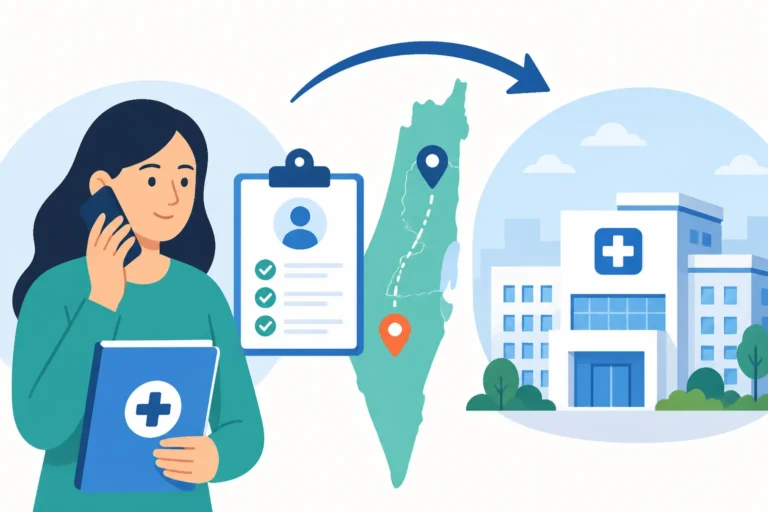
What Is the Cost of a Private Specialist Consultation in Israel?
You have finally settled into your new life in Tel Aviv or Jerusalem, only to realize that booking a simple dermatology appointment through your health fund involves a daunting four-month wait. This guide explores the real-world costs of private specialist consultations in Israel, helping you navigate the system, avoid the public queues, and understand exactly what you will pay for immediate, high-quality medical care.
The Reality of the Israeli Specialist Queue
When you first arrive and set up your healthcare, you likely spent time Choosing a Kupat Holim in Israel: Clalit, Maccabi, Meuhedet or Leumit (2027). The public system is actually world-class, but its popularity is its own undoing. For non-urgent issues—a persistent skin rash, a routine gynecological check, or a consult for a sports injury—the wait times in the public sector can be maddening. I remember needing an endocrinologist a few years back and being told the next available slot was in another season entirely. This is where the private sector becomes an essential lifeline for many expats.
The frustration is real. You are paying your monthly Bituach Leumi Health Contributions Work in Israel, yet you cannot see a doctor when you need one. Seeing a specialist privately allows you to bypass the "gatekeeper" system. In the public track, you usually need a referral from your family doctor to see a specialist. In the private world, you simply call the doctor's office, book an appointment for later that week (or even that afternoon), and show up. You are paying for speed, convenience, and often, a much longer face-to-face consultation than the ten minutes allotted in the public system.
Typical Costs of Private Consultations in 2026
The cost of a private consultation in Israel is not fixed by the government, but it does follow certain market trends. Generally, you can expect to pay anywhere from 800 NIS to 1,500 NIS for an initial consultation with a senior specialist. If you are seeking out a "Professor" or a Head of Department at a major hospital like Ichilov or Sheba, the price can climb to 2,000 NIS or more. It is a significant out-of-pocket expense, which is why understanding Supplementary and Private Health Insurance in Israel: Options Explained is so vital for long-term residents.
These costs usually cover the consultation itself. However, be aware that diagnostic tests performed in the office—such as an ultrasound in a gynecologist’s office or a specialized scope in an ENT’s clinic—may incur additional fees. When you call to book, always ask if the quoted price includes "procedural fees" or just the "consultation fee." For digital nomads or those here on shorter stays, having a plan like SafetyWing can provide a necessary safety net when these unexpected private costs arise, especially before you have fully integrated into a local health fund.
| Specialist Type | Estimated Private Cost (NIS) | Average Wait (Private) | Average Wait (Public) |
|---|---|---|---|
| Dermatologist | 800 – 1,200 | 1 – 5 Days | 3 – 5 Months |
| Gynecologist | 900 – 1,500 | 2 – 7 Days | 1 – 3 Months |
| Orthopedic Surgeon | 1,000 – 1,800 | 3 – 10 Days | 2 – 4 Months |
| Cardiologist | 1,200 – 2,000 | 2 – 5 Days | 2 – 3 Months |
| Psychiatrist | 1,000 – 1,600 | 7 – 14 Days | 4 – 6 Months |
| Pediatric Specialist | 900 – 1,400 | 1 – 4 Days | 1 – 3 Months |
Navigating the Sharap System in Jerusalem
If you are living in Jerusalem, you will encounter a unique hybrid system known as Sharap (Sherut Refua Prati). While the government has restricted private medical services within public hospitals in Tel Aviv and the center of the country, Jerusalem’s major hospitals—Hadassah (Ein Kerem and Mt. Scopus) and Shaare Zedek—are permitted to offer private tracks. This allows you to choose your specific surgeon or consultant within the hospital infrastructure.
The costs for Sharap are generally transparent and regulated by the hospitals themselves. You might find that What Is Sharap and How Do Private Services Work in Israeli Hospitals? provides a middle ground: you get the advanced equipment of a massive medical center but the personalized attention of a private doctor. For many expats, this is the gold standard of care. You pay a premium, but you get a "receipt for consultation" that is often eligible for reimbursement if you have the right level of Understanding Supplementary Insurance (Bituach Mashlim) from Your Kupah.
Reducing Your Costs Through Reimbursements
The high price tag of private care is easier to swallow when you realize you can get 60% to 80% of it back. Most expats choose the highest tier of their Kupat Holim's supplementary insurance (like Clalit Mushlam Platinum or Maccabi Sheli). One of the best perks of these plans is the "consultation with a specialist" benefit. Usually, you are allowed three to four such consultations per year where the fund will reimburse you up to a certain cap (often around 600–700 NIS).
To get your money back, you must ensure the doctor you see is on the "approved list" of your health fund or holds a senior enough position (usually a Deputy Department Head or higher) to qualify for an "independent" reimbursement. This is a common pitfall: people see a private doctor and then realize their insurance won't cover it because the doctor isn't "senior enough" by the insurance company’s definition. Always check How Do I Get a Specialist Referral Quickly in Israel? to see if there are ways to expedite the process within the system before jumping to the full private price.
For those who are not yet eligible for the national basket or are in the country on a work visa, How Do I Pay for Private Healthcare in Israel as a Foreigner? can be a complex question. In these cases, travel medical insurance or international expat insurance like SafetyWing is crucial. It can help bridge the gap and cover costs that the local system might not yet recognize for newcomers.
Choosing Between a Private Clinic and an Independent Specialist
In Israel, "private care" happens in two ways. First, there are large private hospitals and clinics like Assuta or the Herzliya Medical Center (HMC). These institutions are sleek, look like five-star hotels, and offer a wide range of specialists under one roof. When you see a doctor here, you are paying for the facility as much as the expertise. The administrative staff usually speaks excellent English, which helps when Navigating the Israeli Healthcare System: An Expat's Roadmap (2027).
The second way is seeing a doctor at their private "clinic," which is often just a room in a residential building or a small professional suite. These visits are often slightly cheaper because they don't have the overhead of a hospital like Assuta. However, the experience is more "local." You might find the waiting room crowded and the receptionist speaking rapid-fire Hebrew. If you are looking for a specific expert, such as when you need to How to Find an English-Speaking Doctor in Israel, the setting matters less than the doctor’s ability to communicate clearly with you.
The Importance of the Receipt (Kabala)
In the Israeli medical world, the receipt is king. If you intend to claim any money back from your health fund or a private insurer like SafetyWing, the receipt must be very specific. It needs to state the doctor’s name, their license number, their specialty, and specifically that the payment was for a "Consultation" (Yi'utz). If the receipt says "Treatment" or "Procedure," your insurance might reject it or process it under a different (and usually less generous) category.
I have seen many olim lose hundreds of shekels because they didn't check their receipt before leaving the office. Don't be afraid to be assertive. Ask the secretary to ensure the word "Yi'utz" is clearly visible. If you are seeing a specialist for a chronic issue, ensure they also provide a brief summary letter (Michtav Sikum) of the visit. This letter is essential if you later need to How to Register a Chronic Condition with My Israeli Doctor or if you need to justify the private expense to an international insurance provider.
Private Healthcare for Families and Children
When it comes to children, the stakes feel higher, and the wait times even more stressful. While Understanding the Role of Tipat Halav (Family Health Centres) in Israel is great for routine wellness, if your child needs a pediatric neurologist or a cardiologist, the public wait can be months. Many parents in the expat community keep a "private doctor fund" specifically for these moments.
The cost for a private pediatric specialist is often slightly lower than for adult specialists, ranging from 700 NIS to 1,200 NIS. Many of these doctors are very empathetic to the expat experience and are willing to provide their WhatsApp numbers for follow-up questions—a level of service you rarely get in the public sector. If you are here on a B/1 visa and wondering Can I Use Public Healthcare in Israel on a Work Visa?, the answer is often a mix of both, but having private options is what truly provides peace of mind for parents.
Conclusion and Final Thoughts on Costs
While the price of a private consultation in Israel—often exceeding 1,000 NIS—can seem shocking at first, it is a tool that allows you to take control of your health in a system that is often bogged down by bureaucracy. By combining the public Understanding the Health Basket (Sal Briut) and What It Covers with strategic private visits, you can ensure that you are never waiting in pain or anxiety.
Whether you are using a local Kupah or an international provider like SafetyWing, always do your homework before you book. Check the doctor’s credentials, confirm the total cost of the visit, and ensure your paperwork is in order for reimbursement. In the end, the cost of a private consultation is not just a medical fee; it is an investment in your time and your sanity while living abroad.
Disclaimer
The information provided in this guide is for informational purposes only and does not constitute medical or legal advice. Healthcare costs and regulations in Israel are subject to change. Always consult with your health fund provider, insurance agent, or a qualified medical professional regarding your specific situation and coverage options.