Understanding the National Health Insurance Law (Bituach Briut Mamlachti)
Moving to Israel often feels like stepping into a beautiful, chaotic whirlwind, full of new sights, sounds, and an entirely different way of doing things. Among the many adjustments, figuring out the healthcare system can feel like deciphering an ancient scroll, especially when you hear terms like Bituach Briut Mamlachti. This comprehensive guide is here to demystify the National Health Insurance Law, explaining who's covered, what benefits you're entitled to, and how to navigate this essential aspect of life as an expat or new immigrant in Israel.
What Exactly is Bituach Briut Mamlachti?
The heart of Israel's healthcare system lies in the National Health Insurance Law, or Chok Bituach Briut Mamlachti, enacted in 1995. Before this, healthcare was provided through voluntary membership in different health funds, often tied to employment or social groups. It created a rather unequal landscape. The law was a game-changer, establishing a universal, publicly funded healthcare system designed to ensure that every legal resident of Israel has access to essential medical services, regardless of their income or health status. It’s a powerful commitment to public welfare, aiming to remove financial barriers to necessary care.
The Foundation of Israeli Healthcare
Think of Bituach Briut Mamlachti as the bedrock upon which all other healthcare services in Israel are built. It's not a health fund (Kupat Holim) itself, but rather the legislative framework that mandates membership in one of the four official health funds for all Israeli residents. The law dictates that everyone residing in Israel is entitled to a comprehensive basket of health services, known as the Sal Briut (Health Basket), which we'll dive into later. This means whether you’re a new arrival making Aliyah, a long-term expat with a work visa, or a native Israeli, you're expected to be part of this system. It fundamentally enshrines the right to health, emphasizing preventative care, treatment, and rehabilitation.
This universal approach means that when you eventually visit a doctor, get a prescription, or need specialist care, it's all flowing from the provisions of this law. It's designed to be egalitarian, ensuring that the quality of basic care isn't dictated by your wallet. The health funds act as the operational arms of this law, managing clinics, employing doctors, and facilitating access to the services outlined in the Health Basket.
A System of Solidarity
The National Health Insurance Law operates on a principle of solidarity, meaning that everyone contributes according to their means, and everyone receives care according to their needs. This isn't a private insurance scheme where your premiums are calculated based on your individual risk factors or pre-existing conditions. Instead, it’s funded primarily through mandatory health insurance contributions collected by the National Insurance Institute (Bituach Leumi), alongside government funding from general taxation. These contributions are essentially a portion of your income, ensuring that those who earn more contribute more, while still ensuring access for those with lower incomes or no income at all.
This shared responsibility is a key characteristic, differentiating it from many other national health systems. The collective pooling of resources ensures that the system remains robust enough to cover a wide array of medical needs for the entire population. It's a fundamental social contract: in exchange for your contributions, you and your family gain access to comprehensive healthcare services, knowing that the system is there for you in times of need. It’s about building a safety net that protects everyone.
Who is Covered by the National Health Insurance Law?
Navigating who is actually covered by this all-encompassing law can sometimes feel like trying to solve a riddle, especially for newcomers to Israel. While the intent is universal coverage, the specifics depend on your status.
Residents, Olim, and Specific Visa Holders
The general rule is that all permanent residents of Israel are covered by the National Health Insurance Law. This includes Israeli citizens, of course, but also extends to certain categories of non-citizens who are recognized as permanent residents.
For new immigrants (Olim), the situation is unique and usually quite favorable. Upon making Aliyah and receiving their Teudat Oleh (immigrant certificate) and Teudat Zehut (identity card), new Olim are generally immediately covered. However, there's a crucial point that often catches people off guard: there can be a brief waiting period for those who are not automatically registered upon arrival or who may have had a break in their residency. For example, if you're a new Oleh, your coverage from a Kupat Holim typically begins automatically from your registration date with the Population and Immigration Authority, but it's vital to confirm this at the earliest opportunity. You might want to refer to our guide on How Long Until New Olim Get Health Coverage in Israel? for more detailed information on this transition period.
Expats on long-term work visas (B/1 visas) and their registered dependents are generally entitled to Bituach Briut Mamlachti, provided they meet certain residency criteria and their employer facilitates their registration with Bituach Leumi. This is a critical point; if you're coming to Israel on a work visa, ensuring your employer handles all the necessary registrations with Bituach Leumi is paramount. Without these contributions, your access to the public health funds could be in jeopardy. Similarly, some categories of temporary residents, particularly those with A/1 or A/5 visas, might also be eligible for public health services.
Exceptions and Special Cases
Not everyone living in Israel falls under the direct umbrella of Bituach Briut Mamlachti, and these exceptions are important to understand to avoid nasty surprises.
Tourists (B/2 visa holders), for instance, are generally not covered by the National Health Insurance Law. If you're visiting Israel, even for an extended period, you are expected to have private travel medical insurance. This is a common pitfall; don't assume that because you're in a country with universal healthcare, it automatically applies to you as a visitor. For unexpected medical issues, especially during that initial period before your public coverage officially begins, or if you're not eligible for public healthcare, having a reliable travel medical insurance like SafetyWing can provide crucial protection. You don't want to be caught off guard with a medical bill for a broken ankle or a sudden illness.
Other categories of foreign nationals, such as those on certain student visas (A/2) or humanitarian visas, might have specific arrangements or require private health insurance. International students, for example, often have a requirement to prove adequate health insurance coverage as part of their visa application. Even individuals working for foreign companies remotely from Israel, without an Israeli employer making Bituach Leumi contributions on their behalf, might find themselves in a grey area regarding public health coverage. In these situations, understanding your visa type and its associated health provisions is critical. If you're pondering Can I Use Public Healthcare in Israel on a Work Visa?, the answer is often yes, but always with specific conditions that must be met.
It’s always best practice to clarify your health insurance status with the Population and Immigration Authority or Bituach Leumi directly upon arrival or whenever your residency status changes. Don't leave it to chance.
How is Bituach Briut Mamlachti Funded?
Understanding how the system is funded is crucial to grasping its mechanics. It operates on a progressive contribution model, ensuring everyone contributes their fair share to maintain the system's robustness.
National Insurance Institute (Bituach Leumi) Contributions
The primary source of funding for the National Health Insurance Law comes from mandatory health insurance contributions collected by the National Insurance Institute (Bituach Leumi). This isn't just a health fund fee; it's a national social security payment that also covers other benefits like unemployment, maternity, and pensions. When you contribute to Bituach Leumi, a portion of that payment is specifically earmarked for health insurance.
For employees, these contributions are typically deducted directly from your salary by your employer, who then remits them to Bituach Leumi. The contribution rate is a percentage of your income, up to a certain ceiling, and it's split between you and your employer. This often happens so seamlessly in Israel that many employees don't actively think about it, but it's happening every month.
For the self-employed (Atzmai), the responsibility falls squarely on your shoulders. You are required to register with Bituach Leumi as self-employed and make regular payments yourself. These payments are calculated as a percentage of your declared income, and you'll usually make them monthly or quarterly. It's a critical part of being self-employed in Israel, and failing to pay these contributions can result in a lapse in your health insurance coverage, not to mention penalties. If you’re self-employed, make sure you understand How Bituach Leumi Health Contributions Work in Israel to avoid any issues.
For non-working individuals, such as students, retirees, or those with no income, there are provisions to ensure coverage. In some cases, payments might be at a minimal fixed rate, or in situations of very low income, the state might cover the contributions. New immigrants might have their initial Bituach Leumi contributions covered for a period as part of their absorption benefits, further highlighting the state's commitment to ensuring universal access from day one.
The Role of the Kupot Holim
Once Bituach Leumi collects these contributions, the funds aren't just sitting in a government account. They are distributed among the four official health funds (Kupot Holim): Clalit, Maccabi, Meuhedet, and Leumit. Each Kupat Holim receives a per capita payment for every member they have, adjusted for age and other demographic factors to account for varying healthcare needs.
This distribution model fosters competition among the health funds, encouraging them to provide high-quality services and attract members. They use these funds to run their clinics, employ doctors and nurses, purchase equipment, subsidize medications, and provide a wide range of services within the Sal Briut (Health Basket). When you choose a Kupat Holim, you're essentially choosing which organization will manage your primary care, specialist referrals, and access to medical facilities. The government acts as a regulator, ensuring that all funds adhere to the National Health Insurance Law and provide the mandated services.
This financial structure ensures a decentralized yet unified system. While the funding is centralized through Bituach Leumi, the actual delivery of care is managed by the Kupot Holim, offering residents a choice and promoting responsiveness to patient needs within the national framework.
What Does the "Health Basket" (Sal Briut) Include?
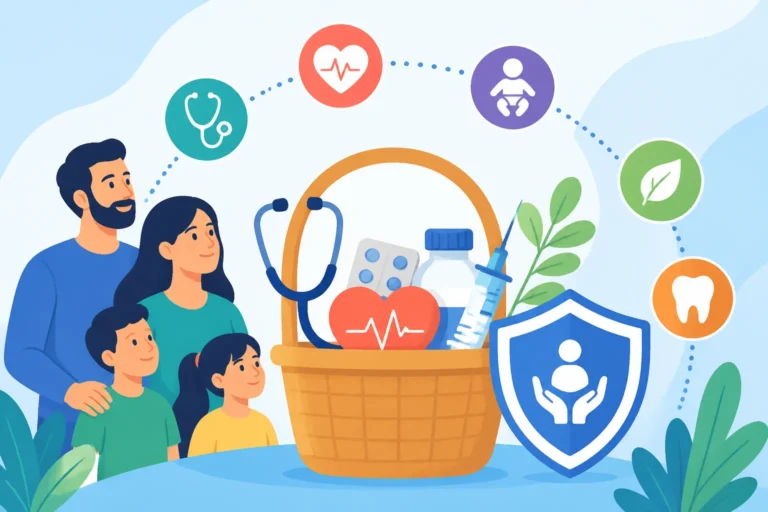
The "Health Basket" or Sal Briut is perhaps the most important concept to grasp within the National Health Insurance Law. It's a clearly defined list of medical services, treatments, and medications that every Israeli resident is entitled to receive through their Kupat Holim. It's not a static list; it's regularly updated by a public committee to incorporate new technologies and treatments, reflecting advancements in medicine and public health needs.
Comprehensive Coverage for Essential Services
The Sal Briut is genuinely comprehensive for essential care. It covers a vast array of services, ensuring that basic health needs are met for everyone. Here’s a detailed look at what you can expect:
- Primary Care: Unlimited visits to your family doctor (GP), pediatrician (rofeh yeladim), or gynecologist (rofeh nashim) within your chosen Kupat Holim. These are your first point of contact for most health concerns.
- Specialist Consultations: Referrals to a wide range of specialists, from dermatologists to cardiologists, are covered, often with a small co-payment per visit.
- Hospital Care: This includes hospitalization, surgeries, and treatments in public hospitals. For emergencies, you're covered regardless of your Kupat Holim membership, though some costs might be reimbursed later. Understanding How to Access Hospital Care at a Beit Holim in Israel can be incredibly helpful.
- Laboratory Tests and Imaging: All necessary blood tests, urine tests, X-rays, ultrasounds, and sometimes more advanced imaging like MRIs or CT scans (with approval) are covered.
- Prescription Medications: A significant portion of the cost of prescription medications listed in the Sal Briut is covered, with members paying a subsidized co-payment. This can make a huge difference, especially for chronic conditions. Our guide on Prescription Medications and Pharmacies in Israel: The Complete Guide provides further detail.
- Preventative Care: This includes vaccinations for children and adults, health screenings, and preventative programs. Things like mammograms, colonoscopies, and flu shots are typically covered.
- Maternity and Prenatal Care: Comprehensive care for pregnant women, including prenatal check-ups, childbirth in a public hospital, and postnatal care. Our guide on Understanding Maternity and Prenatal Care in Israel can provide more specifics.
- Rehabilitation: Physical therapy, occupational therapy, and other rehabilitation services are included, often requiring a referral from a doctor.
- Mental Health Services: Basic mental health services, including psychological consultations and psychiatric evaluations, are also part of the basket. More on this can be found in How to Access Mental Health Services in Israel as an Expat.
This broad coverage means that for most day-to-day and acute medical needs, you can rely on the public system without fear of crippling costs.
Limitations and Co-Payments
While the Sal Briut is extensive, it’s not entirely free, nor does it cover absolutely everything. This is where the concept of hishtatfut atzmit, or co-payments, comes into play. You’ll encounter these small fees for various services:
- Doctor Visits: While primary care visits are often free or have a very minimal charge, specialist visits typically incur a co-payment. This fee is usually quite low, often around ₪20-₪30 per visit, though it can vary slightly between Kupot Holim.
- Medications: As mentioned, prescription medications on the Sal Briut list are subsidized, but you'll still pay a co-payment, usually a percentage of the drug's cost or a fixed low fee.
- Lab Tests and Imaging: While covered, some more complex or specialized tests might have a small co-payment.
- Emergency Room Visits: If you go to an emergency room without a referral from a doctor, you will likely pay a significant co-payment. This is to encourage people to use their primary care doctor for non-emergencies. If you arrive by ambulance or are admitted to the hospital, the ER co-payment is usually waived. It's worth reviewing Emergency Medical Care in Israel: What Every Newcomer Needs to Know.
- Dental Care: For adults, basic dental care (check-ups, fillings, extractions) is generally not included in the standard Sal Briut, though children up to a certain age receive comprehensive dental coverage. Many adults opt for supplementary insurance (Bituach Mashlim) to cover dental needs.
- Optometry: Routine eye exams and prescription glasses are generally not covered for adults, though some medical conditions affecting vision might be.
It's important to understand that these co-payments are designed to be affordable and prevent overuse of services, rather than to be a barrier to essential care. For many expats, the transition from a purely private or very different public system to this co-payment model can take some getting used to. You can find more details in Understanding Co-Payments (Hishtatfut Atzmit) in the Israeli Health System.
Navigating the System: Your Kupat Holim and Beyond
Once you're covered by Bituach Briut Mamlachti, your next crucial step is to choose and register with one of the four health funds. This is where your healthcare journey truly begins.
Choosing Your Health Fund (Kupat Holim)
Israel has four main health funds, each a non-profit organization providing comprehensive services under the National Health Insurance Law. They are:
- Clalit: The largest Kupat Holim, with a vast network of clinics, doctors, and hospitals. It's often favored for its widespread presence, especially in smaller towns, and its significant investment in digital services.
- Maccabi: Known for its emphasis on quality and technological innovation, Maccabi is popular among urban populations and often has clinics with a more modern feel. They also tend to have many English-speaking staff.
- Meuhedet: While smaller than Clalit and Maccabi, Meuhedet is also known for its personalized service and strong network of specialists.
- Leumit: The smallest of the four, Leumit often appeals to those looking for a more community-focused experience, though its network might be less extensive in some areas.
Choosing between them can feel like a big decision, especially if you don't speak fluent Hebrew. Factors to consider include:
- Location of clinics and doctors: Are there conveniently located clinics in your neighborhood? Do they have doctors specializing in areas relevant to your family's needs?
- Availability of English-speaking staff: This is often a deal-breaker for new olim and expats. Many Kupot Holim, particularly Maccabi and Clalit, have dedicated services or doctors who speak English. A good resource for this is How to Find an English-Speaking Doctor in Israel.
- Digital services: Most Kupot Holim have excellent apps and websites for booking appointments, getting lab results, and refilling prescriptions. Check which one aligns with your preferences. You might want to explore How to Book Appointments Through Clalit and Maccabi Apps.
- Supplementary insurance (Bituach Mashlim): While the Sal Briut is standard, each Kupat Holim offers optional supplementary plans. These vary in cost and benefits, covering things like dental care, alternative medicine, or discounts on private specialist visits. You can understand more about this in Understanding Supplementary Insurance (Bituach Mashlim) from Your Kupah.
You can switch your Kupat Holim a few times a year, typically with a short waiting period, so your choice isn't set in stone. However, it's wise to research upfront. Our article on Choosing a Kupat Holim in Israel: Clalit, Maccabi, Meuhedet or Leumit (2027) provides a deeper dive into making this decision.
Here's a quick comparison of the main Kupot Holim:
| Kupat Holim | Key Characteristics | Strengths for Expats/Olim | Potential Considerations |
|---|---|---|---|
| Clalit | Largest, extensive network, strong digital presence. | Wide geographic spread, many branches, good digital services. | Can feel bureaucratic due to size, may have longer wait times for some specialists. |
| Maccabi | Focus on quality, technology, and customer service. | Often strong English support, modern clinics, excellent online services. | May have slightly fewer branches in very remote areas. |
| Meuhedet | Mid-sized, emphasis on personalized service. | Good for building relationships with doctors, strong specialist network. | Fewer clinics than larger funds, so location might be key. |
| Leumit | Smallest, community-focused. | Can offer a more intimate, family-like feel at clinics. | More limited network, fewer doctors/specialists compared to larger funds. |
Accessing Services and Supplementary Insurance
Once you're registered with a Kupat Holim, you'll receive a membership card (or have digital access via their app). This card is your gateway to accessing all the services within the Sal Briut.
- Finding a Doctor: Your first step should be to choose a family doctor (rofeh mishpacha) or pediatrician (rofeh yeladim). You can often browse doctor profiles on your Kupat Holim's website or app, filtering by language. This choice is vital as your family doctor will be your primary point of contact and provide referrals to specialists. Check out How to Choose a Family Doctor (Rofeh Mishpacha) in Israel for tips.
- Booking Appointments: Most appointments are booked online through the Kupat Holim's website or app. You can also call their service center.
- Referrals (Hafnayot): To see most specialists, you'll need a referral from your family doctor. This is a standard procedure to ensure continuity of care and appropriate treatment pathways. Our article, How to Get a Referral (Hafnaya) to a Specialist in Israel, can guide you.
- Filling Prescriptions: With a prescription from your doctor, you can visit any pharmacy (Beit Mirkachat) that contracts with your Kupat Holim, usually conveniently located within clinics or nearby. You'll pay your co-payment at the pharmacy. More details are in Understanding the Israeli Pharmacy (Beit Mirkachat) System.
Beyond the Sal Briut, many expats opt for supplementary insurance (Bituach Mashlim) offered directly by their Kupat Holim. This isn't private insurance in the traditional sense, but an upgrade to your existing public coverage. These plans typically offer:
- Discounts on a wider range of prescription medications not fully covered by the Sal Briut.
- Subsidized dental care for adults.
- Access to alternative medicine treatments (acupuncture, chiropractic, etc.).
- Discounts on private specialist visits or procedures, potentially reducing waiting times.
- Travel insurance benefits for medical emergencies abroad.
For those who want extra peace of mind or need specific services not fully covered by the Sal Briut, Bituach Mashlim can be a worthwhile investment. It helps bridge the gap between the universal basic coverage and a more comprehensive personal health plan.
Common Challenges and Practical Tips for Foreigners
Living in Israel as a foreigner, while incredibly rewarding, definitely comes with its unique set of challenges. The healthcare system, for all its benefits, is no exception.
Language Barriers and Bureaucracy
One of the most significant hurdles for many expats and olim is the language barrier. While many medical professionals, especially in larger cities like Tel Aviv and Jerusalem, speak English, navigating forms, phone systems, and sometimes even explaining complex medical symptoms in Hebrew can be incredibly stressful. Imagine trying to explain a nuanced stomach issue to a busy receptionist in a language you're only just learning – it’s a recipe for anxiety!
Then there's the bureaucracy. While Israel's system is efficient in many ways, it's still a government-mandated structure. This means forms, waiting times for appointments (especially for popular specialists), and sometimes feeling like you're stuck in a loop trying to get the right approval or referral. Things don't always move as quickly or straightforwardly as you might be used to in your home country. You might find yourself needing to chase up referrals or test results more actively than you'd prefer. This is a common frustration, and honestly, you're not alone in feeling exasperated by it sometimes.
Practical Tips:
- Learn basic medical Hebrew: Even knowing a few key phrases for symptoms or body parts can make a huge difference.
- Utilize online services: Most Kupot Holim have robust online portals and apps where you can book appointments, view results, and get prescriptions without speaking to anyone.
- Bring a friend: If you have a friend who speaks Hebrew, ask them to accompany you to important appointments, especially initial consultations or specialist visits.
- Find English-speaking doctors: Prioritize finding a family doctor who speaks your language well. This will make all future interactions much smoother. Don't underestimate the comfort of speaking your native tongue when you're feeling unwell.
Bridging the Gap: Private Insurance and Travel Considerations
For all its strengths, Bituach Briut Mamlachti might not cover every scenario, particularly for certain types of residents or during transitional periods. This is where understanding other insurance options becomes vital.
Private Health Insurance: Beyond the supplementary plans offered by the Kupot Holim, there are fully private health insurance plans available in Israel. These plans typically offer faster access to specialists, choice of doctors and hospitals for procedures, and coverage for treatments or technologies not yet included in the Sal Briut. They can significantly reduce waiting times for non-urgent procedures and offer a level of flexibility and choice that the public system, by its nature, cannot always provide. For those with specific health needs, a higher income, or simply a preference for private care, combining public and private insurance can be an attractive option. You can learn more about this in Understanding Private Health Insurance Plans in Israel.
Temporary or Travel Medical Insurance: This is crucial for several groups:
- New arrivals: If you're a new Oleh, there might be a short waiting period before your public health insurance fully kicks in. Having a robust travel medical insurance, like SafetyWing, can be invaluable during this gap, covering any unexpected medical emergencies that might arise.
- Visitors or those on non-eligible visas: As mentioned, tourists and those on certain types of visas are not covered by Bituach Briut Mamlachti. For these individuals, travel medical insurance is not just recommended, it's essential. SafetyWing provides comprehensive coverage for travelers and remote workers, offering peace of mind for medical emergencies, hospital stays, and even some emergency dental care. It's designed to be flexible and cater to a global, mobile lifestyle, which many expats in Israel embody.
- Travel outside Israel: Even once you're fully covered by an Israeli Kupat Holim, their coverage for medical emergencies outside of Israel is usually limited to emergency situations and might have lower caps. If you travel frequently, a separate travel insurance policy or an upgraded supplementary plan from your Kupat Holim (Bituach Mashlim) that includes international coverage is highly recommended. For instance, if you're planning a trip back home or to another destination, a plan like SafetyWing could cover unforeseen medical issues that arise while you're abroad, ensuring you're protected wherever you go. You don't want to rely on basic public coverage for international mishaps.
The key takeaway here is to assess your individual circumstances – your visa status, your length of stay, your travel plans, and your personal health needs – to determine if Bituach Briut Mamlachti alone is sufficient, or if supplementary or private insurance, potentially including options like SafetyWing for specific needs, might be a smart addition to your healthcare strategy in Israel.
Disclaimer
The information provided in this guide is intended for general informational purposes only and does not constitute legal, medical, or financial advice. While we strive to provide accurate and up-to-date information, the Israeli healthcare system, laws, and regulations are subject to change. It is always recommended to consult with official sources, such as the National Insurance Institute (Bituach Leumi), the Israeli Ministry of Health, and your chosen Kupat Holim, for the most current and personalized advice regarding your specific situation.