How to Handle a Medical Emergency While Travelling Abroad with Israeli Insurance
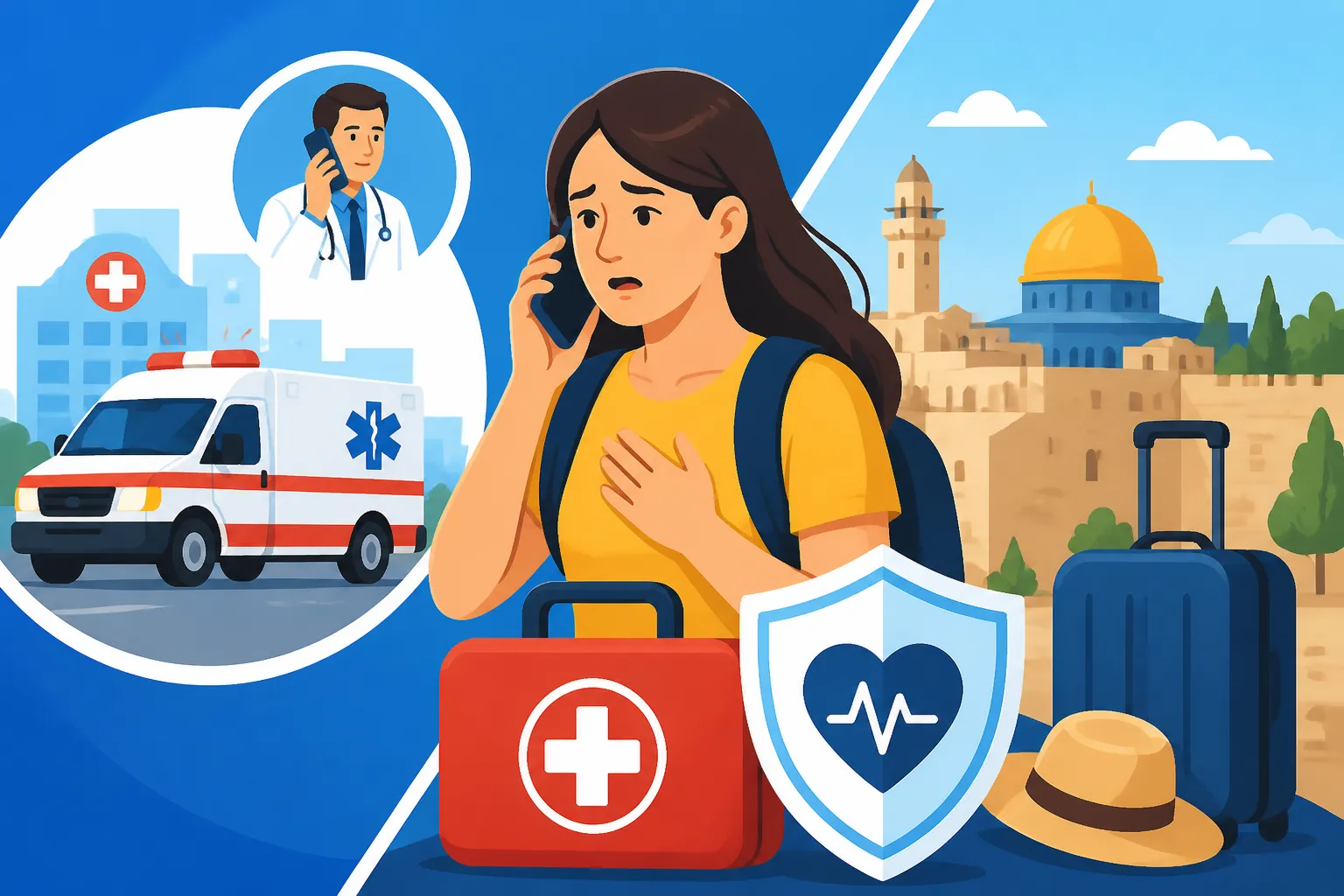
Picture this: you're finally taking that much-deserved vacation, perhaps exploring ancient ruins in Rome or hiking through the breathtaking landscapes of Patagonia, when suddenly, disaster strikes. A nasty fall, a mysterious stomach bug, or something far more serious lands you in a foreign hospital. Your mind races – "What about my Israeli health insurance? Will it cover this?" The cold, hard truth is, for most of us expats living in Israel, our national health fund, or Kupat Holim, offers very little, if any, substantial coverage once you step foot outside the country. This guide is here to walk you through the essential steps and considerations for handling a medical emergency while traveling abroad, ensuring you're prepared long before you even pack your suitcase.
The Harsh Reality of Medical Emergencies Abroad
It's a scenario no one wants to envision, but it's crucial to be prepared. When you're thousands of miles from home, in an unfamiliar healthcare system, a medical emergency can be terrifying and financially devastating if you're not properly insured. The language barrier, the unfamiliar medical practices, and the sheer stress of the situation can feel overwhelming, turning a dream trip into a nightmare.
Initial Panic and What to Expect
The moment you realize you or a loved one needs urgent medical attention in a foreign country, a wave of panic is entirely natural. Your first instinct might be to rush to the nearest hospital or clinic. However, before you do anything, take a deep breath. Unless it's a life-or-death situation requiring immediate ambulance service (in which case, call the local emergency number instantly), your next steps should ideally involve contacting your travel insurance provider. They are your lifeline in these moments, guiding you to approved medical facilities, arranging direct billing, and offering crucial translation services. Trying to navigate this alone, especially with complex medical needs, can lead to unnecessary stress and costs.
Think about it: you're in a tiny village in Thailand with a broken ankle, or perhaps battling a severe allergic reaction in rural France. Do you know which hospital has English-speaking staff? Do you know if they accept international credit cards, or if they'll demand cash upfront? This is where good preparation, specifically having robust travel insurance, really pays off. Without it, you could be looking at an immediate, out-of-pocket expense that could deplete your savings in an instant.
Why Your Israeli Health Fund Isn't Enough
This is perhaps one of the most common misconceptions among expats and even long-term residents in Israel. Many assume that because Israel has an excellent national healthcare system and we pay our monthly Bituach Leumi contributions, our Kupat Holim coverage extends globally. Unfortunately, this is almost entirely incorrect for non-emergency, comprehensive care. While the Israeli healthcare system is robust for residents, as detailed in The Complete Guide to Healthcare in Israel for Olim and Expats (2027), its reach significantly diminishes at the border.
Your Kupat Holim (whether it's Clalit, Maccabi, Meuhedet, or Leumit) primarily covers medical services rendered within Israel. There might be some very limited exceptions for very urgent life-saving treatments abroad, typically requiring prior approval and usually only covering a small fraction of the cost, often at the discretion of the Kupat Holim itself. For instance, if you experience a truly sudden and unexpected life-threatening event, some kupot might consider partial reimbursement, but this is rare and should never be relied upon as your primary safety net. Even then, the bureaucratic hoops you'd have to jump through to get that reimbursement would be immense, and you'd certainly have to pay everything upfront. This is a stark difference from how Emergency Medical Care in Israel: What Every Newcomer Needs to Know operates, where your Kupat Holim is your first line of defense. The bottom line is, your regular Israeli health fund is absolutely not designed to cover the vast majority of medical incidents that can occur while you're traveling internationally.
Understanding Your Israeli Insurance Coverage for Travel
It's vital to clearly distinguish between your local Israeli health coverage and dedicated international travel insurance. Confusing the two can lead to severe financial penalties and immense stress during an emergency.
The Limitations of Your Kupat Holim
Let's get this straight: your Kupat Holim provides comprehensive care within Israel, encompassing a wide range of services laid out in the Understanding the Health Basket (Sal Briut) and What It Covers. However, when you leave the country, your Kupat Holim acts more like a distant acquaintance than a close friend. They are not designed to cover routine medical care, specialist visits, hospital stays, or emergency transport (like medical evacuation) outside of Israel. If you fall ill or get injured while traveling, even for a short trip, you will almost certainly be responsible for the full cost of your medical treatment. This includes everything from a doctor's consultation for a simple ear infection to complex surgery for a broken bone.
The only sliver of connection might be if you have very specific, high-tier supplementary insurance (bituach mashlim) through your Kupat Holim that offers some minimal travel benefits, but even these are usually incredibly limited. They might cover a tiny portion of emergency dental work or provide a small daily allowance for hospitalization abroad, but they are rarely enough to cover serious medical events, especially in countries with high healthcare costs like the US or Western Europe. You would still need to pay upfront and then jump through significant hoops to claim any reimbursement from your Kupat Holim. It’s a bit like hoping a trickle of water will put out a house fire – it’s simply insufficient for the scale of the problem.
The Role of Private Travel Insurance
This is where dedicated private travel insurance steps in as your true guardian angel abroad. Unlike your Kupat Holim, private travel insurance is specifically designed to cover unexpected medical emergencies, accidents, and even non-medical travel disruptions when you're outside your home country. These policies typically cover:
- Emergency Medical Treatment: This is the core of any good policy, covering doctor visits, hospital stays, surgeries, and prescription medications due to unexpected illness or injury.
- Medical Evacuation and Repatriation: This is perhaps the most crucial and expensive aspect. If you need to be moved to a better-equipped facility or flown back to Israel for further treatment, these costs can easily run into tens or even hundreds of thousands of dollars.
- Trip Cancellation/Interruption: While not directly medical, many policies also cover non-refundable costs if your trip is canceled or cut short due to medical reasons (yours or a family member's).
- Lost Baggage or Travel Delays: Again, not medical, but often included for comprehensive coverage.
For expats who frequently travel, or even for a single annual vacation, investing in a robust travel insurance policy is not just advisable, it's non-negotiable. It bridges the gap that your Israeli national health insurance leaves wide open. For a deeper dive into private insurance options generally, you can explore Supplementary and Private Health Insurance in Israel: Options Explained.
Choosing the Right Travel Insurance for Your Needs
Navigating the world of travel insurance can feel like deciphering ancient texts, but it’s a critical step that you absolutely cannot skip. Just like you wouldn't embark on Navigating the Israeli Healthcare System: An Expat's Roadmap (2027) without knowing the way, don't travel without understanding your insurance.
What to Look For in a Policy
When you're comparing policies, don't just go for the cheapest option. Read the fine print, because that's where the devils (and angels) truly reside. Here’s what you should prioritize:
- High Medical Coverage Limits: Look for policies with at least $100,000 to $250,000 in medical coverage. In places like the United States, a single emergency hospital visit can quickly rack up tens of thousands of dollars. More is always better here.
- Emergency Medical Evacuation: This is non-negotiable. Ensure the policy covers at least $250,000 for medical evacuation. If you're seriously ill or injured in a remote area, getting you to a proper medical facility or even back home could cost a fortune.
- 24/7 Emergency Assistance: A good policy will have a multilingual emergency hotline you can call any time, day or night. This team will guide you through the process, communicate with medical providers, and arrange logistics.
- Direct Billing Options: Ideally, the insurance company should be able to pay hospitals and doctors directly, so you don't have to pay large sums upfront and wait for reimbursement.
- Repatriation of Remains: While grim, it’s an important consideration that covers the cost of bringing your body home in the unfortunate event of death abroad.
- Deductibles and Excess: Understand how much you'll have to pay out-of-pocket before the insurance kicks in. Lower deductibles are generally better, though they come with higher premiums.
- Activities Covered: If you plan on engaging in adventure sports (skiing, diving, hiking, etc.), ensure these activities aren't excluded from your policy. Many standard policies have specific exclusions for "hazardous activities."
Think about your travel style. Are you backpacking through Southeast Asia, or relaxing by the beach in Cyprus? The risks, and therefore the insurance needs, are different.
Comparing Different Providers
There's a sea of travel insurance providers out there, each with its own quirks and offerings. Beyond the big names, many companies cater specifically to long-term travelers and expats. For instance, SafetyWing is a popular choice among digital nomads and long-term travelers because they offer flexible, subscription-based travel medical insurance that can be purchased even when you've already started your trip. This is a massive plus for those of us who might sometimes forget to buy coverage until the last minute, or whose plans change spontaneously. They also provide good emergency medical coverage and evacuation benefits, which are essential. Other providers like World Nomads, Seven Corners, and AXA are also reputable options, each with their own strengths depending on your destination and duration of travel.
It's wise to get quotes from at least three different providers and carefully compare their terms, conditions, and coverage limits. Don't be shy about calling their customer service to ask specific questions, especially if you have particular concerns like pre-existing medical conditions or specific activities planned.
Specific Needs: Pre-existing Conditions, Adventure Sports, Long-Term Travel
Your personal situation heavily influences the type of policy you'll need.
- Pre-existing Medical Conditions: If you have any pre-existing conditions (e.g., diabetes, heart conditions, asthma), you absolutely must declare them. Many standard policies exclude coverage for pre-existing conditions unless you purchase an additional rider or opt for a specialized policy. Failing to declare could void your entire policy if a medical emergency arises related to that condition. This is a critical point that can mean the difference between full coverage and paying out of pocket for an expensive emergency.
- Adventure Sports and High-Risk Activities: Planning to scuba dive in the Red Sea (outside Israel, of course!), bungee jump in New Zealand, or trek in the Himalayas? Standard policies often exclude these. Look for policies with "adventure sports" or "hazardous activities" add-ons. Don't risk it; a simple sprain during an adventurous hike could leave you with a hefty bill.
- Long-Term Travel or Expat Life Abroad: If you're going for an extended period, perhaps for The Complete Guide to Studying at an Israeli University (2027) abroad or The Complete Guide to Working in Israel as a Foreigner (2027) outside of Israel, standard short-term travel insurance won't cut it. You'll need specialized long-term travel medical insurance or even international health insurance. Companies like SafetyWing are particularly good for this, offering flexible, recurring coverage that works well for digital nomads and those on extended stays. This type of insurance is distinct from typical vacation insurance and often offers more robust, albeit pricier, health coverage benefits.
Here’s a quick comparison of the types of coverage:
| Feature | Israeli Kupat Holim Abroad | Standard Travel Insurance Abroad |
|---|---|---|
| Emergency Medical | Very limited, mostly for life-threatening; often no prior approval, pay upfront | High limits (e.g., $100k-$1M), covers most emergencies |
| Medical Evacuation | Generally not covered | High limits (e.g., $250k-$1M), often direct arrangement |
| Repatriation of Remains | Generally not covered | Usually covered up to a certain limit |
| Pre-existing Conditions | Not covered | May be covered with an add-on or specific policy |
| Adventure Sports | Not covered | May be covered with an add-on |
| Direct Billing | Rarely | Often available with 24/7 assistance |
| Customer Support | None for abroad emergencies | 24/7 multilingual assistance team |
| Cost | Included in Bituach Leumi | Varies by duration, coverage, age |
Steps to Take During an Emergency Abroad
Even with the best preparation, an emergency can still leave you reeling. Knowing these steps can help you act decisively and minimize further stress.
Immediate Actions: Contacting Assistance
Once the immediate danger is stabilized (e.g., you've called local emergency services if absolutely necessary, like 911 in the US or 112 in Europe), your very next call should be to your travel insurance provider’s 24/7 emergency assistance line. This number should be saved in your phone, written down, and ideally carried on a physical card in your wallet.
When you call, be prepared to provide:
- Your policy number.
- Your personal details.
- A clear description of the medical emergency.
- Your current location and contact information.
- Details of the medical facility you are at or are being taken to.
The assistance team will then guide you. They can:
- Identify appropriate medical facilities: They know which hospitals are best equipped, have English-speaking staff, and are within their network for direct billing.
- Guarantee payments: In many cases, they can arrange direct payment to the hospital, saving you from having to shell out thousands of dollars upfront.
- Provide translation services: If there’s a language barrier, they can often connect you with a medical translator.
- Coordinate medical evacuation: If necessary, they will arrange and cover the costs of transferring you to another facility or back to Israel.
Trying to handle this yourself, especially in a foreign language and under duress, is incredibly difficult. Leverage the services you've paid for!
Documentation is Key
From the moment an emergency occurs until long after you've returned home, meticulous documentation is your best friend. Without it, your reimbursement claims can get tangled in bureaucratic red tape, reminiscent of trying to figure out How to Claim Reimbursement from Your Kupat Holim in Israel – but even more complex!
- Keep all medical records: This includes hospital discharge papers, doctor's notes, diagnosis reports, prescription details, and any test results. Ask for copies in English if possible.
- Retain all receipts: Every single expense related to the emergency must have a receipt. This means doctor's fees, hospital bills, ambulance costs, medication purchases, and even unexpected lodging or transportation costs if they were directly related to the emergency and covered by your policy.
- Log communication: Keep a record of all calls, emails, and correspondence with your insurance company, noting dates, times, and the names of the representatives you spoke with.
- Incident reports: If your injury was due to an accident (e.g., a fall at a hotel, a car accident), get official incident reports from local authorities or the establishment.
- Police reports: For situations like theft (which might involve lost medications or documents) or accidents, a police report is essential.
Digital copies are great, but always have physical copies too, or at least the ability to access them offline. Taking photos of documents with your phone is a good backup strategy.
Payment and Reimbursement Process
This is often the most stressful part, especially if your insurance doesn't offer direct billing.
- Direct Billing: If your insurance company has a direct billing arrangement with the medical facility, you might only need to pay your deductible. The rest is handled between the insurer and the provider. This is the ideal scenario.
- Paying Upfront: If direct billing isn't possible (which can happen, especially in smaller clinics or in certain countries), you will have to pay for services yourself. This is why having access to funds – credit cards with high limits, emergency cash, or even an emergency fund – is crucial. For example, if you're traveling in a remote area and need to visit a local doctor for a nasty infection, you'll likely pay cash on the spot. Make sure you get an itemized receipt, stamped and signed, with the doctor's details.
- Claim Submission: Once you're stable or back in Israel, you'll need to formally submit a claim to your travel insurance provider. This usually involves filling out a claim form and attaching all the meticulously collected documentation. Be prepared for this to take some time. Insurance companies need to verify everything, and international claims can be complex. Be patient but persistent.
- Review your policy details: Before incurring costs, always double-check what your specific policy covers. For example, some policies might cover emergency dental work, but not routine check-ups. Others might have limits on specific types of treatment or exclude certain conditions. Knowing your policy inside out, even if it feels like reading a phone book, will save you headaches.
Remember, the initial cost of healthcare in Israel, as detailed in The Cost of Healthcare in Israel: A Complete Breakdown for Foreigners (2026), can vary wildly depending on whether you're public or private. Abroad, these costs can be even more unpredictable.
Returning Home: Follow-Up and Claims
Once you're back on Israeli soil, you might feel a huge sense of relief, but the process isn't quite over yet. There are still steps to ensure your recovery is complete and your financial claims are settled.
Post-Emergency Care in Israel
Depending on the nature of your emergency abroad, you might need follow-up medical care once you return to Israel. This is where your Kupat Holim seamlessly kicks back in. You can consult your family doctor, who can then refer you to specialists, as explained in How to Get a Referral (Hafnaya) to a Specialist in Israel.
- Schedule a visit with your family doctor: Bring all the medical records from your treatment abroad. This will help your Israeli doctor understand your diagnosis and treatment plan.
- Follow up with specialists: If your doctor recommends further tests, physiotherapy, or specialist consultations (e.g., orthopedic surgeon, gastroenterologist), your Kupat Holim will cover these as per your regular benefits.
- Prescription medications: If you were given a foreign prescription, your Israeli doctor can likely provide a local equivalent. Then you can fill it at an Israeli pharmacy, usually at the standard Kupat Holim subsidized price, following the system outlined in Prescription Medications and Pharmacies in Israel: The Complete Guide.
The transition back to the Israeli healthcare system should be smooth, provided you have all your foreign medical documentation in order.
Filing Your Claim: The Paperwork Mountain
This is the final hurdle, and it requires patience and organization.
- Gather all documents: Reconfirm you have every single piece of paper requested by your travel insurance provider – claim forms, original receipts, medical reports, police reports (if applicable), flight tickets, and any correspondence.
- Complete the claim form accurately: Fill out all sections clearly and truthfully. Any discrepancies could delay or even invalidate your claim.
- Submit promptly: Most insurance policies have a deadline for submitting claims, often within 30 or 60 days of the incident or your return home. Don't procrastinate!
- Keep copies of everything: Before sending anything to the insurance company, make full copies for your own records. It’s a sad reality that documents can get lost, and having your own set will be invaluable if you need to resubmit or dispute something.
- Be prepared for communication: The insurance company might contact you for more information or clarification. Respond promptly and keep track of all interactions.
While the process can be lengthy, especially for larger claims, a well-organized submission significantly increases your chances of a smooth and successful reimbursement. Companies like SafetyWing aim for a streamlined claims process, recognizing that their target audience often values efficiency. They usually provide clear instructions on how to submit claims and what documentation is required, which can make a huge difference when you're already exhausted from the experience.
Remember, while living in Israel offers us access to an incredible healthcare system domestically, when you venture out into the world, you are effectively on your own without dedicated travel insurance. Don't let a medical emergency abroad turn your adventure into a financial catastrophe. Plan ahead, secure comprehensive coverage, and travel with peace of mind.
Disclaimer
The information provided in this guide is for general informational purposes only and does not constitute professional medical, legal, or financial advice. Healthcare regulations and insurance policies can change frequently. Always consult with a qualified insurance professional or legal expert for advice tailored to your specific situation. While efforts have been made to ensure accuracy, we cannot guarantee that all information is completely up-to-date or applicable to every individual's circumstances.