How to Convert Your Foreign Driving Licence in Israel
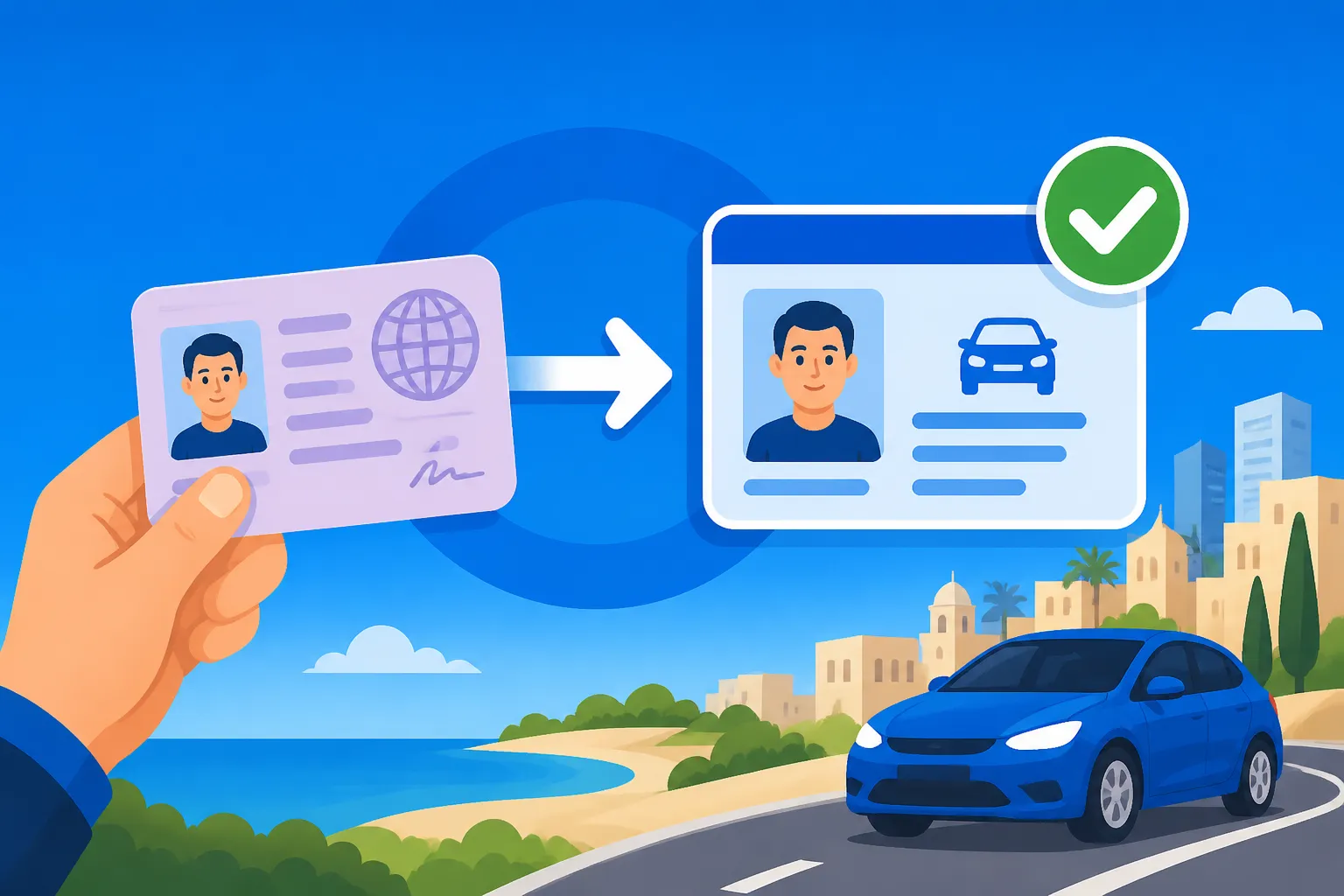
Oh, the Israeli driving license! If there's one administrative hurdle that truly tests your patience and sanity as an expat or new Oleh in Israel, it's definitely getting your foreign driving license converted. You've likely navigated unfamiliar roads in a new country, maybe even learned a few choice Hebrew phrases for traffic, and now you face the ultimate test: proving your driving prowess to the Israeli Ministry of Transport. This guide is here to walk you through every twist, turn, and bureaucratic roadblock, offering a realistic, empathetic roadmap to getting your Israeli driving license in hand.
Understanding Israel's Driving License Conversion Rules
Moving to Israel often means dealing with a lot of new regulations, and driving is certainly one of them. It's not as simple as showing up with your old license and getting a new one, though sometimes it feels like it should be! The rules vary quite a bit depending on who you are and where your original license comes from, which can be frustratingly opaque.
Who Needs to Convert Their License?
If you're planning on being in Israel for any significant length of time, you're going to need to convert your driving license. This isn't just about convenience; it's about legality and, crucially, insurance.
For tourists, you're generally permitted to drive in Israel for up to one year from your date of entry using your valid foreign driver's license, provided it's in English or accompanied by an International Driving Permit (IDP). If you're coming from abroad, an IDP can be a real lifesaver, as it translates your license into multiple languages, making it easier for local authorities to understand. However, if your stay extends beyond a year, or if you transition to a resident status, that's when things change dramatically.
New Olim (immigrants), those who have recently made Aliyah, are granted a specific grace period. The Israeli government generally provides a generous three-year window from your date of Aliyah to convert your foreign license. This is a welcome relief amidst all the other adjustments of klita (absorption). You’ll get your temporary Teudat Oleh and later your permanent Teudat Zehut, and these dates are critical for determining your grace period. However, even with this extended period, it's highly advisable not to wait until the last minute, as the process can be slow and unpredictable. Trying to sort out your driving license when your grace period is about to expire, especially if you’re also trying to manage getting your How to Get a Teudat Zehut and Tax File Number in Israel sorted, can add unnecessary stress.
For expats and long-term residents who are not Olim, the rules are a bit stricter. If you've been living and working in Israel on a visa (like a B/1 work visa) for more than one year, your foreign license is generally no longer valid for driving. At this point, you're expected to convert it. Failing to do so can lead to serious issues, including fines, potential legal action, and, most importantly, complications with your car insurance in the event of an accident. Imagine getting into a fender bender and your insurance company refusing coverage because your license isn't valid – that's a headache no one needs.
Which Countries Have Reciprocal Agreements?
Now, this is where it gets interesting and can save you a significant amount of hassle. Israel has reciprocal agreements with several countries, meaning that if you hold a license from one of these nations, your conversion process will be significantly smoother. Typically, it means you'll be exempt from taking the practical driving test, and sometimes even the theory test. This is a massive bonus, believe me.
Countries that generally have reciprocal agreements or a streamlined process for conversion include the United States, Canada, the United Kingdom, Australia, New Zealand, and most European Union member states. If you're coming from one of these places, consider yourself lucky! This simplified approach recognizes that these countries generally have similar driving standards and testing procedures to Israel's.
What does this mean for you? If your country is on this "preferred" list, you'll still need to go through the administrative steps: getting your medical and eye exams, filling out the forms, and visiting the Ministry of Transport. However, the daunting practical driving test, known as the Tist Hanhiga or "L-test," will likely be waived. This saves you money on driving lessons with an Israeli instructor and, perhaps more importantly, spares you the anxiety of driving with an examiner in a foreign language.
However, if your country isn't on this list, or if your license is from a country with significantly different driving regulations, then you'll likely need to complete both the theory test and the practical driving test. This applies to many countries in Asia, Africa, and parts of South America. Don't despair, though! While it's more effort, it's a very common path for many expats. It means you'll need to study up on Israeli traffic laws and potentially take lessons with an Israeli driving instructor to get acquainted with local driving habits and expectations. This can be a significant time and financial investment, so factor it into your relocation budget if you haven't already.
The Step-by-Step Process for Converting Your License
Okay, deep breaths! We're diving into the nitty-gritty of the conversion process. It can feel like a maze, but breaking it down into manageable steps makes it a lot less intimidating. Think of it like learning to drive all over again, but with more paperwork and less teenage angst.
Gathering Your Essential Documents
Before you even think about stepping foot in a Ministry of Transport office, you need to have your ducks in a row. Missing just one document can send you home, forcing you to rebook and start over – a truly maddening experience in Israeli bureaucracy.
Here’s a checklist of the crucial documents you'll need:
- Valid Foreign Driving License: This is the obvious one, but make sure it’s not expired and is still valid in your home country.
- Passport and Visa (if applicable): Your foreign passport is essential for identification. If you're not an Oleh, you'll also need your valid Israeli visa (e.g., B/1 work visa or A/5 temporary residence visa).
- Teudat Zehut (or Temporary Teudat Zehut for Olim): For new Olim, your blue Teudat Oleh or the green temporary Teudat Zehut from Registering Your Address with the Population Authority in Israel is vital. For long-term residents, your regular Teudat Zehut is necessary. This document is your official identification in Israel and connects you to the system.
- Original Ministry of Transport Form (Rishyon Nahiga): This is the application form for an Israeli driving license. You generally cannot print this off the internet. You need to obtain a physical form, often called a "green form" (tófes yarók), from an approved optometrist or Rishui (Ministry of Transport) office. This form has sections for your personal details, medical history, and spaces for the eye and medical exams.
- Proof of Address: While not always explicitly asked for, having a utility bill or rental contract with your Israeli address on it can be helpful, especially if there's any discrepancy in your records.
- Payment Method: Be prepared for fees! Bring a credit card or cash for various payments throughout the process.
It’s always a good idea to have several photocopies of everything. Israelis love copies, and you never know when you'll be asked for one. Better safe than sorry, as they say here, yoter tov babalagan mi'lehitratzetz.
The Medical and Eye Exam
Once you have your Rishyon Nahiga form, the first practical step is to get your eyes and general health checked. This is mandatory for all conversions.
You need to visit an approved optometrist and a general practitioner (GP) who is registered with the Ministry of Transport. You can usually find a list of approved professionals on the Misrad HaRishui website (though navigating it can be an adventure in itself!), or simply ask around in expat groups or local clinics. Your local Kupat Holim (health fund) clinic might have an approved optometrist on staff or be able to recommend one. Remember, you'll need to go to your Kupat Holim once you’ve figured out How Israel's Health Funds (Kupot Holim) Work: A Full Overview.
The eye exam is pretty standard: checking your vision, peripheral vision, and color blindness. If you wear glasses or contact lenses, make sure to bring them and declare them. The optometrist will fill out and stamp the relevant section of your Rishyon Nahiga form.
The medical exam with your GP is usually a quick check of your general health, to ensure you don't have any conditions that would impair your ability to drive safely. They'll ask about any chronic illnesses, medications, or past incidents that might affect your driving. They will also sign and stamp your form. It's crucial that both the optometrist and doctor use the official Ministry of Transport stamps, or the form will be rejected. This is a common hiccup for newcomers!
Theory Test (Optional/Required based on origin country/experience)
This is the point where the "reciprocal agreement" really comes into play.
If you're from a country with a direct agreement (like the US, Canada, UK, most of the EU, Australia, New Zealand), you generally do not need to take the theory test for a standard private vehicle license (B license). This is fantastic news, as studying Israeli traffic laws in Hebrew can be quite the task.
However, if your country doesn't have such an agreement, or if you're converting a specific type of commercial or heavy vehicle license, you will need to pass the theory test (teoriya). This test covers Israeli traffic laws, road signs, and safe driving practices.
The theory test can be taken in various languages, including Hebrew, English, Russian, Arabic, and French, which is a huge relief for many expats. There are numerous apps and websites designed to help you study for the Israeli theory test, often featuring practice questions identical to those on the actual exam. "Derech" (דרך) is a popular app for this. You'll register and pay for the test online or at an approved testing center. Make sure you book it in your preferred language!
Practical Driving Test (Tist Hanhiga or "L-Test")
Again, this stage hinges entirely on your country of origin and status.
If you're converting from a license from a reciprocal country and you are a new Oleh (within the 3-year grace period) or an eligible long-term resident, you are usually exempt from the practical test. You'll still visit the Ministry of Transport (Misrad HaRishui) with all your documents, and they'll process your application and issue your temporary license right there, potentially after a short interview to confirm your driving experience.
If, however, you fall into the category where a practical test is required, get ready for an adventure. The Tist Hanhiga, or "L-test" as it's often called (from the 'L' plate used by learner drivers), is notorious. Even experienced drivers from abroad often find it challenging. This is partly due to slightly different driving conventions in Israel (the aggressive merging, the often-creative parking) and partly due to the high standards and subjective nature of the exam.
You must take lessons with a certified Israeli driving instructor (moreh nahiga) before you can even apply for the practical test. This isn't just a formality; these instructors know exactly what the examiners are looking for. They'll teach you the specific maneuvers (like parallel parking in incredibly tight spots or the dreaded "K-turn"), the correct ways to indicate, and how to navigate common Israeli road scenarios. Finding an English-speaking instructor is possible, especially in cities like Tel Aviv or Jerusalem. Expect to pay per lesson, and you might need quite a few, even if you’ve been driving for decades.
When you're ready, your driving instructor will typically arrange the test for you. You'll usually drive their car. The test itself lasts about 20-30 minutes and will involve driving in various traffic conditions, performing specific maneuvers, and demonstrating your knowledge of road rules. Examiners are known for being very strict, so try to stay calm and follow every rule meticulously. If you fail, you'll need to take more lessons and rebook the test, incurring additional fees each time. It can be a very frustrating loop for many expats who are perfectly competent drivers, but remember, persistence is key in Israel.
Navigating the Israeli Bureaucracy: Practical Tips and Pitfalls
Ah, the Misrad HaRishui (Ministry of Transport). If you've spent any time in Israel, you'll know that government offices can be an experience in themselves. A blend of modern online systems and old-school paper trails, navigating this labyrinth can be the most challenging part of converting your license.
The Misrad HaRishui (Ministry of Transport) Experience
Visiting the Misrad HaRishui is usually the final, critical step in getting your converted license. Here's what you need to know:
First, appointments are almost always mandatory. Gone are the days of just showing up and waiting for hours (mostly). You'll typically need to book an appointment online via the Gov.il website or through their phone service. The website itself is usually available in English, but sometimes the booking system can be finicky. Booking an appointment usually means securing a slot days or even weeks in advance, so don't leave it to the last minute, especially if your foreign license is nearing its one-year validity or your Oleh grace period is ending.
When you arrive at the Misrad HaRishui, be prepared for a wait, even with an appointment. Take a number (mispar) from the machine, and listen for your number to be called to a specific counter (pekeed). This is where the language barrier can become a significant issue. While some clerks may speak English, it's not guaranteed, especially in smaller towns. If your Hebrew isn't strong, consider bringing a Hebrew-speaking friend to help translate, or at least have a translation app ready on your phone.
Bring all original documents you gathered, plus several sets of copies. They might only ask for one or two things, but then suddenly request a copy of something obscure. Having it ready prevents another trip. The clerk will review your documents, verify your identity with your Teudat Zehut, and enter your details into the system. If you're exempt from the practical test, they will usually issue you a temporary paper driving license (rishyon zmani) on the spot, and the official plastic card will be mailed to your registered address (the one on your Teudat Zehut or from your How to Register Your Address at the Misrad HaPnim in Israel process).
Common Challenges and How to Overcome Them
It wouldn't be an Israeli bureaucratic experience without a few challenges. The key is to anticipate them and arm yourself with patience.
- Missing Documents: This is the most common reason for rejection. Always double-check your checklist. If your foreign license doesn't have a clear issue date or expiry, or if your name doesn't match exactly across all documents, it can cause problems. Sometimes, they might ask for an official translation of your foreign license if it’s not in English.
- Outdated Information: Government websites can sometimes lag. Always try to confirm the latest requirements, perhaps by calling ahead (if you can get through!) or asking in local expat Facebook groups.
- Language Barriers: As mentioned, this can be a real headache. Even simple questions can get lost in translation. Having a friend or even hiring a local "fixer" who understands the system and speaks Hebrew can save you hours of frustration.
- Unexpected Fees: Israeli bureaucracy loves its fees. While you'll pay for tests separately, there might be processing fees at the Misrad HaRishui itself. Make sure you have a credit card that works in Israel.
- The "Different Clerk, Different Rules" Phenomenon: It's an unspoken rule of Israeli bureaucracy: two different clerks might give you two different answers or interpretations of the rules. If you're told something that doesn't sound right, politely ask to speak to a supervisor or try coming back another day with a different clerk. Persistence, a polite smile, and a bit of a chutzpah (guts/nerve) can go a long way.
One helpful tip is to use your phone to stay connected. While waiting for your appointment, having access to things like mobile and internet service can make the wait feel shorter. Many people use apps like Airalo for eSIMs when they first arrive to ensure they have data, which is useful when navigating appointment booking systems or looking up information on the go.
Understanding Temporary Licenses and Fees
Once your application is approved, and if you're exempt from the practical test, you'll walk out with a temporary paper driving license (rishyon zmani). This is usually a printed paper valid for a few months, and it allows you to drive legally immediately. Keep it with you at all times when driving. The actual plastic, credit-card-sized Israeli driving license will be mailed to you within a few weeks to a few months. Ensure your address on file with the Population Authority is correct, as that’s where it’ll go.
Let's talk about the dreaded fees. They add up, so budget accordingly:
| Item | Estimated Cost (NIS) | Notes |
|---|---|---|
| Eye Exam | 50-100 | Paid directly to the optometrist. |
| GP Medical Exam | 50-150 | Paid directly to the doctor, sometimes covered by Kupat Holim for members. |
| Theory Test (if required) | 60-100 | Paid to the testing center or online. |
| Driving Lessons (if practical test req.) | 150-250 per lesson | Variable, most people need 10-20 lessons for the practical test. |
| Practical Driving Test (if required) | 150-250 | Paid to the instructor who arranges it. |
| License Issuance Fee | 200-300 | Paid at the Misrad HaRishui or later via mail/online. |
| International Driving Permit (if needed) | 200 | For driving on foreign license during grace period. |
Please note: These are estimated costs and can change. Always verify current fees.
The cost of driving lessons, if you need the practical test, is often the biggest expense. Factor in the possibility of needing multiple attempts for the test, as each re-test means more lessons and another test fee.
Driving in Israel with a Foreign License vs. Converted License
The decision of when and how to convert your license often sparks debate among expats. "Can't I just keep driving on my foreign license?" is a common question. While you can for a limited time, understanding the risks and benefits of both options is crucial for your peace of mind and legal standing.
The Legality and Limitations of Foreign Licenses
When you first arrive in Israel, you're generally allowed to drive on your valid foreign license, often coupled with an International Driving Permit (IDP). For tourists, this typically lasts for up to one year from your date of entry. An IDP isn't a license itself, but rather a translation of your existing one, which can be very helpful if you get stopped by police who don't recognize your home country's format. You'd be surprised how often a simple, straightforward document can prevent a lot of unnecessary hassle.
For new residents, including Olim, the one-year rule still applies to your foreign license. However, Olim get that three-year grace period during which they can convert. This means that while you can technically still drive on your foreign license for that first year (and then convert it anytime within the three years), it's important to differentiate between merely driving and having full legal coverage.
The biggest risks of relying solely on your foreign license beyond the initial validity period (one year for non-Olim, effectively three years for Olim to convert, but still better to convert earlier) are insurance issues and legal trouble. If you're involved in an accident and your foreign license is considered expired or invalid by Israeli law, your car insurance policy might be completely voided. This means you'd be personally liable for all damages, which could be catastrophic, especially in serious accidents. Insurers in Israel are notoriously strict on adhering to legal requirements, and an invalid license is a big red flag for them.
Furthermore, driving without a valid Israeli license (or a valid foreign license within the permitted period) means you're driving illegally. This can lead to heavy fines, your vehicle being impounded, and potentially even criminal charges. It's simply not worth the risk. Many new arrivals initially focus on big-ticket items like getting a place to live or sorting out The Expat Guide to Setting Up Utilities in Israel, but ignoring the driving license can have serious repercussions.
Benefits of an Israeli Driving License
Getting your Israeli driving license isn't just about compliance; it offers several practical benefits that genuinely ease your integration into Israeli life:
- Peace of Mind and Legality: This is paramount. Once you have that shiny new Israeli plastic card, you no longer have to worry about legal gray areas or insurance validity. You are fully recognized as a legal driver in Israel.
- Insurance Benefits: With a valid Israeli license, you'll often find better rates on car insurance. Some insurance companies even offer discounts for drivers who have had an Israeli license for a certain period, as it indicates full integration into the local driving system. Plus, in the unfortunate event of an accident, there won't be any question about your license's validity.
- Proof of Identity: Your Israeli driving license can serve as a secondary form of identification, complementing your Teudat Zehut. While not a primary ID like the Teudat Zehut, it’s often accepted for various day-to-day transactions and checks.
- No More IDP Hassles: You won't need to renew an International Driving Permit every year, saving you time and money.
- Seamless Integration: It's one less thing marking you as "new" or "foreign." It's a small but significant step towards feeling more at home and confident on Israeli roads. For those considering buying a car, having an Israeli license is almost a prerequisite for a smooth purchase and insurance process. You can learn more about this in guides like How to Buy a Used Car in Israel as a Foreigner.
Insurance Implications
The impact on your car insurance cannot be overstated. When you apply for car insurance in Israel, one of the first things they ask for is your Israeli driving license number.
If you're still on your foreign license within the legally permitted period, most insurance companies will still insure you. However, they might charge slightly higher premiums, viewing you as a higher risk due to unfamiliarity with local roads and regulations. It's crucial to be transparent with your insurance provider about your license status. Some, like Migdal or Harel, might have specific policies for new immigrants or those on foreign licenses.
The real danger, as mentioned, comes if you exceed the legal period for driving on a foreign license. If you're involved in an accident, your insurer has every right to deny your claim. Imagine hitting another car, and then being told you're completely uninsured and have to pay for all the damages out of pocket – potentially tens of thousands of shekels. This extends beyond collision; third-party liability, personal injury, and comprehensive coverage all hinge on you being a legally licensed driver. It’s a risk no one should take.
Therefore, even if you’re granted a grace period as an Oleh, completing the conversion process as soon as reasonably possible is highly advisable. It protects you financially and legally, and frankly, it just makes life easier in the long run.
Special Cases and Considerations
The Israeli system, like many, has specific rules for specific groups. New immigrants get some leniency, while those with specialized licenses face additional hurdles. It’s always good to know where you stand.
New Olim (Immigrants) Specific Rules
As we touched upon, new Olim receive special treatment when it comes to driving license conversion, mainly because the Israeli government wants to ease your absorption process. This is part of the broader package of benefits for new immigrants under The Complete Guide to Making Aliyah and Israeli Citizenship (2027).
The primary benefit is the extended grace period of three years from the date of your Aliyah. This means you can legally drive on your foreign license for up to three years, as long as it remains valid in your country of origin. This flexibility is a significant advantage, giving you time to settle in, learn some Hebrew, and tackle other urgent bureaucratic tasks without the immediate pressure of the driving license conversion. However, remember the caveats regarding insurance – while technically legal, some insurers might still prefer an Israeli license sooner.
Furthermore, Olim from certain countries (primarily those with reciprocal agreements like the US, Canada, EU, UK, Australia, New Zealand) often benefit from a simplified process that waives the practical driving test. This is a massive boon, as the practical test is often the most anxiety-inducing and expensive part of the process.
To take advantage of these Oleh-specific rules, you'll need to present your Teudat Oleh (New Immigrant Certificate) and your Teudat Zehut at the Ministry of Transport. These documents confirm your status and allow the clerks to apply the correct regulations to your case. It's one of the few times in Israeli bureaucracy where your "newness" actually works in your favor!
Converting a Commercial or Motorcycle License
If you're looking to convert anything beyond a standard private vehicle (B) license, prepare for a more complex journey. This includes licenses for:
- Commercial Vehicles (trucks, buses): Category C1 (up to 12 tons), C (over 12 tons), D1 (small public transport), D (buses).
- Motorcycles: Categories A2 (up to 125cc), A1 (up to 47hp), A (unrestricted).
- Heavy Equipment or Agricultural Vehicles: Categories 1 (tractor) and 3 (heavy equipment).
For these categories, even if you come from a country with a reciprocal agreement, you will almost certainly be required to undergo additional testing, and sometimes specific training. This often includes:
- Medical Fitness Exams: More rigorous medical tests, sometimes including psychological evaluations, especially for public transport drivers.
- Specialized Theory Tests: Separate theory tests focused on the specific regulations for commercial vehicles or motorcycles.
- Practical Driving Tests: Almost always required, often with specific requirements for the type of vehicle (e.g., driving a heavy truck, or demonstrating specific motorcycle maneuvers).
- Minimum Age Requirements: Israeli law has specific minimum age requirements for certain vehicle categories that might differ from your home country.
- Experience Requirements: For some commercial licenses, you might need to prove a certain number of years of driving experience in that category in your home country.
The process for these specialized licenses is more demanding because the stakes are higher – public safety is a major concern. It's advisable to consult directly with the Ministry of Transport or a specialized driving school in Israel that deals with commercial licenses for the most accurate and up-to-date requirements. Don't assume your foreign commercial license will convert easily; plan for a significant investment of time and money in lessons and tests.
What If Your Foreign License is Expired?
This is a critical point that trips up many people. The Israeli Ministry of Transport will only convert a foreign driving license that is currently valid in your country of origin. If your foreign license has expired, even if it's just by a day, it cannot be converted. Period.
In this scenario, you're essentially treated as if you've never held a license before (at least in the eyes of the Israeli system). This means you will need to go through the entire process of obtaining an Israeli driving license from scratch, which includes:
- Full Eye and Medical Exams: Still required.
- Theory Test: Mandatory.
- Driving Lessons: You'll need to take the minimum number of required lessons with an Israeli driving instructor (currently 28 lessons for a B license).
- Practical Driving Test: Mandatory.
This is obviously a much longer, more expensive, and more arduous process than conversion. The best advice here is to ensure your foreign license is renewed and valid before you even start the conversion process in Israel. If you're abroad and thinking of moving to Israel, check your license's expiry date and renew it if it's close to expiring, even if it means doing it from overseas. Dealing with an expired foreign license while already in Israel adds a massive layer of complication to what is already a challenging administrative task.
Comparison of Driving License Conversion Requirements
To give you a clearer picture, here's a simplified table comparing typical requirements based on your situation. Remember, this is a general guide, and specific cases can vary. Always check the official Ministry of Transport website or consult directly with them.
| Scenario / Origin Country | Foreign License Validity in Israel (Initial) | Grace Period for Olim | Theory Test Required? | Practical Test Required? | Required Documents Highlights | Estimated Overall Difficulty |
|---|---|---|---|---|---|---|
| Tourist | 1 year | N/A | No | No | Foreign License, IDP, Passport | Easy |
| Oleh (US, CAN, EU, UK, AUS, NZ) | 1 year (can drive for 3 years) | 3 years | No | No | Foreign License, Teudat Oleh, Teudat Zehut, Medical/Eye forms, Passport | Moderate |
| Oleh (Non-reciprocal country) | 1 year (can drive for 3 years) | 3 years | Yes | Yes | Foreign License, Teudat Oleh, Teudat Zehut, Medical/Eye forms, Passport | High |
| Expat (Reciprocal country) | 1 year | N/A | No | No | Foreign License, Teudat Zehut, Medical/Eye forms, Passport, Visa | Moderate |
| Expat (Non-reciprocal country) | 1 year | N/A | Yes | Yes | Foreign License, Teudat Zehut, Medical/Eye forms, Passport, Visa | High |
| Expired Foreign License (Any) | Invalid | N/A | Yes | Yes | Teudat Zehut, Passport, Medical/Eye forms (Full driving process) | Very High (Start from scratch) |
This table illustrates why knowing your status and country of origin is so crucial. The difference between a "Moderate" and "Very High" difficulty can mean months of effort and thousands of shekels.
Navigating the logistics of moving to a new country and then dealing with something as personal as your driving license can be incredibly stressful. Platforms like Sirelo can be really helpful resources for general relocation advice, offering insights into moving companies and how to handle international moves, which can indirectly assist in planning your arrival and subsequent administrative tasks like license conversion.
Ultimately, getting your Israeli driving license converted is a rite of passage for many expats and Olim. It's a bureaucratic marathon, not a sprint, but with persistence, preparation, and perhaps a good dose of humor, you'll get there. Before you know it, you'll be confidently navigating the Kvishim (highways) like a true local, honking (responsibly, of course!) and making your way through the beautiful, chaotic tapestry of Israeli roads.
Disclaimer
The information provided in this guide is for general informational purposes only and does not constitute legal or professional advice. Driving laws and regulations in Israel are subject to change and may vary based on individual circumstances. We strongly recommend consulting with the official Israeli Ministry of Transport (Misrad HaRishui) or a qualified legal professional for the most accurate and up-to-date information regarding your specific situation.